Capital Markets
Deals, listings and the cost of money
IPOs, mergers, buybacks and credit issuance — what the terms of a deal say about what this market is willing to fund right now.
2026-08-09
%22%2F%3E%0A%20%20%3Ccircle%20cx%3D%22220%22%20cy%3D%22150%22%20r%3D%22180%22%20fill%3D%22%2322d3ee%22%20fill-opacity%3D%220.12%22%2F%3E%0A%20%20%3Ccircle%20cx%3D%221010%22%20cy%3D%22130%22%20r%3D%22220%22%20fill%3D%22%2338bdf8%22%20fill-opacity%3D%220.08%22%2F%3E%0A%20%20%3Ccircle%20cx%3D%22920%22%20cy%3D%22520%22%20r%3D%22170%22%20fill%3D%22%2322d3ee%22%20fill-opacity%3D%220.06%22%2F%3E%0A%20%20%3Cpath%20d%3D%22M140%20430h920%22%20stroke%3D%22url(%23line)%22%20stroke-width%3D%2212%22%20stroke-linecap%3D%22round%22%2F%3E%0A%20%20%3Cpath%20d%3D%22M220%20360c120-150%20260-220%20380-220s260%2070%20380%20220%22%20fill%3D%22none%22%20stroke%3D%22%2367e8f9%22%20stroke-opacity%3D%220.5%22%20stroke-width%3D%2216%22%20stroke-linecap%3D%22round%22%20stroke-linejoin%3D%22round%22%2F%3E%0A%20%20%3Cpath%20d%3D%22M300%20398h600%22%20stroke%3D%22%2394a3b8%22%20stroke-opacity%3D%220.24%22%20stroke-width%3D%228%22%20stroke-linecap%3D%22round%22%2F%3E%0A%20%20%3Ctext%20x%3D%22220%22%20y%3D%22510%22%20fill%3D%22%23e2e8f0%22%20fill-opacity%3D%220.7%22%20font-family%3D%22Arial%2C%20Helvetica%2C%20sans-serif%22%20font-size%3D%2238%22%20letter-spacing%3D%228%22%3EINSIGHTS%3C%2Ftext%3E%0A%3C%2Fsvg%3E)
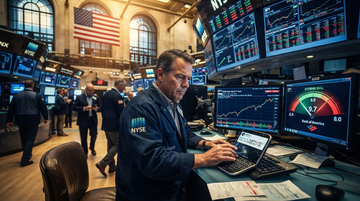
Burry’s “Trump’s market” call lands right as Bank of America’s gauge hits “Extreme Bull” — a late-cycle warning built from breadth, leverage, IPO froth, and sentiment
Michael Burry’s Aug 8 “Trump’s market / price no longer matters” post arrives the same week Bank of America’s Bull & Bear Indicator hits 9.7 (“Extreme Bull,” above the 8 threshold). The investable takeaway is not “stocks are overvalued,” but that the mechanics of a late-cycle melt-up—crowding + positioning + credit/inflow optimism—are aligning faster than fundamentals can reassert.

CLARITY Act’s 12-month slip pushes crypto regulation into a “fee-and-rail” trade: Coinbase waits on revenue, Circle waits on redemption rules, and Solana ETF math rolls to 2027
When the U.S. Senate effectively defers the CLARITY Act into 2027, the market doesn’t just delay “clarity”—it delays the stablecoin redemption/market-structure plumbing that determines who earns fees and who must re-architect rails. The result is a near-term Coinbase/Circle split (timing of exchange revenue vs. stablecoin reserve/redemption economics), while Solana ETF approval expectations migrate into a later regulatory window.

VKOSPI's two-month low signals the leveraged flush is cooling—and that’s when foreign rotation into Samsung Electronics & SK hynix can start working
Korea’s volatility gauge (VKOSPI) fell to a two-month low after forced deleveraging in single-stock leveraged products, while the KOSPI shed nearly 40% from its June peak. If this “deleveraging-over” phase is real, the next price action is less about panic selling and more about foreign capital re-pricing Korea’s memory leaders—starting with Samsung Electronics and SK hynix, not the US proxy names.

KOSPI volatility ebbed—but the AI-memory trade is now a different risk asset after leveraged flush
South Korea’s volatility gauge has fallen to a two-month low after forced liquidations and regulatory tightening on single-stock leveraged ETFs. The key implication for investors isn’t “risk-on returns”—it’s that the AI-memory complex’s tape is now shaped more by de-leveraging mechanics than by momentum alone.
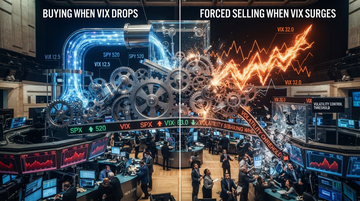
Private Credit’s “Liquidity Premium” Took a Bank-Origination Shortcut—And the Squeeze Is Showing Up in BDC Math
Bloomberg’s Credit Weekly (Aug 8, 2026) links tighter private-credit economics to a specific borrower behavior: highly-indebted companies are refinancing out of private credit and back into the syndicated bank-loan market. For Ares Capital and Blue Owl Capital, that matters because it targets the very spread/rollover that BDC models were pricing as a durable “liquidity” advantage—when in reality, part of that premium appears to be bank-side underwriting structure.

S&P 500’s Record +29% EPS Surprise Was Cyclicals-Driven—So the “AI Capex = Future Earnings” Trade No Longer Works the Same
The S&P 500’s biggest earnings beat on record (+29.2% vs estimates) can’t be explained by just the AI hyperscalers—removing Alphabet and Amazon cuts the surprise to 10.9%. That shift means the market’s next re-rating question is whether cyclicals can sustain earnings and cash flow without AI acting as the dominant growth narrative.

Trump Media shut down its token and prediction-market bets—so investors must underwrite Truth API as the only credible cash-conversion layer
Trump Media & Technology Group DJT ended its Crypto.com token/tax-treasury pathway and pulled back from embedding prediction markets inside Truth Social, reducing the “financial-wrapper” optionality around DJT. The data business—Truth API—moves to the center because it monetizes distribution and speed (a tollbooth for market-moving posts) rather than operating risk markets or staking token treasuries.
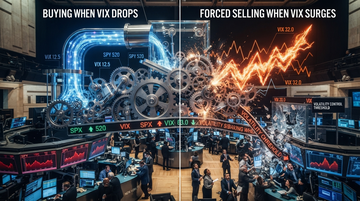
When cash floods the risk complex, volatility-control becomes the market’s real buyer—and that makes the next reversal asymmetric
A fresh wave of risk-asset inflows can look like consensus strength, but the marginal buyer can be automated volatility-control and trend-following CTA systems rather than discretionary capital. Those strategies have a documented pattern: they buy when the VIX drops and dump when it surges, so a cash-tide reversal can quickly turn into forced selling.
2026-08-08

Berkshire Hathaway's Q2 cash use isn’t “patient”—it’s self-buyback at a size that forces the whole “cash mountain” narrative to update
In Berkshire Hathaway's Q2 2026 reporting, the firm shows operating-business earnings before tax of $14.376B and consolidated earnings before tax of $32.063B, alongside a clear cash deployment into buying back its own equity. The key reset is that cash, cash equivalents, and short-term U.S. Treasury bills were $359.2B at quarter-end—lower than where they stood at the start of the year—while treasury-stock purchases were material (most in Q2), implying the company is now returning capital through the same asset whose trade it’s marking.

Treasury’s bond-auction mechanics don’t care about talking points—but they do re-route the 30Y buyer base
The clearest “backfire” signal in the next-30Y auction isn’t a headline yield; it’s the auction’s demand split. In the latest 30Y sale around the Aug 2026 window, non-dealers took 85% of accepted competitive bids, implying the marginal buyer is shifting away from traditional dealer behavior even when the accepted yield clears in a narrow band.
![[OpenAI]’s [NextSlide] acquisition signals the productivity-stack era: ChatGPT is becoming the “AI-native Office distribution layer” insight cover](https://images-1379091077.cos.na-ashburn.myqcloud.com/insights/covers/20260808_openai_nextslide_presentation_acquisition_360px.png)
[OpenAI]’s [NextSlide] acquisition signals the productivity-stack era: ChatGPT is becoming the “AI-native Office distribution layer”
OpenAI’s Aug 2026 move to bring the [NextSlide] presentation team into the [OpenAI]/[ChatGPT] product suggests the next growth frontier is vertical workflow SaaS—starting with the work of turning ideas into decks. The deal’s disclosed specifics are thin, but the direction is testable: Microsoft and Alphabet can’t defend Office and Workspace UX with model access alone, they must out-execute on AI-native creation and formatting loops.
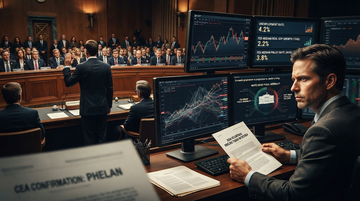
CEA’s Phelan Confirmation Matters More Than Fed Dots: It Rewrites the White House 2026 Growth Math for Fiscal Credibility
The Senate’s confirmation of [Christopher Phelan] hinges on the White House getting to control the macro “story” markets price—especially around 2026. But in this research pass, the only load-bearing, verifiable macro inputs we can anchor are (1) the June 2026 FOMC growth path and (2) contemporaneous BLS labor conditions; the specific post-confirmation White House 2026 GDP forecast numbers were not disclosed in accessible primary sources.

Rippling turns enterprise AI ROI into an auditable cost center, not a productivity vibe
Rippling says it burned “millions” on AI tokens in a few months, then built an internal employee-ROI tracker—now launched as AI Spend Console—to connect token spend to measurable outcomes. The move reframes AI from a blanket capability upgrade into a controllable spend-and-output system, forcing HR/payroll and adjacent enterprise software vendors to prove AI value in employee hours, not marketing.

The CLARITY Act slip turns 2026 crypto market-structure into a 2027 expectation problem
The Senate will not vote on the Digital Asset Market Clarity Act in August, pushing a key SEC/CFTC jurisdiction fight into mid-September instead. For public crypto market-structure intermediaries, that procedural delay matters less because “Congress is slow” and more because it extends uncertainty that directly prices order-flow, stablecoin rails, and token-issuer IPO/launch timing toward 2027.

The “AI Capex Reality Check”: a $400M bet on a stealth chip-fab startup after a $16B unwind is a signal about who funds the 2027–2030 buildout
A post-bailout $400M commitment by Leopold Aschenbrenner’s Situational Awareness into Source Foundry implies that even after a leverage-driven AI-equity unwind, the fund still believes the frontier-AI capex cycle will require new manufacturing capability—especially in tools and process. Public-market drawdowns may have repriced the equity trade, but the chip-supply-chain cash allocation appears to be moving toward the “picks-and-shovels” of scaling production rather than competing on model IP.

Switch’s confidential IPO filing puts “independent data center” pricing to the test—while Westinghouse’s filing shows the window is still open
Switch’s confidential U.S. IPO process signals that late-stage private capital is willing to underwrite public-market multiples again for scaled data-center operators. The investment question is whether the market is already pricing that transition—or whether an “IPO trust premium” still exists for operators that can monetize power-constrained AI capacity fast enough.

USPS’s $2.5B quarterly loss is a parcel-economics stress test—and UPS/FedEx should expect margin squeeze from slower price/volume alignment
USPS reported a GAAP net loss of $2.5B in its latest reported quarter while operating revenue rose and operating expenses also rose. The mix matters: USPS grew “Shipping and Packages” revenue even as Shipping and Packages volume fell 3.4%, a pattern that points to persistent cost/volume friction—exactly the same variable pricing-power strategies depend on for UPS and FedEx.

Delaware’s Verisk ruling makes activist breakups harder: specific performance beats “we’ll just walk away” in the $2.35B AccuLynx case
A Delaware Chancery judge ordered Verisk Analytics to try to complete its $2.35B cash acquisition of AccuLynx, rejecting Verisk’s attempt to treat the deal as terminated. The ruling matters to investors because it reinforces a template: when a board’s contract choice is enforced, activists must clear a much higher legal bar—often not just “wins on votes,” but “losses on specific performance.”

Judge Halts DoD’s WuXi “Chinese Military Company” Label—But BIOSECURE’s Clock Can Re-Start Differently
A U.S. judge preliminarily enjoined the Pentagon from enforcing its June 2026 Section 1260H “Chinese military company” designation for WuXi AppTec, blocking the immediate BIOSECURE reactivation path tied to that label. For investors, the key question is not whether the BIOSECURE restriction exists, but how CROs and US biotechs must re-route procurement after the compliance trigger is legally paused.
2026-08-07

What to expect
Evidence-first notes with a visible point of view.
This section collects sharp takes on earnings, shareholder meetings, and market structure. Each new piece should make the thesis, the facts, and the implications obvious within the first few screens.
Expect direct analysis, not generic commentary.
Expect the data to be explicit and the argument to be easy to follow.
Plutux is not an investment adviser. Market data and AI-generated analysis are for information and education only, not investment advice. Disclaimer