Capital Markets
Deals, listings and the cost of money
IPOs, mergers, buybacks and credit issuance — what the terms of a deal say about what this market is willing to fund right now.
2026-07-23
![At a $115B secondary mark, [Revolut] just forced a “Revolut discount” question for US fintech—because it redefines what “bank-like growth” is worth insight cover](data:image/svg+xml;charset=UTF-8,%3Csvg%20xmlns%3D%22http%3A%2F%2Fwww.w3.org%2F2000%2Fsvg%22%20viewBox%3D%220%200%201200%20630%22%20role%3D%22img%22%20aria-hidden%3D%22true%22%3E%0A%20%20%3Cdefs%3E%0A%20%20%20%20%3ClinearGradient%20id%3D%22bg%22%20x1%3D%220%22%20y1%3D%220%22%20x2%3D%221%22%20y2%3D%221%22%3E%0A%20%20%20%20%20%20%3Cstop%20offset%3D%220%25%22%20stop-color%3D%22%23050816%22%2F%3E%0A%20%20%20%20%20%20%3Cstop%20offset%3D%22100%25%22%20stop-color%3D%22%230f172a%22%2F%3E%0A%20%20%20%20%3C%2FlinearGradient%3E%0A%20%20%20%20%3ClinearGradient%20id%3D%22line%22%20x1%3D%220%22%20y1%3D%220%22%20x2%3D%221%22%20y2%3D%220%22%3E%0A%20%20%20%20%20%20%3Cstop%20offset%3D%220%25%22%20stop-color%3D%22%2322d3ee%22%20stop-opacity%3D%220.12%22%2F%3E%0A%20%20%20%20%20%20%3Cstop%20offset%3D%2250%25%22%20stop-color%3D%22%2367e8f9%22%20stop-opacity%3D%220.45%22%2F%3E%0A%20%20%20%20%20%20%3Cstop%20offset%3D%22100%25%22%20stop-color%3D%22%2322d3ee%22%20stop-opacity%3D%220.12%22%2F%3E%0A%20%20%20%20%3C%2FlinearGradient%3E%0A%20%20%3C%2Fdefs%3E%0A%20%20%3Crect%20width%3D%221200%22%20height%3D%22630%22%20fill%3D%22url(%23bg)%22%2F%3E%0A%20%20%3Ccircle%20cx%3D%22220%22%20cy%3D%22150%22%20r%3D%22180%22%20fill%3D%22%2322d3ee%22%20fill-opacity%3D%220.12%22%2F%3E%0A%20%20%3Ccircle%20cx%3D%221010%22%20cy%3D%22130%22%20r%3D%22220%22%20fill%3D%22%2338bdf8%22%20fill-opacity%3D%220.08%22%2F%3E%0A%20%20%3Ccircle%20cx%3D%22920%22%20cy%3D%22520%22%20r%3D%22170%22%20fill%3D%22%2322d3ee%22%20fill-opacity%3D%220.06%22%2F%3E%0A%20%20%3Cpath%20d%3D%22M140%20430h920%22%20stroke%3D%22url(%23line)%22%20stroke-width%3D%2212%22%20stroke-linecap%3D%22round%22%2F%3E%0A%20%20%3Cpath%20d%3D%22M220%20360c120-150%20260-220%20380-220s260%2070%20380%20220%22%20fill%3D%22none%22%20stroke%3D%22%2367e8f9%22%20stroke-opacity%3D%220.5%22%20stroke-width%3D%2216%22%20stroke-linecap%3D%22round%22%20stroke-linejoin%3D%22round%22%2F%3E%0A%20%20%3Cpath%20d%3D%22M300%20398h600%22%20stroke%3D%22%2394a3b8%22%20stroke-opacity%3D%220.24%22%20stroke-width%3D%228%22%20stroke-linecap%3D%22round%22%2F%3E%0A%20%20%3Ctext%20x%3D%22220%22%20y%3D%22510%22%20fill%3D%22%23e2e8f0%22%20fill-opacity%3D%220.7%22%20font-family%3D%22Arial%2C%20Helvetica%2C%20sans-serif%22%20font-size%3D%2238%22%20letter-spacing%3D%228%22%3EINSIGHTS%3C%2Ftext%3E%0A%3C%2Fsvg%3E)
![At a $115B secondary mark, [Revolut] just forced a “Revolut discount” question for US fintech—because it redefines what “bank-like growth” is worth insight cover](https://images-1379091077.cos.na-ashburn.myqcloud.com/insights/covers/20260723_revolut_115b_valuation_secondary_360px.png)
At a $115B secondary mark, [Revolut] just forced a “Revolut discount” question for US fintech—because it redefines what “bank-like growth” is worth
A $115B secondary mark for [Revolut] (per late-July 2026 reporting) implies investors are capitalizing Revolut’s bank-like scale with venture-style expectations—without waiting for a public-market re-rating. That creates pressure on US-listed fintechs—especially PayPal, Block, and Robinhood—to justify why they deserve the same “platform multiple” while lacking the same balance-sheet narrative or monetization trajectory.

ServiceNow’s $40M India banking deal tests whether “workflow + AI” can become regulated core infrastructure
ServiceNow is backing BusinessNext with a reported $40M investment in a Series C at a $700M valuation—an AI-focused bet that targets autonomous, regulated banking operations rather than generic enterprise automation. The key investor question is whether this distribution + implementation play can clear banking-grade constraints (security, governance, and auditability) well enough to turn vertical-specific deployments into durable, repeatable revenue.

Tesla’s “SpaceX merger” narrative is really a margin map: who captures value first is inferable from Tesla’s capex mix—and SMCI’s order-driven margin guidance
The Tesla–SpaceX merger chatter sounds like a corporate-finance story, but the investable question is operational: which link in the shared stack monetizes first—launch cadence, defense compute, compute/data-center builds, or vehicle manufacturing spillovers. In public data, Tesla is signaling multi-billion AI+manufacturing capex intensity, while SMCI—positioned upstream in AI server supply—reported a >$60B new-orders quarter and simultaneously guided margins materially up to a 15%–17% range (via its disclosed update after the SpaceX-linked announcement), turning the “valuation” debate into a supply-chain throughput bet.

Tesla’s “SpaceX merger” is a capex-and-margin value-capture map—2026 capex guidance shows where integration would likely re-anchor multiples
If Tesla–SpaceX integration ever becomes “real,” the value will likely shift based on capex timing: Tesla is already guiding to $20B+ of 2026 capex tied to AI compute and manufacturing/R&D ramps, while its Automotive and Energy segments show materially different gross-margin profiles (17.8% vs. 29.8% in FY2025). The merger narrative therefore matters less for probability and more for what it changes in Tesla’s capex mix and the resulting Automotive-vs-Energy margin pathway.
2026-07-22

Shein’s HK IPO Committee Nod Isn’t the Finish Line—It’s a Test of Trust, Supply-Chain Discipline, and Profitability
Shein has cleared a major procedural hurdle: approval from the Hong Kong listing committee, bringing the fast-fashion retailer closer to an IPO window in 2026. For investors, the real question is whether the company can convert capital-markets access into durable margins and governance credibility—at a time when public e-commerce peers like JD.com, Alibaba, and PDD Holdings already trade on very different “path to profit” narratives.

Yen at 163+: Why Intervention-Pressure, Not Japan’s Rates Alone, Is the Carry-Trade Shock Point
As of July 22, 2026 the yen slid past 163 per US dollar, keeping markets on alert for another Japanese authorities intervention attempt. The key risk for carry trades is not simply that USD/JPY is high—it’s that repeated “intervention resolve” narratives can trigger fast, liquidity-driven unwinds when positioning is crowded. That turns a macro FX move into a cross-asset volatility event, with the intervention “mechanism” and speed mattering as much as the level.

Zhongji Innolight's $7B Hong Kong IPO Is a Real-Time Demand Test for AI Optical Interconnect
Zhongji Innolight’s Hong Kong listing approval (expected to raise about $7B) is more than a capital-markets milestone—it’s a market verdict on whether AI data-center buildouts will keep translating into high-margin optical transceiver demand. The company’s disclosed growth profile (Q1/3M 2026 revenue and gross margin acceleration) plus its supply-chain scaling plans are the core reason this IPO can be used as a near-term benchmark for AI optical infrastructure capex intensity.
2026-07-21
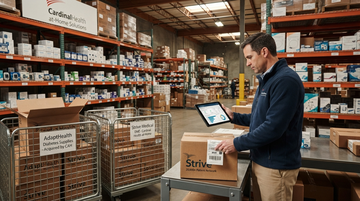
Cardinal Health Buys AdaptHealth Diabetes Unit + Strive Medical for $360M Cash — Home-Care Roll-Up Continues
On July 20, 2026, Cardinal Health announced definitive agreements to acquire AdaptHealth's Diabetes Health business (~$235M cash) and Strive Medical — a DME supplier serving 20,000+ patients — for a combined ~$360M in cash. The deals expand Cardinal Health's Cardinal at-Home Solutions segment, deepening its position in diabetes supplies and durable medical equipment. AdaptHealth framed the divestiture as sharpening focus on its core sleep, respiratory, and HME businesses.

Jersey Mike’s IPO at up to $7.94B is a franchise-math bet: valuation hinges on sustaining high AUV while Blackstone sells into the public market
Jersey Mike’s disclosed IPO terms of 43.5 million shares in a $21–$25 range, targeting up to a $7.94B valuation and up to $1.09B of proceeds. The core investor story is not restaurant-level earnings—it’s franchise royalty economics backed by very high systemwide sales per unit ($4.217B systemwide in fiscal 2025) and an asset-light footprint (only 36 company-owned stores out of 3,300). For Blackstone, the deal is also a classic PE exit: a public listing that monetizes control while keeping upside tied to continued store growth (including an earn-out tied to reaching 4,000 global stores).
![Brookfield+[CPP Investments] to Take LXP Industrial Private for $5.2B—Industrial REIT M&A Is Pricing Control, Not Just Rent insight cover](https://images-1379091077.cos.na-ashburn.myqcloud.com/DEV/insights/covers/20260721_lxp_brookfield_cpp_acquisition_2026_360px.png)
Brookfield+[CPP Investments] to Take LXP Industrial Private for $5.2B—Industrial REIT M&A Is Pricing Control, Not Just Rent
Brookfield Asset Management and CPP Investments agreed to buy LXP Industrial Trust in an all-cash deal valued at about $5.2B (including net debt) at $61.20/share, a double-digit premium with a 40-day go-shop window. Using LXP’s recent fundamentals, the offer implies a rich takeover multiple versus the last several years’ revenue and cash flow—suggesting buyers are paying for asset/tenancy control and a path to recapitalize rather than buying a cheap stream of rents. For investors, this deal is a real-time “private-market bid” read-through to where industrial REIT control premium (and execution risk) is heading in 2H 2026.
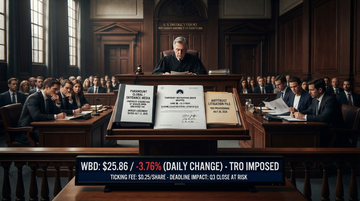
14-Day TRO Forces Paramount Skydance to Pause the $110B WBD Deal—The Mega-Media M&A Era’s First Real Court Litmus Test
On July 20, 2026, a U.S. district judge granted a 14-day TRO blocking Paramount Skydance’s $110B acquisition of Warner Bros. Discovery (through at least an Aug. 3 hearing). The order turns what had been “regulatory risk” into an economic squeeze: WBD shares dropped ~3.8% that day and the deal’s structure includes a $0.25-per-share ticking fee if the close slips past Sept. 30. For investors, the core question is whether this is a short delay—or the opening move in a longer antitrust fight over wide-release theatrical distribution and cable power.

Reformation’s IPO Terms Price a “Profitable DTC” Outfitter for Public Markets—But the Margin Story Still Hinges on Tariffs and Scale
Reformation’s ref S-1/A sets a $15.00–$17.00 range for a roughly $225M raise on $507.1M of 2025 revenue and $12.6M net income, with ~90% of sales from direct-to-consumer. The filing’s most investment-relevant detail isn’t the DTC mix—it’s how much reported gross margin and operating leverage swing around tariff-driven costs/refunds and store expansion discipline. If Reformation can convert store growth into steadier margins, the “profitable sustainable DTC” thesis looks investable; if not, the valuation can compress fast even with positive net income.

Scribe Therapeutics’ $100M IPO Is the First Public “Pure-Play CRISPR Risk Read” of 2H 2026—And It’s Valuing Epigenetic Gene Editing Like a Clinical-Stage Bet
Scribe Therapeutics (Scribe Therapeutics) set Nasdaq IPO terms for 7.15M shares at $13–$15, seeking about $100M at the low end and up to $107.2M at the top, with Sanofi participating in a concurrent purchase. The S-1 frames its core value creation around early, in-human data for its lead epigenetic CRISPR program (Scribe Therapeutics STX-1150]) and preclinical progress for two lipid-risk follow-ons funded partly by CIRM grants. For investors, the key question isn’t just CRISPR’s science—it’s whether public markets will underwrite early-stage execution risk after the post-2024/25 biotech window reopened.
2026-07-20

Databricks' $188B Coatue-Led Round Resets the Private-AI Ceiling: What a 40% Markup in Six Months Says About the Enterprise Data Stack
On July 17, 2026, Databricks signed a term sheet for a strategic funding round led by Coatue that values the data/AI platform at $188B — a roughly 40% step-up from its ~$134B valuation in December 2025. The round totals about $3B from new and existing investors and is expected to close later this summer. It comes on the heels of a separate ~$5B raise earlier in 2026 and stretches Databricks' lead as the most valuable non-foundation-model AI private company, sharpening questions about IPO timing, AI infrastructure economics, and the relative pricing of public SaaS peers.

India's Private Banks Slump 5% as HDFC, Axis, Kotak Q1 FY27 Margins Disappoint
On July 20, 2026, leading Indian private-sector banks fell ~5% intraday after their Q1 FY27 results (reported July 18–19) revealed sharper-than-expected net interest margin compression: HDFC Bank fell 5% (steepest intraday drop in 4 months) on a 13bp sequential NIM decline; Axis Bank dropped 5.03% on soft NII growth; Kotak fell 3.06% despite a 26% YoY net profit rise. ICICI was a relative outperformer. The Nifty Private Bank index was dragged lower; HDFC is down ~20% YTD.

Prologis's Third $18.2B Bid for Segro Just Got Rejected — What Happens Before the July 22 Takeover Panel Deadline
On July 17, 2026, Segro's board unanimously rejected Prologis's third sweetened takeover offer valued at approximately £13.5 billion ($18.16 billion), comprising £2.7 billion in cash and 0.0890 new Prologis shares per Segro share. The bid carries a 33.8% premium to Segro's June 23 closing price but was dismissed as still materially undervaluing the UK warehouse landlord. Under UK Takeover Panel rules, Prologis has until July 22, 2026 to either make a formal offer or walk away, with Bloomberg reporting a possible secondary London Stock Exchange listing as a sweetener. The proposed merger would create the world's largest industrial REIT at a time when data-center demand is reshaping the logistics property thesis.
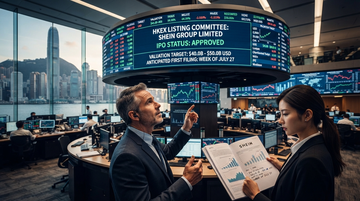
Shein Clears Hong Kong Listing Committee at $40-50B: Fast Fashion's Biggest 2026 IPO Pivots East After the NY/London Fades
On July 17, 2026, Shein received approval from the Hong Kong Stock Exchange listing committee for its long-awaited IPO, targeting a $40-50B valuation (down from $100B in 2022). The fast-fashion retailer plans to publish its first public filing the week of July 27 and could launch the roadshow as soon as late August, after pivoting away from prior New York and London attempts. The prospectus will offer a clean read on Shein's $40B+ revenue, ~$2B net profit, supply chain, and the regulatory tradeoffs of choosing Hong Kong over U.S. listings.
2026-07-19

2026-07-18

CXMT's IPO Turns China's Memory Catch-Up Into a Direct Challenge to Micron, SK Hynix, and Samsung Electronics
China's biggest memory-chip listing in years is not just a capital-raising event. It is a signal that the memory market is being pulled into a state-backed industrial race, with consequences for pricing, capacity, and the global AI supply chain.

CXMT's Mega IPO Is Draining Liquidity From China and Repricing Hong Kong Tech
CXMT's $8.6 billion listing is not just a memory-chip event. The bigger market signal is that a giant domestic IPO can pull liquidity out of mainland China and into a policy-backed industrial story, forcing Alibaba, Tencent, and other Hong Kong tech names to reprice against a tighter cash pool.
What to expect
Evidence-first notes with a visible point of view.
This section collects sharp takes on earnings, shareholder meetings, and market structure. Each new piece should make the thesis, the facts, and the implications obvious within the first few screens.
Expect direct analysis, not generic commentary.
Expect the data to be explicit and the argument to be easy to follow.
Plutux is not an investment adviser. Market data and AI-generated analysis are for information and education only, not investment advice. Disclaimer