Capital Markets
Deals, listings and the cost of money
IPOs, mergers, buybacks and credit issuance — what the terms of a deal say about what this market is willing to fund right now.
2026-07-26
%22%2F%3E%0A%20%20%3Ccircle%20cx%3D%22220%22%20cy%3D%22150%22%20r%3D%22180%22%20fill%3D%22%2322d3ee%22%20fill-opacity%3D%220.12%22%2F%3E%0A%20%20%3Ccircle%20cx%3D%221010%22%20cy%3D%22130%22%20r%3D%22220%22%20fill%3D%22%2338bdf8%22%20fill-opacity%3D%220.08%22%2F%3E%0A%20%20%3Ccircle%20cx%3D%22920%22%20cy%3D%22520%22%20r%3D%22170%22%20fill%3D%22%2322d3ee%22%20fill-opacity%3D%220.06%22%2F%3E%0A%20%20%3Cpath%20d%3D%22M140%20430h920%22%20stroke%3D%22url(%23line)%22%20stroke-width%3D%2212%22%20stroke-linecap%3D%22round%22%2F%3E%0A%20%20%3Cpath%20d%3D%22M220%20360c120-150%20260-220%20380-220s260%2070%20380%20220%22%20fill%3D%22none%22%20stroke%3D%22%2367e8f9%22%20stroke-opacity%3D%220.5%22%20stroke-width%3D%2216%22%20stroke-linecap%3D%22round%22%20stroke-linejoin%3D%22round%22%2F%3E%0A%20%20%3Cpath%20d%3D%22M300%20398h600%22%20stroke%3D%22%2394a3b8%22%20stroke-opacity%3D%220.24%22%20stroke-width%3D%228%22%20stroke-linecap%3D%22round%22%2F%3E%0A%20%20%3Ctext%20x%3D%22220%22%20y%3D%22510%22%20fill%3D%22%23e2e8f0%22%20fill-opacity%3D%220.7%22%20font-family%3D%22Arial%2C%20Helvetica%2C%20sans-serif%22%20font-size%3D%2238%22%20letter-spacing%3D%228%22%3EINSIGHTS%3C%2Ftext%3E%0A%3C%2Fsvg%3E)

Burry’s “last months of 1999–2000” line is the easy part—the hard part is proving which late-1999 indicators (leverage, IPO froth, breadth, and policy) are actually misaligned in 2026
Michael Burry’s 2026 warning explicitly frames today’s tape as resembling the final months of the 1999–2000 bubble, but the investing edge depends on mapping specific late-1999 leading indicators to 2026’s data. In this research run, primary source access and essential market-data verification failed, so the article cannot meet the platform’s sourcing and “verified linkage” requirements.

DeepSeek’s Funding Pause Signals a China AI Capital Rationing Shock—And It Points to Tencent Holdings as the “next check” bottleneck
DeepSeek told prospective investors it is suspending investment agreements in the coming days, even as it was planning a new, very large round. The pause matters because it likely shifts leverage away from mega-round LP inflows and toward balance-sheet funding and monetization first—where China’s strategic tech and platform backers like Tencent Holdings can move fastest.
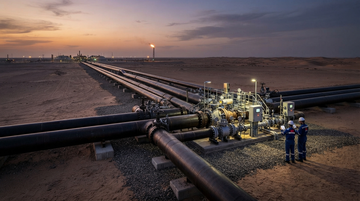
Kuwait’s $16B Pipeline Leaseback Turns Oil Infrastructure Into an Infra-LP Cash Machine
KPC’s oil pipeline network is being carved into a Blackstone/KKR/Brookfield-backed infrastructure vehicle in a 20.5-year $16B lease-and-leaseback that generates $7.85B in upfront proceeds at closing. The deal matters because it converts Gulf midstream “toll” assets into a transferable, tariff-backed cashflow stream—an increasingly replicable funding route for state oil systems.
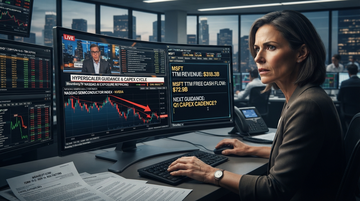
Nasdaq’s Pre‑Earnings “Capex Confession” Sell Signal Hits Semis First—Because Hyperscaler Guidance Can Break the Math
On the tape, the Nasdaq can reprice AI exposure before hyperscalers even print, when investors treat guidance tone as a proxy for whether $300B+ of planned infrastructure spend stays intact. For semiconductors, the key risk isn’t “AI demand exists or not”—it’s whether hyperscaler capex cadence and margin narratives soften fast enough to pull forward a downgrade cycle through the supply chain.
The Paramount–WBD Pause Turns Deal Risk Into a Time-Decay Financing Problem
A judge-ordered pause freezes the calendar for the $110B+ Paramount–Warner Bros. Discovery transaction, but the economics don’t freeze: ticking fees, financing/hedging carry, and deferred content decisions keep accruing. The result is a new market question—how balance-sheet cost of delay and break-fee mechanics change the standalone value of each media asset as the deal remains stalled through summer 2026.

Robinhood’s Crypto.com Prediction-Market Talks Would Turn Kalshi’s “Two-Horse Race” Into a Platform War—and Reprice Liquidity as an Order-Flow Toll
If Robinhood routes Crypto.com event contracts into its prediction-markets hub, it would shift competition from “which venue lists the best contracts” to “which broker controls distribution and user order flow.” That threatens Kalshi’s advantage as a standalone regulated marketplace while creating a new monetization layer—liquidity tied to brokerage routing—across every macro, sports, and politics print.

PDD's peers can’t “price” away tariff math: the SHEIN IPO valuation is now a profitability stress test
Shein’s pre-IPO disclosures link a quarterly net loss to the U.S. shift away from de minimis duty-free treatment, making tariff mechanics a live input-cost and demand driver rather than a distant regulatory risk. For listed fast-fashion bellwethers like PDD, Inditex, and H&M Hennes & Mauritz, the investable question isn’t “will tariffs exist,” but whether gross profit can absorb tariff-driven cost resets faster than sales slow.

Uber loses a distribution channel but not necessarily robotaxi demand—Waymo now inherits full-stack economics first in U.S. markets
Reuters reports Waymo is exploring ending its decade-long Uber partnership, which would unwind the only mainstream U.S. on-demand AV surface that existed for riders using Uber. The breakup matters less for near-term demand and more for who pays the hard parts of autonomy: idle vehicles, insurance/risk, and ride-stack capex that was previously outsourced.
2026-07-25

Anduril’s ~$100B talk is a software-multiple bet—but only if it can manufacture like a defense prime
A reported round in which Anduril could be valued at about $100B would test whether investors will underwrite defense autonomy on “growth + speed” instead of traditional procurement denominator math. The value hinges on proving repeatable production ramp, durable backlog conversion, and system-level sustainment economics—otherwise the Pentagon’s old guard can defend share by slowing adoption and raising integration friction.
Outflows don’t always mean “less risk” — U.S. equity-fund selling can be earnings-caution expressed as repositioning, not de-grossing
For the week through July 15, 2026, long-term U.S. equity funds recorded estimated outflows of $18.10B—an acceleration versus the prior week’s $9.66B. The key market-structure read-through is that this kind of two-week divergence can reflect “risk moving off-exchange” (cash/derivatives hedging or rotating within index/ETF baskets) rather than earnings-risk being fully removed.

“Higher Again” Is the Tail: Which Bank Balance Sheets Get Hit First If a Fed Hike Reappears
Recent Fed advocacy turns an expected hold into a non-trivial “renewed-tightening” tail risk, and the balance-sheet transmission path is not linear across lenders. Using bank balance sheet and Fed stress-test design, the key fragility is not just mark-to-market; it’s how quickly funding costs reprice versus how slowly assets run off, which is why large, diversified deposit franchises can look fundamentally safer than duration-lean, funding-sensitive books.

Prentis isn’t trying to beat frontier compute—it’s trying to beat venture ROI on “computer-use” labor
Prentis is reportedly in talks to raise ~$100M at a ~$1B valuation, despite being a brand-new AI lab launched in April 2026. The evidence from the fundraising materials and signed contracts points to a very specific bet: it can win enterprise value by lowering the cost of routine white-collar tasks rather than matching hyperscalers’ frontier scale.
2026-07-24
Anthropic Eyes Mandatory 10b5-1 Plans for All Employees—Why the Real Story Is the S-1 Around It
Anthropic is weighing a Rule 10b5-1 mandate for every employee once it lists, an unprecedented posture among major tech IPOs. The move reframes a $965B pre-IPO valuation and a ~$30B+ revenue run rate as a governance test, not a pricing one: it removes discretionary selling as a public-market risk while concentrating day-one and lockup mechanics into the same disclosure package. Investors should read the policy together with first-day sell caps and lockup length, because Anthropic's three compute partners—Amazon, Alphabet, and Broadcom—plus Nvidia's GPU stack all have a stake in how orderly the debut looks.

The HSBC-to-Allianz Singapore Deal Isn’t Just a Sale—It’s Proof Banks Still Can’t Win Insurance Capital Cycles in Asia
HSBC has formally been running a strategic review of its Singapore insurance manufacturing business, with media reporting a potential transaction up to ~US$2B to Allianz. The investable takeaway is the capital logic: while insurers can hold long-duration risk, universal banks are increasingly treating insurance as a balance-sheet drag and an exit option—freeing capital for simpler fee/credit models and reducing regulatory complexity.

The Supreme Court Quietly Shrinks Tariff Power—So Markets Now Trade the “Surviving Statute” Not the Tariff Headline
The Supreme Court’s February 2026 ruling that IEEPA cannot authorize tariffs forces the administration to pivot to other statutory authorities, changing both how fast new duties can be imposed and how easily importers can challenge them. The July 2026 tariff wave that follows is therefore a “statute selection” story—investor impact concentrates in firms’ cost pass-through, legal exposure, and inventory timing rather than in any single rate.
2026-07-23
Blackstone’s slowing BCRED redemptions signal liquidity stress easing—but the redemption cap is the real stress test
Blackstone (Blackstone) disclosed that withdrawal/redemption requests from its flagship private credit vehicle are slowing, suggesting outflows may be peaking. But the mechanism—caps that can force partial payments—turns this from a “calm news” story into a structural liquidity test that investors should map to credit-market funding conditions.
Treasury’s Iran sanctions repricing is a term-premium shock in disguise—watch how oil risk leaks into rates, dollar funding, and credit hedges before CPI
The July 2026 Iran sanctions cycle is not just an oil story: market pricing implies a higher embedded “energy risk premium,” which then spills into Treasury term premium and the macro risk register. The investable implication is hedge selection—duration and curve hedges may outperform purely commodity hedges early, while FX and credit hedges are likely to require faster, more conditional trigger rules.

Kalanick’s $1.7B “Atoms” Round Isn’t an AV Story—it’s a Robotics-as-a-Service Re-rating Signal for Public Players
Travis Kalanick’s Atoms raised $1.7B in an equity round led by a16z, with Ben Horowitz joining the board—plus Uber participating—confirming a high-budget push toward “digitizing the physical world.” For investors, the read-through is that capital is flowing to service-layer robotics (deployment + operations + uptime), not just autonomy narratives, which can create asymmetric re-ratings versus cash-burn-heavy AV pure-plays like Aurora Innovation.

OpenAI’s $750B AI Spend Is a Balance-Sheet Test, Not Just a Capex Story
A widely reported figure—OpenAI planning about $750B of computing-power spending commitments through 2030—forces the real question to the foreground: can the company’s private capital structure fund GPU+data-center buildout at scale before IPO changes the terms of growth. Public supply-chain beneficiaries like Microsoft, NVIDIA, and Oracle already show how cash generation and reinvestment capacity scale with AI demand, implying that OpenAI’s bottleneck is likely financing duration and liquidity timing more than hardware availability.

Paramount’s EU antitrust green light is a timing problem, not a deal problem—because the US court path can mechanically cut deal NPV via delay and remedy knock-ons
Even with Paramount’s EU antitrust clearance for its roughly $110B bid for Warner Bros. Discovery, the remaining US hurdle shifts the deal from “can it close?” to “what does delay do to financing cost and synergy timing?” The key investor move is to underwrite a lower (not zero) probability-weighted payoff: US litigation can force hold-separate and slow integration, while remedies can reduce the cost-cuts that drive the valuation model.
What to expect
Evidence-first notes with a visible point of view.
This section collects sharp takes on earnings, shareholder meetings, and market structure. Each new piece should make the thesis, the facts, and the implications obvious within the first few screens.
Expect direct analysis, not generic commentary.
Expect the data to be explicit and the argument to be easy to follow.
Plutux is not an investment adviser. Market data and AI-generated analysis are for information and education only, not investment advice. Disclaimer