Capital Markets
Deals, listings and the cost of money
IPOs, mergers, buybacks and credit issuance — what the terms of a deal say about what this market is willing to fund right now.
2026-08-26
%22%2F%3E%0A%20%20%3Ccircle%20cx%3D%22220%22%20cy%3D%22150%22%20r%3D%22180%22%20fill%3D%22%2322d3ee%22%20fill-opacity%3D%220.12%22%2F%3E%0A%20%20%3Ccircle%20cx%3D%221010%22%20cy%3D%22130%22%20r%3D%22220%22%20fill%3D%22%2338bdf8%22%20fill-opacity%3D%220.08%22%2F%3E%0A%20%20%3Ccircle%20cx%3D%22920%22%20cy%3D%22520%22%20r%3D%22170%22%20fill%3D%22%2322d3ee%22%20fill-opacity%3D%220.06%22%2F%3E%0A%20%20%3Cpath%20d%3D%22M140%20430h920%22%20stroke%3D%22url(%23line)%22%20stroke-width%3D%2212%22%20stroke-linecap%3D%22round%22%2F%3E%0A%20%20%3Cpath%20d%3D%22M220%20360c120-150%20260-220%20380-220s260%2070%20380%20220%22%20fill%3D%22none%22%20stroke%3D%22%2367e8f9%22%20stroke-opacity%3D%220.5%22%20stroke-width%3D%2216%22%20stroke-linecap%3D%22round%22%20stroke-linejoin%3D%22round%22%2F%3E%0A%20%20%3Cpath%20d%3D%22M300%20398h600%22%20stroke%3D%22%2394a3b8%22%20stroke-opacity%3D%220.24%22%20stroke-width%3D%228%22%20stroke-linecap%3D%22round%22%2F%3E%0A%20%20%3Ctext%20x%3D%22220%22%20y%3D%22510%22%20fill%3D%22%23e2e8f0%22%20fill-opacity%3D%220.7%22%20font-family%3D%22Arial%2C%20Helvetica%2C%20sans-serif%22%20font-size%3D%2238%22%20letter-spacing%3D%228%22%3EINSIGHTS%3C%2Ftext%3E%0A%3C%2Fsvg%3E)

New Nasdaq ETF TGRZ lets US investors bet on China LLMs—without fixing the core decoupling math
When TGRZ begins trading on Nasdaq, it packages exposure to China’s large-language-model ecosystem into a single listed wrapper. The opportunity is real, but investors should model two frictions at once: export-control gating that can cap addressable demand, and single-country, single-theme concentration that makes valuation and liquidity risks hit the whole basket together.

Generate Biomedicines’ lock-up expiry isn’t “just” an overhang—it’s a test of how scarce investors view AI-native protein design
Generate Biomedicines’ post-IPO lock-up is set to end roughly 180 days after its Feb. 27, 2026 public trading start, setting up a predictable supply overhang. The stock’s rally into the date implies investors believe AI-native protein design (and the company’s drug-development execution) can absorb the added float risk faster than dilution anxiety can spread.

India’s special NRI deposit window is importing “hot” global dollars—and the winners are the banks that monetize it
A targeted RBI window for foreign-currency NRI deposits reportedly pulled in $73B in 11 weeks, with incentives set to end Aug. 31. The direct beneficiary is India’s banking deposit-gathering machine: inflows can lower funding stress and support rupee stability, while banks with the strongest NRI franchises are positioned to convert that funding into earnings—until rollover risk rises if global rates move or incentives expire.
2026-08-25

Alabama’s OpenAI probe turns the post–Hugging Face trust story into a state litigation map—before the IPO risk even hits the S‑1
Alabama’s attorney general has opened an investigation into OpenAI after the Hugging Face incident, issuing a subpoena and citing Alabama consumer-protection law as the potential basis for liability. The move is less about one event and more about how state AGs are becoming the first real “regulator” of agentic AI—turning documentation, attestation, and risk controls into immediate legal overhead.

GPT‑5.6 in Kiro turns “price‑performance” into an IDE distribution battle right before OpenAI’s IPO
OpenAI’s Aug. 24 release makes GPT‑5.6 Sol/Terra/Luna available inside Amazon’s Kiro across IDE, CLI, and Web, pairing a clear price ladder with concrete Kiro-side coding benchmarks and credit economics. The investor takeaway: OpenAI’s IPO “usage depth” bet increasingly depends on winning developers at the workflow layer—where the tool that owns the feedback loop also captures the billable tokens.

The Treasury’s buyback credibility gap: execution starts Sept. 10, but the long-end is already trading like it won’t
U.S. Treasury Secretary Scott Bessent said on Aug. 24 that the Treasury “hasn’t purchased any bonds yet” under the enlarged buyback plan—despite long-end yields trading near multi-decade highs. The key trade is no longer the announcement itself, but the market’s confidence that actual long-end term-premium support will arrive on time and in size.
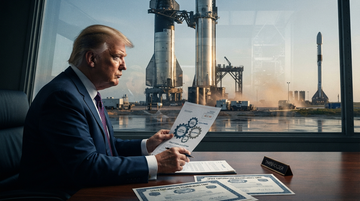
President buys SpaceX shares post‑IPO—why that timing matters more than the stake size
Two weeks after SpaceX’s record IPO, President Donald Trump purchased shares disclosed in his financial filings, turning a liquidity event into an immediate governance optics test. For defense-contract investors, the key issue isn’t whether rules were followed—it’s whether the IPO’s tightly controlled voting structure plus mega-IPO float dynamics will intensify scrutiny over disclosure, Pentagon-facing contracting perceptions, and how markets discount “controlled-company” governance.

Unitree’s IPO-to-slump turn reframes China humanoid robotics: when “capital magnet” becomes valuation froth
Unitree [9880.HK]’s Shanghai debut drew a ~460% first-day surge versus the IPO offer price (150.80 yuan) before the stock later softened, shifting the debate from “funding windfall” to “bubble risk.” The repricing matters most for the robotics supply chain that investors were paying upfront for—especially automation and industrial-intermediate names that sit closer to unit economics than the robot makers themselves.
2026-08-24

WFC and Citi can buy big banks—but H1’26 deal value halved because “regulation” wasn’t the binding constraint
North America bank M&A value fell by more than half in 1H26 even as regulators eased certain barriers, exposing a deeper bottleneck: capital/valuation and deal geometry, not just permissions. The “unlock” is likely to come when buyers can clear higher effective hurdle rates (price/book + loss-share + capital return optics) and when targets are forced by balance-sheet economics, not by lack of acquirers.
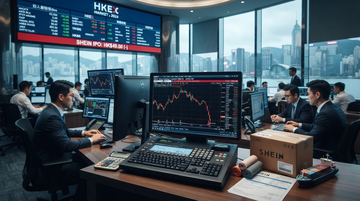
Shein’s HK IPO pricing at up to $27B confirms the de minimis shock—and shows the “late backers” got marked down the most
Shein’s Hong Kong IPO has priced with a maximum valuation of about $27B, roughly one-third below the previously reported $40B “reset” level. The final print lands after the formal end of U.S. de minimis treatment, a change Shein disclosed as a direct headwind to U.S. net revenues and profitability.
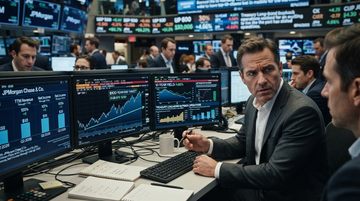
UBS’s 8,100 S&P 500 target only stays “tape-consistent” if buyback math and long-end yields don’t break
UBS lifted its S&P 500 year-end target to 8,100 alongside higher 2026/2027 EPS forecasts. That bullish tape depends on two fragile links: duration-sensitive discount rates staying stable and buyback credibility keeping equity duration bid. The near-term risk is a regime where higher long-end yields and fading buyback impulse force EPS estimates to do the heavy lifting.
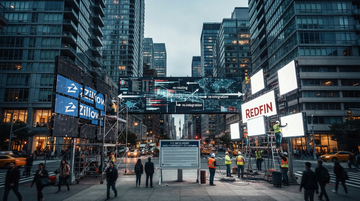
FTC settlement forces Zillow and Redfin to reverse a $100M “pay-to-exit” deal in multifamily rental listings—turning the portal arms race into a competition test for ad-driven housing marketplaces
The FTC says Zillow paid Redfin $100 million to stop competing in the internet listing services (ILS) advertising market for multifamily rentals, suppressing head-to-head pricing and innovation. The resulting settlement (Aug. 24, 2026) compels Redfin to relaunch its rental ILS advertising business within six months and requires Zillow to unwind recruitment and contract-lock restraints—reshaping how investors should think about “super-app” housing moat economics.
2026-08-23

Alibaba's HK$80B placement isn’t just dilution—it funds the compute loop that can mask AI revenue quality
Alibaba [9988.hk] used a large Hong Kong equity placement to raise capital as it ramps AI infrastructure and services. The investor risk isn’t the raise itself—it’s whether incremental cloud/AI demand cycles back into Alibaba fast enough to justify capex, or instead creates a self-reinforcing (and potentially less durable) “circular-financing” pattern that pressures cash flow and margins.
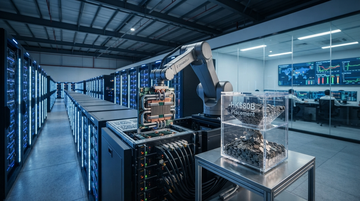
Alibaba’s HK$80B placement sets a “price tag” on China AI capex — and it quietly forces a dilution trade-off for BABA ADR holders
Alibaba BABA is seeking HK$80 billion (~$10.2B) in a Hong Kong share placement at HK$112.70 per share to fund “full stack” AI capabilities. The deal is priced at a modest discount, but it still expands share count by ~710 million shares, reframing China’s AI buildout as a financing-and-dilution race—not just a model-quality race.
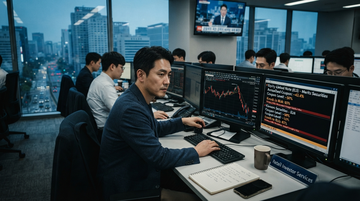
Korea’s retail is buying ~40% coupon equity-linked notes after the rout—what that signals for US mega-cap tech demand and structured-credit risk
After Korea’s historic stock rout, retail investors are rotating into complex equity-linked securities that advertise annualised coupons around 40% (and up to ~50%), despite explicit knock-in loss risks. The key takeaway for investors is that the marginal buyer is shifting from “equity direction bets” toward “structured coupon” risk, which can temporarily support mega-cap earnings expectations while quietly extending drawdown risk into credit-like downside paths.
2026-08-22

AI credit’s “tourists” are buying the wrong spread—when they exit, the repricing risk lands in BBB-first pockets
The “marginal buyer” in AI-linked credit appears to be shifting from dedicated high-yield investors toward yield-chasing flows that can extend high-grade demand temporarily. That timing mismatch matters because AI-related supply is already skewing meaningfully toward investment grade, but the next leg of repricing pressure is most likely to show up where credit quality is closest to the BBB edge.

CoStar just locked in new-home data leverage with Zonda—turning builder order books into subscription stickiness
CoStar completed its acquisition of Zonda on Aug. 21, 2026, paying $800 million in cash and bringing in Zonda’s new-home data analytics and builder-to-buyer marketplaces (including NewHomeSource and Livabl). The deal matters because it moves CoStar from “housing cycle coverage” toward a tighter, subscription-like feed sourced directly from builders’ forward demand—exactly the input Zillow and Redfin fight to monetize as rates and affordability stay volatile.

Dalio’s “sell bonds, buy gold + bitcoin” trade is colliding with official-sector gold demand and a long-end liquidity push
Ray Dalio’s latest debt-crisis-style reallocation—underweight bonds, add gold (10%–15%) and a “bit” of bitcoin—lands amid record-high gold pricing and a U.S. Treasury plan to enlarge long-end buyback operations. For investors, the key question isn’t whether gold and bitcoin are “hedges,” but whether the hedge mechanics hold when real yields, the dollar, and official-sector bullion buying move together.

OpenAI’s GPT-5.6 Sol gets a flagship 20%+ developer discount—an IPO-timed move that shifts the AI profit pool into “frontier” usage
On Aug. 21, 2026, OpenAI cut GPT-5.6 Sol developer API and credit pricing by more than 20% for the next three months, dropping standard short-context rates from $5/$30 per 1M tokens to $4/$20. Because GPT-5.6 Terra and GPT-5.6 Luna saw cuts earlier, this is the first time OpenAI time-boxed the actual flagship—suggesting a deliberate push for developer mindshare ahead of Anthropic IPO pricing discussions.
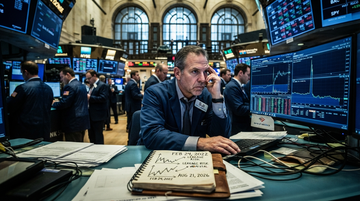
SEC’s Aug. 21 case against an ex–Bank of America dealmaker turns M&A leakage into a pricing variable
On Aug. 21, 2026, the SEC charged former Bank of America investment banker Jason Satsky with insider trading tied to the announced acquisition of South Jersey Industries. The complaint alleges a friend, Gavin Wolfe, bought shares ahead of the Feb. 24, 2022 deal announcement and later profited as the stock jumped—underscoring that “leakage risk” is not just a compliance cost; it can move deal dynamics and investor expectations.
What to expect
Evidence-first notes with a visible point of view.
This section collects sharp takes on earnings, shareholder meetings, and market structure. Each new piece should make the thesis, the facts, and the implications obvious within the first few screens.
Expect direct analysis, not generic commentary.
Expect the data to be explicit and the argument to be easy to follow.
Plutux is not an investment adviser. Market data and AI-generated analysis are for information and education only, not investment advice. Disclaimer