Capital Markets
Deals, listings and the cost of money
IPOs, mergers, buybacks and credit issuance — what the terms of a deal say about what this market is willing to fund right now.
2026-08-19
%22%2F%3E%0A%20%20%3Ccircle%20cx%3D%22220%22%20cy%3D%22150%22%20r%3D%22180%22%20fill%3D%22%2322d3ee%22%20fill-opacity%3D%220.12%22%2F%3E%0A%20%20%3Ccircle%20cx%3D%221010%22%20cy%3D%22130%22%20r%3D%22220%22%20fill%3D%22%2338bdf8%22%20fill-opacity%3D%220.08%22%2F%3E%0A%20%20%3Ccircle%20cx%3D%22920%22%20cy%3D%22520%22%20r%3D%22170%22%20fill%3D%22%2322d3ee%22%20fill-opacity%3D%220.06%22%2F%3E%0A%20%20%3Cpath%20d%3D%22M140%20430h920%22%20stroke%3D%22url(%23line)%22%20stroke-width%3D%2212%22%20stroke-linecap%3D%22round%22%2F%3E%0A%20%20%3Cpath%20d%3D%22M220%20360c120-150%20260-220%20380-220s260%2070%20380%20220%22%20fill%3D%22none%22%20stroke%3D%22%2367e8f9%22%20stroke-opacity%3D%220.5%22%20stroke-width%3D%2216%22%20stroke-linecap%3D%22round%22%20stroke-linejoin%3D%22round%22%2F%3E%0A%20%20%3Cpath%20d%3D%22M300%20398h600%22%20stroke%3D%22%2394a3b8%22%20stroke-opacity%3D%220.24%22%20stroke-width%3D%228%22%20stroke-linecap%3D%22round%22%2F%3E%0A%20%20%3Ctext%20x%3D%22220%22%20y%3D%22510%22%20fill%3D%22%23e2e8f0%22%20fill-opacity%3D%220.7%22%20font-family%3D%22Arial%2C%20Helvetica%2C%20sans-serif%22%20font-size%3D%2238%22%20letter-spacing%3D%228%22%3EINSIGHTS%3C%2Ftext%3E%0A%3C%2Fsvg%3E)

Treasury’s doubled debt buybacks look like quasi-QE—but the mechanism is closer to plumbing support than term-premium math
The U.S. Treasury’s Aug 18–19 decision to double its debt buyback program is a direct liquidity backstop for specific off-the-run Treasury issues, not a broad-based asset purchase like 2020’s QE. For rates investors, the key question is whether tighter bid/offer spreads and fewer dealer balance-sheet constraints can suppress term-premium moves—or merely redistribute trading flows across the auction calendar while yields reprice.

Unitree’s 5x Shanghai debut turns China’s humanoid supply chain into a capital magnet—here’s who captures the first funding windfall
Unitree Robotics (listed as Yushu Technology) debuted on Shanghai’s STAR Market after an IPO priced at 150.8 yuan—then opened at 1,100 yuan, implying a ~5–6x first-day jump versus the offer. The windfall is likely to flow first into the “mechanics layer” (actuators, harmonic reducers, precision sensing) because Unitree’s IPO disclosed near-term R&D and manufacturing-capex use of proceeds—while US-led procurement barriers can redirect Chinese demand into domestic component ecosystems that Tesla Optimus can’t easily bypass.

Crossing $40T Turns Treasury Buybacks Into an Accounting Puzzle at ~4.65% 10-Year Yields
When U.S. debt tops $40 trillion while the 10-year sits near 4.65%, interest-cost arithmetic starts working against any “stabilize liquidity” debt buyback plan. The key contradiction isn’t that buybacks are useless—it’s that at today’s term yields, even modest net issuance can compound into a much faster rise in annual net interest, forcing a larger share of future fiscal space to be auctioned back to investors.
2026-08-18
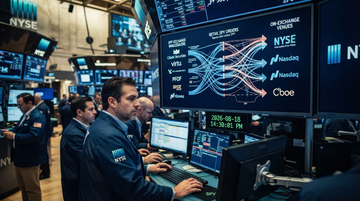
If the SEC scrapped Rule 611, retail spreads could keep getting “paid” — just with a different balance sheet
The SEC’s June 11, 2026 proposal would rescind Regulation NMS’s intermarket trade-through protection (Rule 611) and the locked-and-crossed restriction (Rule 610(e). The key economic bet behind the debate is that weakening exchange-to-exchange price protection changes how retail brokers route orders, how wholesalers (including PFOF arrangements) monetize the spread, and which venues bear more of the execution-cost risk.
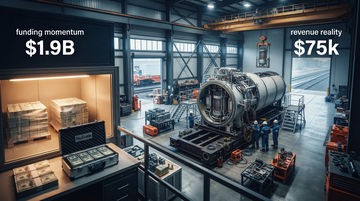
NuScale Power revenue barely exists—while liquidity swells, and the timing matters more than the narrative
In NuScale Power’s Q2 2026 results, revenue totaled just $75k for the quarter while cash, cash equivalents, and investments rose to $1.9B—an extreme mismatch that forces investors to separate “funding momentum” from “revenue reality.” The filing ties the year-over-year revenue plunge to completed Fluor FEED Phase 2 work in late 2025 and the absence of comparable 2026 activity, not a broken business model at every moment; but it still shows that the SMR economics are pacing far behind the AI power-demand storyline.
2026-08-17

Alphabet's first Kangaroo bond is a bet that the USD-to-AUD funding split still beats hedging risk
Alphabet appears to be moving part of its AI-era financing into a brand-new [Australia]() dollar “Kangaroo” format, with the key signal coming from where [Reserve Bank of Australia]() policy meets the [Federal Reserve](). The inaugural step matters because it reframes financing: less “set-and-forget USD issuance,” more targeted cross-currency funding + FX-hedging to match where real hyperscaler demand is showing up on investor balance sheets.

Anthropic’s “crisis of trust” frames the IPO risk investors still may be missing
Anthropic CEO Dario Amodei ties the latest AI backlash to a trust problem—“ordinary people don’t trust companies, governments, or the tech industry”—not just to safety messaging. That framing matters at Anthropic’s $965B post-money valuation after its $65B Series H: if enterprise buyers and regulators treat AI spend as a reputational risk, adoption can slow even when model performance improves.
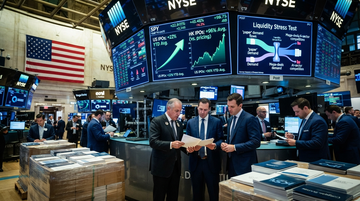
General Atlantic’s JPMorgan-led IPO revival turns the mega-IPO window into a sponsor-liquidity stress test
General Atlantic has tapped JPMorgan Chase to lead its revived IPO effort, signaling that private-sponsor portfolios are reaching the point where liquidity planning matters as much as growth stories. The headline takeaway for investors: sponsor IPOs are acting like the market’s “release valve,” but the trade will only work if aftermarket demand can absorb fresh public paper even while mega-deals—especially AI-linked—compete for allocation.

Calm tapes can be a trap: when options volatility stays low but AI/tech positioning turns defensive, the gap can widen before the air pocket
In late August 2026, Reuters-style 13F behavior shows investors trimming or de-emphasizing parts of tech while still expressing an AI bias, and Bloomberg highlights how “calm” pricing can coexist with rapidly shifting options sentiment. Using listed megacap AI beneficiaries’ fundamentals as a sanity check, this article maps what would confirm de-risking early: widening positioning-vs-price divergence, deteriorating risk premia, and stress signals in financing and liquidity exposure—before price fully breaks.

OpenAI’s S-1 turns Apple’s injunction battle into a measurable IPO risk—and Astra makes the timing matter
OpenAI’s SEC S-1 and its public comments around the Astra model shift the market conversation from “private-valuation hype” to a disclosed, litigation-shaped timeline risk. Meanwhile, Apple’s push for a preliminary injunction in its trade-secrets fight signals that product and deployment schedules can be gated fast—turning legal uncertainty into a priced factor for the next wave of AI listings.
2026-08-16

Anthropic’s IPO valuation is being priced off a 2028 revenue number—not today’s run-rate
Reuters reports that Anthropic’s IPO valuation hinges on a specific 2028 revenue forecast of roughly $190–$200B, far above today’s ~$47B run-rate. That shifts the investment question from “Is Claude growing?” to “Can a four-year revenue ramp survive competitive, pricing, and compute constraints?”

Fitness Fanatics’ $4–$6 micro-cap IPO window is pricing in consumer softness—right after retail’s weakest month in 13 months
Fitness Fanatics’ Aug. 14 S-1 sets a $4–$6 IPO range on just ~7M shares, and its filing explicitly ties demand risk to consumer confidence and spending patterns. That comes the same day U.S. retail sales printed a -0.6% monthly drop—the weakest reading in over a year—highlighting how quickly the consumer IPO window has narrowed when the macro tape turns. The deal’s mix of B2B distribution and B2C channels (including online and vending) also suggests investors are stress-testing whether “fitness” can hold up when discretionary retail weakens.

Q2 earnings season “breaks records” — but the real 2H map is the AI-and-guide-down mix Cisco-style
FactSet’s Q2 S&P 500 earnings growth print near 50% can be dramatically lower once you remove outsized mega-cap effects, and it’s not evenly distributed across the market. The more actionable signal is the repeatable “beat-and-selloff, guide-down” pattern in AI-adjacent leaders like AMD and Cisco, which points to 2H expectations being set by margins and next-quarter guardrails—not by the headline beat.
2026-08-15

The $250M AI deal that unraveled over forged signatures — and what it implies for how fast private AI M&A is really moving
A $250 million AI acquisition tied to Minute Media and the AI video startup VideoVerse collapsed into multiple fraud allegations, including claims of forged signatures on loan and share-repurchase paperwork. The episode is less about “AI being risky” and more about whether today’s private deal velocity is buying speed at the expense of document-grade diligence—raising costs for verification, escrow/earnout enforcement, and post-close dispute risk.

Alphabet’s SpaceX stake turns buybacks into an asset-liquidity story, not just cash-return math
Alphabet’s disclosed SpaceX position is now valued around $94B and dwarfs typical “minority investment” narratives on the balance sheet. The implication for GOOGL investors is that the cash-return story depends not only on free cash flow, but also on when (and how) this post-IPO equity can become sale proceeds or other shareholder value.

Germany’s pension overhaul is a $500B equity flow test—asset managers who win fees decide whether Europe buys Wall Street or stays home
Germany’s new prefunded pension pillar phases in 2% of pay as contributions, reaching about €35B annually by 2031 and allowing materially higher equity exposure. The investment reforms create a structural, multi-year demand shock for managed portfolios and custody/admin infrastructure—so the winner is whoever can package, run, and market the mandates fast enough, not whoever merely owns “the macro story.”
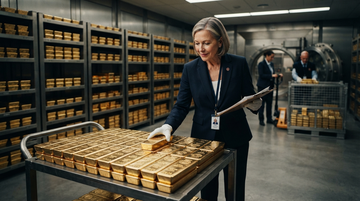
Central banks bought a record 288.9 tonnes in Q2—gold’s August rally is now an official-sector story, not a Fed-timing trade
World Gold Council data shows central banks and other official institutions added a record 288.9 tonnes in Q2 2026 (+62% year over year), alongside a 2026 survey where 45% of reserve managers still plan to add gold over the next 12 months. That shifts the rally’s durability math: the bid is decoupling gold from “Fed-cut hopes fade” narratives, improving the risk/reward for miners and bullion-linked vehicles.

JPMorgan’s quiet Polymarket debanking shows the real chokepoint is the banking rail, not the CFTC
Reuters reported JPMorgan terminated its banking relationship with Polymarket in October, citing regulatory concerns—an event that reframes the prediction-market boom as a compliance-and-rail access story. At the same time, World Liberty’s move toward a national trust charter underscores a widening split: crypto platforms want “banking comfort,” while banks want controllable risk under federal oversight.
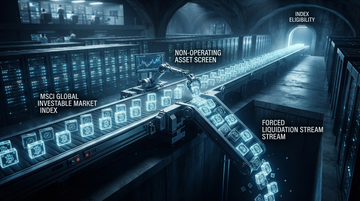
MSCI plants a “non-operating” eligibility trap that makes Strategy’s bitcoin treasury structure a forced-sale risk
MSCI has launched a consultation to screen “non-operating” companies out of its MSCI Global Investable Market Indexes, using operating-asset intensity and cash-flow style ratios. If rules are implemented for index changes effective at the close of Aug. 31, 2026, Strategy is exposed because its balance sheet is dominated by investment assets rather than operating assets, and the market impact can cascade through passive flows and forced crypto rebalancing by similarly structured issuers.
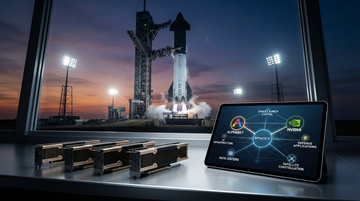
Nvidia’s $21B SpaceX stake turns mega-cap AI cash into launch/defense equity—and concentrates risk where demand can’t be rerouted fast
Nvidia NVDA disclosed a roughly $21B SpaceX position in its latest 13F-HR (as of June 30, 2026), making SpaceX one of its biggest strategic equity exposures. The same ownership map also shows Alphabet’s decade-old bet at about $94B and Tiger Global’s entry, underscoring a new, self-reinforcing loop: AI infrastructure economics can increasingly decide space launch capital, and that concentration can magnify governance and cash-use second-order risks.
What to expect
Evidence-first notes with a visible point of view.
This section collects sharp takes on earnings, shareholder meetings, and market structure. Each new piece should make the thesis, the facts, and the implications obvious within the first few screens.
Expect direct analysis, not generic commentary.
Expect the data to be explicit and the argument to be easy to follow.
Plutux is not an investment adviser. Market data and AI-generated analysis are for information and education only, not investment advice. Disclaimer