Capital Markets
Deals, listings and the cost of money
IPOs, mergers, buybacks and credit issuance — what the terms of a deal say about what this market is willing to fund right now.
2026-08-15
%22%2F%3E%0A%20%20%3Ccircle%20cx%3D%22220%22%20cy%3D%22150%22%20r%3D%22180%22%20fill%3D%22%2322d3ee%22%20fill-opacity%3D%220.12%22%2F%3E%0A%20%20%3Ccircle%20cx%3D%221010%22%20cy%3D%22130%22%20r%3D%22220%22%20fill%3D%22%2338bdf8%22%20fill-opacity%3D%220.08%22%2F%3E%0A%20%20%3Ccircle%20cx%3D%22920%22%20cy%3D%22520%22%20r%3D%22170%22%20fill%3D%22%2322d3ee%22%20fill-opacity%3D%220.06%22%2F%3E%0A%20%20%3Cpath%20d%3D%22M140%20430h920%22%20stroke%3D%22url(%23line)%22%20stroke-width%3D%2212%22%20stroke-linecap%3D%22round%22%2F%3E%0A%20%20%3Cpath%20d%3D%22M220%20360c120-150%20260-220%20380-220s260%2070%20380%20220%22%20fill%3D%22none%22%20stroke%3D%22%2367e8f9%22%20stroke-opacity%3D%220.5%22%20stroke-width%3D%2216%22%20stroke-linecap%3D%22round%22%20stroke-linejoin%3D%22round%22%2F%3E%0A%20%20%3Cpath%20d%3D%22M300%20398h600%22%20stroke%3D%22%2394a3b8%22%20stroke-opacity%3D%220.24%22%20stroke-width%3D%228%22%20stroke-linecap%3D%22round%22%2F%3E%0A%20%20%3Ctext%20x%3D%22220%22%20y%3D%22510%22%20fill%3D%22%23e2e8f0%22%20fill-opacity%3D%220.7%22%20font-family%3D%22Arial%2C%20Helvetica%2C%20sans-serif%22%20font-size%3D%2238%22%20letter-spacing%3D%228%22%3EINSIGHTS%3C%2Ftext%3E%0A%3C%2Fsvg%3E)
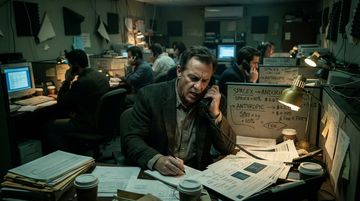
SEC’s $74M “boiler room” case puts retail cash economics behind private-share liquidity—and shows why hidden fees are now the center of the fraud story
The SEC charged Andrew Spaventa and three related entities with defrauding more than 800 mostly retail investors—including many retirees—through unregistered pre-IPO private fund offerings tied to companies including SpaceX, Anduril, and Anthropic. In the SEC’s allegations, investors were paid “hidden fees” created by large markups—turning private-company liquidity into a fee-heavy distribution channel the SEC says reached Main Street on cold calls.

World Liberty’s bank charter turns crypto lending into a deposit bet—and the conflict-of-interest “discount” is the real valuation driver
The U.S. Office of the Comptroller of the Currency (OCC) granted World Liberty Trust Company a conditional preliminary approval for a national trust bank charter that would let the group issue and redeem its USD1 stablecoin and custody/convert related assets. The approval also bakes in governance passivity commitments meant to curb investor control, while critics argue the structure still creates a political-economy “ethics discount” that could weigh on adoption and partnerships—especially where stablecoin issuance and custody sit at the center of the lending supply chain.
2026-08-14

Bending Spoons's FY26 revenue miss turns the leveraged app roll-up into a rates test
After Bending Spoons guided FY2026 revenue to $2.78B–$2.82B, the market treated the first public guidance stress as leverage’s real cost. With interest expense already large versus operating income, the model’s survival depends on keeping organic growth near trend while debt service doesn’t expand faster than operating profit.

Broadcom gets repriced because AI capex financing is now leaking into its own backlog math
Investors punished Broadcom because the market started treating customer financing terms as a backlog-quality problem—not just a data-center operator balance-sheet issue. The result is a sharper linkage between chip delivery cadence and how easily customers can fund the next wave of AI hardware, with meaningful implications for 1–3 year revenue timing and near-term order visibility.

Goldman’s “quality” call is breaking as AI-capex credit stress peaks: BBBs (not AAs) are where supply pain is landing
Goldman’s Aug 13–14 positioning argues that investors leaning hardest into the “highest-rated” corporate debt bucket may be underestimating spread and duration sensitivity while AI-driven debt supply concentrates issuance pressure. At the same time, Goldman’s AI-credit work shows debt-financed hyperscaler capex is set to rise and peak in 2027—tightening the link between rating quality, refinancing timing, and who actually gets paid in a higher-for-longer regime.

Nu Holdings’ ~10% earnings-day surge makes the “digital bank” multiple argument tradable again
Nu Holdings’ latest quarter shows profit scaling while balance-sheet risk looks contained (net cash position and a jump in earnings). The investor read-through is less about one-off Brazil rates/FX and more about whether US-listed digital banks can sustain a profitable growth curve—turning Nu into a re-rating benchmark for the whole consumer-finance stack.

OpenAI’s $40B run-rate flips the IPO debate: the market now prices a $750B compute promise against one hard revenue line
OpenAI’s revenue run-rate has reportedly crossed $40B while its compute/AI-infrastructure spending plan is being discussed around $750B through 2030, compressing the time horizon investors must underwrite. For listed supply-chain leaders like Microsoft, NVIDIA, and Oracle, the implication is straightforward: near-term revenue growth is no longer enough—cash economics and capex-throughput become the gating metrics.
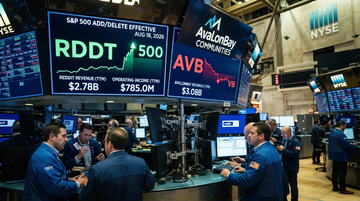
Reddit joining the S&P 500 looks like a forced-buy story—until the real tax shows up when the crowding reverses
S&P Dow Jones Indices said Reddit will replace AvalonBay in the S&P 500 effective Aug. 18, 2026, a change that typically pulls index-tracking capital into RDDT and pushes it out of AVB. The headline pop is easier to explain than the after—once forced flows fade, the stock’s move increasingly reflects what passive owners do when liquidity and ownership concentration are no longer the driver.

SEC’s “pay-to-play” easing would change who wins public pension mandates—and how alternative managers fund growth
The SEC’s proposal to loosen the Investment Advisers Act “pay-to-play” firewall (Rule 206(4)-5) would reduce a key fundraising cost for alternative managers chasing state and local money, but it also reopens conflict and governance risk that the 2010 rule was designed to price out. For allocators and investors, the core question is whether the SEC’s narrower restrictions still deter politically motivated adviser selection without shifting enforcement and compliance burden elsewhere.
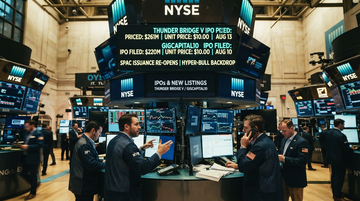
SPACs are pricing again: Thunder Bridge V raises $261M and GigCapital10 filed $220M—classic signs of a “frothy window” investors may be underpricing
Two new blank-check offerings hitting the tape in close succession—Thunder Bridge Capital Partners V, Ltd. pricing a $261M IPO on Aug. 13 and GigCapital10—re-opening a primary-IPO supply line that has been mostly quiet. The amounts are not just deal flow; they change the near-term math for underwriting desks and, more importantly, compress time-to-deal for targets—at exactly the kind of “hyper-bull” backdrop Bank of America has flagged as frothy.
2026-08-13

Ackman’s Netflix re-entry is a value signal: the streaming winner now looks priced like a cash utility
Bill Ackman’s Pershing Square has disclosed a fresh Netflix stake alongside new positions in Visa and Mastercard, reframing the mega-cap growth crowd back toward cash-flow durability. With Netflix running at an annualized revenue base near $48.4B and free cash flow of ~$11.0B on the latest trailing window, this looks like a bet that “streaming wars” have ended and the market is over-discounting the remaining cash engine.

Dish’s bankruptcy is pushing $40,000 antenna-removal bills onto churches—while a $2.4B FCC fund tries to ring-fence who pays
Dish’s Chapter 11 unwind is creating a highly visible “stranded cost” problem: property owners that hosted Dish’s wireless antennas are facing removal bills even as Dish seeks to abandon network assets. The mechanism is an FCC-ordered $2.4B decommissioning trust tied to the AT&T spectrum transaction—intended to reimburse qualified 5G decommissioning claims, but not to fully prevent all local fallout.

Vantage’s ~$100B exit talk turns AI data centers into a public valuation test for Equinix and Digital Realty
Vantage Data Centers is exploring an IPO around a ~$100B valuation and has also discussed a sale, with discussions still informal. Either outcome would pressure public “AI-ready” market pricing because it would anchor a new reference value for wholesale hyperscale land plus contracted capacity—re-rating Equinix and Digital Realty through capital-cost and replacement-value math, not just sentiment.

Peltz’s $4B Wendy’s bid threat is back—what the franchise-and-real-estate model says about whether an LBO can actually win
Trian Fund Management, led by Nelson Peltz, has revisited the idea of a Wendy’s transaction after filing to explore “potential transactions” aimed at enhancing value. For investors, the key is whether Wendy’s real-estate franchise economics can support the leverage required for a value-menu-driven take-private, especially as public-market multiples reset.

Workday’s $10B-class cash machine meets a PE-sized question: can credit finance the biggest SaaS take-private ever?
Reports that Silver Lake is in talks to acquire Workday have pushed the market to price what a mega software LBO would require: a takeover large enough to test whether PE-credit still has the appetite for durable, recurring-revenue cash flows. The financial fact pattern in Workday—including TTM revenue of about $9.85B and TTM free cash flow around $2.97B—supports the math, but the deal’s feasibility will hinge on leverage terms, covenant quality, and how private buyers discount growth after taking software public-market risk out of the equation.
2026-08-12

Blacksmith’s near-10x re-rating doesn’t prove “AI tests AI” is a moat—yet it does prove CI cost and test latency became investable infrastructure
Blacksmith’s valuation jump (reported alongside its $10M Series A) is best read as proof that the software supply chain is being re-priced for an AI era: build, test, and feedback loops matter more than ever. The key investor question isn’t whether AI-generated code needs testing—it’s whether Blacksmith’s “CI for faster, cheaper, observable runs” can compound into a durable workflow lock when AI tools push code frequency up and failure modes change.

Burry’s 13F Signals a “Consensus AI Basket” Risk — He Put Size Behind NVIDIA, Palantir, and (Separately) Oracle
In Scion Asset Management Michael Burry’s latest mandatory 13F (period ended Sep. 30, 2025) reported put options worth $912.1M against Palantir and $186.6M against NVIDIA. But the same filing did not list Oracle, meaning “ORCL short-basket” claims can’t be treated as coming from that specific 13F document—Oracle exposure appears to be from a different disclosure window.

FlightAware’s instant dismissal signals Kalshi can’t be squeezed by “data leverage” alone
FlightAware filed a suit against Kalshi over flight-cancellation prediction markets using its data and branding, then voluntarily dismissed the entire case hours later without prejudice. The filing shows FlightAware’s strongest theory was contract + trademark control, yet the quick withdrawal suggests Kalshi likely forced a faster path to remove/contain the specific claims—shifting the real pressure point from “sourcing data” to “litigation mechanics and remedies timing.”
Goldman Sachs pays up for Neos — and signals ETF leadership is shifting from scale to structured active income
Goldman Sachs agreed to buy Neos Investments for up to $2.25 billion, aiming to lift its active ETF footprint materially ahead of a likely fee-compression era. The price matters because Neos’ options-based “income as the outcome” model is easier to defend when markets demand buffers, defined outcomes, and recurring yield—exactly the style passive scale struggles to replicate.

Hazeltree’s “Doubled Short” AI Reading Can’t Be Verified—So the Crowding Claim Stays Unpublished
I could not locate a primary Hazeltree July report (or a load-bearing excerpt with the exact “doubled their short AI bets in July” figure) that is accessible from open sources in this run. Without that verified July metric and the specific AI/semis basket it references, I can’t responsibly quantify the two-sided “squeeze risk” or name the affected listed tickers and supply-chain links with evidence.
What to expect
Evidence-first notes with a visible point of view.
This section collects sharp takes on earnings, shareholder meetings, and market structure. Each new piece should make the thesis, the facts, and the implications obvious within the first few screens.
Expect direct analysis, not generic commentary.
Expect the data to be explicit and the argument to be easy to follow.
Plutux is not an investment adviser. Market data and AI-generated analysis are for information and education only, not investment advice. Disclaimer