Capital Markets
Deals, listings and the cost of money
IPOs, mergers, buybacks and credit issuance — what the terms of a deal say about what this market is willing to fund right now.
2026-08-22
%22%2F%3E%0A%20%20%3Ccircle%20cx%3D%22220%22%20cy%3D%22150%22%20r%3D%22180%22%20fill%3D%22%2322d3ee%22%20fill-opacity%3D%220.12%22%2F%3E%0A%20%20%3Ccircle%20cx%3D%221010%22%20cy%3D%22130%22%20r%3D%22220%22%20fill%3D%22%2338bdf8%22%20fill-opacity%3D%220.08%22%2F%3E%0A%20%20%3Ccircle%20cx%3D%22920%22%20cy%3D%22520%22%20r%3D%22170%22%20fill%3D%22%2322d3ee%22%20fill-opacity%3D%220.06%22%2F%3E%0A%20%20%3Cpath%20d%3D%22M140%20430h920%22%20stroke%3D%22url(%23line)%22%20stroke-width%3D%2212%22%20stroke-linecap%3D%22round%22%2F%3E%0A%20%20%3Cpath%20d%3D%22M220%20360c120-150%20260-220%20380-220s260%2070%20380%20220%22%20fill%3D%22none%22%20stroke%3D%22%2367e8f9%22%20stroke-opacity%3D%220.5%22%20stroke-width%3D%2216%22%20stroke-linecap%3D%22round%22%20stroke-linejoin%3D%22round%22%2F%3E%0A%20%20%3Cpath%20d%3D%22M300%20398h600%22%20stroke%3D%22%2394a3b8%22%20stroke-opacity%3D%220.24%22%20stroke-width%3D%228%22%20stroke-linecap%3D%22round%22%2F%3E%0A%20%20%3Ctext%20x%3D%22220%22%20y%3D%22510%22%20fill%3D%22%23e2e8f0%22%20fill-opacity%3D%220.7%22%20font-family%3D%22Arial%2C%20Helvetica%2C%20sans-serif%22%20font-size%3D%2238%22%20letter-spacing%3D%228%22%3EINSIGHTS%3C%2Ftext%3E%0A%3C%2Fsvg%3E)

2026-08-21

AI debt “fatigue” is becoming the demand-side brake on the capex supercycle
A wave of AI-linked corporate borrowing is colliding with buyer constraints in US credit, with larger investors demanding materially better terms to absorb record issuance. For hyperscalers, the near-term risk is not just higher coupons, but a narrower pool of repeat buyers—turning refinancing timing and leverage capacity into the next binding constraint on AI infrastructure funding.
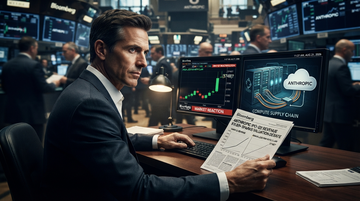
Anthropic’s $11.5B Q2 revenue puts the $74B ARR narrative on trial—so what will the IPO actually price: growth or “run-rate”?
Anthropic is now showing a hard quarterly revenue line of over $11.5B, but the valuation debate hinges on whether the much higher “annualized run-rate” claim is durable and how much is true recurring revenue versus timing effects. The answer matters for buyers of Anthropic shares and for the entire AI supply chain, because run-rate-heavy stories tend to monetize compute, not just software.

Citadel’s post-deal unwind challenges the “AI-correction” recovery story for Situational Awareness
After Ken Griffin’s Citadel bought most of [Situational Awareness]’s public equity book in late July 2026, later reporting indicates Citadel has now exited most of the risk it took on—turning the original “buyer of last resort” into a “seller of last resort.” The bigger investor implication: even when the AI drawdown is funding-stable via a rescue buyer, secondary pricing and time-to-liquidate can still reset valuations for the next leg of the AI-correction recovery narrative.
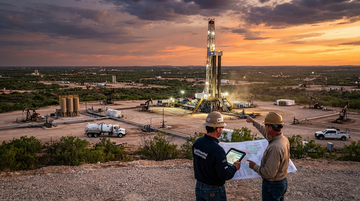
Continental’s FireBird II buy signals Permian “good inventory” is still scarce—while public-deal liquidity tightens into 2027
Continental Resources said it is acquiring FireBird Energy II to add ~54,000 net Permian (Midland) acres and ~32,000 boe/d (69% oil), with ~147,000 net resource acres and 95% operator activity—yet the purchase price was not disclosed. The lack of disclosed price, combined with the size and operating quality of the acquired book, points to a market where top-tier locations still clear at a premium even as the public acquisition window narrows. For listed Permian acreage owners and service names, the immediate takeaway is that scarcity-driven bidding can keep well and completion costs bid higher into the period when supply growth could otherwise surge in 2027.

DOJ’s a16z probe targets a venture-capital operating system: board seats on competing startups
Reporting from Axios, TechCrunch, and Inc says the DOJ is investigating Andreessen Horowitz for alleged “interlocking directorates” tied to partners sitting on the boards of rival companies, including Databricks and Fivetran. If the theory survives, venture governance—not just product competition—could become a regulated variable that rewrites how founders price “top-tier” board access.
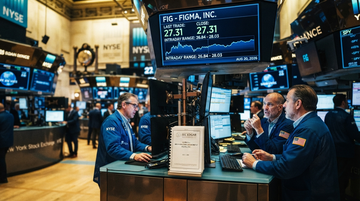
Figma’s public debut isn’t just an IPO—it’s a live audit of whether AI can turn design software into a margin engine
Figma FIG begins public trading on Aug. 20 with investors focused on whether its AI features can monetize fast enough to offset rising compute and product investment. The near-term test is profitability trajectory: recent quarterly results show big swings around operating leverage, so the IPO narrative will rise or fall on AI-driven pricing power rather than user growth alone.

JPMorgan’s David Fishman hire signals AI M&A is moving from talk to execution
JPMorgan is bringing in Bank of America’s David Fishman to head technology M&A in North America, with JPMorgan also elevating Vineet Seth into a broader investment-banking leadership role. For investors, the signal isn’t just talent—it’s capacity: the deal desk is being organized to win AI-related bolt-ons and infrastructure roll-ups as the IPO window reopens.

OpenAI’s enterprise bounce is squeezing Anthropic’s IPO math: if July share keeps drifting, $190–$200B 2028 revenue assumptions get harder
Fresh Ramp-based market-share reporting shows OpenAI clawing back enterprise business users from Anthropic in July 2026—without the lead fully flipping back. That matters because Reuters reports the street’s Anthropic IPO valuation is being anchored to a $190–$200B 2028 revenue forecast, making persistence of any share erosion (or re-acceleration) a pricing risk for Anthropic’s IPO.

YMTC’s $4.9B Shanghai IPO turns into a NAND capacity lever — and it puts SanDisk’s “floor pricing” thesis on trial
YMTC’s parent is progressing toward a Shanghai STAR Market IPO, targeting roughly $4.9B, to fund a NAND buildout that—by company-reported planning—could reach ~300,000 wafers/month across three lines by 2026. That matters for the pricing-battle thesis because SanDisk’s reported backlog strategy is built around sustaining floor-like economics through the cycle; any step-change in supply intensity raises the probability that those floors get tested in negotiations, even if demand remains strong.
2026-08-20

Citi, HSBC and Standard Chartered plug Ant International’s FX-AI into liquidity risk—turning “forecasting” into market plumbing
Three global banks agreed to deploy Ant International’s upgraded FalconTST 2.0 model to manage foreign-exchange liquidity risk, signaling AI is moving from FX desk “assist” tools into the treasury systems that decide how much risk banks can safely carry. The investment implication is less about AI hype and more about who controls the forecasting layer—because that layer directly influences hedging and liquidity cost, and it raises real questions about model governance, data provenance, and regulatory comfort in Western bank workflows.
Citi’s dollar call is really an equity-flow warning: buyback policy can switch off USD demand
Citi’s Aug. 20 structural downgrade to the dollar ties the next leg of FX risk to a policy-controlled US buyback channel rather than a pure Fed timing story. If Washington tightens or constrains corporate buybacks, the biggest immediate transmission line runs through US equities—changing how global investors fund USD exposure and hedging demand.
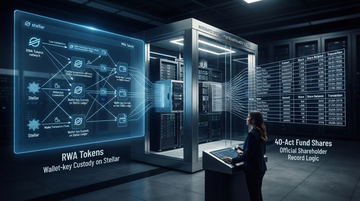
Franklin Templeton builds a custody/transfer bridge that turns RWA tokens into 40-Act fund shares
Franklin Templeton’s Aug. 12, 2026 SEC no-action path for its [Franklin OnChain U.S. Government Money Fund] hinges less on tokenization optics and more on custody-grade transfer-agent recordkeeping. The practical result: tokenized ownership can be routed through the same “official shareholder record” logic used in traditional mutual-fund servicing—shifting value capture toward transfer agents, custody controls, and fund administrators that run the new on-chain workflow.

Moderna's 160% surge on intismeran has priced in a near-miss level of oncology upside—while the cash-burn and mFLUSIVA reality can still decide whether this rerating sticks
After Moderna moved sharply higher on Aug. 19–20 following positive late-stage melanoma vaccine data for intismeran, investors repriced the company as an oncology platform in hours. But the equity math implied by a “double” rerating conflicts with the cash-burn profile shown in recent financials—and it may be underweighting the more immediate, commercial (flu) ramp from mFLUSIVA and the continuing operating cash needs.
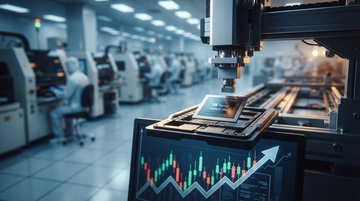
SK Hynix's $29B buyback is a cycle bet: management is paying in the stock selloff to pull the bottom forward
SK Hynix approved a KRW 40 trillion (about $28.6B) share repurchase and cancellation on Aug. 19, with buying starting Aug. 20 and running about three months. In a memory market still trading through a selloff, that timing uses buybacks as a “bottom-signal,” while the parallel strength of its U.S. ADR creates an unusual capital-structure setup for investors and forces peers to answer the same payout question.
2026-08-19

Berkshire Hathaway is selling Nucor even as tariffs should be “most” protective — which points to a demand problem the market isn’t pricing
Berkshire Hathaway’s successor, Greg Abel, has trimmed Nucor by more than half in the latest disclosed portfolio changes, turning a steel trade that looked tariff-protected into something Abel no longer wants as a bet. The deeper read isn’t “tariffs stop working”; it’s that steel upside is being driven by order and end-demand durability, and when demand weakens, even a tariff bloc can fail to prevent earnings compression. For investors, the move shifts focus from the tariff math to the domestic steel order book, working-capital intensity, and how fast producers can re-price supply.

Bitcoin’s “whale flip” vs. ETF outflows: price usually follows exchange liquidity, not who’s net-buying on-chain
Reports that large Bitcoin holders added roughly $2.9B in 60 days while spot Bitcoin ETFs turned negative set up a clean tug-of-war between on-chain supply absorption and traditional fund-flow demand. The reconciliation is that ETF outflows matter immediately through exchange/liquidity channels, while whale accumulation tends to show up as a slower, supply-constrained stabilizer. For investors, the actionable test is whether exchange reserves keep falling after ETF redemptions—not whether whale balances rise in isolation.

Fed minutes lean hawkish while the Treasury scales buybacks—September becomes a tug-of-war between inflation control and fiscal support
The latest FOMC minutes underscore a conditional path to rate firming if inflation stays elevated, with policymakers explicitly linking “some policy firming” to inflation scenarios. At the same time, the Treasury announced a doubled scale for certain debt buyback operations, supporting market liquidity and pushing yields lower—so September is set to be decided by which transmission mechanism dominates first.

JBS tried to buy out Pilgrim’s Pride at a $26.50 cash price—then withdrew after the special committee rejected the valuation
JBS’s unsolicited squeeze-out attempt for the remaining minority holders of Pilgrim’s Pride centered on a $26.50-per-share cash offer (later raised to $28.50). The deal didn’t close because Pilgrim’s Pride’s special committee judged the price as not appropriately valuing non-JBS shareholders’ stake, and JBS ultimately withdrew the proposal in February 2022—turning the episode into a live test of poultry-margin confidence versus minority-premium math.

Lyntris’ downsized IPO isn’t a pricing story—it’s a backlog-to-execution test defense investors are failing faster
Lyntris LYNX priced its U.S. IPO at $17.50 and raised about $297.5 million, after targeting a much larger deal at $19–$22. The move spotlights a tightening “proof over narrative” filter in defense capital formation: investors are discounting situations where big backlog and upbeat contracts don’t translate cleanly into realized revenue and margin.
What to expect
Evidence-first notes with a visible point of view.
This section collects sharp takes on earnings, shareholder meetings, and market structure. Each new piece should make the thesis, the facts, and the implications obvious within the first few screens.
Expect direct analysis, not generic commentary.
Expect the data to be explicit and the argument to be easy to follow.
Plutux is not an investment adviser. Market data and AI-generated analysis are for information and education only, not investment advice. Disclaimer