Capital Markets
Deals, listings and the cost of money
IPOs, mergers, buybacks and credit issuance — what the terms of a deal say about what this market is willing to fund right now.
2026-08-12
%22%2F%3E%0A%20%20%3Ccircle%20cx%3D%22220%22%20cy%3D%22150%22%20r%3D%22180%22%20fill%3D%22%2322d3ee%22%20fill-opacity%3D%220.12%22%2F%3E%0A%20%20%3Ccircle%20cx%3D%221010%22%20cy%3D%22130%22%20r%3D%22220%22%20fill%3D%22%2338bdf8%22%20fill-opacity%3D%220.08%22%2F%3E%0A%20%20%3Ccircle%20cx%3D%22920%22%20cy%3D%22520%22%20r%3D%22170%22%20fill%3D%22%2322d3ee%22%20fill-opacity%3D%220.06%22%2F%3E%0A%20%20%3Cpath%20d%3D%22M140%20430h920%22%20stroke%3D%22url(%23line)%22%20stroke-width%3D%2212%22%20stroke-linecap%3D%22round%22%2F%3E%0A%20%20%3Cpath%20d%3D%22M220%20360c120-150%20260-220%20380-220s260%2070%20380%20220%22%20fill%3D%22none%22%20stroke%3D%22%2367e8f9%22%20stroke-opacity%3D%220.5%22%20stroke-width%3D%2216%22%20stroke-linecap%3D%22round%22%20stroke-linejoin%3D%22round%22%2F%3E%0A%20%20%3Cpath%20d%3D%22M300%20398h600%22%20stroke%3D%22%2394a3b8%22%20stroke-opacity%3D%220.24%22%20stroke-width%3D%228%22%20stroke-linecap%3D%22round%22%2F%3E%0A%20%20%3Ctext%20x%3D%22220%22%20y%3D%22510%22%20fill%3D%22%23e2e8f0%22%20fill-opacity%3D%220.7%22%20font-family%3D%22Arial%2C%20Helvetica%2C%20sans-serif%22%20font-size%3D%2238%22%20letter-spacing%3D%228%22%3EINSIGHTS%3C%2Ftext%3E%0A%3C%2Fsvg%3E)

J.P. Morgan Just Raised the S&P 500 to 8,000—But Its 20x Multiple Hides a $400 EPS Requirement
On Aug 10, 2026, J.P. Morgan lifted its year-end 2026 S&P 500 target to 8,000 from 7,800, explicitly linking the upgrade to AI-driven demand visibility and elevated index profits. However, if the market really earns a ~20x earnings multiple, the implied earnings power needed is closer to ~$400 EPS than the ~$365 EPS embedded in the call—tightening the margin for error and shifting where investors should watch first.

Latigo Biotherapeutics prices a $345.6M IPO for Nav1.8—turning the post-opioid pain trade into a “Phase 3 or bust” bet
Latigo Biotherapeutics priced an upsized IPO at $18 (top of range) to raise $345.6M, valuing it at a fully diluted ~$1.3B at launch. The story investors are paying for is simple: Latigo Biotherapeutics’s Nav1.8 inhibitor (LTG-001) is positioned as opioid-sparing fast relief, but the cash is being used to cross into pivotal Phase 3 while the company still lacks commercialization revenue.

Lovable forces a public-market rethink: who owns the “AI app tier” at a $13.3B private valuation?
Lovable’s announced $400M Series C at a $13.3B valuation—along with scale claims like 60M projects and 900M monthly app visits—puts the “AI app tier” firmly into public-markets debate. The pricing pressure is less about whether AI can build apps, and more about who captures distribution, workflow lock-in, and monetization as app creation shifts from developer tools to end-user deployment.

MSGE turns live scarcity into a bigger bet: Q2 shows concert mix can expand even after normalization
In fiscal Q2 2026, MSGE reported higher entertainment revenues and a profit improvement while reporting strong venue performance metrics tied to concerts. The market read-through is that when live inventory is tight, operators with high-status venues can capture more of the demand—while artists mainly absorb demand volatility via ticketing and show counts.

NYC’s Predatory-Marketing Probe Turns Prediction-Market Growth into a “Regulatory Gate” Business — and Favors Platforms with the Scale to Comply
New York City Council Speaker Julie Menin has launched an inquiry into Polymarket’s alleged predatory marketing practices and is asking the operator (and several peers named in the letter) to respond within 14 business days. The practical risk for listed crypto and event-trading intermediaries is that city-by-city marketing and age-gating rules can fragment “event-trading” demand, raising compliance costs faster than revenue—until a handful of incumbents can absorb the hit.

Thrive Holdings’ $2B OpenAI-backed raise turns “enterprise AI” into a priced roll-up game—who still gets left behind
Thrive Holdings’ plan to buy and rewire accounting and IT services firms with OpenAI-backed teams effectively creates a new class of “AI distribution capacity” priced like software services. That shifts the enterprise AI battlefield from pilots and consulting logos to roll-up economics—pressuring outsourcers and analytics platforms that can’t attach a clear, repeatable AI margin to existing workflows.
2026-08-11

Trump Media’s $238M Q2 loss isn’t a “crypto strategy” story—it’s a cash-runway and dilution math story
DJT posted a $238.1M Q2 net loss on $1.7M revenue, with crypto mark-to-market losses doing almost all the damage. While management says liquidity should fund operations for the next 12 months, the $238M quarterly loss rate forces investors to model how many similar quarters can pass before dilution (and any reverse split) becomes the only remaining financing option.

Flowers Foods’ $350M Tastykake sale is a test of whether DSD “route economics” can outlive brand premium pricing
If Flowers Foods’ rumored ~$350M divestiture of Tastykake is real, it’s less about abandoning a legacy brand and more about fixing the plant + route utilization math that makes DSD margins durable. The investor question becomes whether Flowers can re-rate without Tastykake’s regional/DSD footprint—using Flowers Foods’s flexibility and cost structure as the yardstick.

Section 230 Just Stopped Being a Shield: 9th Circuit Lets “Thousands” of Social‑Media Addiction Suits Proceed Against Meta, Alphabet and Snap
A 9th Circuit ruling removes a key procedural barrier—holding that Section 230 is a defense to liability, not a basis to shut the case down at the outset—so multistate addiction litigation can move toward bellwethers and force-shaping settlements. The earlier, court-backed numbers (Meta $6M federal/US jury verdict context and New Mexico’s $567M order) now sit behind a litigation pipeline measured in thousands, meaning legal reserves and “first-to-settle” leverage may reprice quickly.

NVIDIA's $500B Wall Street syndicate reframes AI capex ownership: bankers—not GPUs—become the gatekeeper
A reported Nvidia partnership with Apollo, BlackRock, Blackstone, Brookfield, Goldman Sachs, and KKR targets >$500B of third‑party financing for AI infrastructure, shifting the “capex stack” from Nvidia’s balance sheet to Wall Street underwriting. For investors, the key is not Nvidia’s chips—it’s how financeable-asset structure (and who prices risk) changes hyperscaler ROI, network/equipment throughput, and ultimately who captures the margin.

OpenAI’s $7B employee tender is the first real “liquidity-at-AI-scale” stress test—and it points to lower, not higher, private-market premiums
A reportedly completed ~$7B employee liquidity event at an ~$852B valuation gives the clearest measurable proof so far of how much cash private AI shareholders can actually convert without going public. The implied lesson for [Anthropic] and [xAI] comps is that the “private AI > public SaaS” premium only survives if the next tenders clear at scale—because employee sell windows are where valuation stories meet settlement risk.
![RBC [ry], BMO [bmo] cash out of Moneris for $1.44B—and the Canadian acquirer gap shifts bargaining power toward US-scale acquirers and processors insight cover](https://images-1379091077.cos.na-ashburn.myqcloud.com/insights/covers/20260811_rbc_bmo_moneris_francisco_partners_1_44b_sale_360px.png)
RBC [ry], BMO [bmo] cash out of Moneris for $1.44B—and the Canadian acquirer gap shifts bargaining power toward US-scale acquirers and processors
RBC [ry] and BMO [bmo] are selling Moneris to Francisco Partners in a $1.44B deal, taking a major Canadian merchant-acquiring platform out of a captive bank model. The practical risk isn’t just ownership—it’s how acquiring capacity, routing strategy, and merchant pricing negotiate with Visa [v] / Mastercard [ma] and global processors once the local acquirer playbook is run by US PE-backed operators.
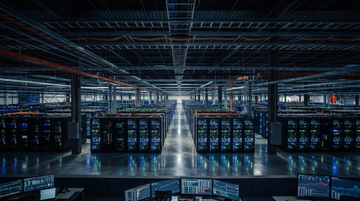
SEC exempted certain data-center securitizations—so the “ABS-like” buyer universe can expand overnight
A July 29, 2026 SEC staff determination says certain data-center securitizations are not “asset-backed securities” under Exchange Act §3(a)(79), removing a stack of ABS-specific disclosure and risk-retention requirements. For AI infrastructure financing, that effectively widens the capital pool for data-center project paper—shifting more build funding toward the balance sheets and financing channels most comfortable with operating-asset-backed structures like Equinix.

The SEC is finally policing the private secondary market — and its first big “compliance date” is attached to SpaceX and Klarna
A new SEC litigation release shows the agency is treating certain pre-IPO secondary trading intermediations as securities-fraud and investment-adviser compliance failures, citing misconduct tied to both Space Exploration Technologies Corp. (SpaceX) and Klarna Group plc. For investors and platforms that rely on “private-market access,” the key shift is that enforcement risk is moving upstream—from after-IPO disclosures to the mechanics of how pre-IPO shares are sourced, priced, and moved.
2026-08-10

Appaloosa’s Q2 pivot bets the AI capex chain is still mispriced—and its “walk-away-from-banks” move tightens the signal
Appaloosa Management (David Tepper) reportedly rotated its Q2 2026 13F exposure toward AI infrastructure—highlighting a sharp add to Micron and a larger position in Amazon, with Taiwan Semi also pushed into core territory—while exiting bank holdings entirely. The investable takeaway isn’t “AI good, banks bad”; it’s that memory + foundry + hyperscaler demand signals can re-rate margins and capex intensity even when financials look safer on paper.

China’s “domestic capital” AI doctrine makes US AI capex less dollar-dominant—look for memory suppliers to win while GPU capex gets quietly rerouted
Beijing’s $28T-style push to fund AI via onshore markets (with CXMT as the prototype) changes how capital is allocated: fewer “must-spend” dollar capex cycles for the US hyperscaler stack, more onshore production funding for bottleneck components. In parallel, DeepSeek’s reported fundraising pause highlights the other side of the doctrine—AI funding is now market-conditional, not subsidy-automatic.

CyrusOne’s 2027 IPO Signal Re-Ratings for “Independent” Data Centers—Because Lenders Are Making Financing a Valuation Variable
CyrusOne is preparing a potential 2027 IPO and has been in discussions with banks about roles, per Reuters. If that listing proceeds, it could force public-market re-pricing across the independent colocation/data-center stack just as tighter lender scrutiny makes leverage and refinancing risk a first-order valuation input.

Intel selling $15B of new stock turns the turnaround rally into dilution math
Intel’s proposed $15B common-stock offering (plus a $2.25B underwriter option) gives management capital for capex/working capital—but it also means investors are funding the foundry ramp with fresh share issuance at a high-price tape. The market implication is straightforward: even if foundry timelines improve, per-share economics get worse until operating leverage arrives.

SpaceX’s First Retail Sell Turns the Mega‑IPO Regime Signal: When Mom‑and‑Pop Becomes a Source, Liquidity Stops Being One‑Way
SpaceX saw its first net retail selling in the post‑IPO era when mom‑and‑pop traders sold a net $4.5M of shares on Aug. 7, 2026 (first negative reading since the June IPO). That matters because the next wave of tradable supply is already scheduled via lockup expiries—starting with a major tranche eligible around Aug. 20—so sentiment can now amplify supply rather than absorb it.
2026-08-09

What to expect
Evidence-first notes with a visible point of view.
This section collects sharp takes on earnings, shareholder meetings, and market structure. Each new piece should make the thesis, the facts, and the implications obvious within the first few screens.
Expect direct analysis, not generic commentary.
Expect the data to be explicit and the argument to be easy to follow.
Plutux is not an investment adviser. Market data and AI-generated analysis are for information and education only, not investment advice. Disclaimer