Capital Markets
Deals, listings and the cost of money
IPOs, mergers, buybacks and credit issuance — what the terms of a deal say about what this market is willing to fund right now.
2026-08-05
%22%2F%3E%0A%20%20%3Ccircle%20cx%3D%22220%22%20cy%3D%22150%22%20r%3D%22180%22%20fill%3D%22%2322d3ee%22%20fill-opacity%3D%220.12%22%2F%3E%0A%20%20%3Ccircle%20cx%3D%221010%22%20cy%3D%22130%22%20r%3D%22220%22%20fill%3D%22%2338bdf8%22%20fill-opacity%3D%220.08%22%2F%3E%0A%20%20%3Ccircle%20cx%3D%22920%22%20cy%3D%22520%22%20r%3D%22170%22%20fill%3D%22%2322d3ee%22%20fill-opacity%3D%220.06%22%2F%3E%0A%20%20%3Cpath%20d%3D%22M140%20430h920%22%20stroke%3D%22url(%23line)%22%20stroke-width%3D%2212%22%20stroke-linecap%3D%22round%22%2F%3E%0A%20%20%3Cpath%20d%3D%22M220%20360c120-150%20260-220%20380-220s260%2070%20380%20220%22%20fill%3D%22none%22%20stroke%3D%22%2367e8f9%22%20stroke-opacity%3D%220.5%22%20stroke-width%3D%2216%22%20stroke-linecap%3D%22round%22%20stroke-linejoin%3D%22round%22%2F%3E%0A%20%20%3Cpath%20d%3D%22M300%20398h600%22%20stroke%3D%22%2394a3b8%22%20stroke-opacity%3D%220.24%22%20stroke-width%3D%228%22%20stroke-linecap%3D%22round%22%2F%3E%0A%20%20%3Ctext%20x%3D%22220%22%20y%3D%22510%22%20fill%3D%22%23e2e8f0%22%20fill-opacity%3D%220.7%22%20font-family%3D%22Arial%2C%20Helvetica%2C%20sans-serif%22%20font-size%3D%2238%22%20letter-spacing%3D%228%22%3EINSIGHTS%3C%2Ftext%3E%0A%3C%2Fsvg%3E)
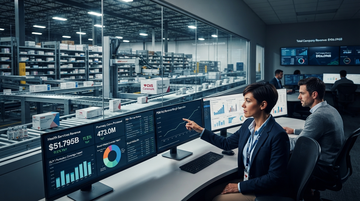
The Fed Just Turned Private Credit Into a Measured Market—And That’s a New Pricing Risk for BDCs
Dallas Fed and the New York Fed launched a pilot survey to collect direct evidence on private-credit availability, credit provision, and evolving lending standards, with expected aggregate findings in Q1 2027. For listed BDCs like Ares Capital and FS KKR Capital, the practical implication is that “shadow banking” spreads may get a new, policy-relevant variable as measurement reduces uncertainty about how private credit tightens under stress.
![Disney [DIS] sells its last A+E stake—Hearst’s $1.2B control grab becomes the clearest “linear-TV cash-flow” M&A read-through in ~2 years insight cover](https://images-1379091077.cos.na-ashburn.myqcloud.com/insights/covers/20260805_disney_hearst_ae_deal_2026_08_360px.png)
Disney [DIS] sells its last A+E stake—Hearst’s $1.2B control grab becomes the clearest “linear-TV cash-flow” M&A read-through in ~2 years
Disney is exiting its 50% ownership in A+E Global Media via an all-cash deal valued at about $1.2B that gives Hearst full control—an unusually clean signal for how buyers are pricing cable-network cash flows. The timing matters: Disney is already recognizing impairment pressure on the A+E investment, and the transaction simultaneously redeploys cash away from linear minority stakes into controllable, scale-friendly media assets.

Etsy's 12% layoff reads like a marketplace GMV reset—not a “trade-down” growth bet
Etsy’s restructuring trimmed about 11% of its marketplace workforce (≈225 people) and targeted a $25–$30M cost charge, signaling management is prioritizing cost discipline over re-accelerating engagement. For investors, the clean read is that Etsy’s problem looks more like platform efficiency under discretionary softness than broad consumer “value winner” rotation—and that distinction matters for how you underwrite post-AI seller-tooling spend.

Glencore’s ASX Secondary Listing Is a Capital-Flow Play, Not a New Share Sale—and That Changes How Copper M&A Will Get Financed
Glencore is exploring an Australian secondary listing to broaden its investor base in a market where mining capital is sticky and deal scrutiny is comparatively workable. The upside for copper investors is less about “fresh money” and more about lowering the cost of capital for future copper/power/industrial metal projects—while the risk is that governance and execution will still be the real constraint.

Shopify.’s “$0 guidance” isn’t the point—its Q2 margin math is
In Shopify‘s Q2 2026 report, revenue growth re-accelerated while operating income rose to $488M and operating cash flow hit $658M. Even without the brief’s claimed “$0 guidance” detail being confirmable from the opened primary exhibit chunk, the disclosed quarter results show the real question investors should ask: whether Shopify can convert GMV-linked merchant growth into sustained operating margin while AI and payment costs intensify.
2026-08-04

Apollo Is Proving Its Fee Engine Works—But Q2’26 Shows Realization Markets Still Decide “Principal Investing”
In Apollo’s Q2’26 results, Fee Related Earnings rose to $785M (+25% YoY) and Spread Related Earnings to $877M, reinforcing the recurring “fee engine.” But Realized performance fees were only $130M and total realizations were $(32.0)B, showing that equity/credit exit timing can still move the earnings mix—and potentially mask growth quality if asset sales are used to smooth quarter-to-quarter results.

Broadridge’s “Profit Gain” Isn’t the Event Cycle—It’s Recurring Market Plumbing Getting More Utilized
Broadridge’s latest earnings show profit rising faster than event-driven activity, with recurring revenue growth lifting both segment earnings and adjusted EPS. The key tell: governance/communications (ICS) keeps scaling, and new proxy/disclosure coverage for tokenized securities suggests the “shareholder communications toll booth” is widening rather than just riding transaction spikes.
![Chipotle [CMG] Isn’t the Suspected Outbreak—But the “Traffic Shock” Math Still Applies insight cover](https://images-1379091077.cos.na-ashburn.myqcloud.com/insights/covers/20260804_chipotle_food_safety_360px.png)
Chipotle [CMG] Isn’t the Suspected Outbreak—But the “Traffic Shock” Math Still Applies
A primary FDA update on a 2026 multistate foodborne illness outbreak implicated Taco Bell locations and iceberg lettuce from Taylor Farms de Mexico—not Chipotle. Even so, Chipotle [CMG] still faces the same investor problem: how fast a suspected outbreak narrative can pull transactions down when the model is already sensitive to traffic and menu disruption.

Electronic Arts‘ $55B PIF Take-Private Just Met a Bookings Miss—So the Console Live-Services Pipeline Is the Only Deal Math That Matters
EA’s Saudi-PIF-backed $55B go-private deal is set to close around Aug. 4, 2026, but the timing is now being judged against a Q1 bookings miss. The market’s “deal” framing is secondary: investors should focus on whether EA can sustain console/PC live-service monetization through its multi-year content cadence to make the cash ramp required by an LBO credible.

Prudential Financial's PGIM beat is real—but the deeper signal is whether the business is shifting toward less capital-heavy earnings
In Q1 2026, Prudential Financial reported PGIM adjusted operating income of $190m (+22% YoY), while its insurance-side profitability weakened in the same quarter. The implication for investors: if fee-based growth keeps pacing (and insurance capital intensity keeps easing), PRU may deserve a valuation framework closer to asset managers than traditional insurers.
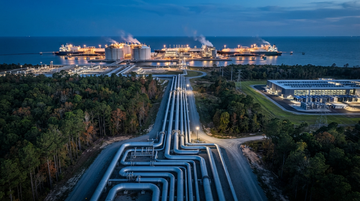
Williams is paying up for a gas-volume thesis the market hasn’t priced in yet
Williams’ up-to-$5.5B all-cash-and-stock deal for Momentum Midstream is an explicit bet that AI-driven power demand plus LNG feedgas will tighten US gas gathering capacity—starting in the Haynesville-to-Gulf corridor. The key investor question is whether this creates a step-change in long-haul contracted volumes (and therefore cash flow durability) rather than just adding regulated/fee-like mileage.
2026-08-03

Copper Foil Is the New US IPO “Test of Trust” for China’s AI Compute Supply Chain
Londian Wason [FOIL] is using a US listing to formalize access to Western capital for a bottleneck material: electrolytic copper foil that feeds both LiB and PCB-grade conductors used in high-performance computing. In its F-1, it frames AI/high-speed computing PCBs as requiring lower-roughness foil (RTF/HVLP) and highlights a scale where PCB-grade remains far smaller than LiB—so investors should watch whether the market can re-rate the PCBs growth story before certification and customer concentration risks show up.

KKR’s $19.2B infrastructure close marks the LP “go-ahead” for AI power + data-center deals (and it changes the deal math)
KKR’s KKR Global Infrastructure Investors V closing at $19.2B is the clearest public confirmation that large LP capital is willing to fund long-duration AI-adjacent infrastructure. The investable takeaway: this capital should compress the risk premium—and therefore improve entry valuations—for equity, credit, and lease/contract structures that sit between hyperscalers and the grid.

US regulators aren’t just policing fair lending—they’re forcing banks to prove where “community development” grant money actually goes
The OCC/FDIC proposal ties CRA-adjacent fair-lending scrutiny to a concrete “credit-allocation” proof: banks must demonstrate that most community development grant funds are spent in the relevant communities—and that grant recipients don’t run high overhead. The economic effect is simple: this rule shifts cost and compliance burden toward relationship banks that rely on mission spending, compressing the returns on “CRA-style” balance-sheet and programmatic allocations.
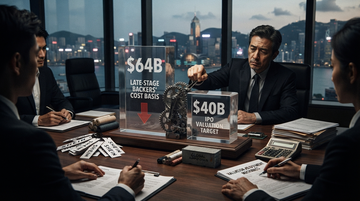
Shein’s $64B-to-$40B cost reset is a stealth IPO pricing experiment—where late backers (not founders) take most of the markdown
Shein is reportedly considering a mechanism that lowers late-stage investors’ “cost base” toward a ~$40B IPO valuation, after those investors bought at an up-to-$64B valuation. The design matters because it shifts the economic pain away from the IPO float and onto backers, creating a transferable template for how other late-stage private names may manage Q3 marks and public-market translation risk.

Tom Lee’s 2027 “best year” only works if mega-caps keep leading while SpaceX-or-Fed shocks don’t reprice risk—here’s the trade book
Tom Lee’s bullish 2027 setup is best understood as a conditions trade: mega-caps must keep capturing AI earnings momentum while the market digests massive tech IPO supply and avoids a Fed-led tail unwind. The concrete test is whether leadership stays narrow (NVDA/META/GOOGL/AXP/CVX) or spreads into the small-cap bridge—because if it doesn’t, “best year” becomes a liquidity/valuation story rather than an earnings story.

Trump turns supermajor capital return into a “gasoline-price” hostage—Exxon and Chevron can’t buyback their way out
On Aug 3, 2026, Trump told ExxonMobil and Chevron to “stop making too much money” and to “cut the retail price, the consumer price,” explicitly tying Big Oil’s high profits to gasoline affordability. The core investor risk is not that buybacks stop tomorrow; it’s that politicized price pressure forces Integrated majors to re-optimize cash allocation between returns, capex, and supply—raising second-order risk to Permian/Midcontinent-capex and refining feedstock plans.
2026-08-02

Ares Printed $36B in a Quarter. The Same Quarter It Capped Withdrawals on a $10.7B Fund.
Ares Management hauled a record $36B in Q2 2026 and stacked it on top of $30B in Q1 — yet the same firm capped redemptions at 5% on its Ares Strategic Income Fund because quarterly withdrawal demand hit 14.4% of NAV. The fundraising headline conceals a two-speed market: closed-end flagship and BDC vehicles absorb a record wave of institutional capital, while the open-end retail-facing fund faces the worst redemption stress in its history. For investors, the trade is not 'private credit is the risk' or 'private credit is the trade' — it is the wedge between them.

Chime's 10% Layoff Is a Fintech Earnings Story, Not an AI Story — and That's the Trade
Chime Financial cut 10% of staff on July 31, 2026 — the first post-IPO deposit-franchise fintech to break a cost story at scale — but the math is more about a $2.19B revenue company trying to widen a 1-month-old GAAP profit margin than about AI replacing engineers. With Visa's 7% cut landing three days earlier, Robinhood's 10% cut pre-positioned, and Affirm's CEO publicly rejecting the AI layoff narrative, the real question for investors is whether AI becomes an excuse for ordinary post-IPO discipline, or a structural opex reset that re-rates the entire consumer-fintech cohort.

Citadel Just Became the AI Correction's Buyer of Last Resort
Ken Griffin's Citadel quietly absorbed roughly $16B of public AI-stock exposure from Leopold Aschenbrenner's Situational Awareness after the 24-year-old's fund dropped 67% in July. The first true whale-buying event of the 2026 chip rout removes a leveraged marginal long, hands the bag to a $67B multi-strategy shop, and leaves private AI names like Anthropic as the only place the survivors still want to be.
What to expect
Evidence-first notes with a visible point of view.
This section collects sharp takes on earnings, shareholder meetings, and market structure. Each new piece should make the thesis, the facts, and the implications obvious within the first few screens.
Expect direct analysis, not generic commentary.
Expect the data to be explicit and the argument to be easy to follow.
Plutux is not an investment adviser. Market data and AI-generated analysis are for information and education only, not investment advice. Disclaimer