Aerospace, Defense & Space
Defense budgets and the contractors behind them
Procurement rounds, backlogs, launch cadence and rearmament programmes, read as multi-year revenue with the primes and suppliers named.
2026-08-29
%22%2F%3E%0A%20%20%3Ccircle%20cx%3D%22220%22%20cy%3D%22150%22%20r%3D%22180%22%20fill%3D%22%2322d3ee%22%20fill-opacity%3D%220.12%22%2F%3E%0A%20%20%3Ccircle%20cx%3D%221010%22%20cy%3D%22130%22%20r%3D%22220%22%20fill%3D%22%2338bdf8%22%20fill-opacity%3D%220.08%22%2F%3E%0A%20%20%3Ccircle%20cx%3D%22920%22%20cy%3D%22520%22%20r%3D%22170%22%20fill%3D%22%2322d3ee%22%20fill-opacity%3D%220.06%22%2F%3E%0A%20%20%3Cpath%20d%3D%22M140%20430h920%22%20stroke%3D%22url(%23line)%22%20stroke-width%3D%2212%22%20stroke-linecap%3D%22round%22%2F%3E%0A%20%20%3Cpath%20d%3D%22M220%20360c120-150%20260-220%20380-220s260%2070%20380%20220%22%20fill%3D%22none%22%20stroke%3D%22%2367e8f9%22%20stroke-opacity%3D%220.5%22%20stroke-width%3D%2216%22%20stroke-linecap%3D%22round%22%20stroke-linejoin%3D%22round%22%2F%3E%0A%20%20%3Cpath%20d%3D%22M300%20398h600%22%20stroke%3D%22%2394a3b8%22%20stroke-opacity%3D%220.24%22%20stroke-width%3D%228%22%20stroke-linecap%3D%22round%22%2F%3E%0A%20%20%3Ctext%20x%3D%22220%22%20y%3D%22510%22%20fill%3D%22%23e2e8f0%22%20fill-opacity%3D%220.7%22%20font-family%3D%22Arial%2C%20Helvetica%2C%20sans-serif%22%20font-size%3D%2238%22%20letter-spacing%3D%228%22%3EINSIGHTS%3C%2Ftext%3E%0A%3C%2Fsvg%3E)

2026-08-28

Anthropic’s courtroom win against the Pentagon’s “supply chain risk” blacklist redraws the rules for AI procurement—then the next fight moves to contracts
On Aug. 27, U.S. District Judge [Rita Lin] ordered the Pentagon’s “supply chain risk” designation against [Anthropic] blocked, finding the measure likely violated the First Amendment and due process. The practical outcome is bigger than one vendor: it constrains how DoD can de facto exclude frontier AI providers from defense work using national-security framing—shifting procurement leverage toward evidence-backed contracting decisions and away from broad, pretextual blacklists.

Pasqal’s Nasdaq debut turns “quantum second wave” into a cash-and-capex test
Pasqal’s Nasdaq go-public deal with Bleichroeder values the neutral-atom pure-play at a roughly $2.0B pre-money with ~$500M gross proceeds to the company, giving the market a concrete pricing benchmark for deep-tech hardware beyond the AI complex. Using IonQ’s reported cash burn and revenue scale as a yardstick, the question for investors is less “who wins quantum,” and more whether Pasqal can turn a cash runway into commercialization that outgrows burn before the public-market IPO window tightens further.
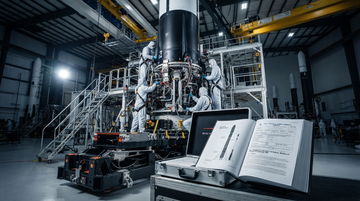
Rocket Lab's COO sold into the space rally—and the bigger tell is why it likely wasn’t a “no” on Neutron
Rocket Lab’s COO, Frank Klein, sold 45,692 shares for about $3.18M on Aug. 26, 2026, according to his Form 4. While insider selling can be a red flag at valuation extremes, Rocket Lab’s own filings show Neutron’s targeted first launch remains in Q4 2026—suggesting the trade fits a tax/plan-driven pattern more than a fundamental vote of no confidence.
2026-08-26

New Nasdaq ETF TGRZ lets US investors bet on China LLMs—without fixing the core decoupling math
When TGRZ begins trading on Nasdaq, it packages exposure to China’s large-language-model ecosystem into a single listed wrapper. The opportunity is real, but investors should model two frictions at once: export-control gating that can cap addressable demand, and single-country, single-theme concentration that makes valuation and liquidity risks hit the whole basket together.

HEICO proves aerospace aftermarket is where profits accumulate (Q3 FY2026 net income +33%)
In HEICO’s third quarter of fiscal 2026, record sales and net income rose 33% to a record $235.4M, outperforming the OEM build-rate narrative. The quarter reinforces why aerospace aftermarket—replacement parts supply and repair/overhaul—can monetize fleet utilization even when OEM delivery timelines slip.
2026-08-25

SpaceX’s $100B “Starbase, Louisiana” reframes AI from power-and-chips to launch-and-orbit capacity
SpaceX’s planned $100B Starbase, Louisiana spaceport targets propellant production, vehicle processing, and an expanded launch cadence—then it explicitly pulls forward the timeline for orbital AI data-center deployments to late 2027. The market implication is simple: when orbital compute moves from prototype flights to scaled constellations, launch slots become a gating input that can reprice the space/value chain.

President buys SpaceX shares post‑IPO—why that timing matters more than the stake size
Two weeks after SpaceX’s record IPO, President Donald Trump purchased shares disclosed in his financial filings, turning a liquidity event into an immediate governance optics test. For defense-contract investors, the key issue isn’t whether rules were followed—it’s whether the IPO’s tightly controlled voting structure plus mega-IPO float dynamics will intensify scrutiny over disclosure, Pentagon-facing contracting perceptions, and how markets discount “controlled-company” governance.

Ukraine’s drone campaign targets Ozon’s logistics hubs—turning Russia’s consumer e-commerce into a sanctions-adjacent battlefield
Ukraine broadened its strike campaign to four Ozon logistics hubs, forcing temporary operational halts and hitting the company’s near-term execution risk. For investors with Russian consumer exposure, the signal is bigger than one retailer: disrupting last-mile logistics and fulfillment capacity can turn “consumer resilience” into an economic-pressure channel—especially for e-commerce platforms that concentrate warehousing and inventory flow.
2026-08-24

2026-08-23

2026-08-22

2026-08-21

Citadel’s post-deal unwind challenges the “AI-correction” recovery story for Situational Awareness
After Ken Griffin’s Citadel bought most of [Situational Awareness]’s public equity book in late July 2026, later reporting indicates Citadel has now exited most of the risk it took on—turning the original “buyer of last resort” into a “seller of last resort.” The bigger investor implication: even when the AI drawdown is funding-stable via a rescue buyer, secondary pricing and time-to-liquidate can still reset valuations for the next leg of the AI-correction recovery narrative.
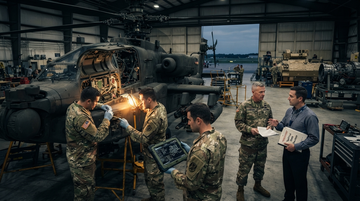
Inside the Pentagon’s “Right to Repair” fight: the policy push targets the defense primes’ sustainment IP profit pool
The Pentagon is pushing contracts to grant the military access to “necessary tools, software, and technical data” so it can repair and sustain weapons without being blocked by intellectual-property limits. Industry pushback is effectively a push to protect the high-margin sustainment economics that come from restricted access to technical data packages—an issue that matters for aftermarket revenue assumptions across RTX, LMT, NOC, GD, and HII.
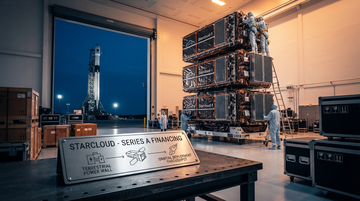
Starcloud’s $170M orbital data-center raise reframes the AI “power wall” as a launch-supply problem
Starcloud’s $170M Series A to build data centers in low Earth orbit leans on a simple thesis: the bottleneck is getting power and heat out—not buying more GPUs. The funding also spotlights a second constraint: as AI shifts to space-based capacity, near-term deployment speed hinges on launch availability and satellite production throughput.
2026-08-19
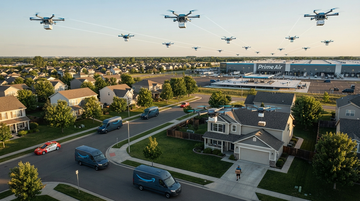
Amazon’s nearly-500-locale drone scale test forces a real question: does air delivery finally beat ground on unit cost—or just on speed?
Amazon Prime Air is expanding drone delivery to nearly 500 U.S. cities and towns by end-2026, using FAA Part 135 regulatory authority and charging $2.99–$4.99 per drone drop. The investment thesis is not “will it fly?” but whether scaled air drops can bend the cost curve enough to undercut ground last-mile and—separately—whether FAA-certified drone operations can compete with DoorDash’s Part 135 advantage in regulated local delivery.

Lyntris’ downsized IPO isn’t a pricing story—it’s a backlog-to-execution test defense investors are failing faster
Lyntris LYNX priced its U.S. IPO at $17.50 and raised about $297.5 million, after targeting a much larger deal at $19–$22. The move spotlights a tightening “proof over narrative” filter in defense capital formation: investors are discounting situations where big backlog and upbeat contracts don’t translate cleanly into realized revenue and margin.
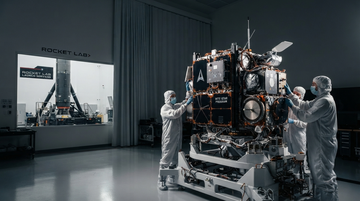
Rocket Lab’s $981M Space Force “vehicle onboarding” is a backlog lever—because its accounting turns eligible bids into contract liabilities, not just headline awards
Rocket Lab RKLB was onboarded to the U.S. Space Force’s $981M NITE-STAR IDIQ contract vehicle on Aug. 18, which makes it eligible for task orders up to the program’s ceiling. Unlike a direct award-to-revenue event, onboarding changes the odds that future work enters backlog/contract liabilities—and Rocket Lab’s current segment economics show why winning more “Space Systems” work matters for margin mix while Launch remains more execution-sensitive.
2026-08-18
2026-08-17

What to expect
Evidence-first notes with a visible point of view.
This section collects sharp takes on earnings, shareholder meetings, and market structure. Each new piece should make the thesis, the facts, and the implications obvious within the first few screens.
Expect direct analysis, not generic commentary.
Expect the data to be explicit and the argument to be easy to follow.
Plutux is not an investment adviser. Market data and AI-generated analysis are for information and education only, not investment advice. Disclaimer