Aerospace, Defense & Space
Defense budgets and the contractors behind them
Procurement rounds, backlogs, launch cadence and rearmament programmes, read as multi-year revenue with the primes and suppliers named.
2026-08-09
%22%2F%3E%0A%20%20%3Ccircle%20cx%3D%22220%22%20cy%3D%22150%22%20r%3D%22180%22%20fill%3D%22%2322d3ee%22%20fill-opacity%3D%220.12%22%2F%3E%0A%20%20%3Ccircle%20cx%3D%221010%22%20cy%3D%22130%22%20r%3D%22220%22%20fill%3D%22%2338bdf8%22%20fill-opacity%3D%220.08%22%2F%3E%0A%20%20%3Ccircle%20cx%3D%22920%22%20cy%3D%22520%22%20r%3D%22170%22%20fill%3D%22%2322d3ee%22%20fill-opacity%3D%220.06%22%2F%3E%0A%20%20%3Cpath%20d%3D%22M140%20430h920%22%20stroke%3D%22url(%23line)%22%20stroke-width%3D%2212%22%20stroke-linecap%3D%22round%22%2F%3E%0A%20%20%3Cpath%20d%3D%22M220%20360c120-150%20260-220%20380-220s260%2070%20380%20220%22%20fill%3D%22none%22%20stroke%3D%22%2367e8f9%22%20stroke-opacity%3D%220.5%22%20stroke-width%3D%2216%22%20stroke-linecap%3D%22round%22%20stroke-linejoin%3D%22round%22%2F%3E%0A%20%20%3Cpath%20d%3D%22M300%20398h600%22%20stroke%3D%22%2394a3b8%22%20stroke-opacity%3D%220.24%22%20stroke-width%3D%228%22%20stroke-linecap%3D%22round%22%2F%3E%0A%20%20%3Ctext%20x%3D%22220%22%20y%3D%22510%22%20fill%3D%22%23e2e8f0%22%20fill-opacity%3D%220.7%22%20font-family%3D%22Arial%2C%20Helvetica%2C%20sans-serif%22%20font-size%3D%2238%22%20letter-spacing%3D%228%22%3EINSIGHTS%3C%2Ftext%3E%0A%3C%2Fsvg%3E)

Sila’s $1.4B OSC conditional loan turns silicon-anode industrial policy into a direct, materials-led Pentagon procurement lever
On Aug 7, 2026 the U.S. Office of Strategic Capital (OSC) announced a $1.4B conditional loan commitment to Sila Nanotechnologies tied to expanding silicon‑carbon (Si/C) anode production and building lithium‑ion cell capacity. The strategic signal is that DoD/OSC is funding the next energy-storage stack at the materials bottleneck—before cells and primes—so investors should map winners to silicon-anode scaling, electrolyte/lithium refining, and US cell manufacturing.

The DFC’s $3B minerals push is less about “materials” and more about buying 2027–2028 capacity blocks—MP Materials, USA Rare Earth, Energy Fuels, and Lithium Americas are the clearest US order-book fits
A verified Aug 7, 2026 package around critical minerals financing links to defense supply-chain bottlenecks, but the publicly accessible primary materials we can confirm name only a partial set of project participants. Using that confirmed deal/map plus listed-company capacity economics, the clearest “funding-to-offtake” winners are the US incumbents that can plausibly monetize demand under a 2027–2028 commissioning window—MP Materials, USA Rare Earth, Energy Fuels, and Lithium Americas—while the defense OEM names (e.g., Lockheed Martin and RTX) mainly matter as anchor buyers of qualifying downstream output.
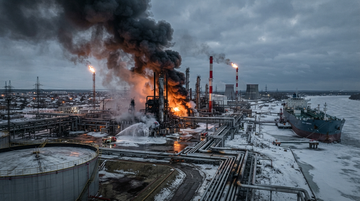
Ukraine’s drone strike on Russian refineries shifts the diesel story from “Iran/Hormuz risk” to hard supply destruction
By hitting two Russian refineries in a coordinated drone attack, Ukraine has targeted the part of the system that converts crude into diesel—tightening product availability and strengthening diesel crack spreads through lost runs. For refiners with product-heavy exposure, the investment implication is not just “war risk premium,” but whether incremental outages persist long enough to translate into sustained margins.
2026-08-08

Hadrian’s $1.37B at a ~$7.87B valuation signals defense manufacturing is the new capital magnet—and it pressures software-multiple investors that can’t show factory throughput
Hadrian (private) raised $1.37B at a $7.87B valuation to scale “factories-as-a-service,” with explicit capacity moves for munitions, shipbuilding, and submarine-component production. For listed defense primes, the real test is whether new factory capacity can convert into deliverable, margin-protecting production schedules—while “autonomy-only” winners face longer cash-conversion paths.

DFC’s $3B minerals bet turns “China decoupling” into a processing-margin race—and the winners are the firms that can monetize working capital first
The U.S. Development Finance Corporation (DFC) has outlined a $3B set of domestic critical-minerals deployments, including a prominently cited $58M-financed component, aimed at strengthening defense-adjacent supply chains. For investors, the key shift is not “more mining,” but which listed processors can pull forward separation/refining timelines—because DFC-style financing changes capex sequencing and who captures the processing margin.

Judge Halts DoD’s WuXi “Chinese Military Company” Label—But BIOSECURE’s Clock Can Re-Start Differently
A U.S. judge preliminarily enjoined the Pentagon from enforcing its June 2026 Section 1260H “Chinese military company” designation for WuXi AppTec, blocking the immediate BIOSECURE reactivation path tied to that label. For investors, the key question is not whether the BIOSECURE restriction exists, but how CROs and US biotechs must re-route procurement after the compliance trigger is legally paused.
2026-08-07
2026-08-06
2026-08-05

Cerberus’s $4B Supply Chain Fund II pitch turns private capital into a Pentagon policy lever—because Feinberg is now an underwriting mechanism
Cerberus is targeting at least $4B for its second supply-chain fund, framed as scaling U.S. domestic industrial capacity. The unusual signal isn’t just fundraising size—it’s that Stephen Feinberg’s post as Deputy Secretary of Defense creates a feedback loop where defense-aligned portfolio bets can directly shape the Pentagon’s procurement-and-industrial base priorities.

Honeywell Aerospace is trading like an “inventory-and-labor” story after it cut its 2026 outlook for supply-chain reasons
Honeywell Aerospace’s first stand-alone guidance update reframes the supply-chain debate from macro “constraint noise” into a measurable operating squeeze: inventory normalization and labor execution risk show up in how it guides 2026. For investors, the read-through is less about “GE Aerospace-style sell-the-news” and more about who downstream can absorb delivery gaps while upstream (titanium/fasteners/avionics) still has the hardest bottlenecks to solve.
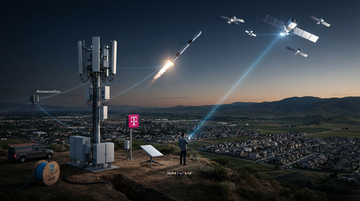
Starlink Direct-to-Cell Turns the “Carriers vs Satellites” Narrative Into a Verizon–T-Mobile Valuation Question: $23B Spectrum and FCC-Approved Service Close the Gap
SpaceX’s Starlink Direct-to-Cell is already commercially available in the U.S., meaning the near-term disruption isn’t theoretical—it’s competing for the same “coverage gap” customers that carriers used to serve with tower buildouts. The first valuation signal is likely to hit Verizon VZ (fiber/dark-fiber leverage) and T-Mobile TMUS (already partnered for Direct-to-Cell), while AT&T T faces a more delayed competitive pressure unless its capacity ramp from EchoStar spectrum acquisition translates quickly into improved 5G economics.
2026-08-03

Boeing's 737 MAX 7 gets FAA type-certificate clearance—so airline delivery conversion can finally stop being a “regulatory option” and start being cashflow
The FAA issued an amended type certificate and updated the Production Limitation Record for the Boeing 737 MAX-7 on Aug 3, 2026—clearing the last big certification overhang that kept 737 MAX 7 deliveries from being a straightforward sales-and-delivery story for carriers. For investors, the key shift is that the remaining uncertainty moves from “will it be certified?” to “how fast will Boeing and the supply chain convert order book into aircraft + acceptance slots,” which should reprice near-term delivery timing risk for Alaska Air Group and Southwest Airlines and flow through to suppliers like Howmet Aerospace.

Palantir’s guide raise is the market’s first “AI budgets are real” signal—because it’s coming through the U.S. commercial line
Palantir’s latest guidance raise is most investable when you treat it as evidence that AI deployments are moving from one-off pilots into contracts that show up in forward revenue. The clearest through-line is the uplift in Palantir’s U.S. commercial revenue guide, which makes the AI/defense thesis a budget-and-execution story—not just a demo-market story for software vendors.

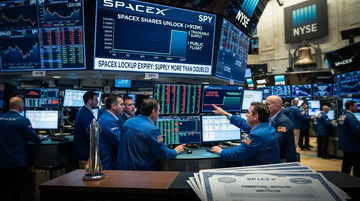
Tom Lee’s 2027 “best year” only works if mega-caps keep leading while SpaceX-or-Fed shocks don’t reprice risk—here’s the trade book
Tom Lee’s bullish 2027 setup is best understood as a conditions trade: mega-caps must keep capturing AI earnings momentum while the market digests massive tech IPO supply and avoids a Fed-led tail unwind. The concrete test is whether leadership stays narrow (NVDA/META/GOOGL/AXP/CVX) or spreads into the small-cap bridge—because if it doesn’t, “best year” becomes a liquidity/valuation story rather than an earnings story.
2026-08-02

2026-08-01

2026-07-31

2026-07-30

L3Harris LHX Turns Weapons Demand Into Throughput Economics—Backlog Is Now the Unit of Measure
L3Harris LHX's Q2 results tie weapons-demand strength to production volume rather than one-off contract wins, which is exactly what “restock cycle” believers need to see. The market should now judge defense primes less by backlog headlines and more by how fast backlog converts into revenue, cash, and operating margin under constrained industrial capacity.

Lockheed’s Patriot production ramp proves the “restock” story is now structural—but the promised $58.6B ceiling is not verified from primary sources this session
In a key Patriot-related award, the U.S. Army funded Lockheed Martin PAC-3 MSE production at scale, explicitly tying deliverables to a multi-year acceleration plan. However, the specific claim that a single “$58.6B Patriot” contract ceiling was just awarded is not verifiable from the primary sources opened in this session, so the article anchors the supply-chain argument on the confirmed, quantified PAC-3 MSE production ramp and what it implies for missile-industrial-policy capacity constraints.
2026-07-29

What to expect
Evidence-first notes with a visible point of view.
This section collects sharp takes on earnings, shareholder meetings, and market structure. Each new piece should make the thesis, the facts, and the implications obvious within the first few screens.
Expect direct analysis, not generic commentary.
Expect the data to be explicit and the argument to be easy to follow.
Plutux is not an investment adviser. Market data and AI-generated analysis are for information and education only, not investment advice. Disclaimer