%22%2F%3E%0A%20%20%3Ccircle%20cx%3D%22220%22%20cy%3D%22150%22%20r%3D%22180%22%20fill%3D%22%2322d3ee%22%20fill-opacity%3D%220.12%22%2F%3E%0A%20%20%3Ccircle%20cx%3D%221010%22%20cy%3D%22130%22%20r%3D%22220%22%20fill%3D%22%2338bdf8%22%20fill-opacity%3D%220.08%22%2F%3E%0A%20%20%3Ccircle%20cx%3D%22920%22%20cy%3D%22520%22%20r%3D%22170%22%20fill%3D%22%2322d3ee%22%20fill-opacity%3D%220.06%22%2F%3E%0A%20%20%3Cpath%20d%3D%22M140%20430h920%22%20stroke%3D%22url(%23line)%22%20stroke-width%3D%2212%22%20stroke-linecap%3D%22round%22%2F%3E%0A%20%20%3Cpath%20d%3D%22M220%20360c120-150%20260-220%20380-220s260%2070%20380%20220%22%20fill%3D%22none%22%20stroke%3D%22%2367e8f9%22%20stroke-opacity%3D%220.5%22%20stroke-width%3D%2216%22%20stroke-linecap%3D%22round%22%20stroke-linejoin%3D%22round%22%2F%3E%0A%20%20%3Cpath%20d%3D%22M300%20398h600%22%20stroke%3D%22%2394a3b8%22%20stroke-opacity%3D%220.24%22%20stroke-width%3D%228%22%20stroke-linecap%3D%22round%22%2F%3E%0A%20%20%3Ctext%20x%3D%22220%22%20y%3D%22510%22%20fill%3D%22%23e2e8f0%22%20fill-opacity%3D%220.7%22%20font-family%3D%22Arial%2C%20Helvetica%2C%20sans-serif%22%20font-size%3D%2238%22%20letter-spacing%3D%228%22%3EINSIGHTS%3C%2Ftext%3E%0A%3C%2Fsvg%3E)
Market event • policy_trade
What changed: Ukraine shifted economic pressure from energy/ports to retail fulfillment
- Forces fulfillment slowdowns by temporarily halting operations at at least two facilities after strikes and alerts
- Concentrates risk in the delivery network because e-commerce platforms warehouse inventory and control order throughput
- Turns “consumer demand” into a logistical vulnerability when warehousing and processing capacity breaks
Event facts
Ozon’s logistics hubs hit: what Reuters said happened, where operations paused
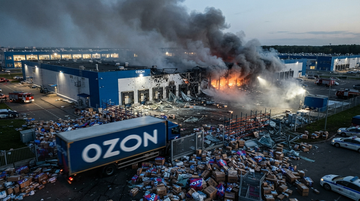
Reuters’ Aug. 24, 2026 report tied the escalation to four affected Ozon logistics hubs. It also described how the strikes translated into immediate operational disruptions—some with visible fire and others with worker evacuations.
| Facility / region (per report) | Operational outcome | Evidence mentioned in the report |
|---|---|---|
| Makhachkala (Dagestan) | Operations halted after a drone attack | Logistics hub on fire; preliminary injuries mentioned |
| Outskirts of Krasnodar (Enem) | Fire broke out at a logistics hub | Fire reported at an Ozon hub |
| Adygeysk and Nevinnomyssk (Adygeya/Stavropol) | Workers evacuated; facilities not damaged (per report) | Evacuations described; damage not reported for those two |
| Samara region + additional logistics-center references (including Orenburg region) | Work halted; evacuations described | Reuters cited halts tied to a drone strike and 300+ evacuations referenced |
Reuters added market commentary: Ozon shares fell sharply on the Moscow Exchange, and major shareholder AFK Sistema also saw a decline in its shares. (No public symbol link is provided here because the evidence for a session-verified ticker was not completed.)
Why this is an economic-pressure escalation
The mechanism: e-commerce logistics is “consumer critical,” not just retail branding
E-commerce differs from traditional retail in how it moves goods. Platforms like Ozon rely on warehouse throughput and regional fulfillment capacity; when hubs are paused, the bottleneck moves from “inventory available” to “orders can’t clear.” That creates a faster path from battlefield events to consumer disruption than targeting energy production alone.
- Fulfillment halts delay delivery windows, which pressures sellers’ order completion and platform-level transaction throughput
- Warehouse disruption forces rerouting to alternative hubs, increasing cost per order and reducing service reliability
- Evacuations and damage risk increase insurance and security costs in the regions where hubs cluster
US-listed exposure: what “Ozon’s Nasdaq ADR” exposure means now
US-listed investors should treat Ozon as a Russia supply-chain proxy, not a discretionary retail story
Ozon was historically available to US investors via Nasdaq-listed ADR-style exposure, but the practical implication of today’s headlines is operational: strikes on Ozon hubs change the expected cost and reliability of the consumer distribution system. Put differently, the market risk is “execution risk” inside the supply chain, not just brand optics.
FY2023 revenue
$424.3B
FY2023, reported currency RUB (income statement line item)
FY2023 gross profit
$44.4B
FY2023, reported currency RUB (income statement line item)
FY2023 net loss
-$42.7B
FY2023, reported currency RUB (bottom-line net income)
FY2023 gross margin
10.5%
FY2023 margin implied by reported gross profit vs. revenue
Those baseline fundamentals matter because a logistics hit does not need to “destroy demand” to hurt the economics. If operations are already loss-making at the margin, incremental disruption can widen losses via added costs and lower throughput.
Supply-chain read-through
Who benefits, who suffers: the strike flow touches more than the retailer
Even when the battlefield headline is a single retailer, the supply-chain effects typically propagate. In an e-commerce system, disruption concentrates on (1) fulfillment infrastructure and (2) downstream consumer purchasing patterns; the winners tend to be those providing alternative logistics capacity or essential “substitution channels” less exposed to regional hub clustering.
- Upstream: regional warehousing and trucking throughput gets repriced when hubs pause or require rerouting
- Downstream: customer delivery reliability worsens, which can reduce repeat purchasing and raise returns
- Policy read-through: the sanctions-policy narrative broadens from finance into physical consumer infrastructure risk
Short-term vs long-term investor horizons
What moves first in markets—and what to watch next
- Days–weeks: trading volatility spikes when new logistics-hub strikes are reported and insurers/financing reprice risk
- Quarters: order throughput disruptions show up as higher fulfillment cost per order and weaker effective transaction conversion
- 1–3 years: capacity reallocation becomes structural—companies that can shift to safer routes or substitute hubs gain resilience
The next “tell” investors should watch is whether the campaign broadens beyond Ozon into additional fulfillment nodes of other major Russian e-commerce and last-mile networks, and whether companies provide quantified operational guidance rather than qualitative statements.
Synthesis
Thesis: targeting Ozon is targeting the consumer distribution bottleneck
Ukraine’s move against Ozon matters because e-commerce is a high-leverage consumer distribution system: when logistics hubs are hit, the war economy pressures everyday goods through throughput and reliability. For investors, the correct framing is that economic warfare is shifting from production to delivery—and Ozon is now a visible proxy for that shift.
Listed-market takeaways (verified link coverage limited by available symbol verification)
- Ukraine’s strikes create near-term logistics execution risk for hub throughput, which can worsen losses if operational fixes lag
- FY2023 shows loss-making economics at the margin, so incremental fulfillment disruption can disproportionately impact net results
- In 1–3 years, resilience depends on capacity substitution and rerouting ability rather than consumer demand alone