Materials & Supply Chain
Raw materials and the chokepoints that price them
Lithium, rare earths, copper and shipping — permits, export bans and capacity, followed to the miners and manufacturers on either side.
2026-08-16
%22%2F%3E%0A%20%20%3Ccircle%20cx%3D%22220%22%20cy%3D%22150%22%20r%3D%22180%22%20fill%3D%22%2322d3ee%22%20fill-opacity%3D%220.12%22%2F%3E%0A%20%20%3Ccircle%20cx%3D%221010%22%20cy%3D%22130%22%20r%3D%22220%22%20fill%3D%22%2338bdf8%22%20fill-opacity%3D%220.08%22%2F%3E%0A%20%20%3Ccircle%20cx%3D%22920%22%20cy%3D%22520%22%20r%3D%22170%22%20fill%3D%22%2322d3ee%22%20fill-opacity%3D%220.06%22%2F%3E%0A%20%20%3Cpath%20d%3D%22M140%20430h920%22%20stroke%3D%22url(%23line)%22%20stroke-width%3D%2212%22%20stroke-linecap%3D%22round%22%2F%3E%0A%20%20%3Cpath%20d%3D%22M220%20360c120-150%20260-220%20380-220s260%2070%20380%20220%22%20fill%3D%22none%22%20stroke%3D%22%2367e8f9%22%20stroke-opacity%3D%220.5%22%20stroke-width%3D%2216%22%20stroke-linecap%3D%22round%22%20stroke-linejoin%3D%22round%22%2F%3E%0A%20%20%3Cpath%20d%3D%22M300%20398h600%22%20stroke%3D%22%2394a3b8%22%20stroke-opacity%3D%220.24%22%20stroke-width%3D%228%22%20stroke-linecap%3D%22round%22%2F%3E%0A%20%20%3Ctext%20x%3D%22220%22%20y%3D%22510%22%20fill%3D%22%23e2e8f0%22%20fill-opacity%3D%220.7%22%20font-family%3D%22Arial%2C%20Helvetica%2C%20sans-serif%22%20font-size%3D%2238%22%20letter-spacing%3D%228%22%3EINSIGHTS%3C%2Ftext%3E%0A%3C%2Fsvg%3E)
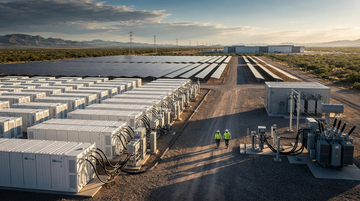
Nvidia’s $3B SB Energy bet highlights the missing “grid-firming” link in AI power
Nvidia’s reported move to invest up to $3B into SB Energy underscores that AI data-center growth is constrained less by chips than by 24/7 power availability. The real supply-chain margin sits in grid-scale storage, power-electronics, and fast interconnection—areas where equipment and energy-storage firms can see order-flow spillover once projects lock fuel (or storage) and transmission timelines.

The transatlantic bottleneck for AI isn’t fiber—it’s who gets to land it
Google’s new transatlantic subsea buildout shows how AI demand is now translated into physical route control: its Nuvem system targets ~384 Tbps across 16 fiber pairs and lands at the Atlantic “gateways” it chooses. In the U.S., FCC licensing and the ownership/architecture of cable landing stations then shape which ecosystems can absorb that capacity first—creating a new competitive edge for operators that sit closest to landing points like Equinix, and a new risk for traffic planners that assume capacity availability is purely a “cable count” problem.
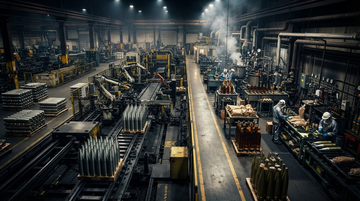
The real bottleneck in 155mm restock isn’t the shell-body line—it’s TNT, propellant charges, and the energetics/chemicals substrate
The U.S. Army’s effort to surge 155mm output has exposed a binding constraint: the energetics layer (TNT explosive fill, propellant charges, and related specialty energetic materials) is harder to scale than the metalworking and assembly steps. The sharpest proof is how capital spent on shell production can still fail to yield usable rounds when upstream requirements—like explosive-fill readiness and propellant/charge compatibility—can’t ramp fast enough.

AI data-center power demand isn’t choking reactor builds—fuel-cycle bottlenecks are tightening uranium-to-fabrication capacity
The hyperscaler PPA wave is being stress-tested by the slowest part of the nuclear supply chain: the front-end fuel cycle. ConverDyn-scale conversion, enrichment capacity, and downstream fuel fabrication are the binding constraints on when new megawatts can actually produce—turning uranium, enrichment, and fuel makers into the margin hinge for AI-linked deployments.

The US fab buildout’s real bottleneck won’t be EUV or HBM—it will be wafer-gas, CMP consumables, and sputtering targets
As the US memory/logic buildout ramps, the chokepoint shifts from tools to consumables: specialty gases, CMP slurries/pads, and metal sputtering targets that must arrive with tight specs and continuous uptime. For investors, the “materials-first” winners are the companies with scale, qualification depth, and upstream integration in those categories—while every schedule slip becomes a margin and delivery risk for downstream fabs.
2026-08-15

Applied Materials beat on the numbers, but the stock sold off because the China pipeline still looks lumpy
Applied Materials delivered a Q3 FY2026 sales and EPS beat, but the market focused on what comes next: China-related licensing uncertainty and the shape of memory-capex demand. The quarter still shows strong operating momentum, yet the guidance/test of end-demand timing remains the key swing factor for the AI semi-cap equipment cycle.

Central banks bought a record 288.9 tonnes in Q2—gold’s August rally is now an official-sector story, not a Fed-timing trade
World Gold Council data shows central banks and other official institutions added a record 288.9 tonnes in Q2 2026 (+62% year over year), alongside a 2026 survey where 45% of reserve managers still plan to add gold over the next 12 months. That shifts the rally’s durability math: the bid is decoupling gold from “Fed-cut hopes fade” narratives, improving the risk/reward for miners and bullion-linked vehicles.

SK Hynix's $38B memory-fab plan won’t ease supply until after Dec 2028
SK Hynix approved about ₩54.3T (≈$38.30B) for two new fabs whose first cleanrooms open in Dec 2028 (NAND) and Jun 2029 (DRAM/Yongin Y2), with construction beginning in 2027. That 2.5-year capex-to-cleanroom gap is the cleanest timing proof that AI-driven tightness can persist even as the next capacity wave is already locked in—quietly shifting the market from a short squeeze to a longer-dated overhang risk.
2026-08-14

Apple's Mac mini Texas shift turns “Made in USA” into a COGS experiment — and it flows through EMS more than patriotism
Apple opened its Houston Advanced Manufacturing Center on Aug. 13, 2026 and tied it to starting Mac mini production “later this year” in Texas, marking the first time the Mac mini is made in the U.S. for sale. The investment matters to margins only if the higher-cost U.S. assembly footprint can be neutralized via supplier localization, logistics control, and tariff-avoidance—an outcome the first steady-state volume run will test.

The COMEX–LME copper spread is pricing tariff odds months before policy headlines—here’s who reprices first
A niche trade—using the COMEX–LME copper spread to infer U.S. refined-copper tariff expectations—has become a leading “policy gauge” rather than a pure commodity signal. When the spread widens, it compresses arbitrage between U.S.-delivered and London-priced copper, pulling forward capital-market and physical-trade decisions first for copper producers with U.S. exposure and for import-sensitive buyers.

Morgan Stanley's gold-to-silver shift reframes the safe-haven trade into an industrial bet
Morgan Stanley says gold is increasingly behaving like a risk asset rather than a portfolio diversifier, while pointing to silver as the metal with “real reasons to rally.” For miners and investors, the implication is a supply-chain rotation: gold hedges face a more saturated macro setup, while silver’s tight multi-year balances and industrial demand (notably solar) can re-price both upstream (silver miners’ cash flows) and downstream hedging demand.

Steam- and hydraulic-driven catapult changes could flip aircraft-carrier electronics content—rewarding legacy electromechanical supply chains while pressuring modern shipboard-electronics primes
A new White House directive orders the Navy to replace EMALS and advanced weapons elevators with steam and hydraulic systems for future CVN-81. That reverses the shipboard electronics content mix: it shifts value from modern electromechanical-and-software-heavy launch/recovery subsystems toward legacy electromechanical/hydraulic supply chains, while also introducing schedule and cost risk for carrier programs near industrial capacity limits.
2026-08-13

A.P. Møller-Mærsk A/S captures reroute pricing power while Hapag-Lloyd AG absorbs the Middle East cost shock
Maersk’s Q2 2026 results helped it lift full-year guidance for 2026 for a second time, framing Middle East disruption as a pricing and demand tailwind. By contrast, Hapag-Lloyd disclosed a Middle East cost shock in its 2026 results messaging—without showing the same offsetting uplift—making container liners an “earnings divergence” trade tied to contract exposure, not a uniform sector story.

Ford's Lincoln shift turns 52.5% tariffs into a relocation deadline—starting in 2030
Ford said it will move production of some Lincoln models from China to the U.S. starting in 2030, with the decision driven mainly by the U.S. tariff cost on China-built vehicles. The move also lines up with the U.S. Connected Vehicle restrictions that already force Ford to seek approvals for its China-built Lincoln Nautilus imports—pushing Ford’s China supply chain toward earlier disruption than most investors expect.
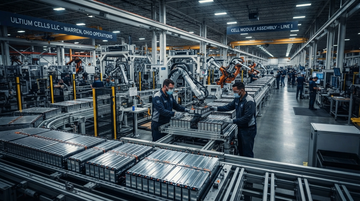
GM’s Ohio Battery Plant Restart Puts “Battery on Demand” Through Its First Scheduling Stress Test
When General Motors and LG Energy Solution restarted cell production at their Ohio Ultium Cells facility, the key question shifted from “who has capacity” to “who can run it profitably when EV demand stays uneven.” The restart arrives as GM continues to frame margin durability around offsetting items (including expected tariff refunds), turning cell output timing into a direct input for lithium and cathode supply-demand expectations.

Russia’s Black Sea grain terminals are now a food-inflation risk—after July PPI went flat, investors must watch for a “food re-pricing” loop
Ukraine’s reported strikes on Russia’s Black Sea port and grain-export infrastructure re-open the disinflation debate through a channel that policy can’t smooth away: food costs tied to wheat logistics. In July, the US PPI release showed flat final-demand inflation and a decline in final-demand food prices—yet disruption risk is rising because Reuters links Black Sea corridor damage to a 30–35 million metric ton wheat shortfall that alternative exporters can’t fully replace.
2026-08-12

2026-08-11

Trump extended the Jones Act waiver—but the narrow “case-by-case” change shifts who benefits from US coastal fuel trade
The 90-day extension keeps foreign-flag ships eligible to move certain energy commodities between US ports, but it replaces blanket access with voyage-by-voyage review. That design reduces broad “market-wide” arbitrage benefits while still easing the specific shipping bottlenecks driving US fuel-cost pressure.

Western Gateway’s $5B midstream bet: Kinder Morgan and Phillips 66 lock in the West Coast refined-products corridor while HF Sinclair pays for capacity certainty
Phillips 66, Kinder Morgan, and HF Sinclair have finalized the $5B Western Gateway refined-products pipeline, including a reversal of existing assets and a new-build Borger, Texas-to-Phoenix segment. The project is structured around long-term contracted economics (primarily ~10-year take-or-pay), which shifts the West Coast refined-products logistics moat toward these three sponsors and reduces merchant exposure during a tariff/refining-margin regime. Investors should track how quickly the corridor monetizes the 230,000 bpd design capacity and whether completion risk stays on track for mid-2029.

Samsung SDI consolidating the US cell JV is a supply-chain control move, not an EV-capacity footnote
While the brief frames a “GM stake buyout” as a single deal headline, the verifiable primary sources we could access here show a broader reality: GM has already been restructuring ownership across Ultium Cells facilities, including selling a Lansing stake to LG Energy Solution, while separately building a New Carlisle Indiana JV with Samsung SDI. The investor takeaway is that US battery capacity is moving toward single-operator control of the cell layer, which changes who captures margin from IRA-era incentives and who sets future pricing terms for OEM demand.
What to expect
Evidence-first notes with a visible point of view.
This section collects sharp takes on earnings, shareholder meetings, and market structure. Each new piece should make the thesis, the facts, and the implications obvious within the first few screens.
Expect direct analysis, not generic commentary.
Expect the data to be explicit and the argument to be easy to follow.
Plutux is not an investment adviser. Market data and AI-generated analysis are for information and education only, not investment advice. Disclaimer