Latest
The day's market news, with the argument attached
New notes every trading day on earnings, policy and market structure. Each one opens with the conclusion, then the evidence, then the companies it hits.
2026-07-30
![Meta Platforms's Q2 FCF crater happens because capex rose faster than cash generation—and it flips the debate from 'earnings' to 'funding discipline'] insight cover](data:image/svg+xml;charset=UTF-8,%3Csvg%20xmlns%3D%22http%3A%2F%2Fwww.w3.org%2F2000%2Fsvg%22%20viewBox%3D%220%200%201200%20630%22%20role%3D%22img%22%20aria-hidden%3D%22true%22%3E%0A%20%20%3Cdefs%3E%0A%20%20%20%20%3ClinearGradient%20id%3D%22bg%22%20x1%3D%220%22%20y1%3D%220%22%20x2%3D%221%22%20y2%3D%221%22%3E%0A%20%20%20%20%20%20%3Cstop%20offset%3D%220%25%22%20stop-color%3D%22%23050816%22%2F%3E%0A%20%20%20%20%20%20%3Cstop%20offset%3D%22100%25%22%20stop-color%3D%22%230f172a%22%2F%3E%0A%20%20%20%20%3C%2FlinearGradient%3E%0A%20%20%20%20%3ClinearGradient%20id%3D%22line%22%20x1%3D%220%22%20y1%3D%220%22%20x2%3D%221%22%20y2%3D%220%22%3E%0A%20%20%20%20%20%20%3Cstop%20offset%3D%220%25%22%20stop-color%3D%22%2322d3ee%22%20stop-opacity%3D%220.12%22%2F%3E%0A%20%20%20%20%20%20%3Cstop%20offset%3D%2250%25%22%20stop-color%3D%22%2367e8f9%22%20stop-opacity%3D%220.45%22%2F%3E%0A%20%20%20%20%20%20%3Cstop%20offset%3D%22100%25%22%20stop-color%3D%22%2322d3ee%22%20stop-opacity%3D%220.12%22%2F%3E%0A%20%20%20%20%3C%2FlinearGradient%3E%0A%20%20%3C%2Fdefs%3E%0A%20%20%3Crect%20width%3D%221200%22%20height%3D%22630%22%20fill%3D%22url(%23bg)%22%2F%3E%0A%20%20%3Ccircle%20cx%3D%22220%22%20cy%3D%22150%22%20r%3D%22180%22%20fill%3D%22%2322d3ee%22%20fill-opacity%3D%220.12%22%2F%3E%0A%20%20%3Ccircle%20cx%3D%221010%22%20cy%3D%22130%22%20r%3D%22220%22%20fill%3D%22%2338bdf8%22%20fill-opacity%3D%220.08%22%2F%3E%0A%20%20%3Ccircle%20cx%3D%22920%22%20cy%3D%22520%22%20r%3D%22170%22%20fill%3D%22%2322d3ee%22%20fill-opacity%3D%220.06%22%2F%3E%0A%20%20%3Cpath%20d%3D%22M140%20430h920%22%20stroke%3D%22url(%23line)%22%20stroke-width%3D%2212%22%20stroke-linecap%3D%22round%22%2F%3E%0A%20%20%3Cpath%20d%3D%22M220%20360c120-150%20260-220%20380-220s260%2070%20380%20220%22%20fill%3D%22none%22%20stroke%3D%22%2367e8f9%22%20stroke-opacity%3D%220.5%22%20stroke-width%3D%2216%22%20stroke-linecap%3D%22round%22%20stroke-linejoin%3D%22round%22%2F%3E%0A%20%20%3Cpath%20d%3D%22M300%20398h600%22%20stroke%3D%22%2394a3b8%22%20stroke-opacity%3D%220.24%22%20stroke-width%3D%228%22%20stroke-linecap%3D%22round%22%2F%3E%0A%20%20%3Ctext%20x%3D%22220%22%20y%3D%22510%22%20fill%3D%22%23e2e8f0%22%20fill-opacity%3D%220.7%22%20font-family%3D%22Arial%2C%20Helvetica%2C%20sans-serif%22%20font-size%3D%2238%22%20letter-spacing%3D%228%22%3EINSIGHTS%3C%2Ftext%3E%0A%3C%2Fsvg%3E)
![Meta Platforms's Q2 FCF crater happens because capex rose faster than cash generation—and it flips the debate from 'earnings' to 'funding discipline'] insight cover](https://images-1379091077.cos.na-ashburn.myqcloud.com/insights/covers/20260730_meta_q2_2026_fcf_craters_ai_capex_double_down_2026_07_360px.png)
Meta Platforms's Q2 FCF crater happens because capex rose faster than cash generation—and it flips the debate from 'earnings' to 'funding discipline']
Meta’s Q2 cash flow shows free cash flow fell to about $1.7B while capex jumped to $30.1B, confirming the “AI capex first” regime with hard numbers. The immediate investor question shifts from whether AI monetizes soon to whether hyperscalers can sustain buybacks/credit ratings while front-loading capex.
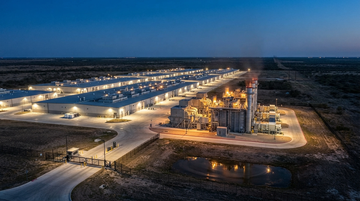
Google's $15B Nexus Loan Is Sovereign Finance in Disguise — and Alphabet's Capex Math Just Got Worse
Alphabet is guaranteeing the Morgan Stanley-led $14B bridge loan on Nexus Data Centers' 1.6 GW Texas gas-powered AI campus for Anthropic, taking ~20% equity in return — the third leg of a $35B+ backstop program that moves frontier compute off Google's balance sheet while keeping it on the hook. With Q2 capex already at $44.9B and free cash flow turning negative, the structure reveals the real constraint: not capital, but the gap between Google Cloud growth and depreciation absorption. Lenders win fees; Broadcom, AMD, and gas-turbine suppliers win volume; the question is what triggers Google's cash calls.

Nscale's $1.65B Anyscale Grab Hands Microsoft a Vertical-Stack Rival It Just Helped Build
London-based neocloud Nscale is buying Ray-creator Anyscale for a reported $1.65B, absorbing the open-source distributed-compute substrate that Microsoft co-engineered as a first-party Azure service just nine months ago. The deal converts a cloud-agnostic Ray ecosystem into Nscale's proprietary full-stack offering, tightening pressure on CoreWeave, Nebius and Lambda Labs while putting Microsoft's $23B Nscale compute commitment on a collision course with the same company's software roadmap.

The Aug 1 “voluntary” 30-day review makes OpenAI and Anthropic buy a government timeline—or lose it
A White House executive order (June 2, 2026) sets up a voluntary pre-release federal review framework for “covered frontier models,” with key agency deliverables feeding into an August 1 implementation milestone. If OpenAI MSFT and Anthropic (unlisted) are inside the first wave, they effectively turn a short window into a durable release-preemption advantage—while everyone else faces a longer, more political customer-acquisition and deployment lag.
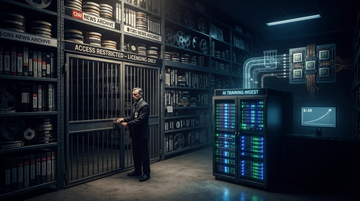
Paramount–WBD’s news-archive consolidation could become a new “data bottleneck” — and cable/AI buyers pay the price
Archival producers warn that a Paramount–Warner Bros. Discovery deal could consolidate CNN/CBS news archives under one private owner, increasing gatekeeping over licensing and preservation. In parallel, AI training’s copyright-cost baseline has shifted—making archive access less like a media afterthought and more like a priced input for distribution and model training.
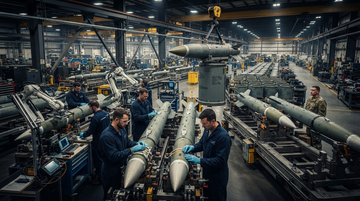
Lockheed’s Patriot production ramp proves the “restock” story is now structural—but the promised $58.6B ceiling is not verified from primary sources this session
In a key Patriot-related award, the U.S. Army funded Lockheed Martin PAC-3 MSE production at scale, explicitly tying deliverables to a multi-year acceleration plan. However, the specific claim that a single “$58.6B Patriot” contract ceiling was just awarded is not verifiable from the primary sources opened in this session, so the article anchors the supply-chain argument on the confirmed, quantified PAC-3 MSE production ramp and what it implies for missile-industrial-policy capacity constraints.
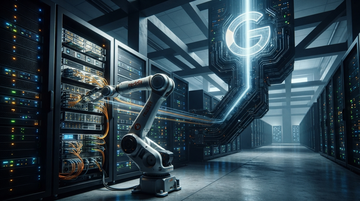
Reddit's AI Ad Engine Is Working—But Google May Be Training Its Own Traffic Threat
Reddit delivered $805 million of second-quarter revenue and $762 million of advertising revenue as AI-powered campaign automation improved advertiser performance. The tension is structural: the same AI ecosystem that helps Reddit sell more ads can also summarize Reddit discussions inside Google's search results, weakening the referral traffic and data leverage that support the platform. Investors should treat the ad product as the near-term earnings engine and search erosion as the long-term valuation risk.
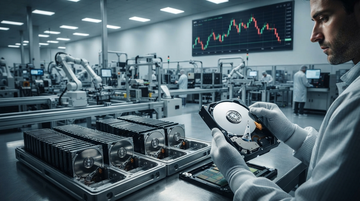
Seagate didn’t “miss”—it proved the HAMR profit engine… and the market still priced in the harder margin math next
Seagate’s fiscal Q4 blowout (revenue and adjusted EPS both beating expectations) triggered a sell-the-news move that makes the next test less about “more TB shipped” and more about whether HAMR mass-capacity economics hold across the drive build-and-supply chain. For investors, the stock’s reaction matters because it shifts attention from die-count/technology headlines to tray/component margin durability—where suppliers and competing drive OEMs can win or lose first.

A $83.3M Defamation Appeal Becomes a SCOTUS Pricing Question: How High Can Immunity—and Media Risk—Go?
Trump’s July 28, 2026 filing asks SCOTUS to reset the ceiling on civil defamation damages tied to statements made in office. The practical market impact isn’t just legal precedent—it’s how aggressively media, podcasts, and speakers price their “presidential-speech” risk, especially if courts treat immunity as narrower (or broader) than the Second Circuit allowed.

UMG.AS’s Q2 streaming-led beat shows catalog owners still have pricing power—but the next 12–18 months hinge on platform deal renegotiations, not subscriber counts
Universal Music Group’s Q2 growth was driven by streaming-related pricing and “Streaming 2.0” agreement benefits, including wholesale price increases that added 3.5 percentage points to recorded-music growth. The investable implication: if platforms can’t outgrow rising content costs, the pricing runway shifts from consumer subscription momentum to who controls the catalog and the contract terms.

US Strike on Iran Forces a 2026 Risk-Premium Reprice: Oil’s “Discount” Is No Longer the Trade
A US strike on Iran reopens Strait-of-Hormuz tail-risk in hours, reversing the recent de-escalation-driven deflationary narrative for crude pricing. The fastest transmission is not headlines—it is how refiners’ and defense primes’ hedging, working-capital timing, and near-term contract marks must reprice under higher oil volatility.
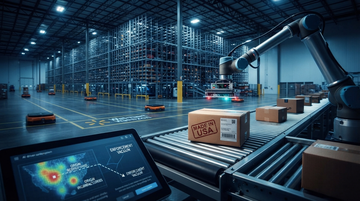
“Made in USA” fraud isn’t just slipping past AI—it’s exploiting the AI governance gap at Walmart and Amazon
A new Columbia Law School report finds that AI shopping assistants at Walmart and Amazon can detect “Made in USA” violations, yet they don’t proactively police the claims. With the FTC escalating “Made in USA” enforcement and an executive order explicitly flagging online marketplaces, the enforcement vacuum becomes the real economic loophole—and a compliance-first strategy can turn into a competitive moat.

Zoox’s NHTSA “No Steering Wheel” Paid-Use Exemption Changes the AV Business Model Math
NHTSA granted Zoox a temporary, commercial-use exemption that caps deployment at 2,500 vehicles annually for two years—and it does so for purpose-built robotaxis that lack steering wheels and other human controls. This is not the same regulatory story as Waymo or Tesla: it explicitly uses the FMVSS-exemption pathway to remove “human fallback” assumptions from the safety and unit-economics equation.
2026-07-29

AI hardware is pulling air cargo capacity toward data-center “just-in-time”—and operators with scheduling power are the gatekeepers
In 2025, air cargo transported more than two-thirds of global AI-related goods, making aircraft utilization and slot allocation a strategic bottleneck rather than a background logistics variable. The air-freight scarcity that e-commerce previously dominated is shifting to dense, time-sensitive AI hardware lanes, where the margin moves from shipping volume to capacity control.
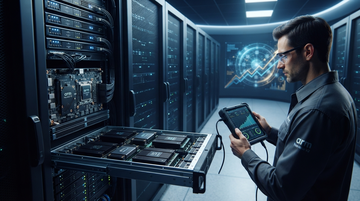
Arm’s AI forecast beat indicates the “architecture royalty” flywheel can scale faster than chip unit demand
Arm’s latest guidance/outlook strength can be read as a demand signal that hyperscalers are prioritizing Arm-based AI infrastructure designs—not just buying more chips. The royalty model works only if energy-efficient adoption drives durable Neoverse (data-center) design-in and custom-silicon programs that keep royalty revenue compounding even when hardware supply constraints shift the timing of shipments.

Boeing’s Air Force One charge just proved why “commercial recovery” won’t fix consolidated cash flow unless fixed-price risk stops
In Boeing’s latest SEC filing, it increased the VC-25B (Air Force One) reach-forward loss by $280 million in a single quarter—underlining that the presidential-aircraft program is consuming earnings power faster than commercial deliveries can rebuild it. The real investor question isn’t 737 numbers; it’s whether recurring “reach-forward” losses on fixed-price defense/presidential work keep overriding cash-flow improvements.

Boston Scientific bets on cost cuts as WATCHMAN mix risk rises—how to separate restructuring alpha from franchise dilution
Boston Scientific’s cost-savings program targets ~$500M annual expense reduction after a $700M–$800M charge window, but it comes while management flagged a 2026 headwind tied to Watchman stand-alone procedure usage. Investors should track whether restructuring-generated operating leverage can offset a shift from “stand-alone” to “bundled” cardiac workflows that can compress product-mix value per procedure at the margin.

ChipAgents’ $60M funding bets AI agents can speed chip design—without breaking the EDA tollbooth
ChipAgents’ new $60M infusion extends an “agentic” approach to chip design and verification, aiming to compress the bug-finding and iteration loop that makes EDA such a sticky spend category. The key investor question isn’t whether AI reduces engineering time, but whether it routes more cycles into EDA workflows (verification runs grow) or starts to replace parts of the workload (tool seats and services get displaced). For incumbents like Cadence and Synopsys, near-term impact hinges on integration and workflow attachment rather than abstract AI throughput claims.

Chipotle's Raised Sales Guide Raises the Wrong Question: Is Traffic Returning or Just Being Purchased?
Chipotle raised full-year comparable restaurant sales growth guidance into a low-single-digit range, and Q2 comps showed growth driven by both average check and transactions. The investor risk is that this “traffic” could be partially value-pulled (promo/LTO mix) rather than sustainably broadened demand—changing how food-cost leverage and margins behave next.

Cognizant’s weak quarterly guide implies clients are buying AI outcomes—but postponing the labor that makes outsourcing revenue easy
Cognizant’s Q2 outlook embeds a “more cautious near-term view” of discretionary spending while still holding full-year revenue steady, which points to timing risk rather than demand collapse. For AI budgets, the key question becomes whether spend is shifting from headcount-heavy IT services into AI infrastructure and automation—an outcome that would pressure traditional services economics even if long-term AI demand persists.
What to expect
Evidence-first notes with a visible point of view.
This section collects sharp takes on earnings, shareholder meetings, and market structure. Each new piece should make the thesis, the facts, and the implications obvious within the first few screens.
Expect direct analysis, not generic commentary.
Expect the data to be explicit and the argument to be easy to follow.
Plutux is not an investment adviser. Market data and AI-generated analysis are for information and education only, not investment advice. Disclaimer