Latest
The day's market news, with the argument attached
New notes every trading day on earnings, policy and market structure. Each one opens with the conclusion, then the evidence, then the companies it hits.
2026-08-05
%22%2F%3E%0A%20%20%3Ccircle%20cx%3D%22220%22%20cy%3D%22150%22%20r%3D%22180%22%20fill%3D%22%2322d3ee%22%20fill-opacity%3D%220.12%22%2F%3E%0A%20%20%3Ccircle%20cx%3D%221010%22%20cy%3D%22130%22%20r%3D%22220%22%20fill%3D%22%2338bdf8%22%20fill-opacity%3D%220.08%22%2F%3E%0A%20%20%3Ccircle%20cx%3D%22920%22%20cy%3D%22520%22%20r%3D%22170%22%20fill%3D%22%2322d3ee%22%20fill-opacity%3D%220.06%22%2F%3E%0A%20%20%3Cpath%20d%3D%22M140%20430h920%22%20stroke%3D%22url(%23line)%22%20stroke-width%3D%2212%22%20stroke-linecap%3D%22round%22%2F%3E%0A%20%20%3Cpath%20d%3D%22M220%20360c120-150%20260-220%20380-220s260%2070%20380%20220%22%20fill%3D%22none%22%20stroke%3D%22%2367e8f9%22%20stroke-opacity%3D%220.5%22%20stroke-width%3D%2216%22%20stroke-linecap%3D%22round%22%20stroke-linejoin%3D%22round%22%2F%3E%0A%20%20%3Cpath%20d%3D%22M300%20398h600%22%20stroke%3D%22%2394a3b8%22%20stroke-opacity%3D%220.24%22%20stroke-width%3D%228%22%20stroke-linecap%3D%22round%22%2F%3E%0A%20%20%3Ctext%20x%3D%22220%22%20y%3D%22510%22%20fill%3D%22%23e2e8f0%22%20fill-opacity%3D%220.7%22%20font-family%3D%22Arial%2C%20Helvetica%2C%20sans-serif%22%20font-size%3D%2238%22%20letter-spacing%3D%228%22%3EINSIGHTS%3C%2Ftext%3E%0A%3C%2Fsvg%3E)
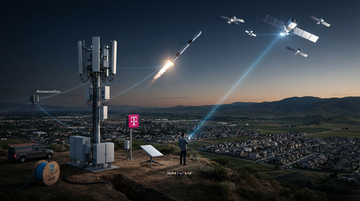
Starlink Direct-to-Cell Turns the “Carriers vs Satellites” Narrative Into a Verizon–T-Mobile Valuation Question: $23B Spectrum and FCC-Approved Service Close the Gap
SpaceX’s Starlink Direct-to-Cell is already commercially available in the U.S., meaning the near-term disruption isn’t theoretical—it’s competing for the same “coverage gap” customers that carriers used to serve with tower buildouts. The first valuation signal is likely to hit Verizon VZ (fiber/dark-fiber leverage) and T-Mobile TMUS (already partnered for Direct-to-Cell), while AT&T T faces a more delayed competitive pressure unless its capacity ramp from EchoStar spectrum acquisition translates quickly into improved 5G economics.

Spotify's 33.4% gross margin turns into an AI-royalties stress test after the Suno/GEMA ruling
Spotify’s Q2 2026 milestone of 300M premium subscribers coincided with a record 33.4% gross margin—so the next pressure point is no longer user growth, but rights cost under AI music generation. The Munich court ruling that Suno violated copyright and was ordered to disclose illicit revenue raises the probability that “AI ingestion + AI output” will become a first-principles, contractual rights-liability chain for streaming platforms in 2026–2027.
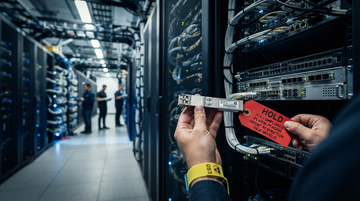
A “quiet” U.S. import ban on Chinese AI data-center components turns optical interconnect into the next choke point
A Reuters report says the FCC is drafting a U.S. ban on imports of new Chinese data-center components—specifically Chinese optical transceivers—targeting the fiber links that move AI traffic inside server parks. That shifts the AI-hardware investment question from compute chips to networking optics, and it changes which listed suppliers can actually capture replacement-system spend as the policy timetable moves through “draft → publish → effective.”

US distillate exports hitting record levels are turning the refining margin trade into an Atlantic-basin diesel shortage bet
The EIA shows U.S. distillate exports surged to a weekly record of 1,861 thousand barrels/day (week ending May 1, 2026), and those barrels are finding their way into a tight Atlantic-basin middle-distillate market. When diesel cracks stay historically high while inventories stay constrained, the refiner story becomes less about oil supply and more about conversion capacity plus logistics—an edge held by refiners like Valero, Marathon Petroleum, and Phillips 66 that can consistently monetize distillate exports.
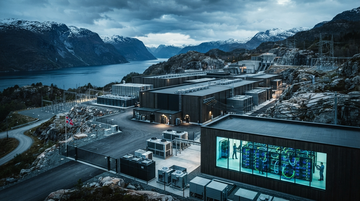
Volta’s $10B AI-cloud deal signals a new “tenant-first” compute model—where data-center build-out follows demand, not the other way around
Volta Infra’s reported $10B, six-year cloud-compute partnership points to an emerging playbook: independent AI-cloud operators lease capacity and scale data centers around a specific AI lab’s spend. The Norway site described at 133MW shows how this model turns power + hyperscaler-friendly chips into a contracted revenue stream—while shifting risk away from AI developers and away from hyperscalers’ balance sheets.

Wells Fargo’s “AI trickle-down” reframes Industrials: the winners are the grid-and-automation bottleneck, not just the factory-build line
Wells Fargo’s Aug 4 framing that hyperscaler AI spending is “trickling down” into older industrial supply chains makes the AI trade less about Mag-7 capex optics and more about domestic, capacity-constrained build cycles. The investable map is concentrated in electrification + control/automation equipment where capex shifts translate into order intake and backlog visibility—while broad-cycle heavy equipment is more rate-and-cycle sensitive.
2026-08-04
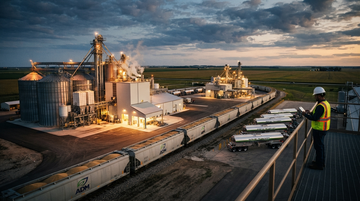
ADM’s Raised 2026 Biofuels-Driven Outlook Suggests a Margin Cycle That May Be More Policy-Structured Than Cyclical
ADM lifted its 2026 adjusted EPS outlook to $4.15–$4.70, explicitly tying the upgrade to “constructive” post–U.S. biofuel policy clarity and expected earnings improvement across its crushing and ethanol businesses. The key shift isn’t just higher margins—it’s that renewed regulatory demand visibility is changing how feedstock economics flow through crushers, refiners/ethanol plants, and ultimately to farmers.
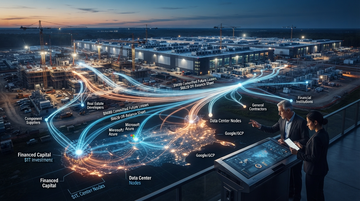
AI’s $1 Trillion Lease Tab: Hyperscalers Shift Utilization and Refinancing Risk—But It Reappears Everywhere
Moody’s estimates $662B of future data-center lease commitments across the largest U.S. hyperscalers sit off balance sheets because they’re not yet commenced—despite the projects being financed and under construction. That shifts occupancy and refinancing risk down the supply chain, turning “leased compute” into a system-wide obligation map investors can’t ignore.

Apollo Is Proving Its Fee Engine Works—But Q2’26 Shows Realization Markets Still Decide “Principal Investing”
In Apollo’s Q2’26 results, Fee Related Earnings rose to $785M (+25% YoY) and Spread Related Earnings to $877M, reinforcing the recurring “fee engine.” But Realized performance fees were only $130M and total realizations were $(32.0)B, showing that equity/credit exit timing can still move the earnings mix—and potentially mask growth quality if asset sales are used to smooth quarter-to-quarter results.
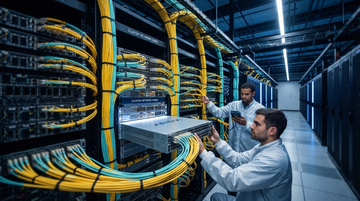
Arista’s AI-Cloud Beat Makes the Next Data-Center Upgrade a Networking Story (Not a GPU One)
Arista’s latest disclosures tie AI buildouts directly to Ethernet switching and “cloud networking” refreshes, shifting attention from just GPU supply into the network that keeps clusters usable at scale. With Arista’s revenue reaching $9.006B in 2025 and management citing it exceeded both AI networking and campus expansion goals, the implication is clear: if customers fund network capacity ahead of (or alongside) accelerators, the “profit pool” can move to open, software-driven switching.

Bessent’s yen request turned the Fed’s FX backstop into a global market-shock switch—starting with $60B per week
When Scott Bessent urged the Fed to “upsiz[e]” its FIMA Repo Facility, the US stopped treating yen defense as just a Treasury operation. That matters because the Fed backstop (up to $60B in USD lending for up to seven days) can amplify cross-border funding stress and make “155 per dollar” a global volatility trigger rather than a Japan-only headline.

Broadridge’s “Profit Gain” Isn’t the Event Cycle—It’s Recurring Market Plumbing Getting More Utilized
Broadridge’s latest earnings show profit rising faster than event-driven activity, with recurring revenue growth lifting both segment earnings and adjusted EPS. The key tell: governance/communications (ICS) keeps scaling, and new proxy/disclosure coverage for tokenized securities suggests the “shareholder communications toll booth” is widening rather than just riding transaction spikes.
Caterpillar's Raised 2026 Outlook Is the First Real “AI-to-Earthmoving” Stress Test
Caterpillar lifted its 2026 growth forecast after reporting results that linked demand to AI data-center buildouts—specifically power-generation and backup power needs tied to new sites. If that forecast holds, the next margin pool won’t stay in the server rack; it will show up as earthmoving, power infrastructure, and rental/field-capacity decisions.
![Chipotle [CMG] Isn’t the Suspected Outbreak—But the “Traffic Shock” Math Still Applies insight cover](https://images-1379091077.cos.na-ashburn.myqcloud.com/insights/covers/20260804_chipotle_food_safety_360px.png)
Chipotle [CMG] Isn’t the Suspected Outbreak—But the “Traffic Shock” Math Still Applies
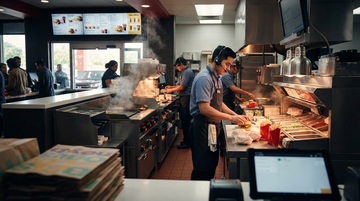
A primary FDA update on a 2026 multistate foodborne illness outbreak implicated Taco Bell locations and iceberg lettuce from Taylor Farms de Mexico—not Chipotle. Even so, Chipotle [CMG] still faces the same investor problem: how fast a suspected outbreak narrative can pull transactions down when the model is already sensitive to traffic and menu disruption.
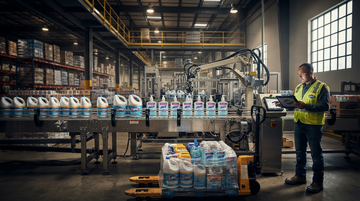
Clorox Just Got a Real-Staples “Re-Rate” Test—Purell Is Doing the Work
Clorox’s GOJO/Purell bolt-on did not just add scale—it changed the company’s 2026 outlook math, with guidance explicitly tracking margin headwinds and transaction costs tied to the deal. For investors, the question shifts from “does hygiene sell volumes?” to “can margin-mix from higher-quality hygiene assets defend earnings through the AI-era spend normalization?”

Electronic Arts‘ $55B PIF Take-Private Just Met a Bookings Miss—So the Console Live-Services Pipeline Is the Only Deal Math That Matters
EA’s Saudi-PIF-backed $55B go-private deal is set to close around Aug. 4, 2026, but the timing is now being judged against a Q1 bookings miss. The market’s “deal” framing is secondary: investors should focus on whether EA can sustain console/PC live-service monetization through its multi-year content cadence to make the cash ramp required by an LBO credible.

Gilead Sciences's HIV growth buys time—but only if its R&D spend translates into “next-legs” before Biktarvy peak cash turns into renewal risk
Gilead Sciences reported base business up 8% and raised full-year guidance to expect HIV sales growth of 8% in 2026. But the investable question is how long that HIV duration can keep funding pipeline bets: in FY2025, free cash flow was $9.46B while R&D is ~$5.80B—meaning the “duration” thesis hinges on near-term clinical conversions, not just franchise resilience.

Iron Ore at a 13-Month Low Turns Beijing’s Stimulus Into a Math Problem at ~$95, Not ~$115
A slide in iron ore forces investors to separate “China steel demand” from “headline price.” Using China’s iron-ore import/inventory signals, the real test for the whole bulk-materials chain is whether stimulus can lift steel throughput enough for benchmarks to stay above the economic clear price—otherwise high-cost supply is still punished while US/EU steel margins get a temporary cushion.
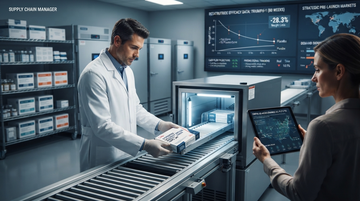
Eli Lilly's “Early-Access” Move Is a TAM Pre-Pricing Mechanism
Lilly’s “early access” to its next-gen obesity drug (retatrutide) is not charity—it is a controlled go-to-market rehearsal that can pre-price demand and steer where patients (and cash-pay channels) land once the broader launch hits. In this model, the value comes from learning-and-pricing ahead of approval, while the financials show Lilly can fund growth and scale investment despite periods of low free cash flow.
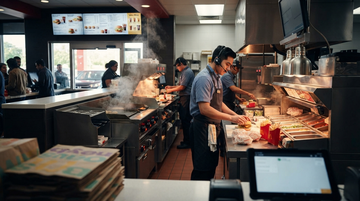
McDonald’s U.S. Value Push Didn’t Fail—But It May Be Losing Its “Traffic Engine” as Growth Shifts Toward Check
McDonald’s latest U.S. comparable sales growth has remained positive (3.9% in Q1 2026), but the company’s own disclosure framework—where comp sales can rise via average check even as guest traffic slows—makes “value” harder to underwrite purely as traffic recovery. For investors, the key question is whether value meals are still expanding guest counts, or increasingly only remixing purchases in ways that protect revenue while compressing franchise economics.
What to expect
Evidence-first notes with a visible point of view.
This section collects sharp takes on earnings, shareholder meetings, and market structure. Each new piece should make the thesis, the facts, and the implications obvious within the first few screens.
Expect direct analysis, not generic commentary.
Expect the data to be explicit and the argument to be easy to follow.
Plutux is not an investment adviser. Market data and AI-generated analysis are for information and education only, not investment advice. Disclaimer