Latest
The day's market news, with the argument attached
New notes every trading day on earnings, policy and market structure. Each one opens with the conclusion, then the evidence, then the companies it hits.
2026-08-03
%22%2F%3E%0A%20%20%3Ccircle%20cx%3D%22220%22%20cy%3D%22150%22%20r%3D%22180%22%20fill%3D%22%2322d3ee%22%20fill-opacity%3D%220.12%22%2F%3E%0A%20%20%3Ccircle%20cx%3D%221010%22%20cy%3D%22130%22%20r%3D%22220%22%20fill%3D%22%2338bdf8%22%20fill-opacity%3D%220.08%22%2F%3E%0A%20%20%3Ccircle%20cx%3D%22920%22%20cy%3D%22520%22%20r%3D%22170%22%20fill%3D%22%2322d3ee%22%20fill-opacity%3D%220.06%22%2F%3E%0A%20%20%3Cpath%20d%3D%22M140%20430h920%22%20stroke%3D%22url(%23line)%22%20stroke-width%3D%2212%22%20stroke-linecap%3D%22round%22%2F%3E%0A%20%20%3Cpath%20d%3D%22M220%20360c120-150%20260-220%20380-220s260%2070%20380%20220%22%20fill%3D%22none%22%20stroke%3D%22%2367e8f9%22%20stroke-opacity%3D%220.5%22%20stroke-width%3D%2216%22%20stroke-linecap%3D%22round%22%20stroke-linejoin%3D%22round%22%2F%3E%0A%20%20%3Cpath%20d%3D%22M300%20398h600%22%20stroke%3D%22%2394a3b8%22%20stroke-opacity%3D%220.24%22%20stroke-width%3D%228%22%20stroke-linecap%3D%22round%22%2F%3E%0A%20%20%3Ctext%20x%3D%22220%22%20y%3D%22510%22%20fill%3D%22%23e2e8f0%22%20fill-opacity%3D%220.7%22%20font-family%3D%22Arial%2C%20Helvetica%2C%20sans-serif%22%20font-size%3D%2238%22%20letter-spacing%3D%228%22%3EINSIGHTS%3C%2Ftext%3E%0A%3C%2Fsvg%3E)

Palantir’s guide raise is the market’s first “AI budgets are real” signal—because it’s coming through the U.S. commercial line
Palantir’s latest guidance raise is most investable when you treat it as evidence that AI deployments are moving from one-off pilots into contracts that show up in forward revenue. The clearest through-line is the uplift in Palantir’s U.S. commercial revenue guide, which makes the AI/defense thesis a budget-and-execution story—not just a demo-market story for software vendors.
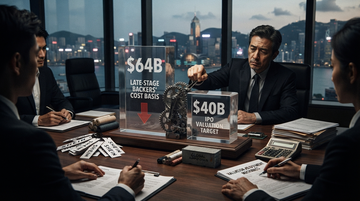
Shein’s $64B-to-$40B cost reset is a stealth IPO pricing experiment—where late backers (not founders) take most of the markdown
Shein is reportedly considering a mechanism that lowers late-stage investors’ “cost base” toward a ~$40B IPO valuation, after those investors bought at an up-to-$64B valuation. The design matters because it shifts the economic pain away from the IPO float and onto backers, creating a transferable template for how other late-stage private names may manage Q3 marks and public-market translation risk.

Snap’s Q2 World Cup “ad beat” survives the ARPU stress test—up to the point where the math is still quarter-specific
Snap’s Q2 revenue inflection looks real on a top-line read, but the durability question is the split between unit economics and temporary demand/event lift. The quarter’s fundamental financial direction is still dominated by advertising volatility and profitability pressure, so investors should treat the World Cup headline as a signal—not proof—of sustained AI-driven routing gains.

Tom Lee’s 2027 “best year” only works if mega-caps keep leading while SpaceX-or-Fed shocks don’t reprice risk—here’s the trade book
Tom Lee’s bullish 2027 setup is best understood as a conditions trade: mega-caps must keep capturing AI earnings momentum while the market digests massive tech IPO supply and avoids a Fed-led tail unwind. The concrete test is whether leadership stays narrow (NVDA/META/GOOGL/AXP/CVX) or spreads into the small-cap bridge—because if it doesn’t, “best year” becomes a liquidity/valuation story rather than an earnings story.

Trump turns supermajor capital return into a “gasoline-price” hostage—Exxon and Chevron can’t buyback their way out
On Aug 3, 2026, Trump told ExxonMobil and Chevron to “stop making too much money” and to “cut the retail price, the consumer price,” explicitly tying Big Oil’s high profits to gasoline affordability. The core investor risk is not that buybacks stop tomorrow; it’s that politicized price pressure forces Integrated majors to re-optimize cash allocation between returns, capex, and supply—raising second-order risk to Permian/Midcontinent-capex and refining feedstock plans.
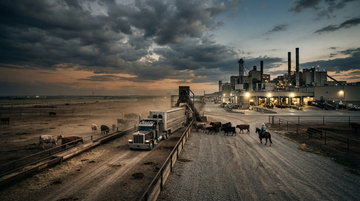
Tyson Foods's cattle squeeze turns into a repricing event for the whole US beef chain
In its FY26 outlook language, Tyson Foods ties weaker profit to structurally tight US cattle supplies, not just short-term volatility. For investors, the key shift is that the beef complex now has to price longer-lasting scarcity (and higher upstream cost risk), while downstream channels face slower relief from cheaper cattle.
2026-08-02
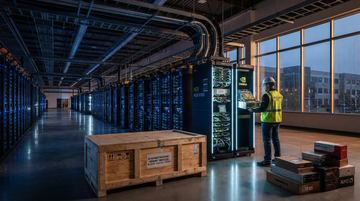
Amazon Just Admitted AI Capex Now Outruns Its Own Cash Engine — A $220B Verdict on Hyperscaler Survival
Amazon raised 2026 capex to $220B and posted a -$7.6B TTM free cash flow on July 30, joining Oracle in negative territory and following Alphabet's -$5.85B Q2 print, even as AWS grew 37% and operating income hit $27.5B. The capex bump is fully memory-driven, the $496B AWS backlog shows demand outstrips supply through 2027, and the $53.4B non-cash Anthropic gain is doing the work that operations no longer can. The read-through to Microsoft, Meta, and NVIDIA: AI capex has moved from 'growth-justified' to 'survival-justified,' and the supply chain — SK Hynix, Samsung, Micron, Broadcom, AMD — collects the toll.

Ares Printed $36B in a Quarter. The Same Quarter It Capped Withdrawals on a $10.7B Fund.
Ares Management hauled a record $36B in Q2 2026 and stacked it on top of $30B in Q1 — yet the same firm capped redemptions at 5% on its Ares Strategic Income Fund because quarterly withdrawal demand hit 14.4% of NAV. The fundraising headline conceals a two-speed market: closed-end flagship and BDC vehicles absorb a record wave of institutional capital, while the open-end retail-facing fund faces the worst redemption stress in its history. For investors, the trade is not 'private credit is the risk' or 'private credit is the trade' — it is the wedge between them.

BYD's 124% Export Jump Just Broke the US Tariff Thesis — and the Second-Order Damage Lands on Tesla, GM, and Ford
BYD's July sales rose 21.8% to 419,211 units — the third straight monthly gain — while overseas shipments doubled to 179,841 vehicles, exposing that the US tariff wall is containing the brand, not the volume. The harder read is structural: with an eight-ship fleet now in service and a 1.5M export target intact, BYD is now pulling demand from every market Tesla, GM, and Ford operate in — at higher margins than its domestic book. Investors holding US auto OEMs should re-base volume assumptions before the Q3 prints.

Capital One's 'AML, Not Politics' Filing Hits a Court Where the White House Already Sits as Prosecutor — That's Why the 0.5% Stock Move Is the Wrong Read
On August 1, 2026, Capital One told a federal court it closed 300+ Trump Organization accounts in March 2021 after a months-long AML review — not political bias. COF shares closed down just 0.54% on the news, but the filing lands inside a coordinated Washington push (EO 14331, the December 2025 OCC report naming nine banks including COF, and a June 2026 DOJ debanking subpoena sweep) that has already converted reputational risk from a private accounting concept into a regulatorily-actionable claim. The brief is correct that this hasn't been priced; the better read is that the market is treating an AML defense as a fact pattern, when it is actually a precedent that re-opens every PEP-exit file across the consumer bank complex.

Chime's 10% Layoff Is a Fintech Earnings Story, Not an AI Story — and That's the Trade
Chime Financial cut 10% of staff on July 31, 2026 — the first post-IPO deposit-franchise fintech to break a cost story at scale — but the math is more about a $2.19B revenue company trying to widen a 1-month-old GAAP profit margin than about AI replacing engineers. With Visa's 7% cut landing three days earlier, Robinhood's 10% cut pre-positioned, and Affirm's CEO publicly rejecting the AI layoff narrative, the real question for investors is whether AI becomes an excuse for ordinary post-IPO discipline, or a structural opex reset that re-rates the entire consumer-fintech cohort.
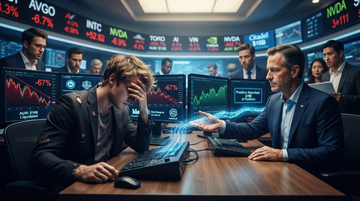
Citadel Just Became the AI Correction's Buyer of Last Resort
Ken Griffin's Citadel quietly absorbed roughly $16B of public AI-stock exposure from Leopold Aschenbrenner's Situational Awareness after the 24-year-old's fund dropped 67% in July. The first true whale-buying event of the 2026 chip rout removes a leveraged marginal long, hands the bag to a $67B multi-strategy shop, and leaves private AI names like Anthropic as the only place the survivors still want to be.
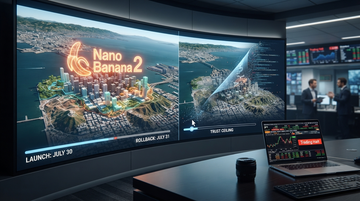
Alphabet's 24-Hour Earth AI Reversal Sets a Trust Ceiling for Generative Maps
Google launched Nano Banana 2 in Google Earth on July 30, 2026, then rolled it back on July 31 after users created convincing false scenarios over real satellite, aerial, and 3D imagery. The episode is not a material near-term revenue event for Alphabet, but it raises the cost of deploying generative features across trusted visual products: stronger review, provenance, moderation, and distribution controls become part of the margin equation.
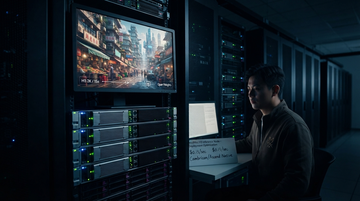
MiniMax's H3 Is a Quotation Mark for Alibaba — China's Video-Gen Race Just Reset the AI Investment Cycle
On July 31, 2026, MiniMax shipped H3 — a 15-second, 2K, omni-modal video model priced at less than one-third of mainstream rivals and built to run on Chinese chips — then open-sourced the weights. The release collapses the price floor for frontier video generation in China and forces Alibaba, which both holds a MiniMax stake AND sells it cloud AND competes with it via HappyHorse, into a single sharp decision. The second-order trade is harder: H3's deliberate compatibility with Cambricon and Huawei Ascend silicon signals that Chinese inference is decoupling from Nvidia, even as Tencent ramps capex above 36 billion yuan for 2026.
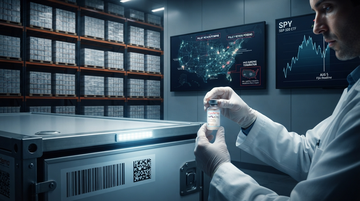
Moderna Cleared the Science Test; August 5 Will Price the Policy Test
Moderna's mFlusiva produced 26.6% relative efficacy over a standard flu shot and won unanimous FDA-adviser support, but approval is no longer the only hurdle. HHS has terminated 22 mRNA investments worth nearly $500 million, making recommendation, distribution and uptake the harder tests for Moderna—and the more important read-through for BioNTech and Pfizer.
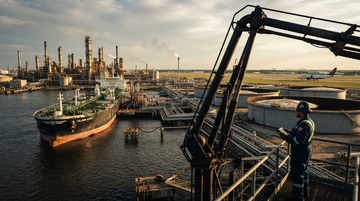
OPEC+’s 188 kbpd Hike Is Too Small to Beat a 2.2 mbpd Inventory Draw
OPEC+ approved a 188,000-barrel-per-day September increase on August 2, but it did not formally promise the widely anticipated pause. The deeper signal is a split market: demand is weakening, yet Iran-war outages and depleted inventories still favor refiners and integrated producers over airlines. That makes Chevron and Valero Energy the cleaner near-term exposures, while Delta Air Lines remains the clearest casualty of expensive fuel.
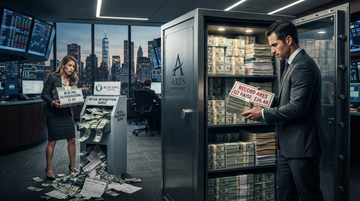
Private Credit Splits in Two: Ares Management Hoards $36B While Blue Owl Capital Scrapes $7.6B — and the $15.6B Retail Redemption Queue Names the Loser
In a single 48-hour window, Ares Management printed a record $36B of Q2 fundraising (Jul 31) while Blue Owl Capital reported its slowest quarter in three years at $7.6B (Jul 30). The same week, $15.6B of redemptions were requested from retail private-credit funds — and only $5.9B, or 38%, were actually returned. The ranking is now quantifiable: institutional-scale managers with diversified platforms and asset-based finance (Ares) are vacuuming up capital, while retail-marketed direct lenders (Blue Owl, Apollo, Blackstone) are repricing access. Ares Management trades at 57x trailing earnings for the privilege; Blue Owl Capital trades at 86x for a direct-lending franchise that fell to 35% of AUM.

The Small-Cap Rally Is Real—but August Must Prove It Is More Than a Rate-Cut Trade
The Russell 2000’s reported 10.3% July gain against a 1.2% rise for the S&P 500 marked a sharp breadth shift, but the evidence is not yet strong enough to call it a durable earnings cycle. Regional banks, industrials, energy and AI-infrastructure names all contributed to the broader move, while the Federal Reserve’s 3.50%–3.75% policy range keeps the trade highly sensitive to rates. August’s test is simple: do earnings revisions and credit conditions validate the rally, or does crowded positioning reverse?

SpaceX's First Print Tests Whether the $1.4T Is Cash or Vision
SpaceX reports its first quarterly earnings Aug 4 with shares already 51% off their June peak at $108.37. The print forces the Street to separate Starlink's real cash engine (Q1 2026: $3.26B revenue, $1.19B operating income) from the AI compute money pit that added a $1.2B EBITDA drag in 2025 — and decide whether the $1.4T market cap is sum-of-parts math or a Musk optionality premium. With 911.5M shares unlocking Aug 6 and 34% of the float already short, the call is the first liquidity test of public-market SpaceX.

Munich's Suno Loss Forces Music Catalogs Into the AI-Liability Trade — and the First Real Read Is on Universal Music Group
The Munich Regional Court's July 31 ruling against Suno — a private US AI lab with ~$300M of annualized revenue — marks the first European jurisdiction to hold that training and output both infringe copyright, rejecting the EU's text-and-data-mining defense. With Warner Music Group already paid up via a November 2025 licensing template, Universal Music Group and Sony Group now have a precedent plus a price sheet to extract similar terms in their pending US suit, turning the majors' catalogs from passive royalty streams into active AI-licensing toll booths. Investors should reprice music-rights equities for a higher licensing-revenue floor and a structural margin tailwind that compounds with streaming.
What to expect
Evidence-first notes with a visible point of view.
This section collects sharp takes on earnings, shareholder meetings, and market structure. Each new piece should make the thesis, the facts, and the implications obvious within the first few screens.
Expect direct analysis, not generic commentary.
Expect the data to be explicit and the argument to be easy to follow.
Plutux is not an investment adviser. Market data and AI-generated analysis are for information and education only, not investment advice. Disclaimer