Latest
The day's market news, with the argument attached
New notes every trading day on earnings, policy and market structure. Each one opens with the conclusion, then the evidence, then the companies it hits.
2026-07-29
%22%2F%3E%0A%20%20%3Ccircle%20cx%3D%22220%22%20cy%3D%22150%22%20r%3D%22180%22%20fill%3D%22%2322d3ee%22%20fill-opacity%3D%220.12%22%2F%3E%0A%20%20%3Ccircle%20cx%3D%221010%22%20cy%3D%22130%22%20r%3D%22220%22%20fill%3D%22%2338bdf8%22%20fill-opacity%3D%220.08%22%2F%3E%0A%20%20%3Ccircle%20cx%3D%22920%22%20cy%3D%22520%22%20r%3D%22170%22%20fill%3D%22%2322d3ee%22%20fill-opacity%3D%220.06%22%2F%3E%0A%20%20%3Cpath%20d%3D%22M140%20430h920%22%20stroke%3D%22url(%23line)%22%20stroke-width%3D%2212%22%20stroke-linecap%3D%22round%22%2F%3E%0A%20%20%3Cpath%20d%3D%22M220%20360c120-150%20260-220%20380-220s260%2070%20380%20220%22%20fill%3D%22none%22%20stroke%3D%22%2367e8f9%22%20stroke-opacity%3D%220.5%22%20stroke-width%3D%2216%22%20stroke-linecap%3D%22round%22%20stroke-linejoin%3D%22round%22%2F%3E%0A%20%20%3Cpath%20d%3D%22M300%20398h600%22%20stroke%3D%22%2394a3b8%22%20stroke-opacity%3D%220.24%22%20stroke-width%3D%228%22%20stroke-linecap%3D%22round%22%2F%3E%0A%20%20%3Ctext%20x%3D%22220%22%20y%3D%22510%22%20fill%3D%22%23e2e8f0%22%20fill-opacity%3D%220.7%22%20font-family%3D%22Arial%2C%20Helvetica%2C%20sans-serif%22%20font-size%3D%2238%22%20letter-spacing%3D%228%22%3EINSIGHTS%3C%2Ftext%3E%0A%3C%2Fsvg%3E)

General Dynamics can’t monetize defense demand if shipbuilding execution hits a fixed “output ceiling”
Recent disclosures show record backlog scale for General Dynamics alongside explicit recognition that higher U.S. Navy demand is pressuring the shipbuilding industrial base already stressed by demographics. The investable question shifts from “is demand strong?” to “how fast can backlog be turned into margin and cash when capacity, labor, and supplier throughput bind?”

Defense backlogs are not “capacity”—fixed-price contract structure and supply-chain + labor execution decide which primes (and suppliers) actually monetize demand
Across Lockheed Martin and Northrop Grumman, the filings show that backlog growth can coexist with contract-level cost and margin pressure under fixed-price development/early-production risk. Investors should treat backlog as a demand signal—but value conversion hinges on labor availability, supply-chain performance, and how much profit/loss risk sits inside the contract terms.

DoorDash's Part 135 move turns drone delivery from a partnership add-on into a regulated, asset-heavy moat
DoorDash says its DoorDash Labs unit earned FAA Part 135 air-carrier certification on Jul 29, 2026, and is launching an in-house “DoorDash Air” vertical stack. That changes the economics of last-mile drone delivery because DoorDash can amortize its own aircraft + hub setup while shifting integration away from Wing/Flytrex/Manna partners—while Part 135 certification acts like a regulatory capacity barrier.

EssilorLuxottica’s Q2 smart-eyewear profit beat proves attach-rate—not novelty—can scale
In EssilorLuxottica’s Q2 print, AI-powered wearables and myopia management show up together with margin expansion, turning smart glasses from buzz into earnings validation. The second-order investor opportunity is the ecosystem that benefits once mainstream brands + optical retail install demand: lens/optics supply, AR display supply chains, and optical retailers with higher service-led attach.

A Hawkish Fed Hold Can Still Ease Financial Conditions—So September Pricing Becomes a Sector-Shift, Not a Rate-Path Story
The Fed’s July hawkish hold (rates unchanged, but inflation risk and a wider policy-path conversation) can still transmit to markets through the financial-conditions channel—not just the policy-rate channel. That means September repricing is likely to favor banks and value-style cashflows that benefit when funding costs don’t tighten as much as the Fed’s tone implies, while duration-heavy growth remains hostage to term-premium volatility.

Ford's truck profit engine can’t run forever on “wealthy buyers” alone—its 2026 EBIT lift is also a math problem
Ford raised its 2026 adjusted EBIT outlook to $10–$11B, explicitly citing strong pricing/product mix and truck-led demand even as EV losses continue. The durable question for investors is whether North American truck affordability pressure can stay contained without eroding the very margin bridge that is offsetting Ford’s Model e losses.

General Dynamics' backlog conversion is already showing up in cash—now the question is whether that production curve can keep up
General Dynamics is printing classic backlog-to-execution signals: a 2-to-1 book-to-bill in Q1 2026 and operating cash conversion of 192% of net earnings. The risk for investors isn’t demand—it’s whether delivery pacing (especially in aerospace) can sustain as backlog rises, without margin or cash quality slipping.

FTC’s Hims & Hers Pixel Case Makes Meta and Snap the Real Compliance Bottleneck for Telehealth PHI Advertising
The FTC (with LA County and Utah) alleges Hims & Hers sent sensitive health data to Meta and Snap pixel tracking systems used for ad targeting/measurement. The key shift for investors is that the “HIPAA pixel loophole” becomes a de facto gatekeeping constraint on the entire consumer-telehealth ad-tech stack—raising compliance, remediation, and potential usage-cost risks for Meta META and Snap SNAP alongside the advertiser.

Kia is betting $600M+ on Mexico EV localization to protect USMCA eligibility if North America tightens battery sourcing
Kia’s planned $600M-plus Nuevo León expansion is less about “Mexico EV capacity” and more about keeping EVs on a USMCA-compliant path as rules increasingly scrutinize batteries and originating inputs. USMCA already contains an “advanced battery” originating framework and requires higher regional value content thresholds (75% for passenger vehicles and light trucks), which makes factory-level localization—and supplier flexibility—an option worth paying for. If the USMCA review process leads to tighter proof requirements or higher battery localization expectations, companies with battery supply chains that can credibly shift origin will be the near-term winners.

China’s DUV mass-production pressures Congress: MATCH Act’s servicing ban timing will decide whether Lam Research, Applied Materials, and KLA harvest China growth in 2H26 or lose it to license “latency”
China’s July 27, 2026 shift to mass-producing homegrown immersion DUV tools increases the probability of near-term fab ramp—exactly when the MATCH Act must clear Congress if it’s meant to restrict not just exports, but servicing/maintenance. For the US semicap trio, the key risk is that a servicing ban applies a licensing policy of denial, which can delay tool upkeep and directly disrupt backlog/revenue conversion even if some equipment already sits in-country.

Microsoft’s Cloud Beat Is Real—but AI Revenue Has to Clear a Utilization & Margin Wall
Microsoft’s latest results show cloud growth is strong enough to absorb AI buildout: Microsoft Cloud revenue rose 29% to $54.5B, while Azure and other cloud services grew 40%. The catch is that the same quarter also shows cloud margin pressure from ongoing AI infrastructure investment—so the market will judge the AI conversion not by demand, but by whether utilization and pricing eventually outpace depreciation and cost of revenue.

Mondelez’s pricing works—until elasticity turns a “volume cushion” into a “volume problem” in Europe
In Mondelez's latest disclosures, higher net pricing is still doing the heavy lifting, but management explicitly flags that pricing actions are creating continued elasticity-driven volume weakness—especially in chocolate in Europe. That split matters for investors because it implies branded power is real, yet pass-through is not linear: retailers and private label become more important exactly when volumes start to slip.

Mondelez proves loyalty works—until input-cost pricing meets elasticity
In Q2, Mondelez grew Organic Net Revenue by 2.2% on higher net pricing and favorable volume/mix, even while admitting that pricing actions have adversely impacted consumer demand, particularly in Europe. The investable question isn’t whether snack brands have pricing power—it’s whether category loyalty can keep absorbing the next cocoa/inputs-driven cost shock without volume giving way again.

NextEra’s Kentucky “uranium-to-data-center” bet reframes nuclear as grid-speed, not just generation
A proposed $100B-scale NextEra–Brookfield data center campus would repurpose DOE’s Paducah uranium-enrichment footprint into a power-and-compute hub. The investor question isn’t whether nuclear is “clean power”—it’s whether co-locating hyperscale load with a nuclear-linked strategy can compress interconnection and build timelines, shifting value toward NextEra as the project’s grid-speed integrator.

Pentair turns a $1.4B Taco deal into a bet on hydronics (not pool pumps)
While Pentair is absorbing pool-equipment destocking headwinds, its $1.4B acquisition of Taco is structured to shift earnings power toward HVAC/hydronics and other commercial/industrial water infrastructure. The economics (about 10.5x 2026E EBITDA, ~$30M run-rate cost synergies, and $0.10–$0.15 accretion in FY2027) matter because they pay you to wait out pool cyclicality while consolidating distribution-ready “water systems” across categories.

P&G’s “muted” 2027 implies brand power stops trading up—and margin protection turns into a promotion math problem
P&G’s latest filings and earnings disclosures point to a cautious consumer environment where brand-driven pricing has less “upside” than investors assumed, shifting the burden to mix, elasticity, and promotional discipline. The key investment question becomes whether P&G can keep volume steady without funding growth with higher trade and share-of-wallet pressure.
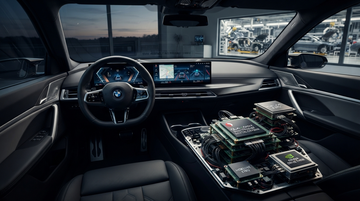
Qualcomm wins BMW’s next-decade cockpit + ADAS silicon—and turns the auto-semiconductor throne into a three-way fight with Mobileye and NVIDIA
BMW has selected Qualcomm as its lead compute silicon provider for the digital cockpit and next-generation ADAS/automated-driving systems through the next decade. The deal puts Qualcomm's Snapdragon Digital Chassis (including Snapdragon Cockpit and Snapdragon Ride) in direct competition with Mobileye's EyeQ-based approach and NVIDIA's Drive/Thor-style central compute, reshaping where investors should look for auto-semiconductor cash generation.

Qualcomm’s data-center pivot is built on handset cash—but mobile weakness is already shaping the funding timeline
Qualcomm QCOM says handset represents roughly one-third of QCT revenues by fiscal 2029, while targeting data-center revenues of more than $15B by fiscal 2029 and $5B in fiscal 2027. The key investable question is whether handset cash generation remains durable enough to fund that ramp through a cyclical, memory-constrained mobile cycle—especially after Qualcomm explicitly expects near-term demand hits from handset supply constraints.
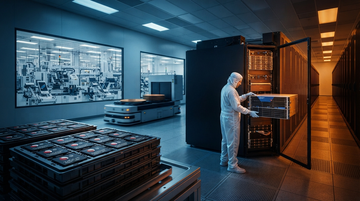
Qualcomm's guidance stress-tests whether handset cash can fund a data-center pivot
In its Q3 FY2026 outlook, Qualcomm guided revenue of $9.2B–$10.0B and non-GAAP EPS of $2.10–$2.30, explicitly baking in memory-supply pressure that hits handset demand. The financial durability question is answerable from cash generation: TTM operating cash flow is $14.285B and free cash flow is $12.502B, but the pivot only creates shareholder value if data-center/edge expansions can offset handset volatility without compressing returns.

Robinhood's profit beat looks like a volume-quality win, but only if net interest stays sticky while crypto swings fade
Robinhood HOOD reported Q1 2026 net income of $346M on $1.07B of total net revenue, with transaction-based revenues up 7% and net interest revenues up 24%. The key durability question is whether higher trading activity is coming from broader, recurring funded engagement (and improving ARPU) versus a temporary volatility tailwind—especially as crypto revenue fell 47% YoY.
What to expect
Evidence-first notes with a visible point of view.
This section collects sharp takes on earnings, shareholder meetings, and market structure. Each new piece should make the thesis, the facts, and the implications obvious within the first few screens.
Expect direct analysis, not generic commentary.
Expect the data to be explicit and the argument to be easy to follow.
Plutux is not an investment adviser. Market data and AI-generated analysis are for information and education only, not investment advice. Disclaimer