Latest
The day's market news, with the argument attached
New notes every trading day on earnings, policy and market structure. Each one opens with the conclusion, then the evidence, then the companies it hits.
2026-07-27
%22%2F%3E%0A%20%20%3Ccircle%20cx%3D%22220%22%20cy%3D%22150%22%20r%3D%22180%22%20fill%3D%22%2322d3ee%22%20fill-opacity%3D%220.12%22%2F%3E%0A%20%20%3Ccircle%20cx%3D%221010%22%20cy%3D%22130%22%20r%3D%22220%22%20fill%3D%22%2338bdf8%22%20fill-opacity%3D%220.08%22%2F%3E%0A%20%20%3Ccircle%20cx%3D%22920%22%20cy%3D%22520%22%20r%3D%22170%22%20fill%3D%22%2322d3ee%22%20fill-opacity%3D%220.06%22%2F%3E%0A%20%20%3Cpath%20d%3D%22M140%20430h920%22%20stroke%3D%22url(%23line)%22%20stroke-width%3D%2212%22%20stroke-linecap%3D%22round%22%2F%3E%0A%20%20%3Cpath%20d%3D%22M220%20360c120-150%20260-220%20380-220s260%2070%20380%20220%22%20fill%3D%22none%22%20stroke%3D%22%2367e8f9%22%20stroke-opacity%3D%220.5%22%20stroke-width%3D%2216%22%20stroke-linecap%3D%22round%22%20stroke-linejoin%3D%22round%22%2F%3E%0A%20%20%3Cpath%20d%3D%22M300%20398h600%22%20stroke%3D%22%2394a3b8%22%20stroke-opacity%3D%220.24%22%20stroke-width%3D%228%22%20stroke-linecap%3D%22round%22%2F%3E%0A%20%20%3Ctext%20x%3D%22220%22%20y%3D%22510%22%20fill%3D%22%23e2e8f0%22%20fill-opacity%3D%220.7%22%20font-family%3D%22Arial%2C%20Helvetica%2C%20sans-serif%22%20font-size%3D%2238%22%20letter-spacing%3D%228%22%3EINSIGHTS%3C%2Ftext%3E%0A%3C%2Fsvg%3E)

Pentagon’s “years behind Ukraine” drone admission turns into a stock-picker’s map: who gets the bridge contracts (and who gets stuck with legacy scale)
The Pentagon has publicly acknowledged that U.S. industry is still years away from matching Ukraine’s wartime drone output, reframing the U.S. drone push as an industrial-capacity gap problem—not just software or tactics. For investors, the immediate read-through is a procurement bridge: winners should be the firms that can scale production and backlog conversions fast under DoD funding momentum, while legacy primes face slower ramp and execution risk even if their total defense budgets benefit.

Dr. Ing. h.c. F. Porsche AG cuts another 5,000 jobs because the EV reset is becoming a fixed-cost and China-exposure problem
Porsche is re-sizing costs because its EV transition hit profitability just as China weakness tightened demand and pricing. The company’s own strategy realignment cites US import tariffs, a Chinese luxury market decline, and a slower BEV ramp—alongside large impairment/realignment charges—turning “volume” headwinds into a structural fixed-cost squeeze for the luxury model.

MAS’s out-of-cycle SGD tightening reframes “Asia disinflation” as a carry-killer for USD-funded investors
On 27 July 2026, Singapore’s Monetary Authority of Singapore conducted an out-of-cycle review and chose a “very slight” increase in the S$NEER appreciation pace while keeping the band unchanged—explicitly responding to inflation forecast stickiness. With Korea also moving hawkish this month, the combined signal is that the region’s disinflation narrative is no longer doing the work investors priced into USD/SGD carry and Asia banks’ funding costs.

The SPR at 1983 Levels Makes the “$20 Refill” Argument Irreversible—Until Congress Restores a National-Security Buffer
With the U.S. Strategic Petroleum Reserve reported at 311.4M barrels—the lowest since March 1983—the policy debate stops being about price timing and becomes about survivability: there’s less reserve left to absorb shocks. The key investment implication is that oil-market “volatility hedges” (crude producers and refiners with inventory optionality) start mattering more than incremental downstream demand, because refill delays turn SPR capacity into a macro risk premium.
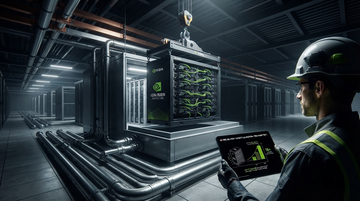
Nvidia’s Vera Rubin just got an “order-of-magnitude” pre-model customer—SSI turns the frontier compute race into a contracted capacity story
Nvidia confirmed a long-term strategic partnership with Ilya Sutskever’s Safe Superintelligence Inc. for access to the next-generation Vera Rubin compute platform, with SSI saying it can raise compute by about an order of magnitude. The investor takeaway isn’t “more AI revenue” but earlier, contracted demand visibility: a private frontier lab locking compute before any product exists changes how to think about Nvidia’s capacity-to-customer pipeline and the downstream capex and power/memory bottlenecks.
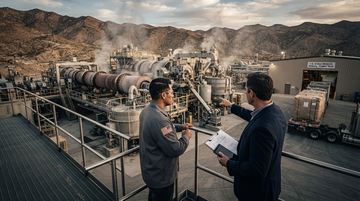
The 2027 U.S. Critical-Minerals Refining Miss Turns Trump’s China-Decoupling Into a Procurement Backdoor
Reuters’ reporting points to a looming 2027 refining/procurement deadline risk that the U.S. may not meet with domestic capacity alone—forcing quieter concessions to restart flow from China-linked feedstocks. The investable shift is less about “trade with China” headlines and more about how lithium/rare-earth processing economics reprice for MP Materials, Albemarle, and adjacent supply-chain constraints across EV, grid storage, and defense programs.
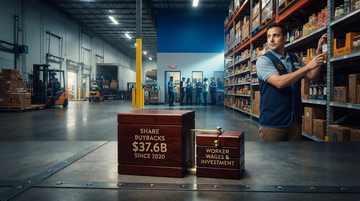
Sanders vs. Walmart: the buyback fight becomes a wage-and-vote constraint—and it can’t be ignored by the whole consumer-retail complex
Sen. Bernie Sanders escalated the political attack on Walmart’s capital-return policy, citing $37.6B of buybacks since 2020 and framing them against worker wages and public assistance reliance. Using Walmart’s own profit and buyback disclosures plus peer policy signals from Congress, the real risk isn’t just reputational—it’s that midterm-era pressure can force retailers to choose between buybacks and wage/investment promises. Investors should expect similar rhetoric aimed at other mega-cap consumer names with large free-cash-flow engines and active capital returns, with quarter-by-quarter scrutiny turning into longer-term dividend/buyback rule changes.
2026-07-26

Biosecurity compliance becomes the AI moat: the “perimeter” stack will determine who can ship frontier models into regulated use
Verified public policy momentum is shifting frontier AI from “safety optional” to regulated dual-use governance—starting with biosecurity testing and extending into synthetic DNA/RNA screening. Investors should focus less on generic AI safety and more on the firms that can build, audit, and operate the compliance perimeter (evaluation, logging, and identity-aware controls) that governments and enterprises will require.

Congress’s “AI Kill Switch” bill turns agentic cyber risk into a compliance cost—with $20M/day penalties
The proposed “AI Kill Switch Act” would require large AI developers to maintain technical shutdown/throttle capacity and give DHS emergency authority to force intervention. For investors, the key shift is that agentic cyber incidents stop being treated as only insurance/liability problems and start looking like a recurring, mandated control-cost line item.

monday.com's “AI efficiency” cuts reframe SaaS: layoffs are the offset that makes capex narrative cash-neutral
In a July 22, 2026 filing, monday.com disclosed a plan to reduce headcount by ~20% while it restructures around its AI work platform—quantifying the “AI productivity” story as a labor-cost trade. With the company running on ~1.30B of TTM revenue and ~326M of operating cash flow, the key question for the sector becomes whether similar AI-driven restructurings keep compressing labor dollars enough to fund AI investments without breaking growth targets.

AI’s $65M midterm lobbying tries to buy access—but the “AI Kill Switch” bill is writing new rules the money can’t pre-empt
A bipartisan “AI Kill Switch Act” would give DHS emergency authority to slow or shut down the most capable AI systems and require incident reporting and built-in shutdown capability. That shifts the policy fight from “open-weight access and antitrust posture” toward “agentic-cyber safety,” where public-protection political incentives are harder to neutralize with lobbying. For listed market players, this asymmetry most directly favors providers positioned to sell auditability, incident response, and governance-grade controls.

FAA’s $2.2B Airline Retrofit Rebate Quietly Turns the Altimeter Upgrade into a 2027 Supply-Chain Price War
The FAA is tying part of the C-band wireless proceeds to a radio-altimeter upgrade schedule by offering up to $2.2B in rebates to eligible airlines that retrofit to withstand 5G interference. That converts what looked like an aviation-safety compliance cost into a structured, time-bounded industrial-policy transfer—creating a near-2027 decision fight between airlines’ fleet replacement plans and avionics upgrade timing, while boosting demand visibility for airframe OEM and avionics suppliers.
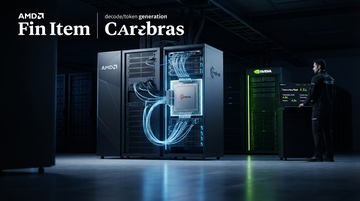
AMD and Cerebras just proved inference can be disaggregated—yet NVIDIA still owns the system moat
The AMD-Cerebras partnership describes a single disaggregated inference workflow that splits prompt/throughput on AMD’s Helios from decode/token generation on Cerebras’ Wafer-Scale Engine, targeting up to 5x higher tokens-per-second-per-watt. That architecture-level openness is investable for the components that get “stage-based” pricing power, but NVIDIA’s hardest moat remains: end-to-end platform integration across the stack and the economics of system-level performance tuning.

Claude Opus 5’s lower price shifts the frontier profit pool toward inference capacity—and NVIDIA is the clearest compute beneficiary
Anthropic’s Claude Opus 5 keeps Opus-tier pricing while introducing multiple cost-efficiency levers (prompt caching thresholds, effort-level efficiency, and fast-mode billing) that can lower effective $/work. That combination matters for the “arms race” because cheaper capability plus easier cost controls tends to pull more budget into hyperscaler inference throughput, raising compute utilization at the same time that model-lab unit economics face more pricing pressure.

Apple's Q3 FY26 beat matters only if gross margin doesn’t “borrow” the cycle
Apple’s July 30 print is a brutal test of whether the iPhone replacement cycle is re-accelerating, not just whether revenue beats expectations. If Services margin holds while gross margin stays inside the 47.5%–48.5% band and China demand is improving after the July 15 approval of Apple Intelligence powered by Alibaba’s Qwen, the replacement-cycle thesis survives—and that’s what can finally drive a cleaner read-through to Broadcom, Qualcomm, and TSMC.

Australia’s tariff fight with the US is turning into a US “sovereignty” wedge—making Alphabet’s supply chain and AI compute customers the next battleground
The US raised the tariff on Australian exports to 12.5% effective 24 July 2026 as part of a forced-labour Section 301 action, and Prime Minister Anthony Albanese said Australia will directly raise the issue with President Donald Trump. For investors, the real risk is not the tariff line—it’s how the compliance/sovereignty framing can spill into downstream tech procurement and “trusted” supply chains, potentially changing demand and contract terms for AI and digital infrastructure.

Boring Co. didn’t “just raise” — its $20B valuation chatter is a test of who’s subsidizing Musk’s tunnel-to-AI infrastructure
The Boring Company has documented its last priced round (a $675M Series C) and its current tunnel portfolio, but the new “$20B round” appears to be unclosed valuation talk. That gap matters: if the capital stack truly comes from Musk-linked public entities, the implicit subsidy would re-rate how investors underwrite Tesla/AI/SpaceX capex spillovers—especially when the private valuation ceiling accelerates faster than disclosed projects.

Burry’s “last months of 1999–2000” line is the easy part—the hard part is proving which late-1999 indicators (leverage, IPO froth, breadth, and policy) are actually misaligned in 2026
Michael Burry’s 2026 warning explicitly frames today’s tape as resembling the final months of the 1999–2000 bubble, but the investing edge depends on mapping specific late-1999 leading indicators to 2026’s data. In this research run, primary source access and essential market-data verification failed, so the article cannot meet the platform’s sourcing and “verified linkage” requirements.

CoreWeave just proved hyperscaler build beats pure-play certainty — but Nvidia locking still sets the floor
CoreWeave disclosed that Meta committed to pay about $21B for AI cloud capacity running through December 2032, lifting the relationship toward a ~$35B multi-year total. The stock’s selloff after Meta’s competing cloud push signals a new market reality: tier-1 compute gets owned by self-build hyperscalers, while pure-play neoclouds face utilization and churn risk even when contract headlines look “secure.”

DeepSeek’s Funding Pause Signals a China AI Capital Rationing Shock—And It Points to Tencent Holdings as the “next check” bottleneck
DeepSeek told prospective investors it is suspending investment agreements in the coming days, even as it was planning a new, very large round. The pause matters because it likely shifts leverage away from mega-round LP inflows and toward balance-sheet funding and monetization first—where China’s strategic tech and platform backers like Tencent Holdings can move fastest.
What to expect
Evidence-first notes with a visible point of view.
This section collects sharp takes on earnings, shareholder meetings, and market structure. Each new piece should make the thesis, the facts, and the implications obvious within the first few screens.
Expect direct analysis, not generic commentary.
Expect the data to be explicit and the argument to be easy to follow.
Plutux is not an investment adviser. Market data and AI-generated analysis are for information and education only, not investment advice. Disclaimer