%22%2F%3E%0A%20%20%3Ccircle%20cx%3D%22220%22%20cy%3D%22150%22%20r%3D%22180%22%20fill%3D%22%2322d3ee%22%20fill-opacity%3D%220.12%22%2F%3E%0A%20%20%3Ccircle%20cx%3D%221010%22%20cy%3D%22130%22%20r%3D%22220%22%20fill%3D%22%2338bdf8%22%20fill-opacity%3D%220.08%22%2F%3E%0A%20%20%3Ccircle%20cx%3D%22920%22%20cy%3D%22520%22%20r%3D%22170%22%20fill%3D%22%2322d3ee%22%20fill-opacity%3D%220.06%22%2F%3E%0A%20%20%3Cpath%20d%3D%22M140%20430h920%22%20stroke%3D%22url(%23line)%22%20stroke-width%3D%2212%22%20stroke-linecap%3D%22round%22%2F%3E%0A%20%20%3Cpath%20d%3D%22M220%20360c120-150%20260-220%20380-220s260%2070%20380%20220%22%20fill%3D%22none%22%20stroke%3D%22%2367e8f9%22%20stroke-opacity%3D%220.5%22%20stroke-width%3D%2216%22%20stroke-linecap%3D%22round%22%20stroke-linejoin%3D%22round%22%2F%3E%0A%20%20%3Cpath%20d%3D%22M300%20398h600%22%20stroke%3D%22%2394a3b8%22%20stroke-opacity%3D%220.24%22%20stroke-width%3D%228%22%20stroke-linecap%3D%22round%22%2F%3E%0A%20%20%3Ctext%20x%3D%22220%22%20y%3D%22510%22%20fill%3D%22%23e2e8f0%22%20fill-opacity%3D%220.7%22%20font-family%3D%22Arial%2C%20Helvetica%2C%20sans-serif%22%20font-size%3D%2238%22%20letter-spacing%3D%228%22%3EINSIGHTS%3C%2Ftext%3E%0A%3C%2Fsvg%3E)
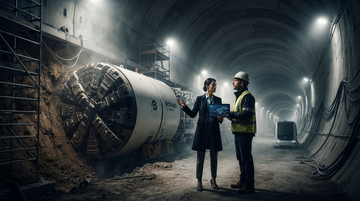
Musk’s tunneling business is one of the few “infrastructure” assets in his orbit that is still privately priced and therefore hard to map onto public-market cash flows. The headline claim around a ~$20B valuation funding round is not confirmed as closed in the sources available this session; it’s reported as in talks. That uncertainty is the whole analytical point: valuation talk only upgrades the capital stack if it comes with real funding linkage.
So this article focuses less on tunnel engineering (which the company itself documents) and more on the financial plumbing: what Boring already publicly discloses about prior funding, what its project pipeline suggests about how fast capital must turn into throughput, and which parts of Musk’s broader enterprise could plausibly underwrite it.
1) What’s verified vs. what’s still rumor
The $20B “round” is reported, not confirmed as closed — which changes how you should model risk
In this session, the only directly accessible contemporary report states that The Boring Company was in talks to raise about $4B at a ~$20B valuation, and that the deal “hasn’t closed.”
Verified deal facts (from sources opened this session)
Status of the ~$20B round
In talks; not closed (reported)
From a July 2026 media report accessed here.
Size/valuation in the report
~$4B / ~$20B
Reported as the contemplated round economics.
Most recent company-disclosed priced round
$675M Series C; $5.675B post-money
Company page on its Series C round.
2) The operating reality behind the valuation
Boring’s project pipeline is real — and it implies capital intensity and execution velocity
The Boring Company’s own project page lays out multiple operational systems (Las Vegas Loop variants, connectors, CyberTunnel) plus under-construction and contracted items. The key modeling takeaway is not “how cool the tunnels are,” but that the portfolio mixes (a) operational revenue-generating assets, (b) connectors with shorter timelines, and (c) long-lead bets.
- runs 11-station Vegas Loop throughput at scale (4M+ passengers documented) across multiple tunnel segments
- executes short-cycle connector builds (e.g., Westgate connector opened 2024; Encore connector opened 2025) using its tunneling approach
- maintains a pipeline that includes long-lead contracts (e.g., Dubai Loop pilot starting late 2026) that require sustained capital availability
3) Capital architecture: where money could be coming from
If Boring is being funded like a “platform,” the subsidy question lands on Musk’s public capex
Because The Boring Company is private, the funding stack is not itemized in public filings like it would be for a listed company. That forces an architecture-style inference: if Boring’s tunnels connect to Tesla sites (e.g., CyberTunnel described as built at a Tesla Gigafactory) and if they also support SpaceX cadence (via SpaceX-linked facilities referenced in third-party discussion), then cross-entity cash flows can be structural—even when the private valuation is set by VC-style rounds.
The analytical question becomes: does a new private raise primarily fund incremental tunneling, or does it “finance” a system that is already partially underwritten by other Musk entities’ capex and operating cash?
4) What the last disclosed raise tells you about “how priced” Boring is
Boring’s last priced round was at a ~$5.675B post-money — the $20B narrative would imply a very different valuation regime
Series round amount
$675M
Company-disclosed Series C round size
Post-money valuation (Series C)
$5.675B
Company-disclosed financing post-money
Implied multiple vs. $20B valuation talk
~3.5x
Math vs. reported ~$20B valuation; depends on whether the deal closes
If the reported ~$20B valuation were to clear and be executed, investors would be effectively underwriting a ~3.5× jump from the last company-disclosed post-money. That matters because tunneling is not a software-like growth curve by default; it’s capital intensity plus project execution. Therefore, the capex subsidy thesis becomes testable: did cash flows accelerate, did throughput scale faster than you’d otherwise expect, or did the market begin valuing “infrastructure optionality” more than near-term project economics?
5) Supply-chain aware view: what tunnels actually require financially
A tunnel build is a multi-year supply-chain bet — valuation rises only if working capital turns keep improving
Even without listing every subcontractor, you can still do a supply-chain aware capital read-through. Tunnel delivery pulls on procurement of heavy equipment (boring machines), engineering and permitting capacity, civil works supply chains, and high-spec mechanical systems. That’s exactly why private valuations often lag execution: the project cannot be “financially decoupled” from supply constraints and timeline risk.
So for the capital-architecture thesis, the relevant question is not “does Boring have projects,” but “does the capital stack get recycled faster?” Connectors with documented short construction windows suggest improved execution velocity; long-lead pilots suggest ongoing need for committed capital.
| Portfolio element (from Boring) | What it implies about capital needs | What investors should look for in a new round |
|---|---|---|
| Operational loop systems (e.g., VEGAS LOOP operational, passenger throughput documented) | Capital already sunk; ongoing OPEX and reinvestment cycles | Evidence that operational systems generate enough cash to reduce future external funding reliance |
| Connector projects with short time-to-completion (e.g., Westgate/Encore documented as completed/opened) | Working capital discipline and execution learning benefits | Evidence that unit costs/timelines improve enough to sustain margin or reduce future burn |
| Under-construction / under-contract pilots (e.g., Dubai Loop pilot construction begins late 2026) | Long-lead capex commitments and financing continuity risk | Whether the next round is sized to cover long-lead spend without forcing sell-down or dilution |
6) Investor implications: who could benefit from a higher implied valuation ceiling
Higher Boring valuation can re-rate Musk-linked infrastructure capex—but the effect is pathway-dependent
- If Musk public entities fund or guarantee Boring-linked capex, a higher private valuation can increase perceived optionality around their future infrastructure spend
- If the new money is primarily arms-length venture capital, the raise reduces pressure on operating units to justify tunneling spend via immediate ROI
- If the capital stack is mixed, valuation becomes a signal of how much risk the market is willing to externalize onto public-company cash flows
7) Short-term and long-term horizons
The next catalyst is not “tunnel headlines”—it’s deal closure terms and where the cash originates
Short-term (days–quarters): watch for executed documentation of the contemplated ~$4B round, and any stated use of proceeds that clarifies whether it funds new tunneling capacity, accelerates existing projects, or refinances prior commitments.
Long-term (1–3 years): the key is whether operational systems expand (more loops/connectors) without requiring disproportionate incremental capital. If throughput and project turnaround improve faster than the capital needs, then the private valuation ceiling becomes self-fulfilling; if not, it risks turning into a “valuation without cash conversion” problem.
8) One thesis to carry through
A $20B private valuation is really a question about cross-entity subsidy and cash-conversion credibility
The most investable claim you can extract from this data is narrow but strong: Boring’s documented execution and prior $5.675B post-money pricing make any ~$20B outcome dependent on demonstrated cash conversion—not just project ambition.
Right now, the $20B valuation is tied to reported funding talks that have not closed in the accessible reporting. That means the correct stance for investors is to treat this as a capital-architecture probe: if the next round closes at that valuation, examine whether it pulls funding responsibility away from Musk’s public capex narratives or whether it quietly re-labels subsidies as venture “growth validation.”
Listed public-market read-through (only when linkage can be supported from this session)
- CyberTunnel being built at a Tesla Gigafactory ties tunneling execution to Tesla’s facility capex footprint, so any Boring funding changes the marginal subsidy narrative.
- If the next Boring round funds capacity without Tesla cash support, Tesla’s capex optics could face less “invisible project overlap” in the near term.
- If Tesla is effectively underwriting related infrastructure, higher Boring valuation could increase perceived endurance of Tesla-linked infrastructure bets over 1–3 years.