Latest
The day's market news, with the argument attached
New notes every trading day on earnings, policy and market structure. Each one opens with the conclusion, then the evidence, then the companies it hits.
2026-07-25
%22%2F%3E%0A%20%20%3Ccircle%20cx%3D%22220%22%20cy%3D%22150%22%20r%3D%22180%22%20fill%3D%22%2322d3ee%22%20fill-opacity%3D%220.12%22%2F%3E%0A%20%20%3Ccircle%20cx%3D%221010%22%20cy%3D%22130%22%20r%3D%22220%22%20fill%3D%22%2338bdf8%22%20fill-opacity%3D%220.08%22%2F%3E%0A%20%20%3Ccircle%20cx%3D%22920%22%20cy%3D%22520%22%20r%3D%22170%22%20fill%3D%22%2322d3ee%22%20fill-opacity%3D%220.06%22%2F%3E%0A%20%20%3Cpath%20d%3D%22M140%20430h920%22%20stroke%3D%22url(%23line)%22%20stroke-width%3D%2212%22%20stroke-linecap%3D%22round%22%2F%3E%0A%20%20%3Cpath%20d%3D%22M220%20360c120-150%20260-220%20380-220s260%2070%20380%20220%22%20fill%3D%22none%22%20stroke%3D%22%2367e8f9%22%20stroke-opacity%3D%220.5%22%20stroke-width%3D%2216%22%20stroke-linecap%3D%22round%22%20stroke-linejoin%3D%22round%22%2F%3E%0A%20%20%3Cpath%20d%3D%22M300%20398h600%22%20stroke%3D%22%2394a3b8%22%20stroke-opacity%3D%220.24%22%20stroke-width%3D%228%22%20stroke-linecap%3D%22round%22%2F%3E%0A%20%20%3Ctext%20x%3D%22220%22%20y%3D%22510%22%20fill%3D%22%23e2e8f0%22%20fill-opacity%3D%220.7%22%20font-family%3D%22Arial%2C%20Helvetica%2C%20sans-serif%22%20font-size%3D%2238%22%20letter-spacing%3D%228%22%3EINSIGHTS%3C%2Ftext%3E%0A%3C%2Fsvg%3E)

2026-07-24

Albertsons’ outlook cut turns “trade-down” from a theory into a grocery-aisle fact
Albertsons’ guidance reset—forecasting fiscal 2026 identical sales down 0.5% to 1.5% and adjusted EPS of $1.75 to $1.85—was sharp enough to re-price the consumer story for grocers. The key market takeaway isn’t that the consumer is “weak,” it’s that spending is bifurcating: value-first, mass/discount-leaning trips are taking share from traditional grocery formats, forcing price-investment to defend volume.
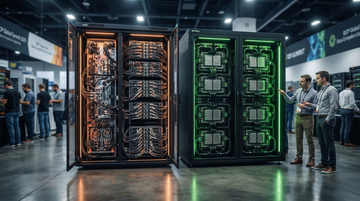
AMD’s Helios Is the First Rack-Scale Bet That Can Let AMD Win More Than GPU Share
With Helios, AMD moves from selling accelerators to selling a complete, double-wide rack-scale AI platform built on open rack standards—meant to compete in the same “one-rack is the system” category as NVIDIA’s NVIDIA NVL72. The decisive investor question is whether hyperscalers treat rack-scale as a compute-ops platform decision (favoring Helios’s open, Ethernet-based scale-up/scale-out) or as an NVIDIA-software-and-interconnect moat that AMD still can’t dislodge.

Anthropic Eyes Mandatory 10b5-1 Plans for All Employees—Why the Real Story Is the S-1 Around It
Anthropic is weighing a Rule 10b5-1 mandate for every employee once it lists, an unprecedented posture among major tech IPOs. The move reframes a $965B pre-IPO valuation and a ~$30B+ revenue run rate as a governance test, not a pricing one: it removes discretionary selling as a public-market risk while concentrating day-one and lockup mechanics into the same disclosure package. Investors should read the policy together with first-day sell caps and lockup length, because Anthropic's three compute partners—Amazon, Alphabet, and Broadcom—plus Nvidia's GPU stack all have a stake in how orderly the debut looks.

AstraZeneca's Wainua Flop Cuts Deeper Than the Trial Itself — A Second Late-Stage Miss in Ten Weeks Just Repriced the Pipeline
AstraZeneca's CARDIO-TTRansform readout on July 9, 2026 wiped ~$24B in market value on a trial analysts said removed only 2-4% from fair value — because it landed ten weeks after the camizestrant adcomm blowup, and forced investors to question whether the $80B 2030 plan can absorb two more high-risk readouts in H2 2026. The pipeline premium, not the missing $5B in peak sales, is what's on sale; Ionis took the partner hit (-21%), while BridgeBio and Alnylam inherit the ATTR-CM monopoly Pfizer once owned.

Etched’s $10.3B Valuation Is a Bet Against “One-Model-to-Fill-a-GPU” — and It’s Powered by a Two-Stage Prefill/Decode Memory Architecture
Etched’s reported $300M Series C at a $10.3B valuation validates venture appetite for vertical inference specialization—not horizontal “GPU duopoly” scaling. The company’s own framing (prefill-first compute at low voltage + decode-side shared “cluster-scale memory” over a proprietary interconnect) suggests the market is paying for systems throughput and latency, not just raw FLOPs.

Europe’s “buy-local” procurement shifts Lockheed, RTX, and Northrop from premium programs to margin-managed components—while Rheinmetall/BAE/Leonardo take the production leverage
Verified reporting shows the EU’s procurement push is turning “access to platforms” into “access to local sustainment and co-production capacity,” starting with missiles and air-defense spares. For US primes, the margin risk is not losing the customer—it’s winning fewer high-margin builds and more tightly specified work that requires licenses, local partners, and sustainment-heavy economics.
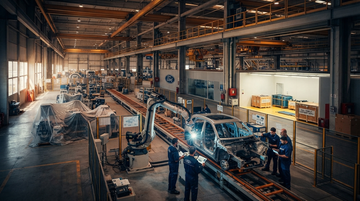
Geely’s “No-Brand-Print” Play in Spain: China EVs First Enter Europe by Taking Over Ford’s Idle Capacity—Not Buying a Publisher-Brand
Geely’s agreement to use Ford’s Almussafes plant in Valencia to produce Geely EVs creates an EU-manufacturing “origin story” that Reuters links directly to avoiding EU tariffs on Chinese EV imports. The real supply-chain message is capacity arbitrage: idle European lines get monetized by China volume, shifting battery/material demand toward whatever can qualify for the JV’s EV ramp instead of whichever OEM owns the logo.

Gold’s “Last Safe Haven” Breaks: Fed-Rate Bets + a Firmer Dollar Can Make Geopolitics Look Secondary
Gold’s recent drop is a clean example of the yield/opportunity-cost channel dominating the hedge narrative: Reuters links the move to firmer USD and rising expectations of Fed hikes, with benchmark 10-year yields up. When gold stops serving as a hedge against rates—and instead loses to higher discount rates and stronger currency—miners and gold-backed flows face a different (and more actionable) set of risks than oil-shock headlines imply.

The HSBC-to-Allianz Singapore Deal Isn’t Just a Sale—It’s Proof Banks Still Can’t Win Insurance Capital Cycles in Asia
HSBC has formally been running a strategic review of its Singapore insurance manufacturing business, with media reporting a potential transaction up to ~US$2B to Allianz. The investable takeaway is the capital logic: while insurers can hold long-duration risk, universal banks are increasingly treating insurance as a balance-sheet drag and an exit option—freeing capital for simpler fee/credit models and reducing regulatory complexity.

Intel Just Proved the AI-Server Demand Link—But the Real Test Is Whether It Holds When TSMC Capex Normalizes
Intel’s Q2 2026 forecast guidance beat—first flagged as “above estimates”—is the clearest, data-backed sign so far that the company is participating in AI server CPU demand rather than only narrating an 18A foundry transition. The key question for investors is whether Intel’s DCAI/server momentum can persist alongside TSMC’s AI-driven capex regime ($60–$64B 2026 guidance) or is merely riding the same cycle.

Lockheed Martin’s Missile Ramping Isn’t a One-Off: The 2026 Guidance Lift Implies the Restock Cycle Is Turning Into a Multi-Quarter Revenue Engine
When Lockheed Martin and RTX raised 2026 targets on missile restocking momentum, it marked the first earnings-confirmed “build more, faster” signal for U.S. primes. The key investor question is whether 2026 is pull-forward—or the start of a durable production-and-delivery cadence where the primes become the steepest part of the defense curve.

Nestlé and the 'Trojan Horse' Lobby: Why Big Food Is Now Treating the Label as a Balance-Sheet Item
Nestlé, PepsiCo, Coca-Cola and the rest of the AFIT coalition are spending 17x more on Washington lobbying than a year ago — not to fight regulation, but to redefine the federal label itself. The play turns ingredient disclosure from a compliance cost into a margin lever, and Conagra's 50% dividend cut nine days ago is the first hard signal of how exposed the holdouts are.
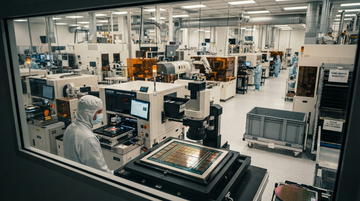
Newmont’s Q2 Beat Converts Gold Into a P&L Hedge (Not a Trading Call)
Newmont’s Q2 showed how a higher realized gold price flowed through to earnings while the cost stack stayed disciplined: $4,414/oz realized gold with gold AISC of $1,938/oz and 1.181M attributable ounces. The result is a tighter, more hedge-like earnings sensitivity to macro shocks (rates/oil/geopolitics) than investors often price into gold miners—so the “gold vs. oil” conversation should start with the miner’s per-ounce margin, not just the spot chart.
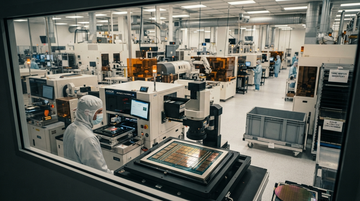
Advanced Packaging Is Escaping CoWoS Scarcity—But Nvidia’s “$1.5B to Amkor” Deal Is Not Verified in Primary Sources Yet
The premise—Nvidia entering a $1.5B, multi-year advanced-packaging agreement with Amkor that routes AI production around TSMC’s CoWoS bottleneck—is not confirmed by any primary source retrieved in this research session. What is verifiable here: Nvidia contracts out assembly/testing/packaging rather than performing it in-house, and Amkor is a leading OSAT providing advanced packaging services; but the specific $1.5B figure and contract scope remain “not disclosed / unverified” due to tool and source-access failures.

Oracle’s $7B Pentagon software consolidation win reframes its defense business from “AI megacampus drain” to durable on-prem cashflow
The Pentagon’s nearly $7B, up-to-10-year contract with Oracle is less about frontier AI and more about consolidating sprawling on‑prem enterprise software—plus maintenance and consulting—into a single procurement path. That changes how investors should think about Oracle’s defense exposure: from “spend-heavy AI buildout risk” to a repeatable, subscription-and-license-style government revenue stream tied to IT standardization.

Tesla: The “Robotaxi Tone Shift” Looks Like a CapEx Switch—Toward Optimus/AI Through 2026
Tesla’s latest disclosures show Robotaxi is still being expanded while the company simultaneously flags a 2026 CapEx regime of “in excess of $25 billion.” With Robotaxi scaling happening alongside new Optimus production-line work and Musk’s “spend on capex as fast as we can” framing, the market’s “delay” narrative reads less like retreat and more like capital reallocation into AI/robotics capacity.
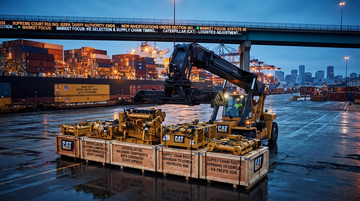
The Supreme Court Quietly Shrinks Tariff Power—So Markets Now Trade the “Surviving Statute” Not the Tariff Headline
The Supreme Court’s February 2026 ruling that IEEPA cannot authorize tariffs forces the administration to pivot to other statutory authorities, changing both how fast new duties can be imposed and how easily importers can challenge them. The July 2026 tariff wave that follows is therefore a “statute selection” story—investor impact concentrates in firms’ cost pass-through, legal exposure, and inventory timing rather than in any single rate.

The “60 Partners” Tariff Move Turns a Timed Emergency Into a Structural Import Cost
U.S. Trade Representative action under Section 301 targets imports from 60 economies with proposed additional duties of 10% or 12.5% tied to forced-labor enforcement failures. Because the policy is being built as a Section 301 regime (not a one-off deadline rollover), the replacement is likely to behave like a persistent “cost-of-capital” shock for U.S. importers—raising the bar for future reversals even after temporary authorities expire.

The Vietnam Tariff Shock Is a Margin Bet: Brands Can’t Just “Pay Duty”—They Have to Re-write Contract Math
Vietnam is the apparel exporter that looks most exposed when the U.S. moves from a temporary, broad 10% tariff regime into a higher, country-sliced structure. For the most Vietnam-heavy shippers—like Nike—the spread between Vietnam and alternative sourcing hubs can become a gross-margin event, unless contract pricing and reroute timing are designed to absorb the duty differential.
What to expect
Evidence-first notes with a visible point of view.
This section collects sharp takes on earnings, shareholder meetings, and market structure. Each new piece should make the thesis, the facts, and the implications obvious within the first few screens.
Expect direct analysis, not generic commentary.
Expect the data to be explicit and the argument to be easy to follow.
Plutux is not an investment adviser. Market data and AI-generated analysis are for information and education only, not investment advice. Disclaimer