Latest
The day's market news, with the argument attached
New notes every trading day on earnings, policy and market structure. Each one opens with the conclusion, then the evidence, then the companies it hits.
2026-07-15
%22%2F%3E%0A%20%20%3Ccircle%20cx%3D%22220%22%20cy%3D%22150%22%20r%3D%22180%22%20fill%3D%22%2322d3ee%22%20fill-opacity%3D%220.12%22%2F%3E%0A%20%20%3Ccircle%20cx%3D%221010%22%20cy%3D%22130%22%20r%3D%22220%22%20fill%3D%22%2338bdf8%22%20fill-opacity%3D%220.08%22%2F%3E%0A%20%20%3Ccircle%20cx%3D%22920%22%20cy%3D%22520%22%20r%3D%22170%22%20fill%3D%22%2322d3ee%22%20fill-opacity%3D%220.06%22%2F%3E%0A%20%20%3Cpath%20d%3D%22M140%20430h920%22%20stroke%3D%22url(%23line)%22%20stroke-width%3D%2212%22%20stroke-linecap%3D%22round%22%2F%3E%0A%20%20%3Cpath%20d%3D%22M220%20360c120-150%20260-220%20380-220s260%2070%20380%20220%22%20fill%3D%22none%22%20stroke%3D%22%2367e8f9%22%20stroke-opacity%3D%220.5%22%20stroke-width%3D%2216%22%20stroke-linecap%3D%22round%22%20stroke-linejoin%3D%22round%22%2F%3E%0A%20%20%3Cpath%20d%3D%22M300%20398h600%22%20stroke%3D%22%2394a3b8%22%20stroke-opacity%3D%220.24%22%20stroke-width%3D%228%22%20stroke-linecap%3D%22round%22%2F%3E%0A%20%20%3Ctext%20x%3D%22220%22%20y%3D%22510%22%20fill%3D%22%23e2e8f0%22%20fill-opacity%3D%220.7%22%20font-family%3D%22Arial%2C%20Helvetica%2C%20sans-serif%22%20font-size%3D%2238%22%20letter-spacing%3D%228%22%3EINSIGHTS%3C%2Ftext%3E%0A%3C%2Fsvg%3E)
2026-07-14

Apple's Record High Is Now a Replacement-Cycle Test, Not a Momentum Victory
Apple reached another all-time high on July 14 as KeyBanc publicly advised investors to sell into the strength. The important signal is not one bearish note; it is the widening gap between a premium multiple and the evidence needed to sustain the next iPhone replacement cycle. That gap transmits directly into Broadcom, Qualcomm, carriers, memory suppliers, and the index itself.

CleanSpark's $6.6 Billion Lease Turns a Bitcoin Miner Into a Power-and-Compute Landlord
CleanSpark's July 14 SEC filing disclosed a 20-year data-center lease covering 175 megawatts of critical IT load, approximately $6.6 billion of initial-term rent, and about $330 million of average annual net operating income. The market's 8.7% midday response is not just an AI enthusiasm trade: it is a vote that contracted rent from investment-grade compute demand can deserve a very different multiple from volatile bitcoin-mining cash flow.

Hundreds of Economists Are Telling the Market What the AI Trade Does Not Want to Hear
AP reported on July 13 that hundreds of economists signed a joint letter calling for immediate action on AI's economic impact and job-displacement risks. The market is still pricing AI as a productivity story. The economists are forcing a parallel conversation about labor-market disruption, antitrust, and AI-specific regulation that can change the political risk premium on the entire AI trade.

Biogen and Eisai Just Removed the Infusion Chair From the Start of the Alzheimer's Treatment Journey
The FDA's July 14 approval of LEQEMBI IQLIK as a subcutaneous initiation dose gives early-Alzheimer's patients an at-home path from treatment start through maintenance. The strategic consequence is larger than convenience: Biogen and Eisai can now attack the infusion-capacity, travel, staffing, and scheduling friction that limited the commercial reach of anti-amyloid therapy, while safety monitoring and diagnosis remain the true bottlenecks.

Nvidia's Asia Buyer Crackdown Turns Export Compliance Into a Moat
Nvidia is halving its list of authorized Asian buyers and tightening checks across Singapore, Malaysia, and Japan. The immediate effect is less channel freedom, but the deeper read is that compliance is becoming part of Nvidia's pricing power and its geopolitical firewall.

Private Credit Is No Longer Quietly Carrying the Risk - It Is the Risk
Private credit is being stress-tested in public for the first time since the asset class scaled, with AP reporting that higher rates are squeezing borrowers and forcing the industry to defend NAV marks. The exposure matters far beyond Apollo, KKR, Blackstone, Blue Owl, and Ares; it now sits inside the loan books of regional banks, BDC ETFs, and the AI capex financing pipeline.

Valero, Marathon Petroleum, and Phillips 66 Are Trading the Product Shortage, Not Just the Oil Shock
Valero, Marathon Petroleum, and Phillips 66 simultaneously printed fresh 52-week highs on July 14 as crude and refined-product risk premia rose. The deeper signal is that investors are paying for conversion scarcity—the ability to turn crude into the right gasoline, diesel, and jet fuel in the right region—while political scrutiny and a potential demand response make the trade increasingly asymmetric.

SpaceX Is Now Trading Like a Post-IPO Test of Whether Mega-Cap Private Tech Can Clear the Public Market
SpaceX closed at $139.14 on July 13, 2026, after touching a 52-week low of $136.78, having fallen from a $225.64 high set on June 16. The slide is more than a chart event. It is the first serious test of whether a private-era mega-cap can survive the public-market discipline of lockup expiries, index inclusions, and investor rotation.

Wall Street's Super Tuesday Puts the Big Banks in a Trading Test
Five of the largest U.S. banks are reporting on the same morning, and the market is not just checking earnings. It is checking whether trading, investment banking, and fee income can keep outrunning deposit competition, higher funding costs, and a noisy geopolitical backdrop.

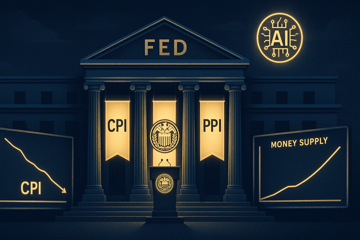
Warsh's First Testimony Meets an Oil Shock and a 4.6% Treasury Yield
The market is heading into Kevin Warsh's first congressional testimony with oil prices higher, Treasury yields repricing, and traders already leaning hawkish. The question is no longer whether inflation is cooling in a straight line; it is whether the Fed's communication reset makes the market tolerate less forward guidance and more volatility.

Wells Fargo Reports Q2 2026 as the First Real Test of Whether It Can Climb Out of the Penalty Box
Wells Fargo enters its July 14, 2026 print having bounced off 52-week lows, with the market still treating the bank as a regulatory-recovery story rather than an earnings-growth story. The Q2 release has to prove that fee income, capital return, and an asset-cap conversation can move together, or the stock will keep trading like a fallen leader waiting for permission to fully re-rate.

Lucid Group's 16% Single-Day Crash on a Chapter 11 Rumor Is the First Real Stress Test of the Sovereign-Backed EV Model
Lucid Group closed down 16.15% at $4.62 on July 14, 2026 on volume of 152.27 million shares - more than 35x its 10-day average - after an EV-blog report claimed restructuring adviser AlixPartners was weighing Chapter 11 or a take-private path for the Saudi-backed automaker. Lucid's IR lead Nick Twork called the report 'completely false' and pointed to the $800 million loan draw from a Saudi affiliate on July 6 as proof of liquidity into 2027. The crash is the first public stress test of whether the sovereign-backed EV model can survive a liquidity scare, and the read-through matters for every loss-making EV OEM still burning cash.

AI Agents Are About to Kill the SaaS Seat - and Sierra Just Made the Outcome-Pricing Bet Public
CNBC reported on July 14, 2026 that Sierra co-founder Clay Bavor said AI agents are moving from demos into real business workflows - customer service, sales, and support - and that outcome-based pricing could challenge the way software companies get paid. Sierra is the cleanest publicly-discussed example of the AI-agent outcome-pricing model, and the read-through is direct for Salesforce, ServiceNow, Snowflake, MongoDB, Datadog, and the entire enterprise-software seat-based cohort that has been the dominant pricing model for two decades.
2026-07-13

Massive AI Buildout Is Turning Into an Inflation Test Before It Becomes a Productivity Story
The AI spending boom is no longer just a future-growth story. With $720 billion of expected data-center investment, sharply higher memory-chip costs, and visible consumer price increases for laptops and consoles, the market now has to decide whether AI is adding durable productivity or leaking into the inflation data first.

AI Semiconductors Are in a Valuation Reset, Not a Demand Collapse
The July selloff in SK Hynix, Samsung Electronics, Micron, and the broader chip complex looks like a thesis break only if you stop at the tape. The better read is a crowded AI trade digesting geopolitics, index concentration, and expectations that had run ahead of near-term proof.

Bank Lending Guidance Turns Immigration Status Into a Credit Underwriting Variable
Federal regulators are now explicitly telling banks to treat immigration status as part of credit-risk analysis for borrowers who may not be legally authorized to work in the U.S. That is more than a policy headline: it changes underwriting, compliance costs, and the way banks think about certain customer segments.

China's Export Surge Shows AI Demand Is Still Pulling Global Supply Chains
China's June export data is not just a macro surprise. The 27% jump in exports and 36% rise in imports show that AI-related demand is still rippling through semiconductors, electronics, EVs, and shipping, even while domestic demand remains softer than the headline trade numbers imply.

Citigroup's Remake Is Now an Earnings and Capital-Return Test
The bank is entering earnings with the cleanest restructuring story on Wall Street, but the market still wants proof that simplification turns into higher ROTCE, better fees, and more buybacks. The read-through matters for Citigroup, JPMorgan Chase, Bank of America, Goldman Sachs, and Wells Fargo.

AI Data Centers Are Hitting the U.S. Grid Before They Hit Scale
Meta's expanded Louisiana build shows hyperscalers are still willing to spend at a shocking scale, but the real bottleneck is now transformers, interconnection queues, and local resistance. The winners are shifting from pure compute landlords to whoever can finance electricity.
What to expect
Evidence-first notes with a visible point of view.
This section collects sharp takes on earnings, shareholder meetings, and market structure. Each new piece should make the thesis, the facts, and the implications obvious within the first few screens.
Expect direct analysis, not generic commentary.
Expect the data to be explicit and the argument to be easy to follow.
Plutux is not an investment adviser. Market data and AI-generated analysis are for information and education only, not investment advice. Disclaimer