%22%2F%3E%0A%20%20%3Ccircle%20cx%3D%22220%22%20cy%3D%22150%22%20r%3D%22180%22%20fill%3D%22%2322d3ee%22%20fill-opacity%3D%220.12%22%2F%3E%0A%20%20%3Ccircle%20cx%3D%221010%22%20cy%3D%22130%22%20r%3D%22220%22%20fill%3D%22%2338bdf8%22%20fill-opacity%3D%220.08%22%2F%3E%0A%20%20%3Ccircle%20cx%3D%22920%22%20cy%3D%22520%22%20r%3D%22170%22%20fill%3D%22%2322d3ee%22%20fill-opacity%3D%220.06%22%2F%3E%0A%20%20%3Cpath%20d%3D%22M140%20430h920%22%20stroke%3D%22url(%23line)%22%20stroke-width%3D%2212%22%20stroke-linecap%3D%22round%22%2F%3E%0A%20%20%3Cpath%20d%3D%22M220%20360c120-150%20260-220%20380-220s260%2070%20380%20220%22%20fill%3D%22none%22%20stroke%3D%22%2367e8f9%22%20stroke-opacity%3D%220.5%22%20stroke-width%3D%2216%22%20stroke-linecap%3D%22round%22%20stroke-linejoin%3D%22round%22%2F%3E%0A%20%20%3Cpath%20d%3D%22M300%20398h600%22%20stroke%3D%22%2394a3b8%22%20stroke-opacity%3D%220.24%22%20stroke-width%3D%228%22%20stroke-linecap%3D%22round%22%2F%3E%0A%20%20%3Ctext%20x%3D%22220%22%20y%3D%22510%22%20fill%3D%22%23e2e8f0%22%20fill-opacity%3D%220.7%22%20font-family%3D%22Arial%2C%20Helvetica%2C%20sans-serif%22%20font-size%3D%2238%22%20letter-spacing%3D%228%22%3EINSIGHTS%3C%2Ftext%3E%0A%3C%2Fsvg%3E)
Verified policy architecture shift
The replacement isn’t a patch—it’s a new Section 301 tariff regime aimed at durability
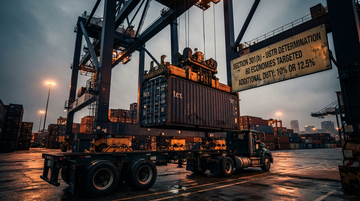
What changes on/around the July 24 deadline is not just that existing tariff authority expires. The new move is being constructed as a Section 301 forced-labor enforcement response covering 60 economies, with proposed additional duties that function like an ongoing import tax—selected to be harder to unwind than earlier, more time-bounded tariff tools.
| Policy lever | Covered set | Proposed additional duty rate | Trigger / rationale | Where it’s stated |
|---|---|---|---|---|
| Section 301 (USTR forced-labor enforcement failure) | 60 economies | 10% or 12.5% additional duty (with rate split by whether certain forced-labor prohibition commitments exist) | Failure to impose/effectively enforce a prohibition on importing goods produced with forced labor | USTR press release and fact sheet |
Facts: what was announced, and when
USTR’s “60 economies” action is formalized as findings + proposed responsive duties (10% or 12.5%)
In June 2026, USTR announced that under Section 301 it found the acts, policies, and practices of 60 economies related to forced-labor import prohibitions are actionable. The agency simultaneously proposed additional duties across products of the investigated economies, with a split between 10% and 12.5% depending on the economies’ specific forced-labor import enforcement posture.
How many economies are targeted
60
USTR Section 301 forced-labor investigations covering 60 economies
Additional duty rate (one range)
10%–12.5%
Proposed additional duties; split by whether certain forced-labor prohibition commitments/partial regimes exist
Mechanism
Section 301(b)
Responsive action based on actionable findings of enforcement failure
Policy schedule items USTR disclosed for the proposed responsive actions
Written comments due
July 6, 2026
Deadline for comments on proposed actions
Hearing window
July 7, 2026
USTR hearings on proposed actions (per the press materials)
Request to appear due
June 22, 2026
Deadline to request participation
Scope: why “system-wide replacement” is plausible
“60 partners” can behave like a broad tariff stack because the trigger is enforcement-wide, not product- or bilateral-narrow
The macro point behind the brief’s framing—“rewriting the US tariff stack into a permanent regime”—hinges on scope logic: a forced-labor enforcement failure is assessed at the country/economy policy level, then converted into duties that apply across products of the investigated economies (subject to exceptions). That architecture naturally scales better than product-specific, one-country renegotiations.
Proposed additional duties split by whether certain forced-labor prohibition commitments/partial regimes exist
This is the policy rate structure USTR described for the 60-economies forced-labor Section 301 action.
Unit: additional duty rate
Economies with committed/providing forced-labor import prohibition posture (per USTR framework)
10%
All other investigated economies
12.5%
Causal chain: event → mechanism → structural driver
Replacement-to-regime is the mechanism: Section 301 turns a temporary political deadline into a long-form compliance contest
- Event: temporary/expiring tariff authority creates a deadline-driven market narrative.
- Mechanism: USTR builds a Section 301 forced-labor response with proposed additional duties tied to whether economies impose and effectively enforce forced-labor import prohibitions.
- Structural driver: forced-labor enforcement is not a single negotiation point—it requires sustained domestic legal and customs implementation by the partner economy, making reversals slower and politically harder.
So the “rewrite” is less about the specific 10% vs 12.5% number, and more about legal/political persistence. A Section 301 action anchored to compliance failures creates a compliance roadmap for trading partners and an extended planning window for U.S. importers and their upstream suppliers.
Supply chain read-through (upstream ↔ downstream)
Tariff durability reorders incentives across the chain: upstream sourcing shifts first, downstream pricing follows
Even without naming a specific product list here, the architecture implies a chain reaction. Upstream: importers and contract manufacturers must re-price inbound components and compliance costs, which encourages re-sourcing and contract renegotiations for goods tied to the tariffed economies. Downstream: retailers and brand owners then re-price final goods, but often with a lag—because contracts, inventories, and freight/working-capital constraints delay pass-through.
Listed-company fundamentals: an illustrative “cost-of-capital” exposure lens
Tariff regimes punish the business models that depend on stable import economics and fast inventory turns
To make this tangible with verifiable data, consider how a telecom infrastructure company’s operating profile differs from a consumer/manufacturing supply chain importer. While tariffs on goods don’t directly map to every segment, the macro point is that more durable import taxes tend to raise the overall cost base for traded-goods producers and can reduce demand velocity—pressuring working capital across the economy.
| Company | FY 2025 Revenue | FY 2024 Revenue | FY 2025 Net income | FY 2023 Net income |
|---|---|---|---|---|
| Crown Castle | $4.265B | $6.568B | $1.103B | $1.502B |
Horizons: near-term catalysts vs 1–3 year consequences
Short-term: compliance uncertainty drives customs and pricing noise. Long-term: supply-chain redesign becomes rational if the regime holds
- Near-term (days–quarters): companies rush to reassess affected tariff classifications, supplier compliance documentation, and contract terms; volatility rises around landed-cost assumptions.
- Near-term market signal: any administrative statements implying continuity from the expiring regime to the Section 301 framework increases hedging and de-risking behavior.
- Long-term (1–3 years): if partners can’t rapidly close forced-labor enforcement gaps, U.S. importers have incentive to re-source inputs and build “tariff-resilient” supply chains—effectively locking in higher baseline costs.
This is exactly why the “replacement” framing matters. If tariffs merely lapse and get renegotiated country-by-country, supply-chain redesign is delayed. But if the government is actively constructing a multi-economy Section 301 framework, the market shifts to treating tariff costs as a lasting part of the operating environment.
Synthesis thesis
The investment-relevant question isn’t “how high is the tariff,” but “how reversible is it.” Section 301 makes it less reversible
Verified policy materials show the U.S. is using Section 301 forced-labor enforcement findings to propose additional duties on imports from 60 economies, with a 10%–12.5% structure. The market interpretation of “permanent regime” is therefore best understood as a reversibility argument: enforcement-based tariffs tend to remain until compliance changes, not until a political clock runs out.