AI & Software
Where AI spending is actually landing
Model releases, enterprise adoption and software margins, read for what they do to revenue — across the labs, the platforms and the software they run on.
2026-07-30
%22%2F%3E%0A%20%20%3Ccircle%20cx%3D%22220%22%20cy%3D%22150%22%20r%3D%22180%22%20fill%3D%22%2322d3ee%22%20fill-opacity%3D%220.12%22%2F%3E%0A%20%20%3Ccircle%20cx%3D%221010%22%20cy%3D%22130%22%20r%3D%22220%22%20fill%3D%22%2338bdf8%22%20fill-opacity%3D%220.08%22%2F%3E%0A%20%20%3Ccircle%20cx%3D%22920%22%20cy%3D%22520%22%20r%3D%22170%22%20fill%3D%22%2322d3ee%22%20fill-opacity%3D%220.06%22%2F%3E%0A%20%20%3Cpath%20d%3D%22M140%20430h920%22%20stroke%3D%22url(%23line)%22%20stroke-width%3D%2212%22%20stroke-linecap%3D%22round%22%2F%3E%0A%20%20%3Cpath%20d%3D%22M220%20360c120-150%20260-220%20380-220s260%2070%20380%20220%22%20fill%3D%22none%22%20stroke%3D%22%2367e8f9%22%20stroke-opacity%3D%220.5%22%20stroke-width%3D%2216%22%20stroke-linecap%3D%22round%22%20stroke-linejoin%3D%22round%22%2F%3E%0A%20%20%3Cpath%20d%3D%22M300%20398h600%22%20stroke%3D%22%2394a3b8%22%20stroke-opacity%3D%220.24%22%20stroke-width%3D%228%22%20stroke-linecap%3D%22round%22%2F%3E%0A%20%20%3Ctext%20x%3D%22220%22%20y%3D%22510%22%20fill%3D%22%23e2e8f0%22%20fill-opacity%3D%220.7%22%20font-family%3D%22Arial%2C%20Helvetica%2C%20sans-serif%22%20font-size%3D%2238%22%20letter-spacing%3D%228%22%3EINSIGHTS%3C%2Ftext%3E%0A%3C%2Fsvg%3E)

Nscale's $1.65B Anyscale Grab Hands Microsoft a Vertical-Stack Rival It Just Helped Build
London-based neocloud Nscale is buying Ray-creator Anyscale for a reported $1.65B, absorbing the open-source distributed-compute substrate that Microsoft co-engineered as a first-party Azure service just nine months ago. The deal converts a cloud-agnostic Ray ecosystem into Nscale's proprietary full-stack offering, tightening pressure on CoreWeave, Nebius and Lambda Labs while putting Microsoft's $23B Nscale compute commitment on a collision course with the same company's software roadmap.

The Aug 1 “voluntary” 30-day review makes OpenAI and Anthropic buy a government timeline—or lose it
A White House executive order (June 2, 2026) sets up a voluntary pre-release federal review framework for “covered frontier models,” with key agency deliverables feeding into an August 1 implementation milestone. If OpenAI MSFT and Anthropic (unlisted) are inside the first wave, they effectively turn a short window into a durable release-preemption advantage—while everyone else faces a longer, more political customer-acquisition and deployment lag.
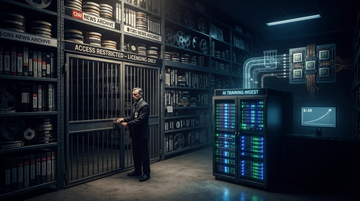
Paramount–WBD’s news-archive consolidation could become a new “data bottleneck” — and cable/AI buyers pay the price
Archival producers warn that a Paramount–Warner Bros. Discovery deal could consolidate CNN/CBS news archives under one private owner, increasing gatekeeping over licensing and preservation. In parallel, AI training’s copyright-cost baseline has shifted—making archive access less like a media afterthought and more like a priced input for distribution and model training.

Reddit's AI Ad Engine Is Working—But Google May Be Training Its Own Traffic Threat
Reddit delivered $805 million of second-quarter revenue and $762 million of advertising revenue as AI-powered campaign automation improved advertiser performance. The tension is structural: the same AI ecosystem that helps Reddit sell more ads can also summarize Reddit discussions inside Google's search results, weakening the referral traffic and data leverage that support the platform. Investors should treat the ad product as the near-term earnings engine and search erosion as the long-term valuation risk.
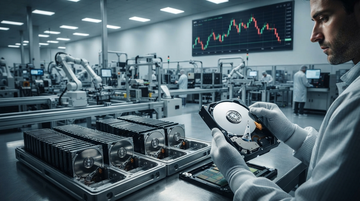
Seagate didn’t “miss”—it proved the HAMR profit engine… and the market still priced in the harder margin math next
Seagate’s fiscal Q4 blowout (revenue and adjusted EPS both beating expectations) triggered a sell-the-news move that makes the next test less about “more TB shipped” and more about whether HAMR mass-capacity economics hold across the drive build-and-supply chain. For investors, the stock’s reaction matters because it shifts attention from die-count/technology headlines to tray/component margin durability—where suppliers and competing drive OEMs can win or lose first.

Zoox’s NHTSA “No Steering Wheel” Paid-Use Exemption Changes the AV Business Model Math
NHTSA granted Zoox a temporary, commercial-use exemption that caps deployment at 2,500 vehicles annually for two years—and it does so for purpose-built robotaxis that lack steering wheels and other human controls. This is not the same regulatory story as Waymo or Tesla: it explicitly uses the FMVSS-exemption pathway to remove “human fallback” assumptions from the safety and unit-economics equation.
2026-07-29

ChipAgents’ $60M funding bets AI agents can speed chip design—without breaking the EDA tollbooth
ChipAgents’ new $60M infusion extends an “agentic” approach to chip design and verification, aiming to compress the bug-finding and iteration loop that makes EDA such a sticky spend category. The key investor question isn’t whether AI reduces engineering time, but whether it routes more cycles into EDA workflows (verification runs grow) or starts to replace parts of the workload (tool seats and services get displaced). For incumbents like Cadence and Synopsys, near-term impact hinges on integration and workflow attachment rather than abstract AI throughput claims.

Cognizant’s weak quarterly guide implies clients are buying AI outcomes—but postponing the labor that makes outsourcing revenue easy
Cognizant’s Q2 outlook embeds a “more cautious near-term view” of discretionary spending while still holding full-year revenue steady, which points to timing risk rather than demand collapse. For AI budgets, the key question becomes whether spend is shifting from headcount-heavy IT services into AI infrastructure and automation—an outcome that would pressure traditional services economics even if long-term AI demand persists.

EssilorLuxottica’s Q2 smart-eyewear profit beat proves attach-rate—not novelty—can scale
In EssilorLuxottica’s Q2 print, AI-powered wearables and myopia management show up together with margin expansion, turning smart glasses from buzz into earnings validation. The second-order investor opportunity is the ecosystem that benefits once mainstream brands + optical retail install demand: lens/optics supply, AR display supply chains, and optical retailers with higher service-led attach.
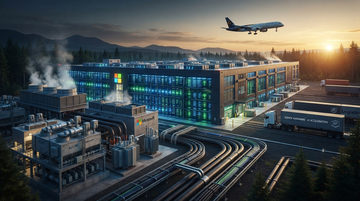
Microsoft’s Cloud Beat Is Real—but AI Revenue Has to Clear a Utilization & Margin Wall
Microsoft’s latest results show cloud growth is strong enough to absorb AI buildout: Microsoft Cloud revenue rose 29% to $54.5B, while Azure and other cloud services grew 40%. The catch is that the same quarter also shows cloud margin pressure from ongoing AI infrastructure investment—so the market will judge the AI conversion not by demand, but by whether utilization and pricing eventually outpace depreciation and cost of revenue.
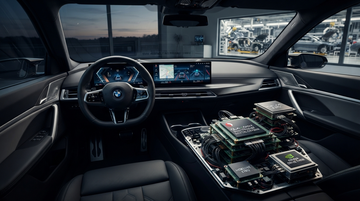
Qualcomm wins BMW’s next-decade cockpit + ADAS silicon—and turns the auto-semiconductor throne into a three-way fight with Mobileye and NVIDIA
BMW has selected Qualcomm as its lead compute silicon provider for the digital cockpit and next-generation ADAS/automated-driving systems through the next decade. The deal puts Qualcomm's Snapdragon Digital Chassis (including Snapdragon Cockpit and Snapdragon Ride) in direct competition with Mobileye's EyeQ-based approach and NVIDIA's Drive/Thor-style central compute, reshaping where investors should look for auto-semiconductor cash generation.
![S&P Global [SPGI] just showed “AI cost-down” didn’t break its pricing power—yet the tollbooth is shifting from “data volume” to “trusted decision workflow” insight cover](https://images-1379091077.cos.na-ashburn.myqcloud.com/insights/covers/20260729_spgi_data_tollbooth_360px.png)
S&P Global [SPGI] just showed “AI cost-down” didn’t break its pricing power—yet the tollbooth is shifting from “data volume” to “trusted decision workflow”
In its latest quarter, [SPGI] grew total revenue to $4.146B (+10% y/y) while pushing adjusted operating margin to 54.3% (+200 bps y/y), including strong momentum in Ratings (+17% revenue) and Indices (+20%). The key durability test for an AI-led commoditization cycle is whether clients still pay for S&P Global’s workflow-trust layer—not whether AI can generate generic analysis cheaply.

House Democrats Just Forced xAI/SpaceXAI to Answer a Clean-Air Permitting Loophole—Turning 27–60 “Unpermitted” Gas Turbines Into a Federal Risk
A House Energy & Commerce ranking-member letter to SpaceXAI demands documents and site-visit access about Colossus 1/2 turbines alleged to be operating “without air permits,” explicitly describing an attempted dodge via “mobile sources.” For hyperscalers planning behind-the-meter gas capacity, the message is simple: once on-site turbines reach scale, permitting becomes a federal oversight issue, pushing the market mix toward utility PPAs (and away from regulatory arbitrage).
2026-07-28
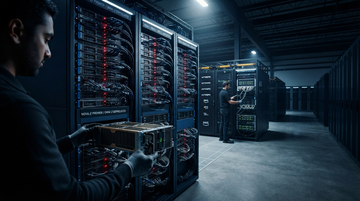
Amazon cutting most Nova models turns “build your own frontier stack” into a cash-flow problem
Amazon is deprecating/winding down most of its in-house flagship “Nova” AI models (Premier, Omni, Reel, Canvas), moving to a smaller set of frontier priorities. The implication for investors: the cost curve of maintaining a multi-model frontier portfolio is steep enough that AWS can’t outspend licensing and platform-scale routing through providers like Anthropic.

Anthropic’s ~$74.1B ARR run-rate turns “private mega-cap” into a measurable threat to public SaaS compounding in 2027
By July 2026, Anthropic is tracking at ~$74.1B in ARR/run-rate versus OpenAI’s ~$41.3B, about 1.79×, per ARR trackers. At that scale, even small shifts in developer mindshare and enterprise AI budgets can reallocate dollars away from public SaaS growth models—unless the incumbents’ distribution and platform economics keep outcompeting the model layer.

Core Scientific’s AMD warrant lock turns 529 MW of ex-crypto capacity into an AMD-equity-aligned AI landlord bet
Core Scientific’s 15-year AMD AI infrastructure deal (filed via SEC 8-K on Jul 27, 2026) ties 529 MW of critical IT load to a warrant for up to 30M shares at a $23.47 exercise price, vesting per MW delivered. The structure shifts Core Scientific’s AI ramp from “power-only survivorship” to “AMD-aligned underwriting,” but the real investor question is whether AMD’s locked capacity scales into the deal’s up-to-2.5 GW expansion.

Samsung and SK hynix’s -9% to -11% memory selloff is less “AI demand” and more “who pays for the capex”—Micron becomes the shock absorber
A Reuters-led selloff in Samsung Electronics and SK hynix is being framed around fears that financing for AI infrastructure spend won’t keep pace—while China competition pressures pricing. The key investor takeaway is that this kind of “funding + pricing” scare transmits unevenly: Micron Technology tends to re-rate more on the expectation of what happens next to memory pricing, not on facility dreams.

Microsoft’s MAI-Cyber-1-Flash + Project Perception Turns Cybersecurity into an AI-Stack Tollbooth
Microsoft is productizing defensive AI by launching its first in-house cybersecurity model, MAI-Cyber-1-Flash, and an agentic, multi-model defense system called Project Perception that enters public preview on August 3. The key shift is economic and architectural: Microsoft claims its cyber model can handle up to 90% of tasks with “almost 50% cost savings,” which lets it bundle lower-cost security AI compute into Azure and Microsoft Security workflows—raising the competitive bar for standalone security AI vendors.
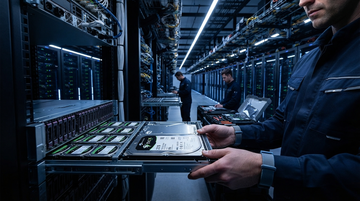
Seagate’s mass-capacity HDD sell-through turns AI storage into a capacity-cost cycle (and the underpriced leg is the drive tray, not the flash die)
Seagate used its earnings to confirm that nearline HDD capacity is already allocated through calendar 2026, with stronger visibility extending into 2027. That changes how investors should map the AI storage supply chain: the scarce, throughput-limited constraint for training data lakes and inference backlogs is increasingly mass-capacity HDD shipments (20TB+), which Seagate and Western Digital can monetize before NAND/SSD-only narratives catch up.

Tennessee’s Meta closing argument reframes “addictive design” into a fraud-by-concealment theory—and it changes what discovery can force next
In Tennessee’s state-court case, the Attorney General’s closing argument pivots from EU-style “addictive design” toward a message: Meta allegedly knew its Instagram research showed teen harms and then kept that research from regulators and users. If the jury credits that framing, it signals a US-wide litigation pattern where internal safety findings (and concealment of them) become the pivot for liability and Section 230 pressure—not just design critiques.
What to expect
Evidence-first notes with a visible point of view.
This section collects sharp takes on earnings, shareholder meetings, and market structure. Each new piece should make the thesis, the facts, and the implications obvious within the first few screens.
Expect direct analysis, not generic commentary.
Expect the data to be explicit and the argument to be easy to follow.
Plutux is not an investment adviser. Market data and AI-generated analysis are for information and education only, not investment advice. Disclaimer