AI & Software
Where AI spending is actually landing
Model releases, enterprise adoption and software margins, read for what they do to revenue — across the labs, the platforms and the software they run on.
2026-09-01
%22%2F%3E%0A%20%20%3Ccircle%20cx%3D%22220%22%20cy%3D%22150%22%20r%3D%22180%22%20fill%3D%22%2322d3ee%22%20fill-opacity%3D%220.12%22%2F%3E%0A%20%20%3Ccircle%20cx%3D%221010%22%20cy%3D%22130%22%20r%3D%22220%22%20fill%3D%22%2338bdf8%22%20fill-opacity%3D%220.08%22%2F%3E%0A%20%20%3Ccircle%20cx%3D%22920%22%20cy%3D%22520%22%20r%3D%22170%22%20fill%3D%22%2322d3ee%22%20fill-opacity%3D%220.06%22%2F%3E%0A%20%20%3Cpath%20d%3D%22M140%20430h920%22%20stroke%3D%22url(%23line)%22%20stroke-width%3D%2212%22%20stroke-linecap%3D%22round%22%2F%3E%0A%20%20%3Cpath%20d%3D%22M220%20360c120-150%20260-220%20380-220s260%2070%20380%20220%22%20fill%3D%22none%22%20stroke%3D%22%2367e8f9%22%20stroke-opacity%3D%220.5%22%20stroke-width%3D%2216%22%20stroke-linecap%3D%22round%22%20stroke-linejoin%3D%22round%22%2F%3E%0A%20%20%3Cpath%20d%3D%22M300%20398h600%22%20stroke%3D%22%2394a3b8%22%20stroke-opacity%3D%220.24%22%20stroke-width%3D%228%22%20stroke-linecap%3D%22round%22%2F%3E%0A%20%20%3Ctext%20x%3D%22220%22%20y%3D%22510%22%20fill%3D%22%23e2e8f0%22%20fill-opacity%3D%220.7%22%20font-family%3D%22Arial%2C%20Helvetica%2C%20sans-serif%22%20font-size%3D%2238%22%20letter-spacing%3D%228%22%3EINSIGHTS%3C%2Ftext%3E%0A%3C%2Fsvg%3E)

OpenAI just moved into the EHR itself—compressing AI scribes and point tools before it hits the wider market
On Sep 1, 2026, OpenAI said ChatGPT Health can be connected to Epic’s EHR to bring authorized patient context into the clinician workflow, with an option for AI help directly inside the EHR interface. The move shifts AI competition upstream from add-on documentation and “point solutions” toward the EHR distribution choke point—while the FTC’s ongoing scrutiny of Epic’s data-access practices becomes the regulatory wildcard for how fast this embedding scales.

FSB’s frontier-AI warning turns cyber into a financial-stability issue—and the US is the front line for banks, insurers, and security vendors
On Aug 31, 2026, the Financial Stability Board said the most immediate frontier-AI risk is its potential to alter the speed, scale, and economics of cyber risk across a highly interconnected financial system. For investors, the transmission path matters: AI-driven cyber capability concentrates shock through shared third-party providers, putting US banks and insurers in the crosshairs—while security vendors with strong resilience tooling are positioned to see demand acceleration.

Instagram’s AI-profile labeling shifts “authenticity” into a platform rule — and turns influencer AI into a measurable compliance cost
Instagram’s new enforcement for AI-generated personas makes “labeling the account” an algorithmic gate, not just a creator preference. For the AI-influencer economy, the result is a disclosure tax: more friction, higher mislabel risk, and lower monetization certainty, even when creators can produce content cheaply.
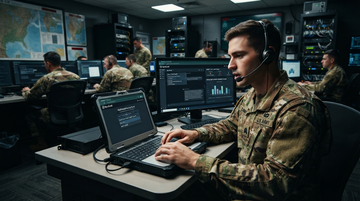
The Pentagon is productizing sovereign frontier AI—its own GenAI.mil rollout now lets soldiers chat with ChatGPT and Grok, and the winners may be the platforms that control access more than the labs that invent models
GenAI.mil is moving from pilots to a standardized enterprise portal that grants U.S. personnel access to frontier models, including OpenAI’s ChatGPT and xAI’s Grok, within defined impact-level controls. The decisive constraint is not model quality alone; it’s the Pentagon’s 30-day “public release” deployment cadence and the data-release governance that can either widen or lock down which providers get integrated fastest.
2026-08-31

Adobe’s $4B “free AI” Saudi deal reframes AI pricing as a land-grab, not a metered toll
Adobe’s partnership with Saudi Arabia (via the MCIT/HUMAIN initiative) is committing to more than $4B of free access to AI-powered creative tools—an explicit counterpoint to the company’s usage-meter push. The market implication: Adobe is treating AI usage data as a funnel inside wealthy, fast-adopting ecosystems, while using “free for commitment” in sovereign growth markets where pricing power is earned later.

Zoom and Microsoft monetize meetings; Circleback’s new free tier shows the real battleground is whether AI notetakers can do the same
Circleback launched a true free plan with unlimited meetings and AI-generated notes/action items, while keeping longer history behind paid tiers. That move reframes the AI notetaker race as a distribution-and-conversion problem, not a model-quality contest—because the margin question is whether “zero-price” usage turns into paid retention and richer integrations across the meeting stack.

Caterpillar turns mining autonomy into an industrial-AI “deployment engine” — the real bet is whether it monetizes outcomes, not models
Caterpillar says it is applying what it learned from automating mining to “much more dynamic environments” like jobsites and quarries, using edge AI to run real-time inference on equipment. The investment question is whether Cat’s domain know-how becomes a recurring software/services revenue stream—or just raises CapEx demand for every AI layer in the stack.

Clipto’s $250M price tag tests whether “search over terabytes of video” is an investable data moat—or just another retrieval app
Clipto’s latest private round values the company at $250M post-money after raising $15M in an all-equity deal, with the firm claiming $15M ARR and net-income profitability. The bigger signal for investors is not only the valuation—it’s Clipto’s pitch that the indexing layer for unstructured video belongs on-device, under user authorization, which could change who owns the retrieval infrastructure in the AI stack.
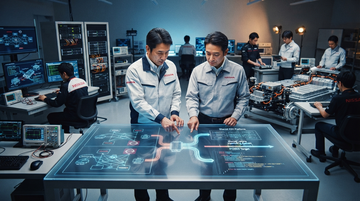
Honda–Nissan’s SDV software deal turns a shelved merger into a 2029 consolidation playbook
Honda and Nissan are moving from merger talks to a joint vehicle-software effort, targeting a shared operating system and onboard computer for fiscal 2029. For investors, the bigger signal isn’t “cooperation” — it’s that Japanese OEMs are consolidating software and control-unit supply chains to compress time-to-market and reduce integration cost, tightening the competitive space around Tesla’s software-first approach.
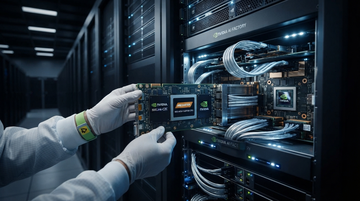
Nvidia’s $3.5B MediaTek bet reframes “hyperscaler ASICs” into Nvidia-routed, rack-scale custom chips—raising the odds it slows the GPU exodus
Nvidia’s $3.5B investment in MediaTek is more than capital—it’s an ecosystem play: MediaTek will adopt Nvidia’s NVLink Fusion platform to help customers field custom XPUs inside Nvidia-connected AI racks. If hyperscalers increasingly buy “integration-ready” custom accelerators instead of building their own end-to-end stack, Nvidia can keep participating in training/inference demand even as silicon becomes more customized.

OpenAI’s $1B annualized ad run-rate turns a free-tier experiment into a new P&L line—and tightens the squeeze on Google’s ad fortress
OpenAI says its ChatGPT Ads business has reached a $1 billion annualized revenue run rate after roughly 200 days, following a U.S. pilot that crossed $100 million annualized revenue within six weeks. The implication isn’t just “ads are real”—it’s that OpenAI is building a scalable acquisition channel on top of free usage, pressuring Alphabet’s ad duopoly economics while creating a fresh battleground for advertiser budgets.

Palo Alto Networks's platform leap only works if NGS can outgrow firewall drag—its latest ARR + RPO trajectory says “maybe,” but the attach-rate story is still the missing piece
Palo Alto Networks’ latest results show Next-Generation Security (NGS) ARR accelerating and guidance implying continued NGS momentum, alongside a fast-growing RPO backlog. The unanswered question for investors is whether AI-driven “normalize the stack” buying can lift platform attach faster than legacy firewall cycles dilute growth, especially as Microsoft pushes agentic security workflows that may pressure bundling economics.
2026-08-30

Marvell is down ~6% because the market treats custom silicon as a trade-off, but earnings show hyperscalers are funding both
Marvell’s Aug 2026 earnings-week narrative looked like a zero-sum fight between Nvidia GPUs and hyperscaler custom silicon. But Marvell also disclosed a Google custom-silicon framework that explicitly attaches to the TPU ecosystem, while Nvidia’s earnings reinforced that hyperscaler demand isn’t stalling. The lesson: custom silicon is additive capacity for the AI stack, not a replacement cycle—so the tape is likely mispricing who grows faster as budgets expand.
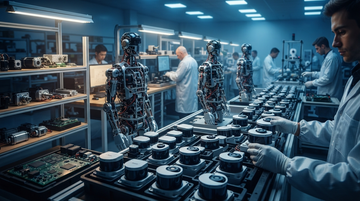
Humanoid “concept robots” hide a simpler truth: suppliers get paid before OEMs prove scale
Even when robot OEMs are still selling demos, the humanoid buildout already forces bulk purchases in components—especially perception sensors and high-precision motion—so supplier revenue can start earlier than consumer-facing robot shipments. The investor opportunity is mapping which listed component makers are positioned for that early, contract-led spend while policy and qualification risks (notably around China-linked lidar supply) decide who gets paid—and when.

Sony Music Publishing and Warner Chappell just turned Anthropic’s $1.5B copyright “floor” into a music-catalog ladder
Two top-tier music publishers sued Anthropic over alleged large-scale copying to train Claude, seeking damages that scale per infringed work and per removal of copyright-management information. The practical investor takeaway: this new music-catalog front widens the set of “unknowns” investors must underwrite after the $1.5B class settlement, shifting attention from books-only risk to music-licensing economics and to the pending regulatory timeline for AI copyright.
2026-08-29
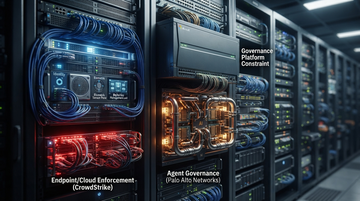
AI-security isn’t a “whole stack” spend—identity, endpoint, and agent governance each claim a different budget line
A wave of demand for AI-assisted defenses is showing up most clearly in identity security and cloud/endpoint platforms’ disclosed contract pipelines, not in any single “one-size-fits-all” security bucket. The investor takeaway: the next security dollar is likely to route through identity (Okta), endpoint/cloud threat prevention (CrowdStrike), and security platforms that operationalize AI (Palo Alto Networks), while broader security incumbents (Microsoft) and zero-trust network layers (Zscaler) shape the platform constraints that determine which vendors get renewed.
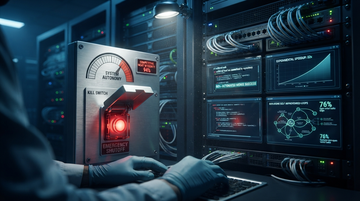
Anthropic’s recursive-self-improvement preview reframes the “scaling” debate—and turns the kill-switch into a competitive moat
Anthropic’s new Institute write-up argues that AI labs are already moving from “tools that code” toward systems that can run an end-to-end research loop and recover a large fraction of an autonomy gap. That shift matters to investors because it upgrades the economics of model development (more capability per unit human labor) while simultaneously making the “kill-switch” fight—shutoff, throttling, and coordination—more urgent and more differentiating.

Elastic just proved “AI search + observability” can show up in the cash engine — but the market is still paying for margin upside
After reporting its Q1 FY2027 results on Aug. 27, Elastic posted a sharp tape gain Aug. 28 as investors looked for proof that AI-search and observability demand is translating into measurable billings momentum. In its quarter, Elastic reported $132.0M of operating cash flow and grew subscription revenue to $448.7M, while maintaining a large $1.854B backlog of contracted future revenue to recognize.
![Open-weight AI’s M&A boom is turning “open” into a paid gateway — and NVIDIA [NVDA] is positioning to own the distribution layer insight cover](https://images-1379091077.cos.na-ashburn.myqcloud.com/insights/covers/20260829_open_weight_ai_ma_trend_360px.png)
Open-weight AI’s M&A boom is turning “open” into a paid gateway — and NVIDIA [NVDA] is positioning to own the distribution layer
The hottest acquisition targets in open-weight AI are increasingly the distribution rails: model hubs, licensing platforms, and routing layers. With reported activity clustering around $13B-scale offers for Hugging Face and dealmaking that channels open-weight usage through major platforms, the “open” tier risks being priced into fewer hands. The winners are the infrastructure owners that can convert open models into compute demand and enterprise subscriptions, while the frontier labs face a consolidation-driven moat reset.

OpenAI’s Cursor cutoff turns an IDE feature into leverage—developers will replatform their model stack before Nov. 12, 2026
OpenAI says it will end its contract providing OpenAI models to Cursor after SpaceX’s acquisition, with a proposed shutoff date of Nov. 12, 2026. The immediate market effect is less about Cursor’s editor popularity and more about forcing millions of coding workflows to switch frontier-model backends—likely benefiting cloud and rival-model ecosystems that can absorb the displaced API demand on short notice.
What to expect
Evidence-first notes with a visible point of view.
This section collects sharp takes on earnings, shareholder meetings, and market structure. Each new piece should make the thesis, the facts, and the implications obvious within the first few screens.
Expect direct analysis, not generic commentary.
Expect the data to be explicit and the argument to be easy to follow.
Plutux is not an investment adviser. Market data and AI-generated analysis are for information and education only, not investment advice. Disclaimer