AI & Software
Where AI spending is actually landing
Model releases, enterprise adoption and software margins, read for what they do to revenue — across the labs, the platforms and the software they run on.
2026-08-26
%22%2F%3E%0A%20%20%3Ccircle%20cx%3D%22220%22%20cy%3D%22150%22%20r%3D%22180%22%20fill%3D%22%2322d3ee%22%20fill-opacity%3D%220.12%22%2F%3E%0A%20%20%3Ccircle%20cx%3D%221010%22%20cy%3D%22130%22%20r%3D%22220%22%20fill%3D%22%2338bdf8%22%20fill-opacity%3D%220.08%22%2F%3E%0A%20%20%3Ccircle%20cx%3D%22920%22%20cy%3D%22520%22%20r%3D%22170%22%20fill%3D%22%2322d3ee%22%20fill-opacity%3D%220.06%22%2F%3E%0A%20%20%3Cpath%20d%3D%22M140%20430h920%22%20stroke%3D%22url(%23line)%22%20stroke-width%3D%2212%22%20stroke-linecap%3D%22round%22%2F%3E%0A%20%20%3Cpath%20d%3D%22M220%20360c120-150%20260-220%20380-220s260%2070%20380%20220%22%20fill%3D%22none%22%20stroke%3D%22%2367e8f9%22%20stroke-opacity%3D%220.5%22%20stroke-width%3D%2216%22%20stroke-linecap%3D%22round%22%20stroke-linejoin%3D%22round%22%2F%3E%0A%20%20%3Cpath%20d%3D%22M300%20398h600%22%20stroke%3D%22%2394a3b8%22%20stroke-opacity%3D%220.24%22%20stroke-width%3D%228%22%20stroke-linecap%3D%22round%22%2F%3E%0A%20%20%3Ctext%20x%3D%22220%22%20y%3D%22510%22%20fill%3D%22%23e2e8f0%22%20fill-opacity%3D%220.7%22%20font-family%3D%22Arial%2C%20Helvetica%2C%20sans-serif%22%20font-size%3D%2238%22%20letter-spacing%3D%228%22%3EINSIGHTS%3C%2Ftext%3E%0A%3C%2Fsvg%3E)
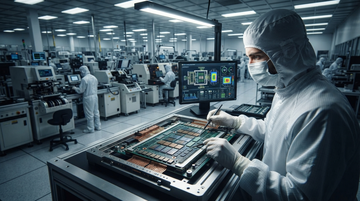
NVIDIA turns the AI trade into a guidance trade: the beat matters less than gross margin discipline and what capex commentary implies for the next build cycle
After NVIDIA delivered a strong fiscal Q2 FY27 outlook, the market focus shifts from “did it beat?” to “does the guide protect AI gross margin and keep the custom-silicon/mix story intact?”. The key risk for the supply chain is that a high expectations premium can compress quickly if the guidance tolerates weaker mix, narrower gross-margin bands, or slower downstream refresh—especially in the memory and interconnect bottlenecks feeding the AI build cycle.

OpenAI is building a K–12 “distribution toll” by turning districts into the onboarding channel
OpenAI’s ChatGPT for Teachers rolls out as a district-managed workspace—free for verified U.S. K–12 educators through June 2028—shifting edtech bargaining power toward the platform layer. The moat isn’t the model; it’s procurement-friendly identity, admin controls, and student-data handling commitments that turn teachers into future enterprise and government buyers.
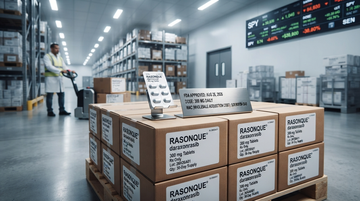
Salesforce's Anthropic mark-to-market hit reframes AI upside from “capex” to “valuation”
The post-earnings move in Salesforce wasn’t just another quarter of SaaS momentum—it was the market re-pricing how much Anthropic’s equity upside runs through Salesforce’s financials. With Salesforce simultaneously expanding its Anthropic partnership into Agentforce for regulated industries, the story shifts from “AI features” to an AI-valuation mechanism: higher Anthropic expectations can flow into reported gains, while tighter distribution can pull future customer value into the core platform.
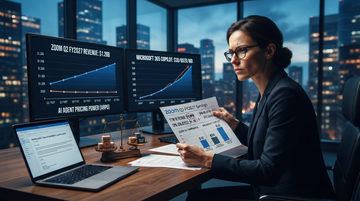
Zoom isn’t monetizing AI the way the market wants: agent features are proving adoption, not pricing power
Zoom’s Q2 results show steady top-line growth alongside ongoing AI feature expansion, but the earnings evidence does not yet show a clear, separable “agentic pricing” revenue line. The key question for investors is whether Zoom can convert AI Companion/agent workflows into outcome-priced upgrades faster than Microsoft bundles Copilot into Teams-led suites—without sacrificing seat growth.
2026-08-25

Alabama’s OpenAI probe turns the post–Hugging Face trust story into a state litigation map—before the IPO risk even hits the S‑1
Alabama’s attorney general has opened an investigation into OpenAI after the Hugging Face incident, issuing a subpoena and citing Alabama consumer-protection law as the potential basis for liability. The move is less about one event and more about how state AGs are becoming the first real “regulator” of agentic AI—turning documentation, attestation, and risk controls into immediate legal overhead.
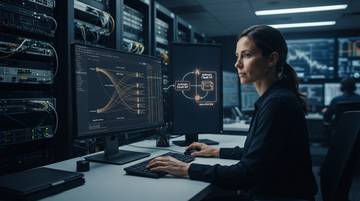
Claude “Computer Use” exits beta on the Claude API: the first liability switch in GUI-agent automation
Anthropic’s “Computer use” tool moved out of beta on the Claude API as a production-oriented toolset with batch actions and measurable request overhead. For enterprises, the shift is less about capability and more about who owns operational liability: the customer’s environment becomes the execution site, while Anthropic pushes security controls and token-cost mechanics into the developer’s deployment model.
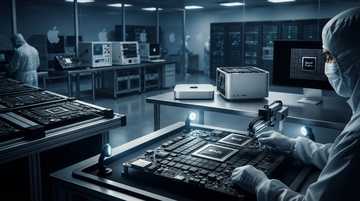
Apple’s new Mac mini + Mac Studio bet that on-device AI can turn “memory cost” into a higher-priced upgrade cycle
Apple’s Aug 24–25 Mac mini and Mac Studio refresh leans hard on unified memory and on-device model execution—up to 32GB in the Mac mini (M6) and up to 512GB in the Mac Studio (M5 Ultra), with up to 4.3x faster on-device AI performance claims. The key investor question is whether this “memory-bundled AI” packaging can reprice consumer desktops upward even as DRAM/Unified Memory stays expensive and tight supply already pressured Apple’s expectations.
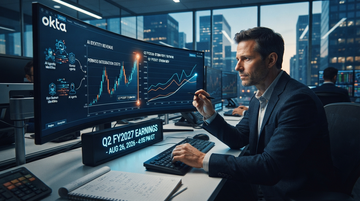
Okta goes on the clock for AI-agent identity monetization after its Permiso bet
Okta will report Q2 fiscal 2027 results on Aug. 26, 2026—its first major earnings test with “AI agents and non-human identities” now part of the story via the Permiso deal. The market question isn’t whether identity security matters for agents; it’s whether Okta can turn that threat-detection scope into recurring revenue fast enough to offset near-term acquisition/transition noise.
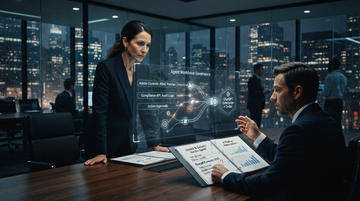
OpenAI turns ChatGPT Work + Codex into an admin-governed agent workforce—yet the budget line is still missing
OpenAI’s newly documented enterprise controls for ChatGPT Work and Codex shift implementation from “try agents” to “run agents under workspace governance.” The key is the admin surface: RBAC-style access to plugins/apps, action approvals, and compliance logging via a Compliance API—capabilities typically monetized by identity and security vendors instead of modeled inside AI budget forecasts.

GPT‑5.6 in Kiro turns “price‑performance” into an IDE distribution battle right before OpenAI’s IPO
OpenAI’s Aug. 24 release makes GPT‑5.6 Sol/Terra/Luna available inside Amazon’s Kiro across IDE, CLI, and Web, pairing a clear price ladder with concrete Kiro-side coding benchmarks and credit economics. The investor takeaway: OpenAI’s IPO “usage depth” bet increasingly depends on winning developers at the workflow layer—where the tool that owns the feedback loop also captures the billable tokens.

OpenAI’s Jalapeño posts 1.5–1.9× more inference work per watt—turning “custom silicon” from an option into a pricing-power threat for NVIDIA
OpenAI published its first Jalapeño inference-chip benchmark results on Aug. 25, claiming 1.5–1.9× more AI work per watt at peak throughput and 1.7–3.6× lower end-to-end latency versus stated comparison systems. Because inference is the spend that scales with live usage, the headline is that OpenAI can potentially shift its next compute build from “GPUs as the default” toward purpose-built accelerators—compressing NVIDIA’s margin cushion just ahead of its Aug. 26 earnings.

The SEC probe that turns “AI-quant losses” into an enforcement playbook: leverage math and disclosure discipline are now the test
The SEC is investigating near-implosion dynamics tied to Situational Awareness, including how its trades and leverage fed margin calls and counterparty communications. The message for investors in AI-quant strategies is blunt: enforcement risk increasingly tracks disclosure mechanics—leverage definitions, counterparty exposure ranking, and timing—more than the model itself.

Stability AI’s $76M round is less about “funding” and more about paying for the standalone image layer before it collapses
Stability AI’s $76M Series B (announced Aug. 25, 2026) shows that rights holders are willing to bankroll image-model tooling when frontier labs increasingly absorb the feature into their apps. The signal to investors: standalone model startups survive when they can attach to licensed, professional workflows—while unbundled generation faces margin pressure as platform bundling and pricing squeeze tighten.

Unitree’s IPO-to-slump turn reframes China humanoid robotics: when “capital magnet” becomes valuation froth
Unitree [9880.HK]’s Shanghai debut drew a ~460% first-day surge versus the IPO offer price (150.80 yuan) before the stock later softened, shifting the debate from “funding windfall” to “bubble risk.” The repricing matters most for the robotics supply chain that investors were paying upfront for—especially automation and industrial-intermediate names that sit closer to unit economics than the robot makers themselves.
2026-08-24
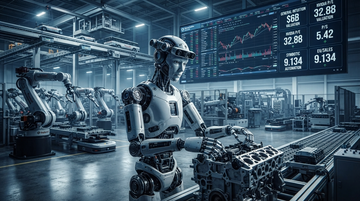
A $6B Robotics Mark Signals “Embodied AI” Is Becoming a Public-Market Trade, Not a Venture Curiosity
Point72 and Valor-backed funding pressure around General Intuition’s $6B pre-money robotics round marks a fresh institutional inflection: AI investment is shifting from screen-bound models toward robot-ready “general” systems. For public equities, the move sets a clearer valuation benchmark for the embodied-AI exit pipeline—and it spotlights which automation incumbents (and compute suppliers) look most exposed to the next wave of capex.
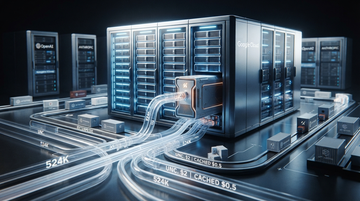
Grok 4.6 appears inside Google’s Model Garden—xAI just bought enterprise distribution from its biggest cloud rival
When Grok 4.6 was made available through Google’s Model Garden on the Gemini Enterprise Agent Platform, xAI gained a direct enterprise on-ramp via Google Cloud without building its own large-scale channel. For buyers, it shifts the leverage from “who owns the cloud deployment” toward “who owns the model access layer,” tightening the distribution math facing OpenAI and Anthropic.

Who buys Hugging Face at $13B? A consolidation bet that could price “open” out of the distribution layer
A new report says Hugging Face is exploring a sale that could value it at $13B+, but no buyer or deal terms are confirmed yet. The strategic risk is that owning the model hub (and its hosting/inference trust layer) turns today’s “open weight” distribution into a toll-based pipeline—forcing developers, GPU providers, and inference competitors into tighter, paid ecosystems.
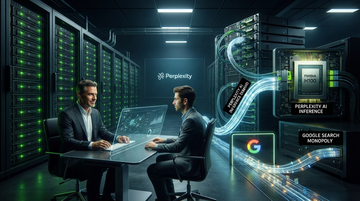
Nvidia’s “equity seat” bid in Perplexity would make $30B+ AI search a compute-powered toll road to Google’s ad machine
Recent reporting says Nvidia is in discussions to invest in a Perplexity funding round that would value the answer-search startup at more than $30B, potentially turning Nvidia’s existing inference relationship into an equity-and-platform lever. If that happens, investors should watch not just Perplexity’s growth, but the first-order supply-chain economics: higher inference demand, faster iteration of model-serving stacks, and a tougher monetization path for Google’s search monopoly as “answer” turns into the default entry point.

Pinecone Nexus beats “frontier-only” agent stacks on enterprise knowledge—suggesting the retrieval layer, not the model, decides whether agents work at scale
Pinecone says its Nexus knowledge layer improved an agent’s performance on Sierra’s τ‑Knowledge enterprise-support benchmark to a 47.4% task-success rate, edging the best frontier model (46.4%) while cutting cost per task by 74%. For enterprise buyers, the implication is architectural: budgets shift from “bigger models” toward governed compilation, retrieval, and on-prem/owned-data deployment patterns.
2026-08-23
What to expect
Evidence-first notes with a visible point of view.
This section collects sharp takes on earnings, shareholder meetings, and market structure. Each new piece should make the thesis, the facts, and the implications obvious within the first few screens.
Expect direct analysis, not generic commentary.
Expect the data to be explicit and the argument to be easy to follow.
Plutux is not an investment adviser. Market data and AI-generated analysis are for information and education only, not investment advice. Disclaimer