AI & Software
Where AI spending is actually landing
Model releases, enterprise adoption and software margins, read for what they do to revenue — across the labs, the platforms and the software they run on.
2026-08-05
%22%2F%3E%0A%20%20%3Ccircle%20cx%3D%22220%22%20cy%3D%22150%22%20r%3D%22180%22%20fill%3D%22%2322d3ee%22%20fill-opacity%3D%220.12%22%2F%3E%0A%20%20%3Ccircle%20cx%3D%221010%22%20cy%3D%22130%22%20r%3D%22220%22%20fill%3D%22%2338bdf8%22%20fill-opacity%3D%220.08%22%2F%3E%0A%20%20%3Ccircle%20cx%3D%22920%22%20cy%3D%22520%22%20r%3D%22170%22%20fill%3D%22%2322d3ee%22%20fill-opacity%3D%220.06%22%2F%3E%0A%20%20%3Cpath%20d%3D%22M140%20430h920%22%20stroke%3D%22url(%23line)%22%20stroke-width%3D%2212%22%20stroke-linecap%3D%22round%22%2F%3E%0A%20%20%3Cpath%20d%3D%22M220%20360c120-150%20260-220%20380-220s260%2070%20380%20220%22%20fill%3D%22none%22%20stroke%3D%22%2367e8f9%22%20stroke-opacity%3D%220.5%22%20stroke-width%3D%2216%22%20stroke-linecap%3D%22round%22%20stroke-linejoin%3D%22round%22%2F%3E%0A%20%20%3Cpath%20d%3D%22M300%20398h600%22%20stroke%3D%22%2394a3b8%22%20stroke-opacity%3D%220.24%22%20stroke-width%3D%228%22%20stroke-linecap%3D%22round%22%2F%3E%0A%20%20%3Ctext%20x%3D%22220%22%20y%3D%22510%22%20fill%3D%22%23e2e8f0%22%20fill-opacity%3D%220.7%22%20font-family%3D%22Arial%2C%20Helvetica%2C%20sans-serif%22%20font-size%3D%2238%22%20letter-spacing%3D%228%22%3EINSIGHTS%3C%2Ftext%3E%0A%3C%2Fsvg%3E)
2026-08-04
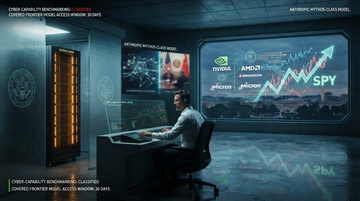
AI diplomacy is repricing US chips: China’s Mythos anxiety turns the next frontier-model release into a Trump–Xi bargaining input
U.S. policy is building a voluntary, federally benchmarked “covered frontier model” review process for advanced AI with cyber risk, ahead of a Trump–Xi summit sequence. If China is truly focusing on Anthropic’s Mythos-class cyber capabilities as an “offensive weapon” concern, then the next frontier-model decision window is effectively being priced into the same trade corridor that governs advanced AI chip access—making NVIDIA, Broadcom, AMD, and Micron sensitive to diplomacy headlines.
Amazon’s “transaction-entry” defense just got court-tested—AI shopping agents may need a new payments-and-permissions layer
A U.S. judge granted Amazon a preliminary injunction blocking Perplexity’s Comet “agentic” shopping tool from accessing protected parts of Amazon on behalf of users. The ruling reframes AI-agent commerce as a permissions-and-integration problem (not just a scraping or UX problem), which changes who profits: the interface owner, the identity/payment rail, or the discovery layer.

A White House “voluntary” AI safety test became a pre-regulatory negotiation—frontier labs now face a binary choice on access vs. disclosure
A Reuters report says the Trump White House invited Meta, Anthropic, Google, and OpenAI to a sit-down on voluntary government AI safety testing. Combined with the June 2, 2026 executive order’s up-to-30-day access framework, the meeting signals a shift from “standards talk” to controlled, government-mediated model access that can re-price who can move fastest without being forced to reveal too much.
2026-08-03
AMD's $11.2B Quarter Is the Easy Print — Helios, the Anthropic 2GW Deal, and a 64x Forward P/E Decide Whether This Rally Has a Second Half
Advanced Micro Devices reports Q2 2026 on Aug 4 with $11.2B revenue and ~$1.61 non-GAAP EPS already in the guide, but the real test sits in the data-center mix and gross margin trajectory now that the $5B/Anthropic 2GW MI450 deal (Jul 22), Helios rack-scale launch (Jul 23) and $14B/Core Scientific 2.5GW data-center pact (Jul 28) have reset the 2027–2028 setup. Stock has run +120–160% YTD to ~$476 against a 64x forward P/E — almost 3x NVIDIA's 22x — so the print must validate that MI450 ramp economics can absorb Blackwell-style gross-margin compression rather than replicate it.

Copper Foil Is the New US IPO “Test of Trust” for China’s AI Compute Supply Chain
Londian Wason [FOIL] is using a US listing to formalize access to Western capital for a bottleneck material: electrolytic copper foil that feeds both LiB and PCB-grade conductors used in high-performance computing. In its F-1, it frames AI/high-speed computing PCBs as requiring lower-roughness foil (RTF/HVLP) and highlights a scale where PCB-grade remains far smaller than LiB—so investors should watch whether the market can re-rate the PCBs growth story before certification and customer concentration risks show up.
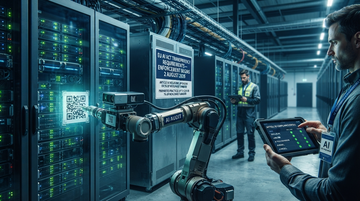
Brussels Raises the Cost of AI Distribution—But Big Tech Can Absorb What Frontier Labs Cannot
The EU AI Act’s transparency rules began applying on 2 August 2026, forcing providers and deployers to disclose AI interaction and label synthetic content. The immediate burden is operational rather than a guaranteed 7% revenue hit: Article 50-related violations fall under a ceiling of €15 million or 3% of worldwide turnover, while the larger 7% ceiling applies to prohibited practices. That asymmetry favors diversified platforms such as Microsoft, Alphabet, and Amazon over private frontier labs whose Europe-specific revenue is not disclosed.
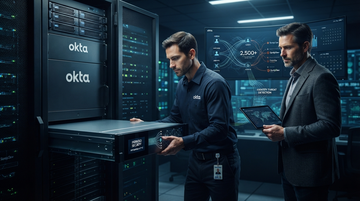
Okta Paid Nearly $200M for the Missing Layer in AI Security
Okta is buying Permiso Security to extend identity protection from login and access control into the behavior of human, machine, and agentic identities. The reported price is nearly $200 million, but the more important signal is strategic: the security platform that owns post-access telemetry may control the next AI-security budget.
OpenAI’s “abundant intelligence” is a capex doctrine—and the bill routes through Nvidia, Oracle, and the AI power grid
OpenAI’s Jul 31 “Building abundant intelligence” framing reads less like a product roadmap and more like a compute-scale-out discipline: plan infrastructure years ahead, measure success by useful work per cost, and keep pushing the capability-per-dollar frontier. When you combine that with OpenAI’s explicit GPT-5.6 cost cuts and its Nvidia partnership commitment to deploy at least 10 GW starting in 2H’26, the likely winners are the suppliers who monetize GPU scale, cloud capacity, and (most underpriced) reliable power.
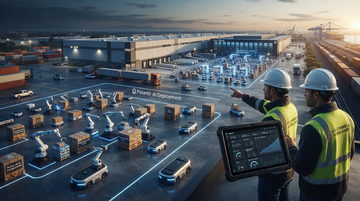
Palantir’s guide raise is the market’s first “AI budgets are real” signal—because it’s coming through the U.S. commercial line
Palantir’s latest guidance raise is most investable when you treat it as evidence that AI deployments are moving from one-off pilots into contracts that show up in forward revenue. The clearest through-line is the uplift in Palantir’s U.S. commercial revenue guide, which makes the AI/defense thesis a budget-and-execution story—not just a demo-market story for software vendors.

Snap’s Q2 World Cup “ad beat” survives the ARPU stress test—up to the point where the math is still quarter-specific
Snap’s Q2 revenue inflection looks real on a top-line read, but the durability question is the split between unit economics and temporary demand/event lift. The quarter’s fundamental financial direction is still dominated by advertising volatility and profitability pressure, so investors should treat the World Cup headline as a signal—not proof—of sustained AI-driven routing gains.

Tom Lee’s 2027 “best year” only works if mega-caps keep leading while SpaceX-or-Fed shocks don’t reprice risk—here’s the trade book
Tom Lee’s bullish 2027 setup is best understood as a conditions trade: mega-caps must keep capturing AI earnings momentum while the market digests massive tech IPO supply and avoids a Fed-led tail unwind. The concrete test is whether leadership stays narrow (NVDA/META/GOOGL/AXP/CVX) or spreads into the small-cap bridge—because if it doesn’t, “best year” becomes a liquidity/valuation story rather than an earnings story.
2026-08-02
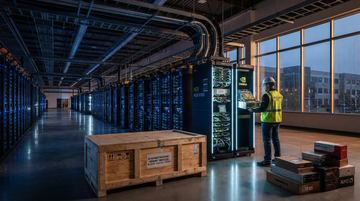
Amazon Just Admitted AI Capex Now Outruns Its Own Cash Engine — A $220B Verdict on Hyperscaler Survival
Amazon raised 2026 capex to $220B and posted a -$7.6B TTM free cash flow on July 30, joining Oracle in negative territory and following Alphabet's -$5.85B Q2 print, even as AWS grew 37% and operating income hit $27.5B. The capex bump is fully memory-driven, the $496B AWS backlog shows demand outstrips supply through 2027, and the $53.4B non-cash Anthropic gain is doing the work that operations no longer can. The read-through to Microsoft, Meta, and NVIDIA: AI capex has moved from 'growth-justified' to 'survival-justified,' and the supply chain — SK Hynix, Samsung, Micron, Broadcom, AMD — collects the toll.

Chime's 10% Layoff Is a Fintech Earnings Story, Not an AI Story — and That's the Trade
Chime Financial cut 10% of staff on July 31, 2026 — the first post-IPO deposit-franchise fintech to break a cost story at scale — but the math is more about a $2.19B revenue company trying to widen a 1-month-old GAAP profit margin than about AI replacing engineers. With Visa's 7% cut landing three days earlier, Robinhood's 10% cut pre-positioned, and Affirm's CEO publicly rejecting the AI layoff narrative, the real question for investors is whether AI becomes an excuse for ordinary post-IPO discipline, or a structural opex reset that re-rates the entire consumer-fintech cohort.

Citadel Just Became the AI Correction's Buyer of Last Resort
Ken Griffin's Citadel quietly absorbed roughly $16B of public AI-stock exposure from Leopold Aschenbrenner's Situational Awareness after the 24-year-old's fund dropped 67% in July. The first true whale-buying event of the 2026 chip rout removes a leveraged marginal long, hands the bag to a $67B multi-strategy shop, and leaves private AI names like Anthropic as the only place the survivors still want to be.
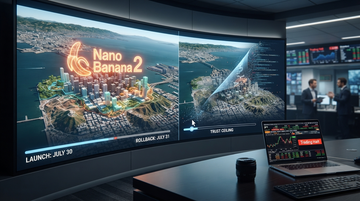
Alphabet's 24-Hour Earth AI Reversal Sets a Trust Ceiling for Generative Maps
Google launched Nano Banana 2 in Google Earth on July 30, 2026, then rolled it back on July 31 after users created convincing false scenarios over real satellite, aerial, and 3D imagery. The episode is not a material near-term revenue event for Alphabet, but it raises the cost of deploying generative features across trusted visual products: stronger review, provenance, moderation, and distribution controls become part of the margin equation.
MiniMax's H3 Is a Quotation Mark for Alibaba — China's Video-Gen Race Just Reset the AI Investment Cycle
On July 31, 2026, MiniMax shipped H3 — a 15-second, 2K, omni-modal video model priced at less than one-third of mainstream rivals and built to run on Chinese chips — then open-sourced the weights. The release collapses the price floor for frontier video generation in China and forces Alibaba, which both holds a MiniMax stake AND sells it cloud AND competes with it via HappyHorse, into a single sharp decision. The second-order trade is harder: H3's deliberate compatibility with Cambricon and Huawei Ascend silicon signals that Chinese inference is decoupling from Nvidia, even as Tencent ramps capex above 36 billion yuan for 2026.

SpaceX's First Print Tests Whether the $1.4T Is Cash or Vision
SpaceX reports its first quarterly earnings Aug 4 with shares already 51% off their June peak at $108.37. The print forces the Street to separate Starlink's real cash engine (Q1 2026: $3.26B revenue, $1.19B operating income) from the AI compute money pit that added a $1.2B EBITDA drag in 2025 — and decide whether the $1.4T market cap is sum-of-parts math or a Musk optionality premium. With 911.5M shares unlocking Aug 6 and 34% of the float already short, the call is the first liquidity test of public-market SpaceX.

Munich's Suno Loss Forces Music Catalogs Into the AI-Liability Trade — and the First Real Read Is on Universal Music Group
The Munich Regional Court's July 31 ruling against Suno — a private US AI lab with ~$300M of annualized revenue — marks the first European jurisdiction to hold that training and output both infringe copyright, rejecting the EU's text-and-data-mining defense. With Warner Music Group already paid up via a November 2025 licensing template, Universal Music Group and Sony Group now have a precedent plus a price sheet to extract similar terms in their pending US suit, turning the majors' catalogs from passive royalty streams into active AI-licensing toll booths. Investors should reprice music-rights equities for a higher licensing-revenue floor and a structural margin tailwind that compounds with streaming.
2026-08-01
What to expect
Evidence-first notes with a visible point of view.
This section collects sharp takes on earnings, shareholder meetings, and market structure. Each new piece should make the thesis, the facts, and the implications obvious within the first few screens.
Expect direct analysis, not generic commentary.
Expect the data to be explicit and the argument to be easy to follow.
Plutux is not an investment adviser. Market data and AI-generated analysis are for information and education only, not investment advice. Disclaimer