AI & Software
Where AI spending is actually landing
Model releases, enterprise adoption and software margins, read for what they do to revenue — across the labs, the platforms and the software they run on.
2026-08-09
%22%2F%3E%0A%20%20%3Ccircle%20cx%3D%22220%22%20cy%3D%22150%22%20r%3D%22180%22%20fill%3D%22%2322d3ee%22%20fill-opacity%3D%220.12%22%2F%3E%0A%20%20%3Ccircle%20cx%3D%221010%22%20cy%3D%22130%22%20r%3D%22220%22%20fill%3D%22%2338bdf8%22%20fill-opacity%3D%220.08%22%2F%3E%0A%20%20%3Ccircle%20cx%3D%22920%22%20cy%3D%22520%22%20r%3D%22170%22%20fill%3D%22%2322d3ee%22%20fill-opacity%3D%220.06%22%2F%3E%0A%20%20%3Cpath%20d%3D%22M140%20430h920%22%20stroke%3D%22url(%23line)%22%20stroke-width%3D%2212%22%20stroke-linecap%3D%22round%22%2F%3E%0A%20%20%3Cpath%20d%3D%22M220%20360c120-150%20260-220%20380-220s260%2070%20380%20220%22%20fill%3D%22none%22%20stroke%3D%22%2367e8f9%22%20stroke-opacity%3D%220.5%22%20stroke-width%3D%2216%22%20stroke-linecap%3D%22round%22%20stroke-linejoin%3D%22round%22%2F%3E%0A%20%20%3Cpath%20d%3D%22M300%20398h600%22%20stroke%3D%22%2394a3b8%22%20stroke-opacity%3D%220.24%22%20stroke-width%3D%228%22%20stroke-linecap%3D%22round%22%2F%3E%0A%20%20%3Ctext%20x%3D%22220%22%20y%3D%22510%22%20fill%3D%22%23e2e8f0%22%20fill-opacity%3D%220.7%22%20font-family%3D%22Arial%2C%20Helvetica%2C%20sans-serif%22%20font-size%3D%2238%22%20letter-spacing%3D%228%22%3EINSIGHTS%3C%2Ftext%3E%0A%3C%2Fsvg%3E)
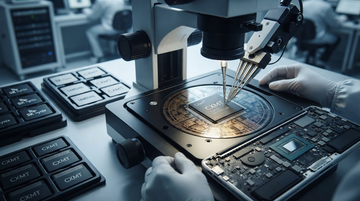
Apple's CXMT test isn’t a price story—it’s a sanctions-and-qualification story that can *stabilize Apple’s bill or strengthen SK hynix and Samsung’s pricing power
Apple is reported to have progressed to qualification testing of [CXMT] PRC DRAM for iPhone/Mac devices sold in China, while also engaging US policy for clearance. The first-order market implication is that CXMT can’t credibly undercut pricing yet, so the substitution “math” likely sharpens near-term leverage for SK Hynix and Samsung Electronics while raising a binary compliance risk for Apple’s sourcing pipeline.
Cloudflare’s Q2 AI-Inference Guide Raised the “Toll” Value of the Internet Edge—So NET Repriced From CDN to Answer-Engine Infrastructure
Cloudflare used its Q2 2026 print to guide fiscal 2026 revenue to $2.864B–$2.870B and non-GAAP EPS to $1.25–$1.26, a combination the market treated like proof that AI inference traffic is accelerating at the edge. The read-through is that Cloudflare (and edge rivals) increasingly function as the “metering + policy control plane” for machine-to-machine traffic—not just a caching layer.
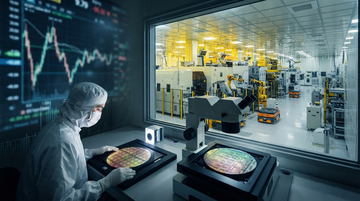
KOSPI volatility ebbed—but the AI-memory trade is now a different risk asset after leveraged flush
South Korea’s volatility gauge has fallen to a two-month low after forced liquidations and regulatory tightening on single-stock leveraged ETFs. The key implication for investors isn’t “risk-on returns”—it’s that the AI-memory complex’s tape is now shaped more by de-leveraging mechanics than by momentum alone.
2026-08-08

Apple turns Alibaba Qwen into a China Mac distribution channel—iPhone was the pilot
Reuters says Apple’s China rollout lets eligible Mac users connect to Alibaba’s Qwen service via a macOS extension (macOS 26.6+), routing Qwen through Siri and Writing Tools for more detailed responses. That shifts the “Qwen for Apple Intelligence in China” story from a mobile-only monetization channel to desktop/enterprise workflows—raising the odds that Alibaba captures more downstream AI usage time (and thus higher Cloud/enterprise pull) alongside Apple’s China Services stickiness.
AppLovin's Q2 miss broke the “open access = upside” story—because its own model-driven auction timing still controls monetization
AppLovin didn’t miss on demand; it missed on timing, with management attributing the softer quarter to lighter-than-normal model improvement. That matters to the “open access / distribution” thesis because ad-tech economics clear through pricing/take-rate via auctions, not just incremental reach—so one weak quarter can vaporize the narrative even when the machine keeps growing.
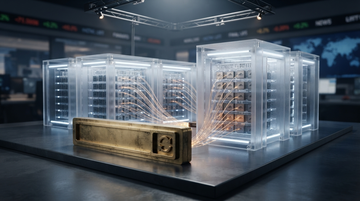
Cloudflare turns the browser into agent compute—then prices the cost drivers (CPU/memory) inside Workers P&L
With Cloudflare’s Kitesurf (launched Aug 6), the “browser” becomes a stateless Rust engine running inside Workers, optimized for AI agent tasks rather than human browsing. The key economic tell is that Cloudflare reports materially lower CPU and especially memory than Chromium for common agent actions—shifting Cloudflare’s agent-compute revenue mechanics away from CDN/security toward browser-like workloads metered by resource cost.

Nvidia’s $3B Lancium Bet Turns Stargate Into a Power-Site Landlord Play—Not a GPU Story
The key market constraint behind Stargate-style AI buildouts is shifting from GPU availability to multi-year power + grid interconnect lock-up. Nvidia’s $3B-scale equity commitment to Lancium (the power infrastructure developer tied to Stargate) matters because it anchors the “AI grid” that determines where compute can actually be deployed.
OpenAI’s “Critical Cyber” threshold turns AI-safety into a security-vendor compliance stack—creating a new 30-day-style review process even without a “kill switch” law
OpenAI’s Aug 7 post on “Responding to the next frontier of critical cyber capabilities” defines when a frontier model can perform end-to-end novel cyberattack strategies, and says it is strengthening/pausing releases and agent workloads accordingly. That threshold reframes AI safety from “model behavior promises” into a test-and-controls gate—one that can force security vendors and evaluators to operationalize compliance via measured exploitability and environment isolation, not just policy statements.
![[OpenAI]’s [NextSlide] acquisition signals the productivity-stack era: ChatGPT is becoming the “AI-native Office distribution layer” insight cover](https://images-1379091077.cos.na-ashburn.myqcloud.com/insights/covers/20260808_openai_nextslide_presentation_acquisition_360px.png)
[OpenAI]’s [NextSlide] acquisition signals the productivity-stack era: ChatGPT is becoming the “AI-native Office distribution layer”
OpenAI’s Aug 2026 move to bring the [NextSlide] presentation team into the [OpenAI]/[ChatGPT] product suggests the next growth frontier is vertical workflow SaaS—starting with the work of turning ideas into decks. The deal’s disclosed specifics are thin, but the direction is testable: Microsoft and Alphabet can’t defend Office and Workspace UX with model access alone, they must out-execute on AI-native creation and formatting loops.
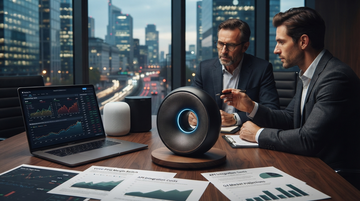
OpenAI’s $300–$400 Smart Speaker Trade: a voice-first margin switch that forces retailers and phone ecosystems to pay for access
A leaked report places OpenAI’s first consumer device—a screenless, donut-shaped AI speaker—at ~$300–$400 and suggests a 2027 entry. For investors, the key question isn’t “will people buy it?” but “who funds the margin bridge from OpenAI API to an always-listening voice edge in the home,” with likely knock-on pressure for Apple (ecosystem control) and Sonos (connected-audio relevance) while Amazon monetizes shipping distribution.

Rippling turns enterprise AI ROI into an auditable cost center, not a productivity vibe
Rippling says it burned “millions” on AI tokens in a few months, then built an internal employee-ROI tracker—now launched as AI Spend Console—to connect token spend to measurable outcomes. The move reframes AI from a blanket capability upgrade into a controllable spend-and-output system, forcing HR/payroll and adjacent enterprise software vendors to prove AI value in employee hours, not marketing.
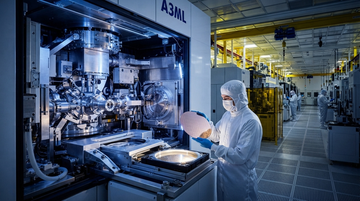
The “AI Capex Reality Check”: a $400M bet on a stealth chip-fab startup after a $16B unwind is a signal about who funds the 2027–2030 buildout
A post-bailout $400M commitment by Leopold Aschenbrenner’s Situational Awareness into Source Foundry implies that even after a leverage-driven AI-equity unwind, the fund still believes the frontier-AI capex cycle will require new manufacturing capability—especially in tools and process. Public-market drawdowns may have repriced the equity trade, but the chip-supply-chain cash allocation appears to be moving toward the “picks-and-shovels” of scaling production rather than competing on model IP.
2026-08-07

Alibaba’s “pay-for-heavy-users” open-weight twist turns Qwen into a monetization moat—weeks after the open-weights cost wave started
Reuters reports Alibaba plans to charge “big users” for its next open-weight model (Qwen3.8-Max), with timing aimed for next week and revenue-sharing for commercial “sale-as-a-service” deployments. The immediate investor signal: if open-weight can be turned into a paid tail without killing developer adoption, it pressures US hyperscalers’ inference-at-low-margin playbooks that currently benefit from free distribution.
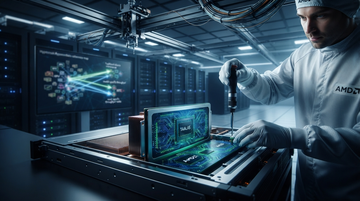
Advanced Micro Devices' first “one-model-to-silicon” buy re-ranks the inference chip war
By acquiring Taalas, Advanced Micro Devices is buying an inference architecture where the model is hardwired into custom silicon, not just accelerated at runtime. That shifts the hyperscaler vendor map toward “model-specific throughput” players, while pressuring GPU-style margins to defend against a new cost-performance axis.
Anthropic’s 85% fewer biology fallbacks reframes biosecurity as a measurable, cost-to-serve moat
Anthropic says its Aug 7, 2026 update cut biology-related “fallbacks” by about 85% in testing by tightening the boundary of its biology safeguards (constitutional classifier tuning). If regulated labs buy based on operational friction—not just policy—this kind of measurable false-positive reduction can lower reroute-and-retry costs while improving throughput into life-science workflows.

Anthropic’s 85% fewer biology fallbacks turns biosecurity from “friction” into a measurable cost-to-ship advantage for regulated labs
Anthropic reports that an update to Claude Fable 5’s biology safeguards reduced biology-related fallbacks by about 85% in testing, while keeping higher-risk dual-use controls intact. For enterprises running AI in regulated laboratory environments, fewer fallbacks means less workflow interruption, fewer manual handoffs, and lower total cost per usable “research session”—even when safety remains a hard requirement.
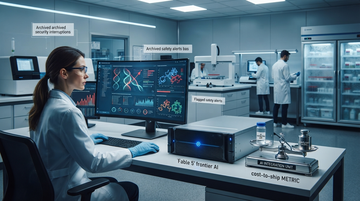
Anthropic’s Aug 7 Fable 5 biology update cuts biology fallbacks ~85%—turning biosecurity into a measurable “cost-to-ship” for frontier AI into regulated labs
Anthropic’s Aug 7 update to Claude Fable 5 biology safeguards reduced biology-related fallbacks by about 85% and lowered total fallbacks across product surfaces by material double-digits. The change matters to investors because it makes biosecurity compliance operational: a lab integrating frontier AI can expect fewer “route to Opus” interruptions, but also inherits a new sourcing liability around safety classifier performance and auditability.
Cloudflare's Billable AI Metering Turns Inference Into a FinOps Problem—And That’s the Real Network Toll
Cloudflare’s launch of billable usage instrumentation and “Unified Billing” for AI Gateway creates a tighter loop between inference consumption and programmable, credit-based billing. The strategic shift isn’t just AI monetization—it’s turning edge-network delivery into something customers can budget and audit, which can raise switching costs and pull more value toward the infrastructure layer.

Cloudflare's AI traffic finally looks billable—its model is shifting from “security cost” to “metered usage”
Cloudflare’s recent AI/agent product direction plus a notably strong Q2 revenue guide imply AI-driven request growth is moving from nuisance traffic to monetizable usage. The key investor question is whether Cloudflare captures the incremental dollar per request at the edge, or whether hyperscalers/cloud customers “resell” that value downstream.

DeepSeek founder’s quant-linked funds slid ~16% in the week ending July 17—turning a model release into a forced position unwind
A Bloomberg-reported drawdown tied to DeepSeek founder Liang Wenfeng shows how China’s quant “regime shift + crowded trades” can hit the same players that helped power DeepSeek. The deeper issue isn’t only market beta: when a quant desk and a lab are financially linked, model-release timing can tighten or loosen the desk’s ability to hold risk—creating feedback from trading losses back into model output constraints.
What to expect
Evidence-first notes with a visible point of view.
This section collects sharp takes on earnings, shareholder meetings, and market structure. Each new piece should make the thesis, the facts, and the implications obvious within the first few screens.
Expect direct analysis, not generic commentary.
Expect the data to be explicit and the argument to be easy to follow.
Plutux is not an investment adviser. Market data and AI-generated analysis are for information and education only, not investment advice. Disclaimer