Macro & Policy
Rates, inflation and the policy that moves them
Central bank decisions, jobs prints and fiscal policy, read the way a portfolio reads them: what reprices, by how much, and what would change the call.
2026-07-23
%22%2F%3E%0A%20%20%3Ccircle%20cx%3D%22220%22%20cy%3D%22150%22%20r%3D%22180%22%20fill%3D%22%2322d3ee%22%20fill-opacity%3D%220.12%22%2F%3E%0A%20%20%3Ccircle%20cx%3D%221010%22%20cy%3D%22130%22%20r%3D%22220%22%20fill%3D%22%2338bdf8%22%20fill-opacity%3D%220.08%22%2F%3E%0A%20%20%3Ccircle%20cx%3D%22920%22%20cy%3D%22520%22%20r%3D%22170%22%20fill%3D%22%2322d3ee%22%20fill-opacity%3D%220.06%22%2F%3E%0A%20%20%3Cpath%20d%3D%22M140%20430h920%22%20stroke%3D%22url(%23line)%22%20stroke-width%3D%2212%22%20stroke-linecap%3D%22round%22%2F%3E%0A%20%20%3Cpath%20d%3D%22M220%20360c120-150%20260-220%20380-220s260%2070%20380%20220%22%20fill%3D%22none%22%20stroke%3D%22%2367e8f9%22%20stroke-opacity%3D%220.5%22%20stroke-width%3D%2216%22%20stroke-linecap%3D%22round%22%20stroke-linejoin%3D%22round%22%2F%3E%0A%20%20%3Cpath%20d%3D%22M300%20398h600%22%20stroke%3D%22%2394a3b8%22%20stroke-opacity%3D%220.24%22%20stroke-width%3D%228%22%20stroke-linecap%3D%22round%22%2F%3E%0A%20%20%3Ctext%20x%3D%22220%22%20y%3D%22510%22%20fill%3D%22%23e2e8f0%22%20fill-opacity%3D%220.7%22%20font-family%3D%22Arial%2C%20Helvetica%2C%20sans-serif%22%20font-size%3D%2238%22%20letter-spacing%3D%228%22%3EINSIGHTS%3C%2Ftext%3E%0A%3C%2Fsvg%3E)

Oil’s “six-week high” is often a shipping-risk repricing: the payoff belongs to tankers and margin-flex refiners, not to everyone holding crude
When Middle East shipping risk rises, part of the crude move is a time-spread shipping-and-uncertainty premium rather than pure physical tightness. That distinction changes who wins: oil-product margins at refiners like Valero Energy and Marathon Petroleum can benefit if product spreads widen faster than feedstock, while airlines such as Delta Air Lines face asymmetric fuel-cost pressure. Conversely, tanker owners like Frontline and Scorpio Tankers tend to capture a more direct shipping-risk revenue pass-through—if the premium persists into the next charter/freight cycles.

When jobless claims hit a 1969-low, the “soft landing” story may be the risky one: it can mean hiring scarcity—not fewer layoffs
U.S. initial jobless claims fell to 187,000 for the week ending July 18, 2026, the kind of print that usually strengthens the soft-landing narrative. But the same data level can also reflect tight hiring funnels (delayed hires, higher hiring friction, fewer separations counted) rather than an improving labor-market turn—changing how investors should think about Fed timing, consumer resilience, and equity duration.
2026-07-22

The U.S.-Saudi Nuclear Deal’s Real Market Signal: Enrichment Permission Is the Policy Variable Congress Can Still Break
As of July 22, 2026, a U.S.-Saudi civil nuclear cooperation agreement is still awaiting final signature and is reportedly structured in a way that could permit uranium enrichment on Saudi soil. The investment relevance isn’t “nuclear is coming,” but whether enrichment/reprocessing and safeguards constraints survive the U.S. Section 123 / congressional review process. If the deal’s enrichment pathway is curtailed, the first-order winners shift from fuel-cycle capacity beneficiaries toward reactor EPC and nuclear components—changing near-term contracting and long-cycle supply-chain demand.

Trump’s 50% Tariff on Canadian Goods Forces North America to Rebuild Auto, Alcohol, Dairy, and Construction-Materials Flows—Fast
On July 20, 2026, the White House announced a 50% tariff on a broad range of Canadian goods effective 30 days later, explicitly targeting categories tied to motor vehicles, alcoholic beverages, and dairy while excluding certain areas such as energy. The immediate supply-chain effect is less about “tariff math” and more about how quickly buyers can reroute inputs (and re-qualify supply) across the integrated U.S.–Canada manufacturing corridor. In the public markets, the clearest equity sensitivity shows up across steel, aluminum, building materials, and heavy-equipment demand—especially for firms whose margins already depend on tight cross-border logistics, pricing, and contract timing.

Yen at 163+: Why Intervention-Pressure, Not Japan’s Rates Alone, Is the Carry-Trade Shock Point
As of July 22, 2026 the yen slid past 163 per US dollar, keeping markets on alert for another Japanese authorities intervention attempt. The key risk for carry trades is not simply that USD/JPY is high—it’s that repeated “intervention resolve” narratives can trigger fast, liquidity-driven unwinds when positioning is crowded. That turns a macro FX move into a cross-asset volatility event, with the intervention “mechanism” and speed mattering as much as the level.
2026-07-21
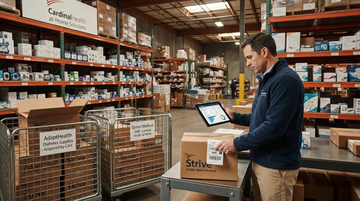
Head of US AI Safety Agency CAISI Resigns After Just 3 Months — What It Means for Frontier AI Oversight
On July 20, 2026, Reuters and CNBC confirmed that Chris Fall resigned as Director of the Center for AI Standards and Innovation (CAISI) — the federal AI testing institute under the Department of Commerce that replaced the prior AI Safety Institute — just three months after his appointment. The departure is the latest shakeup in the Trump administration's AI oversight team and comes amid intensifying negotiations with frontier-model developers (OpenAI, Anthropic, Google) over staged releases, government access, and how to test for national-security risks. It raises questions about the stability of US AI regulatory infrastructure as cheaper Chinese open-weight models accelerate.
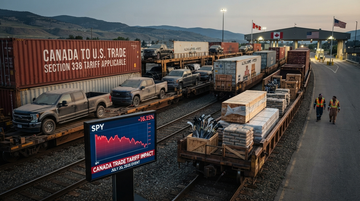
Trump Slaps 50% Tariffs on $20B of Canadian Goods Under Section 338 — Markets Brace for New Trade Shock
On July 20, 2026, President Trump signed three proclamations under Section 338 of the Tariff Act of 1930, imposing a 50% tariff on approximately $20 billion of Canadian goods — including motor vehicles, wine, spirits, beer, dairy, cement, lumber, and even hockey sticks — to retaliate against Canadian trade discrimination. The tariffs take effect in 30 days and apply regardless of USMCA status. Energy, potash, fish, Section 232 products, and critical minerals are exempted. Cited drop data: Canadian imports of U.S. vehicles fell ~22% ($5.6B) from April 2025 to March 2026; U.S. alcohol imports to Canada fell ~81% ($582M) from March 2025 to February 2026.
2026-07-20

2026-07-19
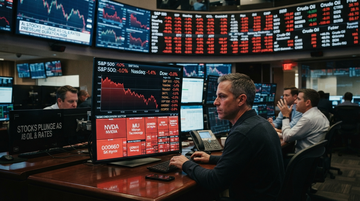
The AI Selloff Is Repricing Duration, Not Demand, as Oil and Rates Hit the Tape
A one-day drop in AI stocks is not a demand collapse story. The tape is telling investors that the most crowded parts of the AI complex are now being judged like long-duration assets, while oil, rates, and leverage force the market to separate Nvidia from Micron, SK Hynix, and Samsung Electronics.

The Beige Book Says Growth Is Still Moderate, but Fuel and Tariffs Keep the Fed on Guard
The latest Beige Book says the U.S. economy is still expanding at a moderate pace, but higher fuel costs and tariff pressure mean the Fed cannot treat inflation as solved. That keeps Walmart, United Airlines, and rate-sensitive sectors tied to the next policy print.

CFM's $2 Billion Repair Plan Says Aviation's Bottleneck Is Aftermarket Capacity, Not Engine Demand
CFM's five-year, $2 billion repair push is a signal that the supply problem in commercial aviation sits in maintenance, parts, and turn time. That has direct read-through for GE Aerospace, Safran, Boeing, and the airlines that are paying for missed utilization.

Jordan's Strike Reopens the Strait of Hormuz Energy-Risk Premium
The attack that killed two U.S. service members in Jordan and the follow-on U.S. strikes on Iran keep the Strait of Hormuz at the center of the market's inflation and freight math. That matters for Exxon, Chevron, United Airlines, Delta Air Lines, and any portfolio that still thinks oil is a side issue.

SpaceX's Pentagon AI Deal Turns Defense Compute Into a New Cloud Test
The Pentagon is reportedly considering a multibillion-dollar compute deal with SpaceX, which means defense AI is no longer just about models and chips. It is about who can deliver cheap, secure, and scalable data-center capacity without depending only on the usual cloud giants.

Taylor Farms' Cyclospora Recall Shows How One Lettuce Channel Can Spread Across Taco Bell and 27 States
Taylor Farms' July 17 recall turns a central Mexico lettuce sourcing channel into a network-risk case for retailers and quick-service restaurants. The public-health signal came from shredded iceberg lettuce served at Taco Bell, but the commercial unwind spans a 27-state distribution footprint and multiple packed formats.
2026-07-18

Nvidia Barely Kept the Market Cap Crown Over Apple, and That Turns the AI Trade Into a Cash-Conversion Test
The intraday fight between Nvidia and Apple is not just a market-cap headline. It is the market asking which mega-cap can still justify a premium when AI capex, memory costs, and valuation crowding are all rising at once.

Retail Sales and Jobless Claims Say the U.S. Consumer Is Slowing, Not Breaking
June retail sales rose only 0.2% and initial jobless claims fell to 208,000, which is a mixed signal in the best possible sense: spending is still holding up, layoffs are still low, and the Fed still has room to stay patient.

The SOX Bear Market Is Not the End of AI, It Is the Start of a Capital-Discipline Regime
When the Philadelphia Semiconductor Index drops more than 20% from its high, the market is not saying AI demand vanished. It is saying the cost of owning the AI supply chain is now high enough that only the cleanest cash converters deserve a premium.

The SOX Bear Market Is Splitting AI Toll Collectors From AI Beta
When the semiconductor index falls into bear-market territory, the market is not dumping AI. It is sorting the AI stack into companies that toll the buildout and companies that are still being priced like pure beta.
2026-07-17

Chevron's Iraq Pipeline Push Turns Hormuz Risk Into a Midstream Re-Routing Trade
New Iraq agreements worth roughly $60 billion do more than add barrels. They signal that the market is starting to price alternative export routes, which changes the value of Chevron, ConocoPhillips, and the entire Gulf energy infrastructure stack.
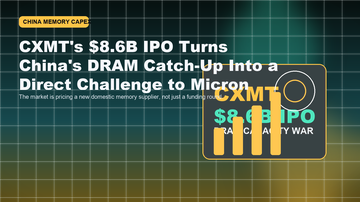
CXMT's $8.6B IPO Turns China's DRAM Catch-Up Into a Direct Challenge to Micron
China's ChangXin Memory Technologies is using a blockbuster IPO to turn AI demand into domestic DRAM capacity. That is not just a China story; it is a direct pricing challenge for Micron, SK Hynix, and Samsung Electronics.
What to expect
Evidence-first notes with a visible point of view.
This section collects sharp takes on earnings, shareholder meetings, and market structure. Each new piece should make the thesis, the facts, and the implications obvious within the first few screens.
Expect direct analysis, not generic commentary.
Expect the data to be explicit and the argument to be easy to follow.
Plutux is not an investment adviser. Market data and AI-generated analysis are for information and education only, not investment advice. Disclaimer