%22%2F%3E%0A%20%20%3Ccircle%20cx%3D%22220%22%20cy%3D%22150%22%20r%3D%22180%22%20fill%3D%22%2322d3ee%22%20fill-opacity%3D%220.12%22%2F%3E%0A%20%20%3Ccircle%20cx%3D%221010%22%20cy%3D%22130%22%20r%3D%22220%22%20fill%3D%22%2338bdf8%22%20fill-opacity%3D%220.08%22%2F%3E%0A%20%20%3Ccircle%20cx%3D%22920%22%20cy%3D%22520%22%20r%3D%22170%22%20fill%3D%22%2322d3ee%22%20fill-opacity%3D%220.06%22%2F%3E%0A%20%20%3Cpath%20d%3D%22M140%20430h920%22%20stroke%3D%22url(%23line)%22%20stroke-width%3D%2212%22%20stroke-linecap%3D%22round%22%2F%3E%0A%20%20%3Cpath%20d%3D%22M220%20360c120-150%20260-220%20380-220s260%2070%20380%20220%22%20fill%3D%22none%22%20stroke%3D%22%2367e8f9%22%20stroke-opacity%3D%220.5%22%20stroke-width%3D%2216%22%20stroke-linecap%3D%22round%22%20stroke-linejoin%3D%22round%22%2F%3E%0A%20%20%3Cpath%20d%3D%22M300%20398h600%22%20stroke%3D%22%2394a3b8%22%20stroke-opacity%3D%220.24%22%20stroke-width%3D%228%22%20stroke-linecap%3D%22round%22%2F%3E%0A%20%20%3Ctext%20x%3D%22220%22%20y%3D%22510%22%20fill%3D%22%23e2e8f0%22%20fill-opacity%3D%220.7%22%20font-family%3D%22Arial%2C%20Helvetica%2C%20sans-serif%22%20font-size%3D%2238%22%20letter-spacing%3D%228%22%3EINSIGHTS%3C%2Ftext%3E%0A%3C%2Fsvg%3E)
What changed
The Jordan attack is not just a headline. It is a reminder that Hormuz still sits on the market's shortest transmission line.
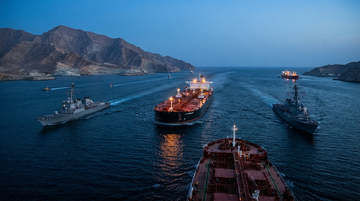
AP and WSJ both framed the latest escalation around the deaths of two U.S. service members in Jordan and the subsequent U.S. retaliation on Iranian targets. That matters because the point of conflict is no longer abstract geopolitics. It is the shipping corridor that carries a huge share of the world's oil and LNG.
The EIA says roughly 20 million barrels per day, or about 20% of global petroleum liquids consumption, moved through the Strait of Hormuz in 2024. The IEA adds that about 80% of those oil flows are headed to Asia and that limited pipeline alternatives can only reroute a small portion of the volume.
That makes every escalation a macro event. The immediate casualty count is tragic. The market consequence is that the energy-risk premium is back, and it is arriving through the fastest channel possible.
Why it matters
Oil is the first asset to reprice, but it is not the only one that matters.
That is why United Airlines and Delta Air Lines sit at the center of the read-through. Fuel is not just a cost line; it is a timing problem. If the move in crude becomes persistent, management teams have to revise guidance before the next quarter closes.
The second-order effect is broader. Higher fuel prices feed into transport, plastics, chemicals, and eventually the consumer basket. That is a problem for the Fed if the move persists, and it is a problem for rate-sensitive equities if inflation expectations stop fading.
| Transmission channel | Most exposed names | Market consequence |
|---|---|---|
| Crude and upstream | Exxon, Chevron | Earnings leverage improves if prices stay elevated |
| Airlines | United Airlines, Delta Air Lines | Fuel expense can outrun ticket pricing |
| Consumer demand | Walmart, discretionary retail | Gasoline taxes household budgets indirectly |
| Asia trade | Samsung Electronics / Alibaba | Import, freight, and growth multiples get more fragile |
Read-through
The right way to read the shock is as a volatility regime change, not a one-day oil spike.
The structural numbers matter more than the exact intraday print. The IEA says there is only 3.5 to 5.5 million barrels per day of available pipeline capacity that could potentially bypass Hormuz, while the strait itself carries about 20 million barrels per day.
That asymmetry means the market does not need a complete closure to feel pain. Even a partial reduction in throughput is enough to tighten shipping insurance, raise tanker rates, and support the idea that the old low-volatility energy regime is gone.
For equities, that argues for a more selective trade. Energy producers and some refiners can still benefit, but the broader implication is that inflation-sensitive assets need to be repriced with a bigger geopolitical premium than they had a week ago.
Hormuz remains a bottleneck even after rerouting options
The bars are direct structural exposures from EIA and IEA data, so the chart reads chokepoint versus bypass capacity rather than price action.
Unit: million barrels per day / percent
Hormuz oil flow
Million barrels per day
20
Bypass capacity
Upper end of reroute capacity
5.5
Asia-bound share
Percent of Hormuz oil
80
LNG trade share
Percent of global LNG trade
19
Bottom line
This is not a trade to fade on the first calm headline.
The market is telling you that the conflict is now large enough to touch the real economy through fuel, freight, and inflation expectations. That is a tougher problem than a single session of oil strength.
If tensions ease, the risk premium can fade quickly. If they do not, the market will keep treating Hormuz as a live input into equities, rates, and the Fed path.
In that scenario, the most important chart is not crude by itself. It is the spread between geopolitical noise and actual shipping continuity.