%22%2F%3E%0A%20%20%3Ccircle%20cx%3D%22220%22%20cy%3D%22150%22%20r%3D%22180%22%20fill%3D%22%2322d3ee%22%20fill-opacity%3D%220.12%22%2F%3E%0A%20%20%3Ccircle%20cx%3D%221010%22%20cy%3D%22130%22%20r%3D%22220%22%20fill%3D%22%2338bdf8%22%20fill-opacity%3D%220.08%22%2F%3E%0A%20%20%3Ccircle%20cx%3D%22920%22%20cy%3D%22520%22%20r%3D%22170%22%20fill%3D%22%2322d3ee%22%20fill-opacity%3D%220.06%22%2F%3E%0A%20%20%3Cpath%20d%3D%22M140%20430h920%22%20stroke%3D%22url(%23line)%22%20stroke-width%3D%2212%22%20stroke-linecap%3D%22round%22%2F%3E%0A%20%20%3Cpath%20d%3D%22M220%20360c120-150%20260-220%20380-220s260%2070%20380%20220%22%20fill%3D%22none%22%20stroke%3D%22%2367e8f9%22%20stroke-opacity%3D%220.5%22%20stroke-width%3D%2216%22%20stroke-linecap%3D%22round%22%20stroke-linejoin%3D%22round%22%2F%3E%0A%20%20%3Cpath%20d%3D%22M300%20398h600%22%20stroke%3D%22%2394a3b8%22%20stroke-opacity%3D%220.24%22%20stroke-width%3D%228%22%20stroke-linecap%3D%22round%22%2F%3E%0A%20%20%3Ctext%20x%3D%22220%22%20y%3D%22510%22%20fill%3D%22%23e2e8f0%22%20fill-opacity%3D%220.7%22%20font-family%3D%22Arial%2C%20Helvetica%2C%20sans-serif%22%20font-size%3D%2238%22%20letter-spacing%3D%228%22%3EINSIGHTS%3C%2Ftext%3E%0A%3C%2Fsvg%3E)
What changed
CFM is putting real money behind the repair bottleneck because the backlog is now strategic, not cosmetic.
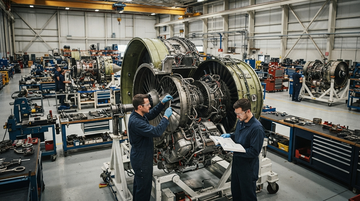
Reuters said CFM will invest $2 billion over five years to speed maintenance, add spare parts, and support suppliers. The company also said it wants 15% higher engine deliveries and described engine-driven groundings as near zero.
That is not a one-off PR move. It is an admission that the aviation system is still struggling with turn time, shop capacity, and installed-base utilization. The bottleneck is no longer just aircraft production. It is the ability to keep the existing fleet turning.
The read-through is clear for GE Aerospace and Safran: the aftermarket has become a growth engine of its own, and airlines are paying for it whether they like the pricing or not.
Why it matters
A faster repair cycle is a margin story for engine makers and a utilization story for airlines.
GE Aerospace's Q2 results show why investors care. The company reported $12.63 billion of revenue, raised full-year adjusted EPS guidance to $7.65-$7.85, and said commercial engines and services revenue rose to $9.7 billion. That is the cash machine CFM is helping support.
On the airline side, the economics are less friendly. Every extra week an engine spends waiting for parts or shop time reduces aircraft availability, complicates schedules, and can force carriers to lease more capacity or accept lower utilization. That flows directly into United Airlines, Delta Air Lines, and the whole narrow-body ecosystem.
The broader supply chain read-through also reaches Boeing and the repair ecosystem. If maintenance capacity improves, then the market can more cleanly separate a delivery bottleneck from a service bottleneck.
| Stakeholder | Benefit or pressure | Why it matters |
|---|---|---|
| GE Aerospace | Benefit | More shop visits and spare-parts demand support services revenue |
| Safran | Benefit | The JV model monetizes the installed base and durability upgrades |
| Boeing | Mixed | More service capacity can help aircraft availability, but OEM bottlenecks still matter |
| Airlines | Pressure eases slowly | Utilization improves only if the backlog clears faster than demand grows |
Read-through
The market should treat engine maintenance like a capacity industry, not a simple parts sale.
IATA's recent warning about engine MRO bottlenecks is the key macro signal. The industry is asking for more third-party access, more repair information, and more parts availability because the installed base is large enough that even small inefficiencies become expensive.
That is why the CFM announcement matters beyond GE and Safran. It says aftermarket economics are still healthy enough to justify a very large reinvestment, and it also says the customer base is still willing to pay to restore operating reliability.
The likely winners are the companies that can scale repair throughput without breaking quality. The likely losers are the firms that depend on persistent scarcity to protect margins but cannot fix the user experience.
Analyst bottleneck index: the repair queue is still the real problem
This is an inference index built from the Reuters, GE, and IATA signals. Higher numbers mean a tighter bottleneck, so the chart compares pressure before and after the new investment as an analytic frame rather than a measured series.
Unit: index
MRO bottleneck before spend
Tight queue
100
Parts scarcity
Still elevated
90
Installed-base demand
Fleet still needs service
80
Relief from $2B spend
Helpful, but not decisive yet
45
Bottom line
The smartest way to think about CFM's move is as an operating-system upgrade for the fleet, not just a repair budget.
If the investment shortens turn times, GE Aerospace and Safran protect the most valuable part of their model: the recurring services stream.
If it fails, the market will conclude that the bottleneck is deeper than capital alone and that airlines will keep paying for lost utilization.
Either way, the message is the same: in aviation, the economic moat is increasingly determined by aftermarket throughput.