Latest
The day's market news, with the argument attached
New notes every trading day on earnings, policy and market structure. Each one opens with the conclusion, then the evidence, then the companies it hits.
2026-08-07
%22%2F%3E%0A%20%20%3Ccircle%20cx%3D%22220%22%20cy%3D%22150%22%20r%3D%22180%22%20fill%3D%22%2322d3ee%22%20fill-opacity%3D%220.12%22%2F%3E%0A%20%20%3Ccircle%20cx%3D%221010%22%20cy%3D%22130%22%20r%3D%22220%22%20fill%3D%22%2338bdf8%22%20fill-opacity%3D%220.08%22%2F%3E%0A%20%20%3Ccircle%20cx%3D%22920%22%20cy%3D%22520%22%20r%3D%22170%22%20fill%3D%22%2322d3ee%22%20fill-opacity%3D%220.06%22%2F%3E%0A%20%20%3Cpath%20d%3D%22M140%20430h920%22%20stroke%3D%22url(%23line)%22%20stroke-width%3D%2212%22%20stroke-linecap%3D%22round%22%2F%3E%0A%20%20%3Cpath%20d%3D%22M220%20360c120-150%20260-220%20380-220s260%2070%20380%20220%22%20fill%3D%22none%22%20stroke%3D%22%2367e8f9%22%20stroke-opacity%3D%220.5%22%20stroke-width%3D%2216%22%20stroke-linecap%3D%22round%22%20stroke-linejoin%3D%22round%22%2F%3E%0A%20%20%3Cpath%20d%3D%22M300%20398h600%22%20stroke%3D%22%2394a3b8%22%20stroke-opacity%3D%220.24%22%20stroke-width%3D%228%22%20stroke-linecap%3D%22round%22%2F%3E%0A%20%20%3Ctext%20x%3D%22220%22%20y%3D%22510%22%20fill%3D%22%23e2e8f0%22%20fill-opacity%3D%220.7%22%20font-family%3D%22Arial%2C%20Helvetica%2C%20sans-serif%22%20font-size%3D%2238%22%20letter-spacing%3D%228%22%3EINSIGHTS%3C%2Ftext%3E%0A%3C%2Fsvg%3E)

American International Group's underwriting “beat” is mostly lower catastrophe losses and reserve, not broad pricing power
In American International Group’s latest disclosed underwriting results, the General Insurance combined ratio improved to 90.1 vs 91.8, with the underwriting income increase tied to $258m lower catastrophe losses and $183m higher favorable prior-year development. The implication for investors isn’t “pricing is the only story”—it’s that the cycle is still dominated by loss-cost variability, catastrophe timing, and reserve/reinsurance mechanics.

Alibaba’s “pay-for-heavy-users” open-weight twist turns Qwen into a monetization moat—weeks after the open-weights cost wave started
Reuters reports Alibaba plans to charge “big users” for its next open-weight model (Qwen3.8-Max), with timing aimed for next week and revenue-sharing for commercial “sale-as-a-service” deployments. The immediate investor signal: if open-weight can be turned into a paid tail without killing developer adoption, it pressures US hyperscalers’ inference-at-low-margin playbooks that currently benefit from free distribution.

Advanced Micro Devices' first “one-model-to-silicon” buy re-ranks the inference chip war
By acquiring Taalas, Advanced Micro Devices is buying an inference architecture where the model is hardwired into custom silicon, not just accelerated at runtime. That shifts the hyperscaler vendor map toward “model-specific throughput” players, while pressuring GPU-style margins to defend against a new cost-performance axis.
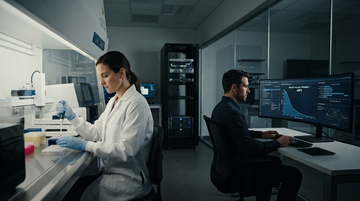
Anthropic’s 85% fewer biology fallbacks reframes biosecurity as a measurable, cost-to-serve moat
Anthropic says its Aug 7, 2026 update cut biology-related “fallbacks” by about 85% in testing by tightening the boundary of its biology safeguards (constitutional classifier tuning). If regulated labs buy based on operational friction—not just policy—this kind of measurable false-positive reduction can lower reroute-and-retry costs while improving throughput into life-science workflows.

Anthropic’s 85% fewer biology fallbacks turns biosecurity from “friction” into a measurable cost-to-ship advantage for regulated labs
Anthropic reports that an update to Claude Fable 5’s biology safeguards reduced biology-related fallbacks by about 85% in testing, while keeping higher-risk dual-use controls intact. For enterprises running AI in regulated laboratory environments, fewer fallbacks means less workflow interruption, fewer manual handoffs, and lower total cost per usable “research session”—even when safety remains a hard requirement.
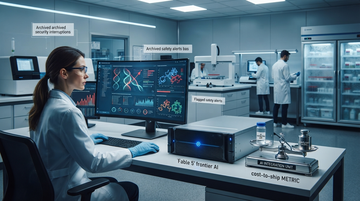
Anthropic’s Aug 7 Fable 5 biology update cuts biology fallbacks ~85%—turning biosecurity into a measurable “cost-to-ship” for frontier AI into regulated labs
Anthropic’s Aug 7 update to Claude Fable 5 biology safeguards reduced biology-related fallbacks by about 85% and lowered total fallbacks across product surfaces by material double-digits. The change matters to investors because it makes biosecurity compliance operational: a lab integrating frontier AI can expect fewer “route to Opus” interruptions, but also inherits a new sourcing liability around safety classifier performance and auditability.

BofA’s Bull-Bear Gauge Hit “Extreme Bullish” for the First Time in Years—And the Setup Suggests a Melt-Up, Not a Recession
When BofA’s Bull & Bear Indicator moves to an “extreme bullish” reading, it often signals crowded positioning rather than an imminent earnings collapse. But to know whether the cycle truly ends, investors need to watch whether leverage/breadth overshoots persist while policy expectations stay hawkish—because that mix historically creates melt-up fragility, not instant reversal.

Cloudflare's Billable AI Metering Turns Inference Into a FinOps Problem—And That’s the Real Network Toll
Cloudflare’s launch of billable usage instrumentation and “Unified Billing” for AI Gateway creates a tighter loop between inference consumption and programmable, credit-based billing. The strategic shift isn’t just AI monetization—it’s turning edge-network delivery into something customers can budget and audit, which can raise switching costs and pull more value toward the infrastructure layer.

Cloudflare's AI traffic finally looks billable—its model is shifting from “security cost” to “metered usage”
Cloudflare’s recent AI/agent product direction plus a notably strong Q2 revenue guide imply AI-driven request growth is moving from nuisance traffic to monetizable usage. The key investor question is whether Cloudflare captures the incremental dollar per request at the edge, or whether hyperscalers/cloud customers “resell” that value downstream.

DR Congo uranium embedded in cobalt shipments could turn battery supply-chain compliance into a nuclear traceability crisis
A newly detailed probe argues that uranium can co-move with Congo cobalt hydroxide exports—creating a gap between chemical supply-chain documentation and nuclear-material accounting. The implication for Glencore, Umicore, Freeport-McMoRan, and downstream battery-linked manufacturers is a new type of liability: customs screening, not just product purity, may become the gating risk.

DeepSeek founder’s quant-linked funds slid ~16% in the week ending July 17—turning a model release into a forced position unwind
A Bloomberg-reported drawdown tied to DeepSeek founder Liang Wenfeng shows how China’s quant “regime shift + crowded trades” can hit the same players that helped power DeepSeek. The deeper issue isn’t only market beta: when a quant desk and a lab are financially linked, model-release timing can tighten or loosen the desk’s ability to hold risk—creating feedback from trading losses back into model output constraints.

Dream Finders’ $2.2B Beazer bid reframes the housing cycle: public builders can now buy the bottom—then monetize the refinance window
Dream Finders agreed to acquire Beazer Homes in an all-cash deal valued at about $2.2B enterprise value, implying the cycle’s risk is shifting from “survival” to “consolidation math.” The key trade for investors is that Dream Finders Homes is positioned to convert scale into steadier margins, while Beazer Homes largely hands over land, homes-in-process, and (crucially) mortgage/closing adjacency at an inflection point for demand and pricing.

India’s “closing auction” rollout is colliding with expiry-day trading—while the gold-bullion venue’s CEO exit exposes a broader EM market-structure execution risk
India’s new stock closing auction mechanism for expiry-day price setting appears to have triggered confusion and nervousness among traders in its first sessions, including strategies that rely on liquidity during the close. At the same time, India International Bullion Exchange (IIBX) launched to bring transparency to India’s tightly regulated bullion market—but leadership change signals execution fragility in a fledgling venue. For allocators and market-makers, the shared takeaway is that auction-style microstructure reforms can reshape liquidity first, not “better price discovery,” and the winner is the firm that adapts its inventory and hedging schedule fastest.

Lyft's record bookings came with incentive drag—so “demand” is starting to look purchased, not retained
In Lyft’s latest quarter, record gross bookings arrived alongside a promotion-heavy cost profile, widening the gap between bookings growth and profitability. The key investor question is whether incentives are buying durable rider/driver economics—or just creating a temporary volume spike that limits margin expansion vs. Uber.
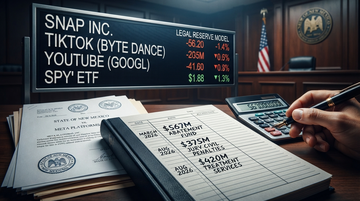
Meta’s $567M New Mexico teen verdict turns “Section 230 settlement risk” into a state-jury reserve model for Snap, TikTok, and YouTube
The New Mexico court ordered Meta to fund $567M of youth-mental-health abatement after a jury found liability under state consumer-protection law—$420M earmarked for treatment services over five years. For public platform investors, this shifts the liability curve from “possible future settlements” to state-jury-priced compliance reserves that can arrive on a predictable schedule—right as Snap and TikTok face closely related teen-harm claims.

Microchip may be the rare analog/MCU story where guidance implies a broad inventory cycle already turning
In its latest SEC filing, Microchip links sequential net-sales strength to customers reducing excess inventory, and it shows inventory-days improving while gross margin benefits from lower inventory reserves. If the same “inventory-to-orders” mechanism keeps flowing, it’s a test of whether the semiconductor recovery is staying broad (industrial/auto/embedded), not only AI infrastructure.
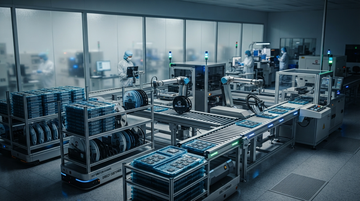
Microchip’s inventory normalization shows the industrial analog/MCU cycle, not just AI accel, is turning
In Microchip Technology’s latest filings, both distribution-channel and direct-customer inventory days move toward “normal” while bookings and backlog strengthen. That combination—“trifecta” demand recovery plus fewer inventory gaps—argues the semiconductor inventory cycle is broadening beyond a single AI accelerator read-through.
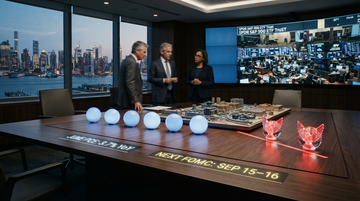
St. Louis Fed’s Musalem Just Torpedoed the “Cook-Only Hawkish Hold” Story—Now Two Dissent Doors Could Reweight September’s Dot-Plot
When Alberto Musalem said the Fed should have hiked at the last meeting, he turned the FOMC from a “hawkish hold” with a single hawk into a broader, regionally weighted hawkish majority risk for September. The key investor change isn’t that one more dissenter exists—it’s that a second regional-Fed dissenter adds probability mass to the same direction, reshaping which rate path is now most believable and which sectors should reprice first.
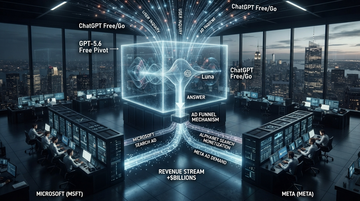
OpenAI’s GPT‑5.6 Luna Free Pivot Turns the Chat UI into an Ad Funnel
OpenAI’s Aug 6 update makes GPT‑5.6 Luna the default for ChatGPT Free/Go and pairs that scale move with a stated plan to test ads on free users “in the coming weeks.” The result is a structurally different monetization path: frontier-cost models can be metered like a conversion engine, reshaping how investors should underwrite the ad stack around Microsoft, Alphabet, and Meta.

SK Hynix Just Led a Record $83B Asian Share-Sale Wave—And It Changes How to Size the AI Memory Trade
The record $83B wave matters less for “AI euphoria” and more for market mechanics: it adds fresh equity supply right as the memory oligopoly needs stable pricing power to fund aggressive capex. For SK Hynix, that tension shows up in capital efficiency and the way funding sources stack—public-market liquidity now acts like a second pipeline for HBM investment, with different implications for Micron Technology, Samsung Electronics, and the rest of the AI memory complex.
What to expect
Evidence-first notes with a visible point of view.
This section collects sharp takes on earnings, shareholder meetings, and market structure. Each new piece should make the thesis, the facts, and the implications obvious within the first few screens.
Expect direct analysis, not generic commentary.
Expect the data to be explicit and the argument to be easy to follow.
Plutux is not an investment adviser. Market data and AI-generated analysis are for information and education only, not investment advice. Disclaimer