Latest
The day's market news, with the argument attached
New notes every trading day on earnings, policy and market structure. Each one opens with the conclusion, then the evidence, then the companies it hits.
2026-08-12
%22%2F%3E%0A%20%20%3Ccircle%20cx%3D%22220%22%20cy%3D%22150%22%20r%3D%22180%22%20fill%3D%22%2322d3ee%22%20fill-opacity%3D%220.12%22%2F%3E%0A%20%20%3Ccircle%20cx%3D%221010%22%20cy%3D%22130%22%20r%3D%22220%22%20fill%3D%22%2338bdf8%22%20fill-opacity%3D%220.08%22%2F%3E%0A%20%20%3Ccircle%20cx%3D%22920%22%20cy%3D%22520%22%20r%3D%22170%22%20fill%3D%22%2322d3ee%22%20fill-opacity%3D%220.06%22%2F%3E%0A%20%20%3Cpath%20d%3D%22M140%20430h920%22%20stroke%3D%22url(%23line)%22%20stroke-width%3D%2212%22%20stroke-linecap%3D%22round%22%2F%3E%0A%20%20%3Cpath%20d%3D%22M220%20360c120-150%20260-220%20380-220s260%2070%20380%20220%22%20fill%3D%22none%22%20stroke%3D%22%2367e8f9%22%20stroke-opacity%3D%220.5%22%20stroke-width%3D%2216%22%20stroke-linecap%3D%22round%22%20stroke-linejoin%3D%22round%22%2F%3E%0A%20%20%3Cpath%20d%3D%22M300%20398h600%22%20stroke%3D%22%2394a3b8%22%20stroke-opacity%3D%220.24%22%20stroke-width%3D%228%22%20stroke-linecap%3D%22round%22%2F%3E%0A%20%20%3Ctext%20x%3D%22220%22%20y%3D%22510%22%20fill%3D%22%23e2e8f0%22%20fill-opacity%3D%220.7%22%20font-family%3D%22Arial%2C%20Helvetica%2C%20sans-serif%22%20font-size%3D%2238%22%20letter-spacing%3D%228%22%3EINSIGHTS%3C%2Ftext%3E%0A%3C%2Fsvg%3E)

Lovable forces a public-market rethink: who owns the “AI app tier” at a $13.3B private valuation?
Lovable’s announced $400M Series C at a $13.3B valuation—along with scale claims like 60M projects and 900M monthly app visits—puts the “AI app tier” firmly into public-markets debate. The pricing pressure is less about whether AI can build apps, and more about who captures distribution, workflow lock-in, and monetization as app creation shifts from developer tools to end-user deployment.

Lumentum turns “1.6T is coming” into Q4 revenue—making optical capacity conversion the new proof point investors should price
Lumentum’s fiscal Q4 2026 delivered a record $1.006B in revenue and $3.23 non-GAAP diluted EPS, while full-year revenue rose to $3.014B—nearly tripling year over year. The key signal is not just growth; it’s that optical networking hardware (including the company’s optical communications engine) is translating hyperscaler throughput plans into measurable quarterly dollars, giving the 800G/“1.6T” AI interconnect narrative a company-level anchor.

Made by Google 2026: Pixel’s Gemini on-device push turns every new phone into a distribution channel—potentially compressing app-store bargaining power
Google’s Made by Google 2026 lineup puts Gemini “Intelligence” directly into Pixel 11, Pixel Watch 5, and a new Pixel Tag experience, with explicit on-device compute claims tied to a new TPU. If this improves response speed and lowers friction for everyday actions, it can shift user time from third-party apps toward Google-first workflows, pressuring platforms built around app discovery and extensions.

MSGE turns live scarcity into a bigger bet: Q2 shows concert mix can expand even after normalization
In fiscal Q2 2026, MSGE reported higher entertainment revenues and a profit improvement while reporting strong venue performance metrics tied to concerts. The market read-through is that when live inventory is tight, operators with high-status venues can capture more of the demand—while artists mainly absorb demand volatility via ticketing and show counts.

OpenAI’s Linux Desktop App Push Turns the Developer OS into the Last AI Distribution Frontier (and Bypasses Both Apple and Microsoft)
OpenAI’s ChatGPT desktop app is now in preview on Linux, bundling ChatGPT, ChatGPT Work, and Codex in a packaged install for mainstream Linux distributions. The strategic shift matters less because “Linux is niche,” and more because it attacks distribution control at the OS layer—where both Apple and Microsoft typically set rules—while pulling more developer workflows into the same subscription funnel.
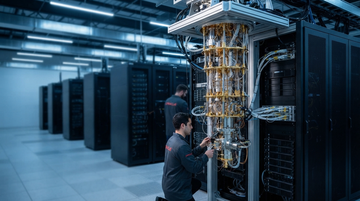
Oracle’s Quantinuum quantum-cloud deal is a tell: hybrid AI compute beats a “quantum hedge,” and cost-out is funding the path
Oracle and Quantinuum plan to deploy Quantinuum Helios inside Oracle Cloud Infrastructure (OCI) to sell “hybrid quantum-AI” access rather than a standalone quantum bet. At the same time, Oracle’s latest 10-K shows large, AI-aimed restructuring charges—supporting a view that Oracle is cost-out funding the expensive, classical compute required while quantum matures.

NYC’s Predatory-Marketing Probe Turns Prediction-Market Growth into a “Regulatory Gate” Business — and Favors Platforms with the Scale to Comply
New York City Council Speaker Julie Menin has launched an inquiry into Polymarket’s alleged predatory marketing practices and is asking the operator (and several peers named in the letter) to respond within 14 business days. The practical risk for listed crypto and event-trading intermediaries is that city-by-city marketing and age-gating rules can fragment “event-trading” demand, raising compliance costs faster than revenue—until a handful of incumbents can absorb the hit.

River AI’s $1.1B Round Turns Custom-Model Training Into a Co-Op Between NVIDIA and AMD
River AI says it raised $1.1B in a round led by General Catalyst and AMP PBC, with strategic participation from both NVIDIA and AMD Ventures. The bigger signal isn’t just the money—it’s River’s pitch that enterprises can train and deploy custom frontier “open-weight” models via an API in minutes, forcing chip vendors to compete on not only hardware, but end-to-end training workflows.

Sandbar’s Stream Ring reframes the AI wearable race: the “voice interface” wins only if inference cost and privacy both survive the finger
Sandbar’s Stream Ring bets that voice—not screens—will be the interface layer for mainstream AI wearables, and it tries to make the experience feel “always available” without becoming always-listening. The key investor takeaway is not the ring form factor; it’s how Sandbar structures the voice workflow to control privacy risk and reduce the on-device vs. cloud inference cost curve. If other wearable makers copy the same interaction economics, the winners may be the companies supplying edge compute, audio capture, and low-latency on-device inference rather than the model providers.

Spotify’s “AI Persona” Label Turns AI Music Into a Distribution Problem—Before UMG/WMG Can Even Standardize a Rulebook
Spotify will show an “AI Persona” badge on some artist profiles and, by default, exclude labeled AI Personas from editorial and algorithmic recommendations starting mid‑September 2026. The move creates a distribution firewall that changes how AI music wins audiences—shifting value away from platform reach, and toward compliance and explicit listener opt-ins long before labels align on standardized handling.

Thrive Holdings’ $2B OpenAI-backed raise turns “enterprise AI” into a priced roll-up game—who still gets left behind
Thrive Holdings’ plan to buy and rewire accounting and IT services firms with OpenAI-backed teams effectively creates a new class of “AI distribution capacity” priced like software services. That shifts the enterprise AI battlefield from pilots and consulting logos to roll-up economics—pressuring outsourcers and analytics platforms that can’t attach a clear, repeatable AI margin to existing workflows.

Trump’s capital-gains loss-offset idea could help “patient capital” win—and it’s a trap for high-turnover trading
If a Trump capital-gains plan were implemented in a way that effectively lets investors offset gains with prior losses without a practical end point, the biggest beneficiaries would be concentrated, buy-and-hold holders with large loss carryforwards. That transmission mechanism would likely favor Berkshire-like long-duration investors and reduce the tax-cost pressure that usually rewards active trading, leaving fast-turnover hedge strategies relatively more exposed.

United States Antimony just reset antimony pricing—and the stock is telling you who still gets paid at policy-linked levels
In its Q2 2026 reporting, United States Antimony disclosed a ~52% drop in average antimony selling prices to $13.70/lb and linked the reset directly to weaker spot pricing, cutting its full-year 2026 gross revenue guidance range. The key investor takeaway is not the commodity headline—it’s that the US mineral “policy premium” for the retail trade can vanish overnight when the embedded pricing formula reverts, creating a buyer/dislocation risk across the downstream defense/flame-retardant demand chain.
2026-08-11

Aug 10–14 AI-Infra Earnings Is the First “Build-vs-Buy Audit” for the Hyperscaler Cloud Race
Between Nebius, CoreWeave, and Super Micro Computer, investors get a rare same-window read on how much margin and contracted demand the AI infrastructure stack can actually monetize. The cluster matters because it turns the “data-center financing is the bottleneck” thesis into an earnings-testable build-versus-rent problem—starting with Nebius’s $7–$9B ARR target and >3GW contracted power, and flowing into CoreWeave’s and Supermicro’s ability to keep gross profit quality intact as 2027 backlog visibility becomes the market’s next currency.

Alpha Compute’s Pennsylvania play reframes the AI data-center bottleneck: buying gas rights to beat the power queue
Alpha Compute ALP reportedly plans to buy Pennsylvania land plus gas rights to anchor a 55MW AI data-center campus—an unusually fuel-first approach to a project pipeline dominated by utility interconnect timelines. If the gas-rights control is real and bankable, it shifts “site control” from the grid side to the upstream fuel side, tightening the link between midstream gas operators and data-center power buildouts.

Anthropic just made “AI text provenance” a product feature—and turned watermarking into a distribution moat
Anthropic says new Claude models released in the EU on/after Aug. 2, 2026 will embed imperceptible watermarks in generated text and add signed provenance metadata to supported files. That self-imposed compliance step shifts the “audit trail” burden from regulators to model providers, and it pressures competitors like OpenAI and Google to either match the feature or face a tightening compliance gap in enterprise procurement.
Prop 40’s billionaire-tax fight turns into an Alphabet-style capital-allocation test: can California still collect after capital “mobility” already cut the base?
California’s Proposition 40 would impose a one-time 5% tax on the worldwide net worth of qualifying billionaires, anchored to residency as of Jan. 1, 2026. The campaign against it—reportedly including Sergey Brin’s $100M+ ad push—and claims that “fled” billionaires could remove ~$27B of potential tax base raise the core market question: does the policy still work if the target population can move before collection year. For investors, the bigger signal is how quickly a state wealth-tax proposal forces ultra-liquid, globally diversified owners to re-optimize residency and liquidity—an outcome that changes both political odds and the expected timing of any capital return by major CA tech wealth holders such as Alphabet.
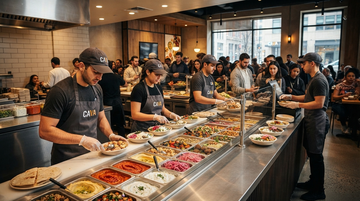
CAVA’s Q2 “premium stays premium” proof hinges on 2H traffic sustaining mix—not just ticket price
CAVA’s Q2 CY2026 beat was enough to drive a sharp post-earnings repricing, but the durability test is the 2H same-store-sales walkthrough. The investor question is whether CAVA can keep growing unit economics through a softening consumer via traffic-led same-store momentum and a credible path to new-unit productivity.

Trump Media’s $238M Q2 loss isn’t a “crypto strategy” story—it’s a cash-runway and dilution math story
DJT posted a $238.1M Q2 net loss on $1.7M revenue, with crypto mark-to-market losses doing almost all the damage. While management says liquidity should fund operations for the next 12 months, the $238M quarterly loss rate forces investors to model how many similar quarters can pass before dilution (and any reverse split) becomes the only remaining financing option.

Flowers Foods’ $350M Tastykake sale is a test of whether DSD “route economics” can outlive brand premium pricing
If Flowers Foods’ rumored ~$350M divestiture of Tastykake is real, it’s less about abandoning a legacy brand and more about fixing the plant + route utilization math that makes DSD margins durable. The investor question becomes whether Flowers can re-rate without Tastykake’s regional/DSD footprint—using Flowers Foods’s flexibility and cost structure as the yardstick.
What to expect
Evidence-first notes with a visible point of view.
This section collects sharp takes on earnings, shareholder meetings, and market structure. Each new piece should make the thesis, the facts, and the implications obvious within the first few screens.
Expect direct analysis, not generic commentary.
Expect the data to be explicit and the argument to be easy to follow.
Plutux is not an investment adviser. Market data and AI-generated analysis are for information and education only, not investment advice. Disclaimer