Latest
The day's market news, with the argument attached
New notes every trading day on earnings, policy and market structure. Each one opens with the conclusion, then the evidence, then the companies it hits.
2026-07-11
%22%2F%3E%0A%20%20%3Ccircle%20cx%3D%22220%22%20cy%3D%22150%22%20r%3D%22180%22%20fill%3D%22%2322d3ee%22%20fill-opacity%3D%220.12%22%2F%3E%0A%20%20%3Ccircle%20cx%3D%221010%22%20cy%3D%22130%22%20r%3D%22220%22%20fill%3D%22%2338bdf8%22%20fill-opacity%3D%220.08%22%2F%3E%0A%20%20%3Ccircle%20cx%3D%22920%22%20cy%3D%22520%22%20r%3D%22170%22%20fill%3D%22%2322d3ee%22%20fill-opacity%3D%220.06%22%2F%3E%0A%20%20%3Cpath%20d%3D%22M140%20430h920%22%20stroke%3D%22url(%23line)%22%20stroke-width%3D%2212%22%20stroke-linecap%3D%22round%22%2F%3E%0A%20%20%3Cpath%20d%3D%22M220%20360c120-150%20260-220%20380-220s260%2070%20380%20220%22%20fill%3D%22none%22%20stroke%3D%22%2367e8f9%22%20stroke-opacity%3D%220.5%22%20stroke-width%3D%2216%22%20stroke-linecap%3D%22round%22%20stroke-linejoin%3D%22round%22%2F%3E%0A%20%20%3Cpath%20d%3D%22M300%20398h600%22%20stroke%3D%22%2394a3b8%22%20stroke-opacity%3D%220.24%22%20stroke-width%3D%228%22%20stroke-linecap%3D%22round%22%2F%3E%0A%20%20%3Ctext%20x%3D%22220%22%20y%3D%22510%22%20fill%3D%22%23e2e8f0%22%20fill-opacity%3D%220.7%22%20font-family%3D%22Arial%2C%20Helvetica%2C%20sans-serif%22%20font-size%3D%2238%22%20letter-spacing%3D%228%22%3EINSIGHTS%3C%2Ftext%3E%0A%3C%2Fsvg%3E)
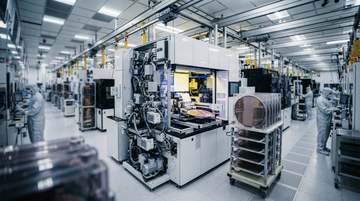
TSMC and ASML Are About to Tell the Market Whether the Semi Trade Is Still Safe
The next semiconductor earnings week is not just about one quarter. It is the first real test of whether AI capex still expands the tools and foundry stack or whether the market starts pricing saturation.

Walmart's Summer Rollbacks Are a Value Signal, Not a Demand Victory
Walmart's latest summer rollbacks show that the company is willing to give up some gross margin to defend traffic, basket size, and price leadership. The important read-through is not that consumers are suddenly healthier; it is that value perception is becoming the main weapon in U.S. retail.

WD-40's Blowout Quarter Says Quality Growth Still Wins in This Tape
WD-40 beat on revenue, EPS, and guidance, showing that clean execution and defensive brand power can outperform the hottest AI trades.
2026-07-10

Brinker International Breaks Out as Chili's Still Works
Brinker International's shares moved to a fresh buy point as investors re-priced the company's traffic recovery, menu execution, and earnings leverage. The market read-through is that Brinker International is still one of the cleaner consumer turnarounds, because the improvement comes from traffic and mix instead of pure inflation pass-through.

China's Helium Export Ban Turns a Niche Gas Into a Semiconductor and MRI Chokepoint
China's temporary helium export ban matters less because of absolute volume and more because helium sits at the wrong intersection of scarcity, specialty industry, and no-substitute physics. The read-through is broader than chips: MRI uptime, aerospace, and industrial gas pricing all get tighter when the marginal molecule disappears.

Commerce's UAE Export-Control Reset Reopens a Strategic Tech Corridor
BIS said it will significantly upgrade the UAE under the EAR, remove it from Country Groups D:3 and D:4, and reclassify it as A:5, enabling license-free exports, reexports, and in-country transfers for certain military items, satellites, spacecraft, and dual-use items relevant to oil, desalination, and civil nuclear power. The inference for investors is that U.S. semiconductor, defense, and systems vendors with Gulf exposure may face a friendlier export backdrop, including names like Nvidia and AMD as a policy read-through.

easyJet's Apollo Bid Turns Airline M&A Into a Valuation Test
Apollo made a $7.15-per-share offer for easyJet and a rival $6.90 bid from Castlelake, pushing the stock up about 13% and turning airline ownership into an explicit valuation contest. The market read-through is that Apollo's involvement can force easyJet's board to think less like a crisis manager and more like a capital allocator.

FDA's Drug-Manufacturing Registry Rule Tightens the Supply-Chain Map
The FDA proposed a rule that would let distributed manufacturers register as a single establishment, require advance notice before unit relocation, and close visibility gaps for foreign establishments that make active pharmaceutical ingredients and other drugs for U.S.-linked supply chains. The market implication is that supply-chain transparency is becoming a policy requirement, which favors manufacturers that can prove traceability and domestic resilience, including Eli Lilly and other scaled pharma operators.

FedEx's Tender Offer Cleanup Says Balance-Sheet Discipline Still Matters
FedEx said it will buy up to $4.15 billion of notes in a cash tender offer, with a 41.3% proration factor on the lowest-priority tranche and an early settlement date of July 14, 2026. The market read-through is not flashy: FedEx is using a liability-management exercise to reduce refinancing risk, trim interest expense, and make the post-Freight business look more disciplined to credit and equity investors.

Risk-On Relief Rally: Why the Oil Drop Mattered More Than the Index Bounce
A deep dive into how easing oil prices, lower yield pressure, and calmer geopolitical headlines fed a broad risk-on move across U.S. equities.

Europe's Addictive-Design Case Puts Meta's Engagement Flywheel on Trial
The European Commission's preliminary DSA finding is not really about a fine. It is about whether Meta can keep maximizing session length, autoplay, and infinite scroll without changing the product architecture that drives ad yield.

Netflix's Next Growth Leg Is Live Programming, Not Just More Subscribers
A Wall Street Journal report that Netflix is studying live channels and streaming bundles says the company is trying to solve the real constraint in streaming: engagement. That matters because the ad business can scale only if users spend more time inside the app.

OpenAI and Anthropic Are Turning Credits Into the New AI Customer Acquisition Weapon
OpenAI's GPT-5.6 pricing and Anthropic's Sonnet 5 rollout show the frontier model race has moved from benchmark bragging rights to subsidy design. The market read-through is that the next AI winners may be the platforms that can monetize cheaper inference, not just the labs that ship the loudest launch.

SK Hynix on Nasdaq: Why the U.S. Listing Matters, What It Changes, and Where the Trap Is
A structured deep dive into the proposed U.S. listing, SK Hynix's operating inflection, and the AI-memory supply chain bottleneck behind the move.

SpaceX on Nasdaq: Liquidity, Control, and What Public Markets Really Buy
A deep dive into why SpaceX chose a public listing, what the market gets, and why governance and capex remain the real risks.

Treasury's Iran Sanctions Reprice the Energy-Risk Premium
Treasury targeted a key Supreme Leader financier and Iranian exchange houses that move billions of dollars annually after Iran resumed attacks on international shipping in the Strait of Hormuz. The market implication is broader than sanctions optics: it raises the near-term risk premium for oil, tanker routes, and financial channels tied to the Middle East, which can matter for Exxon, Chevron, shipping names, and the broader macro tape.
2026-07-09

AstraZeneca's Wainua Trial Miss Shows Late-Stage Biotech Risk Still Reprices Fast
AstraZeneca's Phase III CARDIO-TTRansform readout failed its primary objective, and the market immediately repriced the downside. The message is blunt: even quality pharma names can lose billions when one late-stage trial misses.
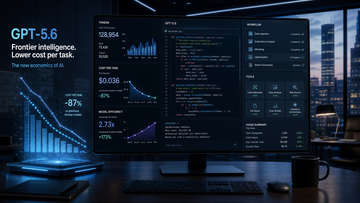
GPT-5.6 Turns Frontier AI Into a Cost-Per-Task War
OpenAI says GPT-5.6 cuts task time, token use, and cost while lifting coding, knowledge-work, and cyber benchmarks. The market read-through is bigger than one model launch: frontier AI is getting cheaper to deploy, which changes the budget math for enterprise software and cloud buyers.

Micron's $3 Billion Supply-Chain Bet Says the AI Memory Trade Is Moving Upstream Again
Micron's July 9 investment to support GlobalWafers, secure a 10-year wafer supply agreement, and deepen U.S. manufacturing makes the AI memory trade look less like a pure pricing story and more like an input-control story. The read-through reaches wafers, substrates, equipment, and every buyer that still thinks memory is only a component line.
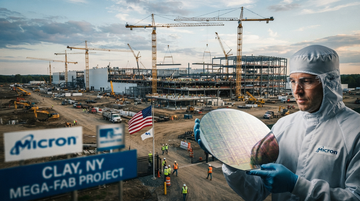
Micron's $250 Billion U.S. Build Turns AI Memory Into Industrial Policy
Micron's expanded U.S. capex plan is bigger than a semiconductor press release. By lifting domestic investment above $250 billion and tying in a $500 million wafer deal, the company is telling the market that AI memory scarcity is now a national supply-chain project.
What to expect
Evidence-first notes with a visible point of view.
This section collects sharp takes on earnings, shareholder meetings, and market structure. Each new piece should make the thesis, the facts, and the implications obvious within the first few screens.
Expect direct analysis, not generic commentary.
Expect the data to be explicit and the argument to be easy to follow.
Plutux is not an investment adviser. Market data and AI-generated analysis are for information and education only, not investment advice. Disclaimer