Latest
The day's market news, with the argument attached
New notes every trading day on earnings, policy and market structure. Each one opens with the conclusion, then the evidence, then the companies it hits.
2026-08-06
%22%2F%3E%0A%20%20%3Ccircle%20cx%3D%22220%22%20cy%3D%22150%22%20r%3D%22180%22%20fill%3D%22%2322d3ee%22%20fill-opacity%3D%220.12%22%2F%3E%0A%20%20%3Ccircle%20cx%3D%221010%22%20cy%3D%22130%22%20r%3D%22220%22%20fill%3D%22%2338bdf8%22%20fill-opacity%3D%220.08%22%2F%3E%0A%20%20%3Ccircle%20cx%3D%22920%22%20cy%3D%22520%22%20r%3D%22170%22%20fill%3D%22%2322d3ee%22%20fill-opacity%3D%220.06%22%2F%3E%0A%20%20%3Cpath%20d%3D%22M140%20430h920%22%20stroke%3D%22url(%23line)%22%20stroke-width%3D%2212%22%20stroke-linecap%3D%22round%22%2F%3E%0A%20%20%3Cpath%20d%3D%22M220%20360c120-150%20260-220%20380-220s260%2070%20380%20220%22%20fill%3D%22none%22%20stroke%3D%22%2367e8f9%22%20stroke-opacity%3D%220.5%22%20stroke-width%3D%2216%22%20stroke-linecap%3D%22round%22%20stroke-linejoin%3D%22round%22%2F%3E%0A%20%20%3Cpath%20d%3D%22M300%20398h600%22%20stroke%3D%22%2394a3b8%22%20stroke-opacity%3D%220.24%22%20stroke-width%3D%228%22%20stroke-linecap%3D%22round%22%2F%3E%0A%20%20%3Ctext%20x%3D%22220%22%20y%3D%22510%22%20fill%3D%22%23e2e8f0%22%20fill-opacity%3D%220.7%22%20font-family%3D%22Arial%2C%20Helvetica%2C%20sans-serif%22%20font-size%3D%2238%22%20letter-spacing%3D%228%22%3EINSIGHTS%3C%2Ftext%3E%0A%3C%2Fsvg%3E)

2026-08-05

Does Albemarle turning profits mean the lithium cycle is back—or just that batteries finally caught up to Albemarle’s accounting? The earnings print to watch
The core investor question for Albemarle isn’t whether lithium demand exists—it’s whether the company’s latest profitability step-up is durable enough to outlive price volatility. With Albemarle already showing multi-year financial swings, the real test is whether operating economics (not just timing) are improving in a way the EV and grid-storage supply chain can actually maintain.

Anthropic’s “Chip Team” Is Real—But It’s a Software-to-Silicon Wedge, Not a Sudden NVIDIA Replacement
Anthropic isn’t (yet) committing to a full in-house accelerator program, but it is hiring ASIC/FPGA talent that explicitly advances silicon-design workflows. That matters because Anthropic’s compute strategy already leans on partner silicon (Google/Broadcom TPUs), so the risk to NVIDIA is gradual: it’s a stack re-optimization project that can chip away at demand over multiple model generations.

Block's 2026 profit lift is the clearest US consumer + Bitcoin “through-line” fintech read—because Cash App grows without credit-bubble risk
Block raised its 2026 gross profit outlook to $12.33B, and the raise’s core driver was Cash App growth alongside resilient consumer spending. That matters because it’s the opposite of the “trade-down + layoffs/cost cutting” fintech narrative, and it points to steadier merchant economics and embedded crypto-related payment flows.

Booking Holdings's Q2 only passes the “Hormuz shock decoupling” test if its region mix and monetization hold while US softens
In Booking Holdings's latest quarter, the company produced $7.352B of revenue and $2.54 EPS on $3.108B of free cash flow, giving a strong baseline for whether demand is geographically reallocating. But the decisive “US-subsidized by Europe/Asia” conclusion requires Q2 2026 geographic/segment disclosures that were not reliably retrievable from the filings pages in this session, so the article separates what is verified (financials) from what remains not disclosed (region-specific pressure) and flags the exact missing proof.

Cerberus’s $4B Supply Chain Fund II pitch turns private capital into a Pentagon policy lever—because Feinberg is now an underwriting mechanism
Cerberus is targeting at least $4B for its second supply-chain fund, framed as scaling U.S. domestic industrial capacity. The unusual signal isn’t just fundraising size—it’s that Stephen Feinberg’s post as Deputy Secretary of Defense creates a feedback loop where defense-aligned portfolio bets can directly shape the Pentagon’s procurement-and-industrial base priorities.

Compass:: Q2 2026 shows synergy “realization” beats retention—but the cost base still needs transaction volume to cooperate
In Compass’ first fully post-close quarter for the Anywhere combination, agent retention held at 95.5% while realized OPEX synergies were already embedded in guidance, with $180M of free cash flow in Q2. The deeper risk is that fixed-cost scale rises faster than commission economics can flex when existing-home turnover stays weak, making “synergy plus volume” the only math that works.
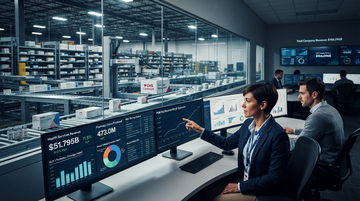
CVS just proved PBM drug revenue can outgrow the retail “GLP-1 siphon”—here’s the mechanism investors should track
In its Q2 results, CVS showed Health Services (Caremark/PBM) growing faster than the headline narrative suggests: Health Services revenue rose 11.5% YoY to $51.795B, with pharmacy claims processed up slightly. The counter-intuitive part isn’t that retail dispenses more cash-pay GLP-1s—it’s that CVS’s PBM economics can still expand through mix/brand inflation and formulary coverage even as retail captures a slice of demand.
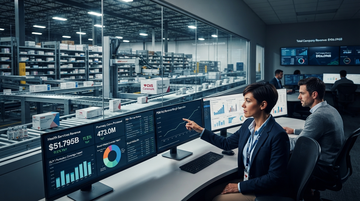
The Fed Just Turned Private Credit Into a Measured Market—And That’s a New Pricing Risk for BDCs
Dallas Fed and the New York Fed launched a pilot survey to collect direct evidence on private-credit availability, credit provision, and evolving lending standards, with expected aggregate findings in Q1 2027. For listed BDCs like Ares Capital and FS KKR Capital, the practical implication is that “shadow banking” spreads may get a new, policy-relevant variable as measurement reduces uncertainty about how private credit tightens under stress.

Dimon’s Cross-Industry AI Governance Signal Is Not a Statement—It’s a Supply-Chain Control Point
The first public-market evidence that “frontier-lab self-policing” is fading is not new model claims—it’s the move to coordinated, defensive, cross-vendor tooling via Anthropic’s Project Glasswing, where JPMorgan Chase is a launch partner. Once governance becomes operationally enforced through software supply-chain security, cloud builders, cyber vendors, and deployment platforms must budget for recurring verification work—raising the cost of AI speed.
![Disney [DIS] sells its last A+E stake—Hearst’s $1.2B control grab becomes the clearest “linear-TV cash-flow” M&A read-through in ~2 years insight cover](https://images-1379091077.cos.na-ashburn.myqcloud.com/insights/covers/20260805_disney_hearst_ae_deal_2026_08_360px.png)
Disney [DIS] sells its last A+E stake—Hearst’s $1.2B control grab becomes the clearest “linear-TV cash-flow” M&A read-through in ~2 years
Disney is exiting its 50% ownership in A+E Global Media via an all-cash deal valued at about $1.2B that gives Hearst full control—an unusually clean signal for how buyers are pricing cable-network cash flows. The timing matters: Disney is already recognizing impairment pressure on the A+E investment, and the transaction simultaneously redeploys cash away from linear minority stakes into controllable, scale-friendly media assets.

The DOJ hasn’t (yet) filed the “retail-advice duopoly” antitrust case—but it has already changed the rules that make fee compression a regulatory fight
A search of DOJ/FTC primary material does not confirm a specific, DOJ-filed antitrust case targeting a retail-investor advice “duopoly” (e.g., Schwab/Fidelity vs. Vanguard/BlackRock-style aggregation). What is verifiably active is a broader US enforcement posture against anticompetitive behavior and (separately) “deceptive/unfair fees,” which is the legal lane where broker-advice bundling and pricing tactics are likely to be attacked first.

Etsy's 12% layoff reads like a marketplace GMV reset—not a “trade-down” growth bet
Etsy’s restructuring trimmed about 11% of its marketplace workforce (≈225 people) and targeted a $25–$30M cost charge, signaling management is prioritizing cost discipline over re-accelerating engagement. For investors, the clean read is that Etsy’s problem looks more like platform efficiency under discretionary softness than broad consumer “value winner” rotation—and that distinction matters for how you underwrite post-AI seller-tooling spend.

The EU’s €1.4B “interest-on-frozen-Russia” delivery is a new war-funding blueprint—because it turns post-freeze yields into politically prioritized spending
The EU has delivered €1.4B in proceeds from interest on immobilised Russian central bank assets to Ukraine, earmarking it mainly to fund Ukraine-related lending mechanisms and a smaller slice to defence support. The deeper shift is that the EU has operationalised a repeatable plumbing template: use frozen-asset yield streams as reliable financial input for future Ukraine finance—without fully converting the underlying assets into confiscation.

SAP’s AI back-office boom is the “second front” the US tape still ignores
Reuters’ Aug 4 reporting highlights Europe’s established tech firms (led by SAP) seeing AI-related demand move from pilots into funded deployment. The trade implication is simple: while investors chase Nvidia-style compute, enterprise software, systems integration, and infrastructure providers are monetizing AI operations—pulling revenue and backlog growth through the supply chain where the US narrative hasn’t looked.

Fed’s Schmid Just Put Hyperscaler AI Capex into “Financial Stability” Language—And That Re-Routes Bank Credit Risk to Data Centers
Kansas City Fed President Jeff Schmid framed AI buildout “finances” as a potential systemic risk channel, explicitly linking hyperscaler capex to macro-level stability concerns. For investors, the key shift is that AI spending stops being only an earnings-rate story and becomes a bank-credit underwriting and concentration question—especially for lenders feeding data-center and AI-adjacent credit.
![Foxconn [2317.TW] just set a July revenue record—and hyperscalers’ rack-scale buildout is now the clearest market read insight cover](https://images-1379091077.cos.na-ashburn.myqcloud.com/insights/covers/20260805_foxconn_ai_server_july_record_360px.png)
Foxconn [2317.TW] just set a July revenue record—and hyperscalers’ rack-scale buildout is now the clearest market read
Foxconn [2317.TW] hit a record July monthly revenue level as AI servers and cloud/networking products drove the upside, turning the company’s “manufacturing calendar” into a real-time hyperscaler signal. When you pair that with the firm’s recent earnings power and cash generation profile, the implication is that AI infrastructure demand is no longer just a chip story—it’s a rack-scale execution story that can move suppliers’ revenue before software spend becomes visible.

Glencore’s ASX Secondary Listing Is a Capital-Flow Play, Not a New Share Sale—and That Changes How Copper M&A Will Get Financed
Glencore is exploring an Australian secondary listing to broaden its investor base in a market where mining capital is sticky and deal scrutiny is comparatively workable. The upside for copper investors is less about “fresh money” and more about lowering the cost of capital for future copper/power/industrial metal projects—while the risk is that governance and execution will still be the real constraint.

Global Payments Just Linked Middle East Travel Shocks to Payment Throughput—This Is the “Decoupling” Myth Breaking
In its Q2 2026 update, Global Payments tied a forecast cut to weaker Middle East travel spending—an earnings-channel risk that shows up in payment processing volumes, not just in hotels or energy. The key investor takeaway: when travel volumes wobble, the payment stack becomes a near-real-time transmission mechanism into revenue and cash generation.

GlobalFoundries’ Q2 Beat Says AI Demand Has Moved Past Leading-Edge—And That’s a Capacity Bottleneck Investors Can Actually Trade
GlobalFoundries’ Q2 reporting indicates AI-related demand is no longer confined to the newest nodes, with upside coming from the company’s specialty/mature manufacturing strengths. The investment implication is that power/analog/RF/“support silicon” is becoming the binding constraint for AI racks, which can spill over into suppliers of power management and custom silicon.
What to expect
Evidence-first notes with a visible point of view.
This section collects sharp takes on earnings, shareholder meetings, and market structure. Each new piece should make the thesis, the facts, and the implications obvious within the first few screens.
Expect direct analysis, not generic commentary.
Expect the data to be explicit and the argument to be easy to follow.
Plutux is not an investment adviser. Market data and AI-generated analysis are for information and education only, not investment advice. Disclaimer