Healthcare
Trial data, approvals, and what they are worth
Readouts, FDA decisions, drug pricing and payer behaviour, sized in revenue rather than in press-release adjectives.
2026-08-10
%22%2F%3E%0A%20%20%3Ccircle%20cx%3D%22220%22%20cy%3D%22150%22%20r%3D%22180%22%20fill%3D%22%2322d3ee%22%20fill-opacity%3D%220.12%22%2F%3E%0A%20%20%3Ccircle%20cx%3D%221010%22%20cy%3D%22130%22%20r%3D%22220%22%20fill%3D%22%2338bdf8%22%20fill-opacity%3D%220.08%22%2F%3E%0A%20%20%3Ccircle%20cx%3D%22920%22%20cy%3D%22520%22%20r%3D%22170%22%20fill%3D%22%2322d3ee%22%20fill-opacity%3D%220.06%22%2F%3E%0A%20%20%3Cpath%20d%3D%22M140%20430h920%22%20stroke%3D%22url(%23line)%22%20stroke-width%3D%2212%22%20stroke-linecap%3D%22round%22%2F%3E%0A%20%20%3Cpath%20d%3D%22M220%20360c120-150%20260-220%20380-220s260%2070%20380%20220%22%20fill%3D%22none%22%20stroke%3D%22%2367e8f9%22%20stroke-opacity%3D%220.5%22%20stroke-width%3D%2216%22%20stroke-linecap%3D%22round%22%20stroke-linejoin%3D%22round%22%2F%3E%0A%20%20%3Cpath%20d%3D%22M300%20398h600%22%20stroke%3D%22%2394a3b8%22%20stroke-opacity%3D%220.24%22%20stroke-width%3D%228%22%20stroke-linecap%3D%22round%22%2F%3E%0A%20%20%3Ctext%20x%3D%22220%22%20y%3D%22510%22%20fill%3D%22%23e2e8f0%22%20fill-opacity%3D%220.7%22%20font-family%3D%22Arial%2C%20Helvetica%2C%20sans-serif%22%20font-size%3D%2238%22%20letter-spacing%3D%228%22%3EINSIGHTS%3C%2Ftext%3E%0A%3C%2Fsvg%3E)

Hims & Hers turns subscriber growth into guidance proof—telehealth becomes a volume platform
In its latest earnings update, Hims & Hers reported subscribers rising to nearly 2.6M (+9% YoY) and raised full-year 2026 revenue guidance to $2.8B–$3.0B. The key investor takeaway is that the company’s top-line beat is now subscriber-driven—supporting a shift from “one-product GLP-1 cycle” risk to a broader telehealth platform with measurable, repeatable volume.

UK calls Eli Lilly’s orforglipron “first in Europe” (10 Aug 2026)—and that sequencing risk compresses the EU/US GLP‑1 oral TAM while it’s still awaiting FDA/EMA timing
The UK’s MHRA authorized Eli Lilly’s oral GLP‑1, orforglipron (Foundayo), on 10 Aug 2026 as “the first country in Europe” for weight management and type 2 diabetes—before broader EU and US timing is locked. For investors, the key is not just access; it’s how an early UK regulatory imprimatur can reshape prescribing momentum, contracting expectations, and competitive sequencing while FDA review is still pending in the US.
2026-08-08

NJ’s $2.5B PFAS deal turns “forever chemicals” into a funded balance-sheet item—and rewrites who bears the next wave of US water risk
New Jersey’s court-approved PFAS settlements with DuPont (plus its spinoffs) and 3M convert open-ended “forever chemical” liability into scheduled, allocable payments through a 25-year remediation framework. For investors, the immediate read-through is less about one state getting paid—and more about how the payment+trust model pressures insurers, reshapes utility capex planning, and strengthens the enforcement pipeline across the US water system.

SEC’s pardon-linked dismissal turns a once-binary insider tail risk into a discretionary policy lever—biotech executives should price the upside differently
When an insider-trading defendant receives a presidential pardon, the SEC can choose to drop the civil case rather than litigate the merits. That “pardon-as-procedural-shield” enforcement discretion is likely to lower expected legal tail-risk for politically connected healthcare and biotech executives—while keeping M&A and trial-disclosure conduct in focus, because the operational information advantage still drives market outcomes.

Judge Halts DoD’s WuXi “Chinese Military Company” Label—But BIOSECURE’s Clock Can Re-Start Differently
A U.S. judge preliminarily enjoined the Pentagon from enforcing its June 2026 Section 1260H “Chinese military company” designation for WuXi AppTec, blocking the immediate BIOSECURE reactivation path tied to that label. For investors, the key question is not whether the BIOSECURE restriction exists, but how CROs and US biotechs must re-route procurement after the compliance trigger is legally paused.
2026-08-07

Anthropic’s 85% fewer biology fallbacks reframes biosecurity as a measurable, cost-to-serve moat
Anthropic says its Aug 7, 2026 update cut biology-related “fallbacks” by about 85% in testing by tightening the boundary of its biology safeguards (constitutional classifier tuning). If regulated labs buy based on operational friction—not just policy—this kind of measurable false-positive reduction can lower reroute-and-retry costs while improving throughput into life-science workflows.

Anthropic’s 85% fewer biology fallbacks turns biosecurity from “friction” into a measurable cost-to-ship advantage for regulated labs
Anthropic reports that an update to Claude Fable 5’s biology safeguards reduced biology-related fallbacks by about 85% in testing, while keeping higher-risk dual-use controls intact. For enterprises running AI in regulated laboratory environments, fewer fallbacks means less workflow interruption, fewer manual handoffs, and lower total cost per usable “research session”—even when safety remains a hard requirement.
2026-08-06

Insulet's US guidance cut shows Omnipod is priced like a reimbursement negotiation product, not a TAM story
Insulet beat Q2 expectations but cut full-year U.S. Omnipod revenue guidance (constant-currency growth) to 17%–19%, down from 20%–22%—a move the market treated like a structural “pricing trap.” The read-through is that diabetes hardware demand in the U.S. is increasingly gated by payer terms and coverage velocity, shifting outcomes for DexCom, Abbott, and Medtronic.
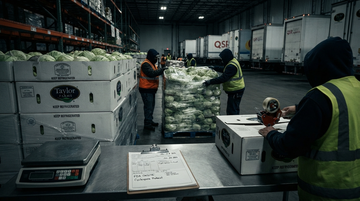
One produce supplier can hit multiple QSR banners at once—what the Taylor Farms Cyclospora case implies for next-quarter same-store sales risk
A FDA-linked, 9-state Cyclospora outbreak traced to iceberg lettuce from Taylor Farms de Mexico exposed Taco Bell customers across 9 states and sickened 1,947 people. The investor takeaway isn’t just recall-cycle headlines—it’s that a single ingredient failure can become a chain-wide same-store-sales variable through franchise remedies, insurance claims, and distributor pull-through effects before the next earnings print.
2026-08-05

CVS just proved PBM drug revenue can outgrow the retail “GLP-1 siphon”—here’s the mechanism investors should track
In its Q2 results, CVS showed Health Services (Caremark/PBM) growing faster than the headline narrative suggests: Health Services revenue rose 11.5% YoY to $51.795B, with pharmacy claims processed up slightly. The counter-intuitive part isn’t that retail dispenses more cash-pay GLP-1s—it’s that CVS’s PBM economics can still expand through mix/brand inflation and formulary coverage even as retail captures a slice of demand.
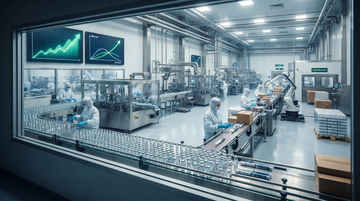
Eli Lilly Is Raising Guidance Because Volume Beat Prices — So the Supply Ramp Is Likely Catching the Demand Curve
In its latest update, Eli Lilly raised 2026 revenue guidance to $82.0B–$85.0B from $80B–$83B, with the company pointing to volume growth as the primary driver. For investors, the key question is not whether GLP-1 demand exists, but whether Lilly’s manufacturing ramp is now keeping pace—determining whether 2026 looks like a production story (constrained) or a consumption story (inflecting).
2026-08-04
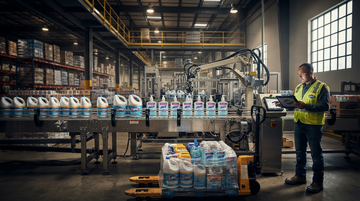
Clorox Just Got a Real-Staples “Re-Rate” Test—Purell Is Doing the Work
Clorox’s GOJO/Purell bolt-on did not just add scale—it changed the company’s 2026 outlook math, with guidance explicitly tracking margin headwinds and transaction costs tied to the deal. For investors, the question shifts from “does hygiene sell volumes?” to “can margin-mix from higher-quality hygiene assets defend earnings through the AI-era spend normalization?”

Gilead Sciences's HIV growth buys time—but only if its R&D spend translates into “next-legs” before Biktarvy peak cash turns into renewal risk
Gilead Sciences reported base business up 8% and raised full-year guidance to expect HIV sales growth of 8% in 2026. But the investable question is how long that HIV duration can keep funding pipeline bets: in FY2025, free cash flow was $9.46B while R&D is ~$5.80B—meaning the “duration” thesis hinges on near-term clinical conversions, not just franchise resilience.

Eli Lilly's “Early-Access” Move Is a TAM Pre-Pricing Mechanism
Lilly’s “early access” to its next-gen obesity drug (retatrutide) is not charity—it is a controlled go-to-market rehearsal that can pre-price demand and steer where patients (and cash-pay channels) land once the broader launch hits. In this model, the value comes from learning-and-pricing ahead of approval, while the financials show Lilly can fund growth and scale investment despite periods of low free cash flow.

Merck's “Quarter Beat” Is a Patent-Reset Reality Check
Merck’s latest reported strength shows how much the Keytruda franchise can still carry, but it doesn’t answer the real question: whether Merck has built a durable replacement economics model before biosimilar pressure starts in December 2028. The company also guided FY2026 sales upward into a window that still precedes the hardest 2028–2029 exclusivity step-down.

Pfizer's $2.5B save is the easy part; the question is what it funds after the patent cliff
Pfizer has repeatedly expanded its “cost realignment” targets, with the program originally including at least $2.5B of additional net savings expected to be realized in 2024 and later culminating in ~$5.7B through 2026. The hard investor question is whether these savings are protecting (or crowding out) the cash needed for the post-patent-cliff commercial and pipeline reset.

Procter & Gamble's $3.8B Thorne bet shifts “wellness” from shelf risk to premium supply-chain leverage
Procter & Gamble is reportedly paying $3.8B in cash to acquire Thorne, a science-driven supplements brand, with closing expected later in 2026. The investor question is not “does supplements grow?”—it’s whether P&G can add a higher-growth, higher-trust revenue stream without sacrificing the margin discipline that supports its staple-like cash generation.

Waters’ Forecast Raise Suggests Biopharma Labs Are Moving Past a One-Quarter “Freeze”
Waters’ 2026 guidance raise points to demand that’s not just cyclical—especially because it ties growth to diagnostics and lab equipment rather than a broad market normalization. The investor question is whether this becomes a durable replacement/utilization cycle that pulls through consumables and services, or whether it fades as budgets reset.
2026-08-03

AstraZeneca–Bristol Myers’ alleged $400B oncology tie-up isn’t about synergy—it’s about buying back the “patent-cliff premium” investors demand
If the reported AstraZeneca–Bristol Myers Squibb (BMS) $400B megadeal ever advanced, the first re-pricing would be in oncology patent-cliff expectations: BMS’s revenue concentration in Opdivo and Eliquis LOE risk would effectively get capitalized into the combined group. The deal logic is strongest for BMS because Eliquis exposure is structurally harder to replace than label-expanding immuno-oncology, which forces a buyer-of-last-resort dynamic that would ripple into how investors price other “patent cliff” stories.

Curium’s Lantheus bid is really an isotope-capacity bet—because radiopharma growth is constrained by reactors, not chemistry
Curium’s reported pursuit of Lantheus shows radiopharma is shifting from “drug + distribution” to “drug + isotope throughput.” The investment implication is that bidders can gain durable advantage only by securing upstream nuclear capacity and locking down downstream commercial pull.
What to expect
Evidence-first notes with a visible point of view.
This section collects sharp takes on earnings, shareholder meetings, and market structure. Each new piece should make the thesis, the facts, and the implications obvious within the first few screens.
Expect direct analysis, not generic commentary.
Expect the data to be explicit and the argument to be easy to follow.
Plutux is not an investment adviser. Market data and AI-generated analysis are for information and education only, not investment advice. Disclaimer