%22%2F%3E%0A%20%20%3Ccircle%20cx%3D%22220%22%20cy%3D%22150%22%20r%3D%22180%22%20fill%3D%22%2322d3ee%22%20fill-opacity%3D%220.12%22%2F%3E%0A%20%20%3Ccircle%20cx%3D%221010%22%20cy%3D%22130%22%20r%3D%22220%22%20fill%3D%22%2338bdf8%22%20fill-opacity%3D%220.08%22%2F%3E%0A%20%20%3Ccircle%20cx%3D%22920%22%20cy%3D%22520%22%20r%3D%22170%22%20fill%3D%22%2322d3ee%22%20fill-opacity%3D%220.06%22%2F%3E%0A%20%20%3Cpath%20d%3D%22M140%20430h920%22%20stroke%3D%22url(%23line)%22%20stroke-width%3D%2212%22%20stroke-linecap%3D%22round%22%2F%3E%0A%20%20%3Cpath%20d%3D%22M220%20360c120-150%20260-220%20380-220s260%2070%20380%20220%22%20fill%3D%22none%22%20stroke%3D%22%2367e8f9%22%20stroke-opacity%3D%220.5%22%20stroke-width%3D%2216%22%20stroke-linecap%3D%22round%22%20stroke-linejoin%3D%22round%22%2F%3E%0A%20%20%3Cpath%20d%3D%22M300%20398h600%22%20stroke%3D%22%2394a3b8%22%20stroke-opacity%3D%220.24%22%20stroke-width%3D%228%22%20stroke-linecap%3D%22round%22%2F%3E%0A%20%20%3Ctext%20x%3D%22220%22%20y%3D%22510%22%20fill%3D%22%23e2e8f0%22%20fill-opacity%3D%220.7%22%20font-family%3D%22Arial%2C%20Helvetica%2C%20sans-serif%22%20font-size%3D%2238%22%20letter-spacing%3D%228%22%3EINSIGHTS%3C%2Ftext%3E%0A%3C%2Fsvg%3E)
What happened • 1Q/near-term reset framing
Merck’s quarter looks like momentum—until you map it onto the exclusivity timeline
Merck’s near-term results and outlook can read like an earnings beat, but the value signal is different: the quarter is effectively a stress test of whether Merck can finance oncology continuity while Keytruda’s exclusivity horizon approaches.
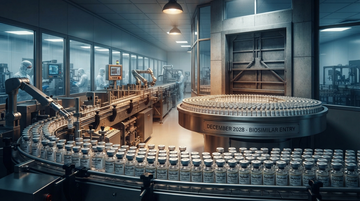
In the company’s own reporting, Keytruda biosimilar pressure is not a vague “later” risk. Merck says it expects biosimilar competition between 2028 and 2029, with an initial starting point as early as December 2028 tied to compound patent expiry.
Keytruda/Keytruda QLEx (1Q 2026)
$8.0B
Merck first-quarter 2026 results highlight Keytruda family sales of $8.0B (+12% YoY). Source: Merck IR release opened in this session.
FY2026 sales outlook (range)
$65.8B–$67.0B
Merck raised midpoint vs prior range in the 1Q 2026 results release. Source: Merck IR release opened in this session.
Keytruda biosimilar start window
Dec 2028+
Merck expects biosimilar competition between 2028 and 2029; could begin in December 2028 when the primary compound patent expires. Source: Merck 2025 Form 10‑K (SEC) opened in this session.
Keytruda biosimilar competition range
2028–2029
Merck’s stated expectation for biosimilar competition timing in the U.S. market. Source: Merck 2025 Form 10‑K (SEC).
Core claim
This isn’t a diversification “win” yet—it’s still a Keytruda-led cash continuity test
| Item | What Merck disclosed | Why it matters for the patent-cliff question |
|---|---|---|
| Keytruda family sales strength (near-term) | Keytruda/Keytruda QLEx sales were $8.0B in 1Q 2026 (+12% YoY). | Shows demand/pricing durability right before (but not through) the exclusivity disruption window. |
| FY2026 sales guidance | FY2026 sales expected $65.8B–$67.0B (midpoint raised vs prior guidance). | Indicates management expects enough continuity to fund pipeline and BD—but does not replace the later cliff economics by itself. |
| Biosimilar timing (U.S.) | Merck expects biosimilar competition between 2028 and 2029; could begin in Dec 2028 on primary compound expiry. | Defines the hardest demand-and-price shock years; investors should test whether replacement pipeline and/or commercial strategy can absorb that step-down. |
| European exclusivity | Merck expects loss of market exclusivity in Europe in 2031. | Suggests regional phasing, but the U.S. timing anchors investor risk for valuation and licensing expectations. |
Verified anchors (SEC + IR)
Merck’s own filing ties the cliff to specific compound-patent expiry windows
Merck’s 2025 Form 10‑K provides the critical time map investors need.
It states that it expects biosimilar competition between 2028 and 2029, and that biosimilar competition could begin as early as December 2028 when the primary compound patent expires. The same disclosure also references additional composition-of-matter patent expiries later (May 2029 and November 2029), which matters because it implies staggered legal/launch risk rather than a single clean “date.”
Load-bearing disclosures (what to cite in your own model)
Biosimilar competition (U.S.)
2028–2029
Company expectation; could begin Dec 2028 tied to primary compound expiry.
Biosimilar start trigger (U.S.)
December 2028
Cited as earliest timing in Merck’s exclusivity discussion.
Europe market exclusivity loss
2031
Company expectation in the 2025 Form 10‑K.
Near-term Keytruda franchise behavior
$8.0B (1Q 2026)
Keytruda/Keytruda QLEx sales from Merck’s Q1 2026 results highlight.
Causal chain • why the quarter can mislead
Why an earnings “beat” can still be a bearish patent-cliff signal
- If Merck raises FY2026 sales but the cliff is still 2028–2029, the guidance is financing strength—not proof of replacement revenue economics.
- When exclusivity loss begins in 2028, the market will discount not just pipeline probability, but how much of Keytruda’s revenue is replaced by new indications, sequencing, and/or successor assets.
- Because Merck’s filing frames staggered expiry windows, investors should treat valuation sensitivity as non-linear: small delays in launches can matter disproportionately to multiple compression or relief.
Merck’s disclosures imply a long gap between “current strength” and “cliff impact”
Timing comparison between near-term Keytruda family strength and the company-stated U.S. biosimilar window.
Unit: Year
1Q 2026 Keytruda family sales highlight
Merck reported Keytruda/Keytruda QLEx sales of $8.0B in 1Q 2026.
2,026
Earliest U.S. biosimilar competition start (company expectation)
Merck states biosimilar competition could begin in December 2028.
2,028
Likely U.S. impact range (company expectation)
Merck expects biosimilar competition between 2028 and 2029.
2,029
Supply chain aware • licensing and oncology-bioeconomics transmission
What this means for licensing prices and oncology-biotech valuations
The patent cliff affects more than Merck’s P&L. It changes how licensing deals are priced because counterparties anchor to expected peak sales, duration of exclusivity, and transition risk.
When the acquirer is Merck, the market effectively asks: can Merck buy time (through pipeline progression and lifecycle extensions) and still preserve acceptable ROI under a biosimilar timetable? Merck’s own disclosures place the hardest U.S. transition window at 2028–2029. That date acts like a “discount-rate” input for late-stage oncology licensing—especially for assets whose commercial viability depends on long exclusivity runs.
Horizons • what moves first
Short-term: guidance can stabilize the stock; long-term: the model must survive 2028–2029
- In the next days–quarters, Merck’s credibility tends to hinge on whether Keytruda family sales continue to hold and whether FY2026 guidance remains intact; that’s what current results suggest, but it doesn’t yet prove post-cliff replacement.
- Over 1–3 years, the key investor test is simpler: does Merck’s non-Keytruda oncology (plus other therapeutic growth) generate enough incremental revenue to offset the sales step-down implied by the company’s 2028–2029 biosimilar expectations.
Data-backed fundamentals check (listed-company context)
Merck’s recent financial profile supports “fund the pipeline,” not “de-risk instantly”
From the fundamentals feed, Merck’s quarterly total revenue is in the mid-$15B–$17B range over recent quarters, with operating income/loss varying across periods. For example, for the quarter ending March 31, 2026, the income statement feed shows total revenue of $16.29B and net loss of $4.24B (quarter-level noise can include one-time items).
Balance-sheet scale is large enough to sustain R&D intensity; the same feed shows total assets of $128.7B as of March 31, 2026 and long-term debt of $46.7B. That supports the idea that Merck can keep funding pipeline transitions while waiting for later-stage outcomes—but it still doesn’t resolve the specific demand-and-price shock window the company states for Keytruda.
Listed-market linkage: who trades the Keytruda-cliff narrative
- Merck can use 1Q 2026 Keytruda family strength to underwrite FY2026 sales of $65.8B–$67.0B, but that guidance still sits before the 2028–2029 biosimilar window.
- Merck’s own filing implies upside from “later cliff” paths, because biosimilar competition could begin in Dec 2028 and extend through 2029—valuation depends on how early starts translate into price erosion.
- When Merck’s Keytruda cliff risk stays salient, investors can re-rate oncology peers’ exclusivity assumptions—a watch item for BMY as the market rotates toward “owning” alternative oncology franchises.
- If the market concludes Merck’s post-2028 replacement pipeline is insufficient, buyers can pay up for non-immuno-oncology growth; AZN is a watch for relative multiple support tied to immuno competition dynamics.
- In a broader patent-cliff sentiment shift, J&J can benefit from “lower single-asset dependence” perception—but its direction is mixed because oncology-biotech licensing economics still affect the whole sector.