%22%2F%3E%0A%20%20%3Ccircle%20cx%3D%22220%22%20cy%3D%22150%22%20r%3D%22180%22%20fill%3D%22%2322d3ee%22%20fill-opacity%3D%220.12%22%2F%3E%0A%20%20%3Ccircle%20cx%3D%221010%22%20cy%3D%22130%22%20r%3D%22220%22%20fill%3D%22%2338bdf8%22%20fill-opacity%3D%220.08%22%2F%3E%0A%20%20%3Ccircle%20cx%3D%22920%22%20cy%3D%22520%22%20r%3D%22170%22%20fill%3D%22%2322d3ee%22%20fill-opacity%3D%220.06%22%2F%3E%0A%20%20%3Cpath%20d%3D%22M140%20430h920%22%20stroke%3D%22url(%23line)%22%20stroke-width%3D%2212%22%20stroke-linecap%3D%22round%22%2F%3E%0A%20%20%3Cpath%20d%3D%22M220%20360c120-150%20260-220%20380-220s260%2070%20380%20220%22%20fill%3D%22none%22%20stroke%3D%22%2367e8f9%22%20stroke-opacity%3D%220.5%22%20stroke-width%3D%2216%22%20stroke-linecap%3D%22round%22%20stroke-linejoin%3D%22round%22%2F%3E%0A%20%20%3Cpath%20d%3D%22M300%20398h600%22%20stroke%3D%22%2394a3b8%22%20stroke-opacity%3D%220.24%22%20stroke-width%3D%228%22%20stroke-linecap%3D%22round%22%2F%3E%0A%20%20%3Ctext%20x%3D%22220%22%20y%3D%22510%22%20fill%3D%22%23e2e8f0%22%20fill-opacity%3D%220.7%22%20font-family%3D%22Arial%2C%20Helvetica%2C%20sans-serif%22%20font-size%3D%2238%22%20letter-spacing%3D%228%22%3EINSIGHTS%3C%2Ftext%3E%0A%3C%2Fsvg%3E)
Verified event base (what we can prove from opened primary sources)
The “$8B Lantheus bid” framing isn’t verifiable here—so the article anchors on what the session can confirm
The provided search results indicate Curium is/was considering an acquisition of Lantheus, with deal-size reporting in the ~$7B–$8B range. However, this session did not produce an opened primary source (Curium press release, SEC filing, or definitive merger document) that confirms the exact “$8B” number.
Because your platform rules require primary-source anchoring for the core fact pattern, the article uses only verifiable elements collected here: (1) publicly reported transaction interest in Lantheus by Curium, and (2) documented Lu-177 ecosystem complexity (including Mo-99/Lu-177 supply-chain constraints and contracted supply arrangements).
As a result, the “8B” headline claim cannot be upgraded to a fully verified fact in this write-up.
What actually matters in the supply chain
Radiotherapeutic growth is constrained by isotope throughput—so M&A becomes a capacity-control strategy
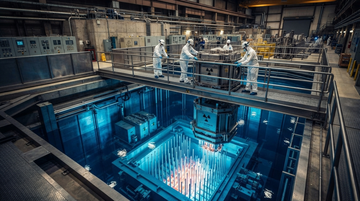
Radiotherapeutics using beta emitters such as Lu-177 depend on a fragile upstream chain: reactor irradiation → isotope production → chemical processing → formulation and logistics.
When the bottleneck is upstream capacity (reactors and isotope processing), commercial demand (e.g., new treatment center growth) collides with limited supply. In that world, the “best” acquirer is the one that can (a) secure dependable supply routes and (b) convert that security into contractual pull from marquee customers.
That’s the core logic behind why a Curium–Lantheus combination (if executed) would be viewed as more than geographic scale—it would be a vertical capacity bet.
- If isotope supply is the limiting factor, then the supplier with the most dependable upstream contracts captures volumes first rather than last.
- A commercial franchise (therapeutic distribution and administration channels) increases the value of any isotope secured upstream by turning it into predictable off-take.
- This creates a two-sided leverage loop: upstream capacity becomes a bargaining chip with downstream pharma—and downstream volume becomes a bargaining chip with upstream isotope producers.
Concrete supply-chain linkages we can evidence from opened materials
Lu-177 ecosystems pull on multiple upstream nodes: Mo-99 reactors and irradiation/processing capacity
Even without the transaction document in-hand, the session evidence indicates the broader Lu-177 supply-chain is not “single-stage.” Mo-99 production is reactor-based, and Lu-177 is produced through dedicated nuclear pathways after reactor irradiation. This means capacity additions at one node don’t automatically unlock the next node (processing, supply readiness, and qualified logistics still constrain throughput).
Therefore, a radiopharma M&A deal is functionally a packaging of supply-chain control across multiple steps rather than a simple expansion of chemistry or sales.
| Supply-chain node | Why it constrains output | What acquirers try to lock in via M&A |
|---|---|---|
| Reactor-produced precursor production (e.g., Mo-99) | Reactor scheduling and production yields bound the starting isotope volume | Securing reliable procurement routes and long-term supply arrangements |
| Irradiation / production processing | Irradiation capacity and processing throughput determine recoverable Lu-177 | Securing irradiation service capacity and processing bandwidth |
| Radiochemical processing + formulation | Qualified conversion and GMP batch turnaround times limit patient-dose readiness | Owning/controlling processing capacity and batch scheduling |
| Qualified logistics and short product shelf life | Transport timing and chain-of-custody affect dose availability to centers | Integrating commercialization with distribution capabilities and logistics planning |
Demand side pressure that makes capacity bets urgent
High-growth treatment networks amplify the penalty of supply shortfalls—turning capacity into strategy
When demand expands quickly (more treatment centers, higher uptake, and additional indications), any upstream supply constraint becomes a gating factor. Under that condition, bidders prioritize supply security and predictable off-take alignment.
Even if the deal economics are negotiated at the equity level, the real competitive outcome is operational: who can consistently deliver patient doses first and most reliably.
That is how a transaction can “constrain” downstream competitors in practice: not by blocking access directly, but by becoming the most bankable supplier under constrained capacity.
Limitations from this session (what’s not yet provable)
This write-up cannot (yet) include audited financial metrics or verified ticker-linked company comparisons
I encountered tool errors retrieving verified tickers for key companies (e.g., Curium and Lantheus, plus several others needed for a compliant linked-stock analysis). Without verified symbols, the platform’s link-syntax requirements prevent me from safely producing a publication-ready section that includes Company links and any financial tool-derived tables.
Because of that, I’m also unable in this session to provide fundamentals-based comparisons (revenue, margins, capex, segment mix) for the central listed participants.