Financials
Banks, credit, and where the risk is sitting
Net interest margins, credit quality, capital rules and deal flow — what the numbers say about the banks, insurers and asset managers reporting them.
2026-08-12
%22%2F%3E%0A%20%20%3Ccircle%20cx%3D%22220%22%20cy%3D%22150%22%20r%3D%22180%22%20fill%3D%22%2322d3ee%22%20fill-opacity%3D%220.12%22%2F%3E%0A%20%20%3Ccircle%20cx%3D%221010%22%20cy%3D%22130%22%20r%3D%22220%22%20fill%3D%22%2338bdf8%22%20fill-opacity%3D%220.08%22%2F%3E%0A%20%20%3Ccircle%20cx%3D%22920%22%20cy%3D%22520%22%20r%3D%22170%22%20fill%3D%22%2322d3ee%22%20fill-opacity%3D%220.06%22%2F%3E%0A%20%20%3Cpath%20d%3D%22M140%20430h920%22%20stroke%3D%22url(%23line)%22%20stroke-width%3D%2212%22%20stroke-linecap%3D%22round%22%2F%3E%0A%20%20%3Cpath%20d%3D%22M220%20360c120-150%20260-220%20380-220s260%2070%20380%20220%22%20fill%3D%22none%22%20stroke%3D%22%2367e8f9%22%20stroke-opacity%3D%220.5%22%20stroke-width%3D%2216%22%20stroke-linecap%3D%22round%22%20stroke-linejoin%3D%22round%22%2F%3E%0A%20%20%3Cpath%20d%3D%22M300%20398h600%22%20stroke%3D%22%2394a3b8%22%20stroke-opacity%3D%220.24%22%20stroke-width%3D%228%22%20stroke-linecap%3D%22round%22%2F%3E%0A%20%20%3Ctext%20x%3D%22220%22%20y%3D%22510%22%20fill%3D%22%23e2e8f0%22%20fill-opacity%3D%220.7%22%20font-family%3D%22Arial%2C%20Helvetica%2C%20sans-serif%22%20font-size%3D%2238%22%20letter-spacing%3D%228%22%3EINSIGHTS%3C%2Ftext%3E%0A%3C%2Fsvg%3E)

Burry’s 13F Signals a “Consensus AI Basket” Risk — He Put Size Behind NVIDIA, Palantir, and (Separately) Oracle
In Scion Asset Management Michael Burry’s latest mandatory 13F (period ended Sep. 30, 2025) reported put options worth $912.1M against Palantir and $186.6M against NVIDIA. But the same filing did not list Oracle, meaning “ORCL short-basket” claims can’t be treated as coming from that specific 13F document—Oracle exposure appears to be from a different disclosure window.

Existing-home sales kept sliding even as small-business optimism hit an 11-month high—why the Fed can’t bridge the housing affordability gap
In the same Reuters morning, U.S. existing-home sales fell again while NFIB small-business sentiment jumped to an 11-month high—widening a “K-shape” between hiring/capex confidence on Main Street and affordability constraints for the average homebuyer. For investors, the immediate playbook shifts away from pure-rate-sensitive home demand and toward mortgage-capex and lending-adjacent winners—especially firms that monetize origination and small-business credit workflows.

Goldman Sachs pays up for Neos — and signals ETF leadership is shifting from scale to structured active income
Goldman Sachs agreed to buy Neos Investments for up to $2.25 billion, aiming to lift its active ETF footprint materially ahead of a likely fee-compression era. The price matters because Neos’ options-based “income as the outcome” model is easier to defend when markets demand buffers, defined outcomes, and recurring yield—exactly the style passive scale struggles to replicate.

Trump’s capital-gains loss-offset idea could help “patient capital” win—and it’s a trap for high-turnover trading
If a Trump capital-gains plan were implemented in a way that effectively lets investors offset gains with prior losses without a practical end point, the biggest beneficiaries would be concentrated, buy-and-hold holders with large loss carryforwards. That transmission mechanism would likely favor Berkshire-like long-duration investors and reduce the tax-cost pressure that usually rewards active trading, leaving fast-turnover hedge strategies relatively more exposed.
2026-08-11
Prop 40’s billionaire-tax fight turns into an Alphabet-style capital-allocation test: can California still collect after capital “mobility” already cut the base?
California’s Proposition 40 would impose a one-time 5% tax on the worldwide net worth of qualifying billionaires, anchored to residency as of Jan. 1, 2026. The campaign against it—reportedly including Sergey Brin’s $100M+ ad push—and claims that “fled” billionaires could remove ~$27B of potential tax base raise the core market question: does the policy still work if the target population can move before collection year. For investors, the bigger signal is how quickly a state wealth-tax proposal forces ultra-liquid, globally diversified owners to re-optimize residency and liquidity—an outcome that changes both political odds and the expected timing of any capital return by major CA tech wealth holders such as Alphabet.

Netcapital's $14M revenue sham turns funding-portal compliance into a measurable earnings-risk haircut
On Aug 10, 2026, the SEC charged Netcapital and five executives with allegedly inflating nearly $14M of revenue via fake consulting agreements tied to John Fanning. For investors, the bigger change is policy-to-financial transmission: micro-cap funding-portal governance now directly determines whether “reported revenue” survives audit-grade scrutiny.
![RBC [ry], BMO [bmo] cash out of Moneris for $1.44B—and the Canadian acquirer gap shifts bargaining power toward US-scale acquirers and processors insight cover](https://images-1379091077.cos.na-ashburn.myqcloud.com/insights/covers/20260811_rbc_bmo_moneris_francisco_partners_1_44b_sale_360px.png)
RBC [ry], BMO [bmo] cash out of Moneris for $1.44B—and the Canadian acquirer gap shifts bargaining power toward US-scale acquirers and processors
RBC [ry] and BMO [bmo] are selling Moneris to Francisco Partners in a $1.44B deal, taking a major Canadian merchant-acquiring platform out of a captive bank model. The practical risk isn’t just ownership—it’s how acquiring capacity, routing strategy, and merchant pricing negotiate with Visa [v] / Mastercard [ma] and global processors once the local acquirer playbook is run by US PE-backed operators.
2026-08-10

Appaloosa’s Q2 pivot bets the AI capex chain is still mispriced—and its “walk-away-from-banks” move tightens the signal
Appaloosa Management (David Tepper) reportedly rotated its Q2 2026 13F exposure toward AI infrastructure—highlighting a sharp add to Micron and a larger position in Amazon, with Taiwan Semi also pushed into core territory—while exiting bank holdings entirely. The investable takeaway isn’t “AI good, banks bad”; it’s that memory + foundry + hyperscaler demand signals can re-rate margins and capex intensity even when financials look safer on paper.
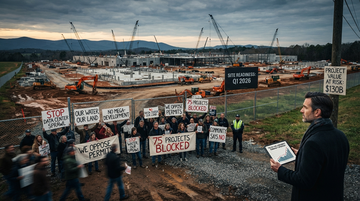
Community opposition is becoming a credit risk—so lenders are shifting data-center financing toward “permit-friendly” states
A Reuters report says lenders are now explicitly folding community opposition into project readiness and drawdown risk. That turns NIMBY/permitting friction into an underwriting variable, which can reorder which markets and operators get built first—and who pays the higher cost of delay.

Intel selling $15B of new stock turns the turnaround rally into dilution math
Intel’s proposed $15B common-stock offering (plus a $2.25B underwriter option) gives management capital for capex/working capital—but it also means investors are funding the foundry ramp with fresh share issuance at a high-price tape. The market implication is straightforward: even if foundry timelines improve, per-share economics get worse until operating leverage arrives.
2026-08-09

AI Financial's $12M exit implies “meme-to-impairment” contagion for crypto-linked payments and Perpetuals.com’s deal pipeline
When AI Financial sold its payments unit (ALT 5 Sigma Canada) for a $12M secured promissory note plus Prime Delta stock, the structure looked less like “growth strategy” and more like a liquidity/valuation reset. For investors watching Trump-linked fintech/crypto narratives, this matters because it converts prior upside hype into a concrete impairment-style event and turns counterparties like Perpetuals.com into the next holder of that risk.
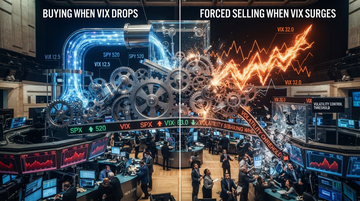
Private Credit’s “Liquidity Premium” Took a Bank-Origination Shortcut—And the Squeeze Is Showing Up in BDC Math
Bloomberg’s Credit Weekly (Aug 8, 2026) links tighter private-credit economics to a specific borrower behavior: highly-indebted companies are refinancing out of private credit and back into the syndicated bank-loan market. For Ares Capital and Blue Owl Capital, that matters because it targets the very spread/rollover that BDC models were pricing as a durable “liquidity” advantage—when in reality, part of that premium appears to be bank-side underwriting structure.

OFAC’s Aug 7 Shelbit Sanction Turns “UAE Iran-Crypto Compliance” Into a Bankable Risk Premium for Exchanges
Treasury’s Aug 7 OFAC action against Dubai’s SHELBIT GENERAL TRADING LLC frames a new enforcement surface: crypto “rails” used to support the IRGC and Nobitex. The second-order read-through is that any U.S.-facing exchange, wallet, or stablecoin on/off-ramp touching UAE OTC liquidity chains must treat “Iran-linked geo-compliance” as a material, tradable risk—not a reputational afterthought.
2026-08-08

Berkshire Hathaway's Q2 cash use isn’t “patient”—it’s self-buyback at a size that forces the whole “cash mountain” narrative to update
In Berkshire Hathaway's Q2 2026 reporting, the firm shows operating-business earnings before tax of $14.376B and consolidated earnings before tax of $32.063B, alongside a clear cash deployment into buying back its own equity. The key reset is that cash, cash equivalents, and short-term U.S. Treasury bills were $359.2B at quarter-end—lower than where they stood at the start of the year—while treasury-stock purchases were material (most in Q2), implying the company is now returning capital through the same asset whose trade it’s marking.
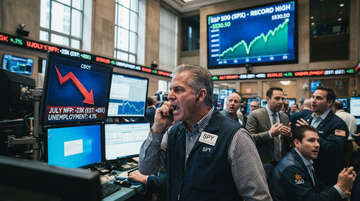
Negative payrolls, record stocks: the July -23K print didn’t just move Fed odds—it rewired the “hike vs cut” path for September
A -23K July nonfarm payrolls print (vs. +85K expected) forced investors to price September policy more aggressively toward action—yet the S&P 500 still pushed to a record high. The paradox is mostly about sequencing: markets treated the jobs shock as disinflationary “growth risk,” while Fed-hawk narratives must re-earn credibility through wage/inflation data before they can justify late-cycle hikes.

SEC’s pardon-linked dismissal turns a once-binary insider tail risk into a discretionary policy lever—biotech executives should price the upside differently
When an insider-trading defendant receives a presidential pardon, the SEC can choose to drop the civil case rather than litigate the merits. That “pardon-as-procedural-shield” enforcement discretion is likely to lower expected legal tail-risk for politically connected healthcare and biotech executives—while keeping M&A and trial-disclosure conduct in focus, because the operational information advantage still drives market outcomes.

Soft Payrolls Don’t Cut the Swap Convexity Bet—Record Eris SOFR Volume Says “Higher for Longer” Got Re-Anchored
After July jobs disappointed, US Treasuries backed up—but swap futures positioning shows institutions didn’t buy the “dovish reset.” Instead, record Eris SOFR swap-futures trading implies dealers and leveraged accounts are paying (and hedging) a higher-for-longer convexity risk premium that can keep rates “sticky” even as Fed-cut odds rise.

Delaware’s Verisk ruling makes activist breakups harder: specific performance beats “we’ll just walk away” in the $2.35B AccuLynx case
A Delaware Chancery judge ordered Verisk Analytics to try to complete its $2.35B cash acquisition of AccuLynx, rejecting Verisk’s attempt to treat the deal as terminated. The ruling matters to investors because it reinforces a template: when a board’s contract choice is enforced, activists must clear a much higher legal bar—often not just “wins on votes,” but “losses on specific performance.”
2026-08-07

AIG’s underwriting surge is real—cat losses fell and prior-year development swung, so the “pricing power” answer depends on how much of the beat was accident-year vs. reserve mechanics
AIG’s first-quarter 2026 earnings jump was driven by a sharp reduction in catastrophe-related charges and favorable prior-year loss reserve development—not just by accident-year underwriting. SEC disclosures show favorable prior-year development in the same period, reinforcing that the beat has a reserve-development component. For investors, the key question is whether AIG can sustain favorable development while catastrophe costs normalize—because that’s what determines whether the US P&C cycle sees durable pricing power.

American International Group's underwriting “beat” is mostly lower catastrophe losses and reserve, not broad pricing power
In American International Group’s latest disclosed underwriting results, the General Insurance combined ratio improved to 90.1 vs 91.8, with the underwriting income increase tied to $258m lower catastrophe losses and $183m higher favorable prior-year development. The implication for investors isn’t “pricing is the only story”—it’s that the cycle is still dominated by loss-cost variability, catastrophe timing, and reserve/reinsurance mechanics.
What to expect
Evidence-first notes with a visible point of view.
This section collects sharp takes on earnings, shareholder meetings, and market structure. Each new piece should make the thesis, the facts, and the implications obvious within the first few screens.
Expect direct analysis, not generic commentary.
Expect the data to be explicit and the argument to be easy to follow.
Plutux is not an investment adviser. Market data and AI-generated analysis are for information and education only, not investment advice. Disclaimer