Financials
Banks, credit, and where the risk is sitting
Net interest margins, credit quality, capital rules and deal flow — what the numbers say about the banks, insurers and asset managers reporting them.
2026-08-31
%22%2F%3E%0A%20%20%3Ccircle%20cx%3D%22220%22%20cy%3D%22150%22%20r%3D%22180%22%20fill%3D%22%2322d3ee%22%20fill-opacity%3D%220.12%22%2F%3E%0A%20%20%3Ccircle%20cx%3D%221010%22%20cy%3D%22130%22%20r%3D%22220%22%20fill%3D%22%2338bdf8%22%20fill-opacity%3D%220.08%22%2F%3E%0A%20%20%3Ccircle%20cx%3D%22920%22%20cy%3D%22520%22%20r%3D%22170%22%20fill%3D%22%2322d3ee%22%20fill-opacity%3D%220.06%22%2F%3E%0A%20%20%3Cpath%20d%3D%22M140%20430h920%22%20stroke%3D%22url(%23line)%22%20stroke-width%3D%2212%22%20stroke-linecap%3D%22round%22%2F%3E%0A%20%20%3Cpath%20d%3D%22M220%20360c120-150%20260-220%20380-220s260%2070%20380%20220%22%20fill%3D%22none%22%20stroke%3D%22%2367e8f9%22%20stroke-opacity%3D%220.5%22%20stroke-width%3D%2216%22%20stroke-linecap%3D%22round%22%20stroke-linejoin%3D%22round%22%2F%3E%0A%20%20%3Cpath%20d%3D%22M300%20398h600%22%20stroke%3D%22%2394a3b8%22%20stroke-opacity%3D%220.24%22%20stroke-width%3D%228%22%20stroke-linecap%3D%22round%22%2F%3E%0A%20%20%3Ctext%20x%3D%22220%22%20y%3D%22510%22%20fill%3D%22%23e2e8f0%22%20fill-opacity%3D%220.7%22%20font-family%3D%22Arial%2C%20Helvetica%2C%20sans-serif%22%20font-size%3D%2238%22%20letter-spacing%3D%228%22%3EINSIGHTS%3C%2Ftext%3E%0A%3C%2Fsvg%3E)

2026-08-30

Affirm turns BNPL’s “credit-curve vs. M&A” fight into a guidance-and-funding test
Affirm’s Q4 FY2026 print and FY2027 outlook are the first live read-through for whether BNPL can keep widening monetization even as funding costs reprice higher. The company is already showing a meaningful shift in earnings power in its filings, so investors now need the Q4 letter’s funding-cost and credit-performance details to judge if that model survives the next rate-and-consumer stress cycle.

War-risk insurance reprices before oil — and it quietly decides who can ship Gulf barrels
When insurers pull or re-price war-risk cover for Iran and the wider Gulf, the constraint moves upstream of oil: fewer routes get insured, costs rise, and cash-flow timing shifts for shipping and energy trades. A key March 5, 2026 cancellation took effect with war-risk exclusions for Iran and defined Gulf waters, while brokers flagged 25%–50% near-term rate pressure for marine hull war exposure—setting up a lag-and-snap pattern investors often misread as “just shipping noise.”
2026-08-28

Affirm faces a valuation standoff: the credit curve vs. the M&A market
The Aug. 28 premarket move in Affirm spotlights how investors are re-pricing BNPL credit risk after peers’ guidance resets and deal narratives stall. Because Affirm is the only US-listed BNPL pure-play, its loss provisions and funding costs are the cleanest read-through to whether the “next” BNPL multiple is set by the Fed or by a buyer.

Affirm turns a gas-price headline into a faster stress signal—if transaction mix shifts toward smaller, more frequent buys
When Affirm's CEO points to high gas prices weighing on U.S. shoppers, the key investor question is whether BNPL usage is a demand stabilizer or a liquidity bandage. A Federal Reserve–cited framework implies BNPL can mirror tightening budgets before delinquency rates move, letting investors watch transaction behavior alongside retailer “trade-down” comments like those from Dollar General.

OCC moves to make bank enforcement timing and penalties more predictable—raising the “compliance cost” signal for regional banks
On Aug. 27, 2026, the Office of the Comptroller of the Currency (OCC) announced revised policies and procedures aimed at improving transparency and consistency in bank enforcement and supervisory standards. The key investor takeaway is that—if the new framework tightens how “violations” and “unsafe or unsound” determinations translate into supervisory actions—regional banks should face a more consistent compliance-cost distribution and less uncertainty around M&A approval timelines.

PayPal’s buyout collapse vs. Stripe’s “platform value”: the deal math implies the market was already discounting PayPal’s standalone turnaround
The reported $53B Stripe–Advent bid reportedly unraveled abruptly, triggering a sharp ~12% one-day drop in PayPal. The bigger lesson isn’t just deal-break risk; it’s what the bid premium versus the post-collapse valuation implies about how much “independent” earnings recovery the market will pay for—without a buyer underwriting the turnaround.
SEC’s Aug. 27 fake-adviser sweep shows the “registration-backdoor” is the real compliance bill—legal, platform and custody workflows get more expensive fast
On Aug. 27, 2026, the SEC charged 38 entities with making material misrepresentations in SEC Forms ADV to feign legitimacy as U.S. advisers and lure retail investors. The read-through for investors: the enforcement mechanism targets the RIA registration/compliance layer—raising the expected cost of onboarding, monitoring, and “custody-ready” diligence across legitimate advisers, retail platforms, and the finfluencer/AI-adviser scam supply chain.

Socure’s $156M strategic growth round bets that “defensive AI” will win the KYC arms race—right as AI fraud accelerates
Socure’s Aug. 27, 2026 $156M strategic growth investment—paired with an acquisition of agentic fraud operations platform Fravity—explicitly funds a shift from legacy identity checks to AI-driven, feedback-loop fraud investigations. The company is also reporting strong operating traction, including $364M total ARR in Q2 2026, suggesting spend is being pulled forward by rising alert and fraud workload rather than only by compliance budgets.
2026-08-27

TD, RBC and CIBC’s same-morning Q3 results turn Canadian majors into a North American credit “vitals check” — TD’s US retail PCL is the signal
With TD, RBC and CIBC reporting fiscal Q3 on the same morning, the trio delivered a near-simultaneous read on credit health across Canadian and U.S. consumer/mortgage exposure. TD’s U.S. Banking credit losses and implied annualized PCL rate act as the swing input for how investors should price near-term U.S. consumer and mortgage risk as Canadian demand cools.

KKR’s $250M DOJ HSR settlement turns merger-filing compliance into a deal-velocity cost center
The DOJ says KKR evaded or botched Hart-Scott-Rodino filings across at least 16 transactions, and the proposed settlement would impose a $250M civil penalty. The key investor takeaway isn’t only the hit to one firm—it’s how this sets a new, priced benchmark for HSR compliance execution risk across every mega-sponsor’s acquisition pipeline.
2026-08-25

2026-08-24

WFC and Citi can buy big banks—but H1’26 deal value halved because “regulation” wasn’t the binding constraint
North America bank M&A value fell by more than half in 1H26 even as regulators eased certain barriers, exposing a deeper bottleneck: capital/valuation and deal geometry, not just permissions. The “unlock” is likely to come when buyers can clear higher effective hurdle rates (price/book + loss-share + capital return optics) and when targets are forced by balance-sheet economics, not by lack of acquirers.

Broadcom's $60B+ AI-debt backstop has shifted credit risk from “equity optimism” to bond-market math
A reported plan for Broadcom to raise more than $60B of AI-chip debt to support Anthropic and other buyers is now being read through the lens of credit: the company’s CDS spread widening implies lenders worry about who absorbs losses if AI demand timing or collateral values miss. For investors, the signal is less about whether Broadcom can finance chips and more about whether today’s AI “backlog math” understates tail risk across the buildout financing chain.

Evergrande’s sentencing turns the property-debt crisis into a balance-sheet timetable for steel and iron ore
When China sentenced Evergrande’s founder to life in prison and fined connected entities, it didn’t “buy” new apartments—but it did tighten the endgame timeline for how losses are absorbed across lenders and suppliers. The next read-through for markets is not construction demand alone; it is how banks and developers reprice risk and how that propagates into steel output intensity and iron-ore buying behavior.

KPMG Australia’s 5% cut is a Big-4 demand signal—because it happens while AI is compressing billable labor
KPMG Australia says it will cut about 5% of its workforce, affecting 27 partners and around 360 staff, and it warns that “difficult market conditions” may persist into 2027. The setup matters for investors: it coincides with an industry-wide pricing shift where AI reduces the staff-hours needed to deliver the same output—so even modest demand softness can trigger headcount actions faster than revenue trends show up.
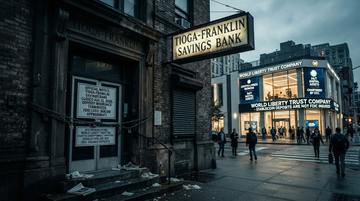
Bank-charter “deposit war” is accelerating—Tioga-Franklin’s $68M FDIC loss is the warning label for the rush
The FDIC’s record shows a $68.0M (approximate) failure cost tied to Tioga-Franklin Savings Bank, while the OCC has conditionally approved new charters tied to crypto-linked business models—explicitly ruling that certain stablecoins are not FDIC-insured deposits. For incumbents, new bank formation raises the odds of higher deposit competition and funding costs; for investors, the key risk is not charter count, but whether growth banks can match rates without breaking underwriting discipline.
2026-08-23

Germany’s “national champion” veto would reprice bank M&A by blocking the UniCredit–Commerzbank playbook
UniCredit’s bid for Commerzbank is forcing German policymakers to confront a structural problem: the German takeover regime can let an acquirer build a large stake and negotiate from a position of leverage rather than paying through a clean, shareholder-out premium. The reported push to review takeover rules after the bid would raise the cost of crossing control thresholds—changing deal math for cross-border bank combinations and putting EU capital-markets-union timelines under pressure.

Korea’s retail is buying ~40% coupon equity-linked notes after the rout—what that signals for US mega-cap tech demand and structured-credit risk
After Korea’s historic stock rout, retail investors are rotating into complex equity-linked securities that advertise annualised coupons around 40% (and up to ~50%), despite explicit knock-in loss risks. The key takeaway for investors is that the marginal buyer is shifting from “equity direction bets” toward “structured coupon” risk, which can temporarily support mega-cap earnings expectations while quietly extending drawdown risk into credit-like downside paths.

Regulators shut a Philadelphia savings bank (Aug. 21, 2026): the FDIC’s $68M/ $67M loss math looks small—but the repricing risk may be systemic
On Aug. 21, 2026, the FDIC took over Tioga-Franklin Savings Bank in Philadelphia and the acquirer, Second Federal Savings and Loan Association of Philadelphia, assumed essentially all deposits and substantially all assets; the FDIC preliminarily estimated a $5.5M cost to the Deposit Insurance Fund. The event is tiny in absolute dollars, but it directly illustrates how “higher-for-longer” interest rates can still translate into balance-sheet losses quickly when deposit betas, funding lifecycles, and CRE/asset duration misalign—typically hitting smaller, concentrated franchises first.
What to expect
Evidence-first notes with a visible point of view.
This section collects sharp takes on earnings, shareholder meetings, and market structure. Each new piece should make the thesis, the facts, and the implications obvious within the first few screens.
Expect direct analysis, not generic commentary.
Expect the data to be explicit and the argument to be easy to follow.
Plutux is not an investment adviser. Market data and AI-generated analysis are for information and education only, not investment advice. Disclaimer