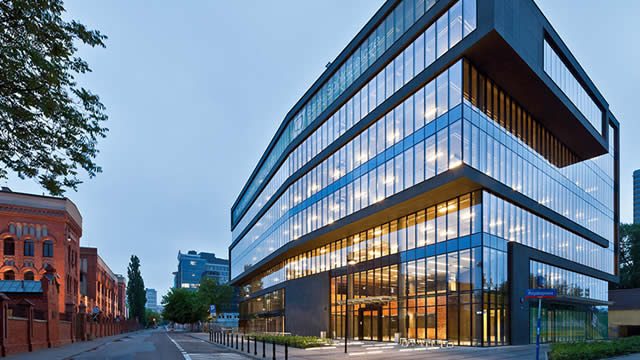
Safehold Inc. (NYSE: SAFE) is fundamentally transforming real estate ownership by offering property owners an innovative and superior method to extract the ...
Safehold Inc. is a specialized U.S. real estate finance company organized as a real estate investment trust and listed on the New York Stock Exchange under the symbol SAFE. The company was created by iStar to develop and institutionalize the modern ground lease model, with Safehold's public-market platform emerging around ...Safehold Inc. is a specialized U.S. real estate finance company organized as a real estate investment trust and listed on the New York Stock Exchange under the symbol SAFE. The company was created by iStar to develop and institutionalize the modern ground lease model, with Safehold's public-market platform emerging around 2017. Its headquarters are at 1114 Avenue of the Americas in New York City. Jay S. Sugarman serves as Chairman and Chief Executive Officer and has held senior leadership roles connected with the company's broader real estate platform for many years.
Safehold's core product is the modern ground lease. Under this structure, Safehold acquires or retains ownership of the land beneath a building and leases that land to the property owner under a long-term contractual arrangement. The building owner receives capital by monetizing the land component of the property, while Safehold receives contractual ground rent. This can reduce the owner's upfront equity requirement, improve financing flexibility, and potentially enhance returns on the building-level investment. Safehold targets premium assets in major U.S. markets across multifamily, office and commercial, industrial, hospitality, and mixed-use sectors.
The company's economic model differs from that of a conventional apartment or office landlord. Safehold generally does not operate the buildings, manage tenants, or bear the full cost of property-level operations. Instead, its revenue is primarily derived from ground rents and related real estate investment income. Because the land is typically a long-lived asset and leases are structured for extended periods, the platform is designed to generate durable, growing income with comparatively limited operating expense exposure. There is no conventional manufacturing bill of materials, or BOM, because Safehold is a financial and real estate platform rather than a producer of physical goods. Its principal costs include interest expense, debt financing, general and administrative expenses, asset management and transaction costs, legal costs, and property-related obligations under its investment structures.
The strategy is intended to benefit both property owners and investors. Owners can unlock embedded land value without selling their buildings, while Safehold gains exposure to land-level cash flows that may be less volatile than building-level operating income. The company also seeks rent growth through contractual escalators and portfolio expansion. Key risks include interest-rate movements, refinancing requirements, property-market conditions, tenant and building-owner credit quality, concentration in selected U.S. markets, regulatory and tax considerations, and the possibility that ground lease structures may face slower adoption than expected.
The supplied trailing-twelve-month data reports approximately $1.17 billion of market capitalization, enterprise value of about $5.80 billion, revenue of roughly $412 million based on revenue-per-share data, net income of approximately $116 million based on net income per share data, a 4.3% indicated dividend yield, and a 61.9% debt-to-assets ratio. Reported profitability metrics include an approximately 28.1% net profit margin, 81.8% EBITDA margin, and 4.8% return on equity. These figures should be interpreted in the context of REIT accounting, non-cash real estate items, leverage, valuation changes, and the timing of ground lease investments. Safehold's stated long-term objective is to deliver secure, steadily increasing income and sustainable capital growth by expanding the modern ground lease market and capturing the value of land beneath high-quality U.S. real estate.
YoYYoY means Year-over-Year. It compares the latest annual value with the previous annual value to show long-term trend strength.
QoQQoQ means Quarter-over-Quarter. It compares the latest quarter with the immediately previous quarter to show short-term momentum changes.
RevenueThe total money that came through the front door from selling things, before paying a single bill. Think of it as the grand total of every credit card swipe from customers. (YoY compares this year to last year's performance, while QoQ compares the current three months to the previous three).
$385.6M
+5.4%
+9.4%
Net IncomeThe absolute bottom line. If the company paid every single supplier, employee, banker, and tax collector, this is the actual money left in their pocket at the end of the day.
$114.5M
+8.2%
+4.5%
Gross MarginThe basic markup. If they sell a $100 pair of sneakers, this percentage tells you how much of that price tag is profit right after paying for the rubber and shoelaces, but before paying for things like store rent or TV commercials.
+94.3%
-4.6%
-11.3%
Operating MarginThe 'day job' efficiency score. Out of every dollar a customer spends, this shows how many cents the company keeps after making the product AND paying for all the everyday corporate overhead (like salaries, marketing, and keeping the lights on).
+79.8%
+235.0%
-64.6%
Net MarginThe final take-home percentage. When you strip away every conceivable cost, tax, and interest payment, this is the exact number of cents the company truly gets to keep from every dollar in sales.
+29.7%
+2.7%
-4.5%
Free Cash FlowThe holy grail of corporate cash. It's the spendable, physical money left over after the business pays for its daily operations AND buys the big, expensive upgrades (like new factories or servers) it needs to survive. This is the 'free' money they can use to pay dividends or buy back stock.
$47.8M
+26.3%
+502.8%
FCF MarginThe ultimate cash conversion rate. It shows how good the company is at turning regular sales directly into cold, hard, spendable cash. A high percentage means the business is an absolute cash-printing machine.
+12.4%
+19.8%
+468.0%
Debt / EquityThe financial risk gauge. It compares how much of the company's empire was built using borrowed money (loans) versus the owners' own money (shareholders). A high number means they are heavily leveraged and playing a riskier game; a low number means they are playing it safe.
186.5%
+3.4%
+0.7%
Current RatioThe 12-month survival check. It simply compares the cash they have right now (plus things they can quickly turn into cash) against the immediate bills they absolutely must pay this year. A score above 1 means they have enough in the wallet to cover the upcoming bills without panicking.
17.86x
-3.8%
+94.0%
Total AssetsThe absolute size of the company's empire. It bundles together absolutely everything of value they own—from the cash in the register and the inventory in the warehouse, to the software patents in the vault and the factories on the ground.
Operator: Good morning and welcome to Safehold's Fourth Quarter and Fiscal 2025 Earnings Conference Call. [Operator Instructions] As a reminder, today's conference is being recorded. At this time, for opening remarks and introductions, I would like to turn the conference over to Pearse Hoffmann, Senior Vice President of Capital Markets and Investor Relations. Please go ahead.
Pearse Hoffmann: Good morning, everyone. Thank you for joining us today for Safehold's earnings call. On the call, we have Jay Sugarman, Chairman and Chief Executive Officer; Michael Trachtenberg, President; Brett Asnas, Chief Financial Officer; and Steve Wylder, Executive Vice President, Head of Investments. This morning, we plan to walk through a presentation that details our fourth quarter and fiscal year 2025 results. The presentation can be found on our website at safeholdinc.com by clicking on the Investors link. There will be a replay of this conference call beginning at 2 p.m. Eastern Time today. The dial-in for the replay is (877) 481-4010 with a confirmation code of 53587. [Operator Instructions] Before I turn the call over to Jay, I'd like to remind everyone that statements in this earnings call, which are not historical facts, may be forward-looking. Our actual results may differ materially from these forward-looking statements, and the risk factors that could cause these differences are detailed in our SEC reports. Safehold disclaims any intent or obligation to update these forward-looking statements, except as expressly required by law. Now with that, I'd like to turn it over to Chairman and CEO, Jay Sugarman. Jay?
Jay Sugarman: Thanks, Pearse, and thank you to all of you joining us today. While headwinds remain, Safehold made good progress on a number of fronts in the fourth quarter that we believe should have a positive impact on 2026. We were pleased to welcome Michael Trachtenberg as President, giving us new reach and firepower, to see Steve, Yosefa and the rest of our affordable housing team begin expanding our platform to new states and new sponsors, and to have Brett and our capital markets team continue to solidify the balance sheet and drive down our cost of capital. These are all important parts of our goal to get our share price back to where it belongs. . More consistent origination growth, more Caret visibility and implementing share buybacks are some of the important themes this coming year that we believe have the potential to unlock value for shareholders. And we want to continue the work begun in 2025 to deliver tangible results in 2026. Our goals will be to add more ground lease volume in '26 versus '25 to find ways to get Carets value more readily recognized and to begin utilizing our previously authorized share repurchase program when trading windows are open and market conditions make sense. Obviously, there are a lot of factors in the mix, but these are the 3 areas of focus that we've been working towards, and we believe will support …