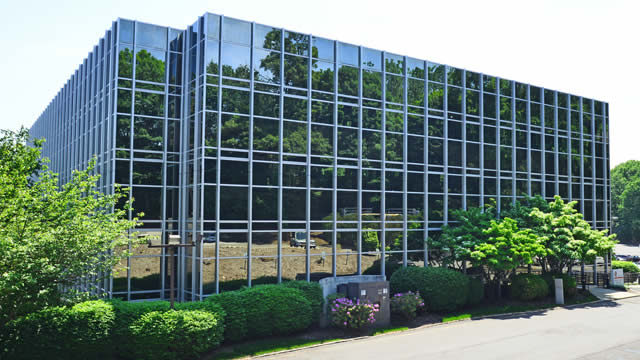
Empire State Realty Trust, Inc. (NYSE: ESRT) functions as a leading real estate investment trust (REIT), focused on the acquisition, ownership, management, ...
Empire State Realty Trust, Inc. is a publicly traded real estate investment trust headquartered in New York City. The company was established in 2011 and became publicly listed on the New York Stock Exchange in October 2013. Its business is rooted in the ownership and operation of commercial real estate, ...Empire State Realty Trust, Inc. is a publicly traded real estate investment trust headquartered in New York City. The company was established in 2011 and became publicly listed on the New York Stock Exchange in October 2013. Its business is rooted in the ownership and operation of commercial real estate, with a geographic concentration in Manhattan and selected markets in the greater New York metropolitan region, including Westchester County, New York, and Fairfield County, Connecticut. The company is best known for owning the Empire State Building, one of the most recognizable commercial properties in the world, together with a portfolio of office and retail assets.
ESRT generates revenue primarily through office and retail rental income, tenant reimbursements, property-management activities, observatory-related operations associated with the Empire State Building, and other property services. Its office portfolio is positioned around well-located, amenitized, and modernized buildings intended to attract corporate tenants, professional-services firms, technology companies, media organizations, and other commercial occupants. Retail space provides additional income and supports the tenant ecosystem around its office properties and prominent landmark assets.
The company’s operating model requires substantial expenditures for property maintenance, utilities, repairs, insurance, real estate taxes, leasing commissions, tenant improvements, security, staffing, and building modernization. Capital expenditures are directed toward renovations, energy-efficiency projects, mechanical systems, elevators, technology infrastructure, common areas, and tenant-facing amenities. Unlike a manufacturing company, ESRT does not have a conventional bill of materials; its equivalent cost base consists of construction materials, engineering and contracting services, building systems, cleaning, security, property operations, and ongoing capital improvements.
ESRT has promoted sustainability as a core operating capability. It has invested in energy-efficiency retrofits and indoor environmental quality, and it has highlighted leadership in environmental, social, and governance practices. The company has also reported being the first commercial real estate portfolio in the United States to receive the WELL Health-Safety Rating.
Anthony E. Malkin serves as chairman and chief executive officer. The supplied company information reports approximately 642 full-time employees, placing ESRT in the 501-to-1,000 employee category. A supplied financial snapshot reports a market capitalization of approximately $830 million, enterprise value of approximately $3.0 billion, a debt-to-assets ratio of about 52.1%, and a dividend of $0.14 per share. These figures can change with market prices, reporting periods, property valuations, interest rates, leasing conditions, and financing activity. As a REIT, ESRT’s performance is particularly influenced by New York office demand, occupancy and rental rates, tenant-credit quality, refinancing costs, interest rates, capital requirements, and the long-term value of its strategic real estate holdings.
YoYYoY means Year-over-Year. It compares the latest annual value with the previous annual value to show long-term trend strength.
QoQQoQ means Quarter-over-Quarter. It compares the latest quarter with the immediately previous quarter to show short-term momentum changes.
RevenueThe total money that came through the front door from selling things, before paying a single bill. Think of it as the grand total of every credit card swipe from customers. (YoY compares this year to last year's performance, while QoQ compares the current three months to the previous three).
$768.3M
+0.7%
+3.5%
Net IncomeThe absolute bottom line. If the company paid every single supplier, employee, banker, and tax collector, this is the actual money left in their pocket at the end of the day.
$47.6M
-7.8%
-1184.1%
Gross MarginThe basic markup. If they sell a $100 pair of sneakers, this percentage tells you how much of that price tag is profit right after paying for the rubber and shoelaces, but before paying for things like store rent or TV commercials.
+1.8%
-96.7%
+177.3%
Operating MarginThe 'day job' efficiency score. Out of every dollar a customer spends, this shows how many cents the company keeps after making the product AND paying for all the everyday corporate overhead (like salaries, marketing, and keeping the lights on).
+17.7%
-15.1%
-10.1%
Net MarginThe final take-home percentage. When you strip away every conceivable cost, tax, and interest payment, this is the exact number of cents the company truly gets to keep from every dollar in sales.
+6.2%
-8.4%
-1147.9%
Free Cash FlowThe holy grail of corporate cash. It's the spendable, physical money left over after the business pays for its daily operations AND buys the big, expensive upgrades (like new factories or servers) it needs to survive. This is the 'free' money they can use to pay dividends or buy back stock.
$50.6M
-80.6%
-122.6%
FCF MarginThe ultimate cash conversion rate. It shows how good the company is at turning regular sales directly into cold, hard, spendable cash. A high percentage means the business is an absolute cash-printing machine.
+6.6%
-80.8%
-121.8%
Debt / EquityThe financial risk gauge. It compares how much of the company's empire was built using borrowed money (loans) versus the owners' own money (shareholders). A high number means they are heavily leveraged and playing a riskier game; a low number means they are playing it safe.
230.1%
-4.5%
-2.8%
Current RatioThe 12-month survival check. It simply compares the cash they have right now (plus things they can quickly turn into cash) against the immediate bills they absolutely must pay this year. A score above 1 means they have enough in the wallet to cover the upcoming bills without panicking.
3.15x
+174.5%
+58.8%
Total AssetsThe absolute size of the company's empire. It bundles together absolutely everything of value they own—from the cash in the register and the inventory in the warehouse, to the software patents in the vault and the factories on the ground.
Operator: Greetings, and welcome to the Empire State Realty Trust, Inc. First Quarter 2026 Earnings Call. At this time, all participants are in a listen-only mode. As a reminder, this conference is being recorded. It is now my pleasure to introduce Suzanne Lu, SVP, Chief Counsel, Real Estate. Thank you. You may begin.
Suzanne Lu: Good afternoon. Welcome to Empire State Realty Trust, Inc. First Quarter 2026 Earnings Conference Call. In addition to the press release distributed yesterday, a quarterly supplemental package with further detail on our results and our latest investor presentation were posted in the Investors section of the company's website at esrpreit.com. During today's call, management's prepared remarks and responses may include forward-looking statements within the meaning of applicable securities laws. These statements reflect management's current views and assumptions, and are subject to risks and uncertainties that could cause actual results to differ materially. Empire State Realty Trust, Inc. extends no obligation to update any forward-looking statement in the future. We encourage listeners to review the more detailed discussions related to these forward-looking statements in the company's filings with the SEC. During today's call, we will discuss certain non-GAAP financial measures, such as FFO, modified and core FFO, NOI, same-store property cash NOI, EBITDA, and adjusted EBITDA, which we believe are meaningful to evaluating the company's performance. The definitions and reconciliations of these measures to the most directly comparable GAAP measures are included in the earnings release and supplemental package, each available on the company's website. Now I will turn the call over to Anthony E. Malkin, our Chairman and Chief Executive Officer.
Anthony E. Malkin: Good afternoon, everyone. Yesterday, we reported Empire State Realty Trust, Inc.'s first quarter results. We began the year with solid earnings, steady execution across our portfolio, and continued contribution from the Observatory. We acquired a high-quality retail asset on North 6th Street with recycled investment as part of our concentrated effort to reallocate our balance sheet capacity towards growth, and completed financings which address our debt maturities all the way into 2028 and maintain balance sheet flexibility. Today's environment presents a wide range of macroeconomic outcomes, some of which could adversely affect our business. That said, as we have said consistently, we do not seek to predict the weather. We have an arc. From that arc, we operate from a position of strength and with great latitude. We derive our revenue from diverse income streams and a broad tenant base. A substantial portion of our revenue is from long-term leases, and we maintain high leased percentages, all supported by our balance sheet. We navigate freely and act decisively when opportunities arise. Pages five through nine of our investor presentation available at esrtreit.com …