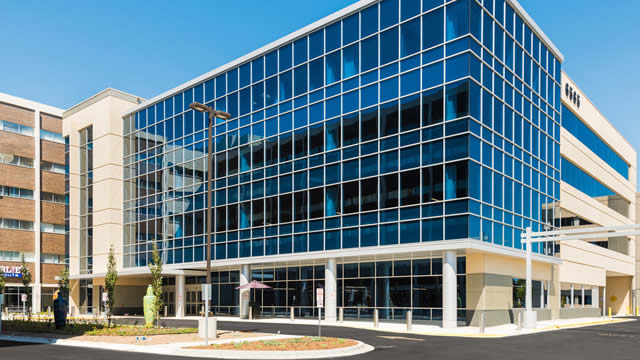
American Strategic Investment Co. (ASIC) functions as a publicly traded Real Estate Investment Trust, managing a select portfolio of premium commercial properties. ...
American Strategic Investment Co. (ASIC) is a real estate investment trust (REIT) that was incorporated in Maryland in 2013 and is headquartered in Newport, Rhode Island, although its properties are concentrated in New York City. The company changed its name from New York City REIT, Inc. to American Strategic Investment ...American Strategic Investment Co. (ASIC) is a real estate investment trust (REIT) that was incorporated in Maryland in 2013 and is headquartered in Newport, Rhode Island, although its properties are concentrated in New York City. The company changed its name from New York City REIT, Inc. to American Strategic Investment Co. on January 19, 2023, reflecting its expanded investment strategy. ASIC owns a portfolio of six properties (as of September 30, 2025, but originally eight properties) comprising approximately 0.7 million rentable square feet, with a focus on office and retail spaces. The properties are strategically located in Manhattan and other boroughs, catering to creditworthy tenants such as government agencies and Fortune 500 companies. As an externally managed REIT, the company does not have its own employees; instead, it relies on an external manager (AR Global) for day-to-day operations, which is typical for some REITs. Financially, the company has a market cap of approximately $22 million (as of the latest data), with a stock price of $7.58. The price-to-earnings ratio is 1.55, and the price-to-book ratio is 0.39, indicating that the stock trades at a discount to its net asset value. The company's revenues have fluctuated, with a gross profit margin of -17.1% and a net profit margin of 49.8% (TTM). The dividend yield is currently 0%, though the company has paid dividends in the past. ASIC aims to provide long-term value to shareholders through strategic property acquisitions, efficient property management, and asset dispositions. The company's leadership team, led by CEO Nicholas S. Schorsch Jr., brings extensive experience in real estate and finance, with a track record of managing over $1 billion in transactions. Despite challenges in the office sector, ASIC remains committed to its investment strategy, focusing on properties with stable cash flows and potential for appreciation. The company's external management structure allows for scalability and access to specialized expertise, while reducing overhead costs. As of the latest financial reports, the company has a current ratio of 11.25, indicating strong liquidity, and a debt-to-equity ratio of 0, suggesting conservative leverage. American Strategic Investment Co. continues to adapt to market conditions, exploring opportunities to enhance its portfolio and maximize shareholder returns.
YoYYoY means Year-over-Year. It compares the latest annual value with the previous annual value to show long-term trend strength.
QoQQoQ means Quarter-over-Quarter. It compares the latest quarter with the immediately previous quarter to show short-term momentum changes.
RevenueThe total money that came through the front door from selling things, before paying a single bill. Think of it as the grand total of every credit card swipe from customers. (YoY compares this year to last year's performance, while QoQ compares the current three months to the previous three).
$43.3M
-29.7%
-0.4%
Net IncomeThe absolute bottom line. If the company paid every single supplier, employee, banker, and tax collector, this is the actual money left in their pocket at the end of the day.
$-21.2M
+84.9%
-6.7%
Gross MarginThe basic markup. If they sell a $100 pair of sneakers, this percentage tells you how much of that price tag is profit right after paying for the rubber and shoelaces, but before paying for things like store rent or TV commercials.
+19.7%
-38.1%
+131.9%
Operating MarginThe 'day job' efficiency score. Out of every dollar a customer spends, this shows how many cents the company keeps after making the product AND paying for all the everyday corporate overhead (like salaries, marketing, and keeping the lights on).
-29.8%
-118.7%
+47.9%
Net MarginThe final take-home percentage. When you strip away every conceivable cost, tax, and interest payment, this is the exact number of cents the company truly gets to keep from every dollar in sales.
-49.0%
+78.6%
-7.2%
Free Cash FlowThe holy grail of corporate cash. It's the spendable, physical money left over after the business pays for its daily operations AND buys the big, expensive upgrades (like new factories or servers) it needs to survive. This is the 'free' money they can use to pay dividends or buy back stock.
$-8.5M
-60.9%
+84.1%
FCF MarginThe ultimate cash conversion rate. It shows how good the company is at turning regular sales directly into cold, hard, spendable cash. A high percentage means the business is an absolute cash-printing machine.
-19.7%
-128.9%
+84.0%
Debt / EquityThe financial risk gauge. It compares how much of the company's empire was built using borrowed money (loans) versus the owners' own money (shareholders). A high number means they are heavily leveraged and playing a riskier game; a low number means they are playing it safe.
540.4%
+14.7%
+7.9%
Current RatioThe 12-month survival check. It simply compares the cash they have right now (plus things they can quickly turn into cash) against the immediate bills they absolutely must pay this year. A score above 1 means they have enough in the wallet to cover the upcoming bills without panicking.
7.98x
+248.7%
-1.4%
Total AssetsThe absolute size of the company's empire. It bundles together absolutely everything of value they own—from the cash in the register and the inventory in the warehouse, to the software patents in the vault and the factories on the ground.
Operator: Good morning, and welcome to the American Strategic Investment Company's Fourth Quarter and Year-End 2025 Earnings Call. [Operator Instructions] As a reminder, this conference is being recorded. I would now like to turn the conference over to Curtis Parker, Senior Vice President. Please go ahead.
Curtis Parker: Thank you, operator. Good morning, everyone, and thank you for joining us for ASIC's fourth quarter and year-end earnings call. This event is also being webcast in the Investor Relations section of our website. Joining me today on the call to discuss this quarter's results are Nicholas Schorsch Jr., American Strategic Investment Company's Chief Executive Officer; and Mike LeSanto, the Chief Financial Officer. The following information contains forward-looking statements within the meaning of the Private Securities Litigation Reform Act of 1995, which are subject to risks and uncertainties. Please review the forward-looking and cautionary statements section at the end of our fourth quarter 2025 earnings release for various factors that could cause actual results to differ materially from forward-looking statements made during our call today. Should one or more of these risks or uncertainties materialize, actual results may differ materially from those expressed or implied by the forward-looking statements. We refer all of you to our SEC filings, including the Form 10-K filed for the year ended December 31, 2025, to be filed on April 15, 2026, for a more detailed discussion of the risk factors that could cause these differences. Any forward-looking statements provided during this call are only made as of the date of this call. As stated in our SEC filings, ASIC disclaims any intent or obligation to update or revise these forward-looking statements, except as required to do so by law. Please note that all fourth quarter 2025 financial information is unaudited. Also during today's call, we will discuss non-GAAP financial measures, which we believe can be useful in evaluating the company's financial and operating performance. These measures should not be considered in isolation or as a substitute for our financial results prepared in accordance with GAAP. A reconciliation of these measures to the most directly comparable GAAP measure is available in our earnings release, which is posted on our website. Please also refer to our earnings release for more detailed information about what we consider to be implied investment-grade tenants, a term we will use throughout today's call. I'll now turn the call over to Nick Schorsch, Chief Executive Officer. Please go ahead, Nick.
Nicholas Schorsch: Thanks, Curtis. Good morning, and thank you for joining us. Today, we will discuss our results for the fourth quarter and full year 2025. We remain committed to operating and unlocking value at our current assets with a focus on tenant retention, property improvements and cost efficiency, while simultaneously pruning our exposure to non-core assets. …