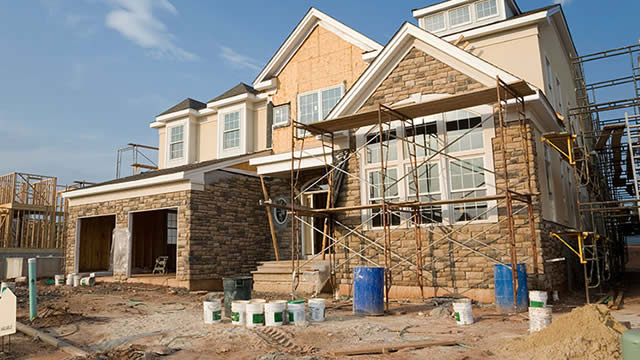
Millrose Properties, Inc. is the premier permanent capital solution for residential homebuilders and developers. The company specializes in the acquisition, financing and ...
Millrose Properties, Inc. is a publicly traded real estate investment trust (REIT) that operates as a 'Homesite Option Purchase Platform' (HOPP'R), providing a modern solution for residential land banking. The company was incorporated in Maryland on March 19, 2024, and spun off from Lennar Corporation in February 2025. Its primary ...Millrose Properties, Inc. is a publicly traded real estate investment trust (REIT) that operates as a 'Homesite Option Purchase Platform' (HOPP'R), providing a modern solution for residential land banking. The company was incorporated in Maryland on March 19, 2024, and spun off from Lennar Corporation in February 2025. Its primary business involves purchasing and developing residential land, then selling finished homesites to homebuilders, particularly Lennar, through option contracts. This model allows homebuilders to control land with less capital upfront, while Millrose generates contractual recurring cash returns. The company is listed on the New York Stock Exchange under the ticker MRP, with its headquarters in Miami, Florida. As of the latest data, Millrose has a market capitalization of approximately $4.47 billion, with a price-to-earnings ratio of 10.1 and a dividend yield of about 10.4%. The company employs a small team, estimated between 11 and 50 people, and is led by CEO Darren L. Richman, who also co-founded Kennedy Lewis. Financially, Millrose shows strong profitability with a net profit margin of 62.6% and an EBITDA margin of 85.8%. The company's enterprise value stands at around $6.91 billion, with a debt-to-equity ratio of 0.424. Millrose's innovative platform addresses the capital-intensive nature of land development, offering investors exposure to residential real estate with potential for income generation and growth. The company was designed to provide homebuilders with a just-in-time homesite delivery system, enhancing their capital efficiency. With its recent IPO and spin-off, Millrose is positioned to become a key player in the land banking sector.
YoYYoY means Year-over-Year. It compares the latest annual value with the previous annual value to show long-term trend strength.
QoQQoQ means Quarter-over-Quarter. It compares the latest quarter with the immediately previous quarter to show short-term momentum changes.
RevenueThe total money that came through the front door from selling things, before paying a single bill. Think of it as the grand total of every credit card swipe from customers. (YoY compares this year to last year's performance, while QoQ compares the current three months to the previous three).
$600.5M
—
+1.0%
Net IncomeThe absolute bottom line. If the company paid every single supplier, employee, banker, and tax collector, this is the actual money left in their pocket at the end of the day.
$379.9M
+254.3%
+2.4%
Gross MarginThe basic markup. If they sell a $100 pair of sneakers, this percentage tells you how much of that price tag is profit right after paying for the rubber and shoelaces, but before paying for things like store rent or TV commercials.
+85.4%
—
-15.2%
Operating MarginThe 'day job' efficiency score. Out of every dollar a customer spends, this shows how many cents the company keeps after making the product AND paying for all the everyday corporate overhead (like salaries, marketing, and keeping the lights on).
+80.9%
—
-0.1%
Net MarginThe final take-home percentage. When you strip away every conceivable cost, tax, and interest payment, this is the exact number of cents the company truly gets to keep from every dollar in sales.
+63.3%
—
+1.4%
Free Cash FlowThe holy grail of corporate cash. It's the spendable, physical money left over after the business pays for its daily operations AND buys the big, expensive upgrades (like new factories or servers) it needs to survive. This is the 'free' money they can use to pay dividends or buy back stock.
$3.7B
+500.4%
+11.1%
FCF MarginThe ultimate cash conversion rate. It shows how good the company is at turning regular sales directly into cold, hard, spendable cash. A high percentage means the business is an absolute cash-printing machine.
+611.7%
—
+10.0%
Debt / EquityThe financial risk gauge. It compares how much of the company's empire was built using borrowed money (loans) versus the owners' own money (shareholders). A high number means they are heavily leveraged and playing a riskier game; a low number means they are playing it safe.
36.1%
+7591.3%
+2.0%
Current RatioThe 12-month survival check. It simply compares the cash they have right now (plus things they can quickly turn into cash) against the immediate bills they absolutely must pay this year. A score above 1 means they have enough in the wallet to cover the upcoming bills without panicking.
1.96x
-89.8%
-98.5%
Total AssetsThe absolute size of the company's empire. It bundles together absolutely everything of value they own—from the cash in the register and the inventory in the warehouse, to the software patents in the vault and the factories on the ground.
Operator: Hello, everyone. Thank you for joining us and welcome to the Milrose Properties Second Quarter Earnings Call. After today's prepared remarks, we will host a Q&A session. Please press star 1 to raise your hand. To withdraw your question, press star 1 again. I will now hand the conference over to Jesse Ross, Millrose's Head of Financial Planning and Analysis. Jesse, please go ahead.
Jesse Ross: Good morning. Thank you for joining us to discuss Millrose Properties second quarter 26 results. Joining me on the call today are Darren L. Richman, our Chief Executive Officer and President Robert Nitkin, our chief operating officer Garett Rosenblum, our Chief Financial Officer and Steven Hensley, our senior market risk analyst. Before we begin, I would like to remind everyone that today's discussion may include forward looking statements and references to non-GAAP financial. These statements are subject to risks and uncertainties that could cause actual results to differ materially from those expressed or implied. For a more complete discussion of these factors, as well as reconciliations of non GAAP measures please refer to our earnings release and investor presentation both of which are available on our Investor Relations website. With that, I will turn the call over to Darren.
Darren L. Richman: Thank you, Jesse. Good morning, everyone. Millrose delivered another strong quarter. We grew invested capital boosted recurring AFFO, deepened builder relationships, and expanded the range of solutions our permanent capital platform provides. Demand for what we do has never been higher, even as builders continue to navigate a fourth consecutive year of mortgage rates above 6% elevated incentives, and a full year 2026 delivery guidance moving lower across the largest public builders. In this environment, as we said before, builders are 4 competing objectives simultaneously. Maintaining sales pace through pricing and incentive strategies, protecting profitability in a more competitive selling environment, preserving and growing their future community count, and limiting capital tied up in long duration land ownership. Those priorities have made capital efficiency a necessity and our permanent capital platform was created to respond to that very need. Homebuilders cannot simply stop their production activity because near demand moderates. The communities that they expect to deliver in 2028 and 2029 require land acquisition and development decisions today. The Millrose platform allows builders to continue investing for long term growth while preserving balance sheet flexibility, and improving capital efficiency. We believe this is more than a cyclical to today's market. It reflects a structural evolution in how builders think about capital allocation. That evolution is playing out visibly across the sector. With public builders, owned and controlled lot positions trending low for 4 consecutive quarters. Builders are not chasing land at any cost. They are …