%22%2F%3E%0A%20%20%3Ccircle%20cx%3D%22220%22%20cy%3D%22150%22%20r%3D%22180%22%20fill%3D%22%2322d3ee%22%20fill-opacity%3D%220.12%22%2F%3E%0A%20%20%3Ccircle%20cx%3D%221010%22%20cy%3D%22130%22%20r%3D%22220%22%20fill%3D%22%2338bdf8%22%20fill-opacity%3D%220.08%22%2F%3E%0A%20%20%3Ccircle%20cx%3D%22920%22%20cy%3D%22520%22%20r%3D%22170%22%20fill%3D%22%2322d3ee%22%20fill-opacity%3D%220.06%22%2F%3E%0A%20%20%3Cpath%20d%3D%22M140%20430h920%22%20stroke%3D%22url(%23line)%22%20stroke-width%3D%2212%22%20stroke-linecap%3D%22round%22%2F%3E%0A%20%20%3Cpath%20d%3D%22M220%20360c120-150%20260-220%20380-220s260%2070%20380%20220%22%20fill%3D%22none%22%20stroke%3D%22%2367e8f9%22%20stroke-opacity%3D%220.5%22%20stroke-width%3D%2216%22%20stroke-linecap%3D%22round%22%20stroke-linejoin%3D%22round%22%2F%3E%0A%20%20%3Cpath%20d%3D%22M300%20398h600%22%20stroke%3D%22%2394a3b8%22%20stroke-opacity%3D%220.24%22%20stroke-width%3D%228%22%20stroke-linecap%3D%22round%22%2F%3E%0A%20%20%3Ctext%20x%3D%22220%22%20y%3D%22510%22%20fill%3D%22%23e2e8f0%22%20fill-opacity%3D%220.7%22%20font-family%3D%22Arial%2C%20Helvetica%2C%20sans-serif%22%20font-size%3D%2238%22%20letter-spacing%3D%228%22%3EINSIGHTS%3C%2Ftext%3E%0A%3C%2Fsvg%3E)
XDOF Series B valuation
~$1.2B
In late-stage talks, led by 8VC, reported Sept 4, 2026
Annualized revenue run rate
~$50M
From ~20 customers, several frontier AI labs
Series A → Series B markup
~$1.2B on $70M raised
Stealth exit June 17, 2026; B-round talks Sept 4, 2026
Implied ARR multiple
~24x
$1.2B ÷ ~$50M run-rate revenue
Headcount
~60 employees
Founded October 2024 by Wu, Shentu, Jin
Open-source data moat
130,703 episodes · 3,591 hrs
ABC-130K dataset, 195 bimanual manipulation tasks
Three Months, $1.2 Billion, and a Robot-Datacenter Thesis
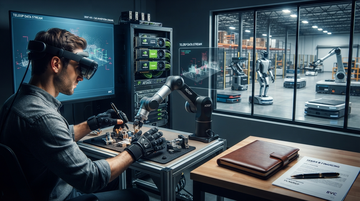
XDOF is a San Mateo–based startup that runs hundreds of teleoperated robots and sells the resulting data to AI labs building foundation models for humanoids and other physical systems. According to TechCrunch's Marina Temkin, the company is in late-stage talks for a Series B that would value it at roughly $1.2 billion, led by Joe Lonsdale's 8VC — just three months after exiting stealth with a $70 million Series A from Thrive Capital, Andreessen Horowitz, Spark Capital, Lux Capital, and WndrCo.
The math is the headline. XDOF raised $78 million in cumulative equity, employs about 60 people, and is generating a roughly $50 million annualized revenue run rate from ~20 customers — primarily frontier AI labs and commercial robotics developers. Pricing the company at $1.2 billion implies ~24x current ARR and assigns roughly $20 million in enterprise value per employee, multiples usually reserved for revenue-stage software, not for a teleop-rig operator with 60 staffers.
| Round | Date | Amount | Lead / Notable investors | Implied valuation |
|---|---|---|---|---|
| Seed | Nov 2024 | Not disclosed | n/a | n/a |
| Series A (stealth exit) | Jun 17, 2026 | $70M | Thrive Capital, a16z, Spark, Lux, WndrCo | Not disclosed (~$250M est.) |
| Series B (in talks) | Sep 4, 2026 | Not disclosed | 8VC (lead) | ~$1.2B |
The Multiple Is the Story — Not the Money
Two things make the XDOF pricing remarkable beyond the round size. First, the velocity: from a $70M Series A in June to a $1.2B Series B in September, the implied per-share markup is roughly 4–5x, and the mark-to-funding-cumulative ratio is ~17x. Second, the customer mix — several frontier AI labs reportedly paying XDOF directly — converts what looks like a labor-intensive teleoperation business into a quasi-software revenue line, and the multiple reflects that re-rating.
Implied revenue multiples across the 2026 AI data/services wave
XDOF vs. comparable AI funding rounds disclosed in the last 12 weeks
Unit: x current ARR (where disclosed)
XDOF (robotics data, ~$50M ARR)
$1.2B ÷ ~$50M ARR
24
AfterQuery (AI training data, ~$100M ARR Apr)
$3.2B ÷ ~$100M ARR, per Forbes
32
Instinct (AI assistant)
ARR not disclosed; $2.5B on ~$350M cumulative raise
0
CuspAI (chemistry AI)
ARR not disclosed; $2.6B on $450M raise
0
Velaura AI (chip design)
ARR not disclosed; $1B+ on $110M Series A
0
On cumulative capital raised, XDOF's $1.2B post-money implies a ~15x mark on every dollar invested to date — a return profile closer to a breakout consumer franchise than to a teleoperation-services business. That is the number that should focus investor attention.
What XDOF Actually Sells: Teleop Rigs and a 130K-Episode Open Dataset
XDOF sits in the physical-AI training-data stack — a layer the AI industry has come to call 'robotics infrastructure.' The company runs hundreds of bimanual teleoperation rigs (two 6-DoF YAM arms each, with top and wrist cameras), pays humans to perform manipulation tasks, and sells the resulting trajectories to labs that train robot foundation models. Its flagship public asset is ABC-130K, an open-source dataset of 130,703 episodes spanning 195 bimanual tasks and roughly 3,591 hours of manipulation, released in collaboration with UC Berkeley, Carnegie Mellon, MIT, and Amazon's Frontier AI & Robotics team.
- Customer base: ~20 enterprise clients, including several frontier AI labs and commercial robotics developers (company-reported, per TechCrunch and CryptoBriefing coverage)
- Core product: teleoperation rigs plus annotation pipelines that turn human demonstrations into training-ready datasets for robot foundation models
- Strategic asset: ABC-130K — 130,703 episodes / 195 tasks / 3,591 hours / 42,980 annotated episodes (XDOF/ABC-130k on Hugging Face)
- Headcount and burn: ~60 employees, founded October 2024 by CEO Philipp Wu, Yide (Fred) Shentu, and Nemo Jin
- Differentiation: Scale AI and others handle text and image labeling; XDOF owns the bimanual-teleop niche that humanoid foundation models need most
Two upstream pieces of the stack make XDOF unusually capital-light. The rigs run on commodity depth cameras (Intel RealSense, Stereolabs ZED-X) and NVIDIA-class edge compute, which means scaling teleop capacity is a function of capex per rig, not R&D. And the open-source ABC-130K release gives XDOF a distribution channel — every lab that fine-tunes on the dataset becomes a candidate customer for XDOF's paid, larger, and more tightly curated private datasets.
Capital Is Quietly Migrating Off the Frontier
XDOF is the latest in a sequence of late-summer 2026 funding events that share a common shape: non-frontier AI infrastructure is being priced like frontier models were priced eighteen months ago. The deals cluster in the picks-and-shovels layer — training data, chemistry models, AI assistants, custom chips — and they're getting done by tier-one funds that two years ago would only underwrite foundation-model labs.
| Company | Vertical | Round / valuation | Date | Lead investors |
|---|---|---|---|---|
| AfterQuery | AI model training data | $3.2B valuation (Series B) | Sep 1, 2026 | Not disclosed |
| XDOF | Robotics training data | ~$1.2B Series B (in talks) | Sep 4, 2026 | 8VC |
| Instinct | AI assistant | $2.5B valuation ($350M Series B) | Aug 26, 2026 | Not disclosed |
| Velaura AI | AI chip design | $1B+ ($110M Series A) | Aug 18, 2026 | Not disclosed |
| CuspAI | Chemistry AI | $2.6B ($450M Series B) | Jul 2026 | Kleiner Perkins, NEA, Bezos Expeditions |
Read together, the cluster says two things. First, frontier-LLM capital is being rationed — Anthropic's reported $850B–$900B talks in April drained check sizes at the very top. Second, every dollar that doesn't go to a frontier lab is chasing something a frontier lab needs to buy: chip designers (Velaura), training-data suppliers (AfterQuery, XDOF), domain-specific foundation models (CuspAI), and consumer-distribution layers (Instinct). The market is funding the supply chain that feeds the frontier, not the frontier itself.
The Supply Chain: Who Feeds XDOF, Who Feeds Off It
XDOF is a mid-stack node. Upstream, it buys edge silicon and depth cameras from NVIDIA, Intel, and Stereolabs to run its teleop rigs; downstream, humanoid and industrial-robot makers buy XDOF's data to train their foundation models. That positioning creates two clean transmission lines into listed equities.
NVIDIA's data-center engine absorbs the physical-AI build-out
Quarterly revenue, last eight quarters, in $ billions
Unit: USD billions
Q4 FY25 (Jan 2025)
Quarter ending Jan 26, 2025
39.3
Q1 FY26 (Apr 2025)
Quarter ending Apr 27, 2025
44.1
Q2 FY26 (Jul 2025)
Quarter ending Jul 27, 2025
46.7
Q3 FY26 (Oct 2025)
Quarter ending Oct 26, 2025
57
Q4 FY26 (Jan 2026)
Quarter ending Jan 25, 2026
68.1
Q1 FY27 (Apr 2026)
Quarter ending Apr 26, 2026
81.6
Q2 FY27 (Jul 2026)
Quarter ending Jul 26, 2026
96.2
On the upstream side, NVIDIA reported $96.2 billion in Q2 FY2027 revenue (ended July 26, 2026), up 106% year over year and 18% sequentially, with Data Center alone at $89 billion — the largest single quarter in semiconductor history. NVIDIA's Isaac GR00T platform and Jetson Orin modules are the de facto reference stack for humanoid developers, and every teleop rig XDOF stands up pulls more Jetson silicon and trains against more H100/H200-class compute. That makes NVIDIA the cleanest pure-play beneficiary of the XDOF moment, even before the robot foundation models are deployed.
On the downstream side, Tesla is the most-watched humanoid consumer of robot training data. Tesla reported TTM revenue of $103.6 billion through Q2 2026 (ended June 30, 2026), with Optimus production reportedly in the 1,000–1,200 unit range for internal deployment in 2026 and zero external sales. Symbotic, the warehouse-automation specialist, generated $2.65 billion in TTM revenue through Q3 of its September fiscal year. Mobileye posted $2.02 billion in TTM revenue on its SuperVision and Chauffeur ADAS pipelines. And Ambarella — maker of the AI-vision SoCs that ship inside many teleop rigs and consumer robots — reported $405 million in TTM revenue with a 58.3% gross margin.
What Moves First, and What the Thesis Risks Are
Near-term (days to quarters), the catalysts are deal-level, not earnings-level. A confirmed 8VC-led close would set a price benchmark for the next two or three robotics-data Series Bs and likely trigger secondary-price discovery on already-public comps. Tesla's Q3 2026 earnings (October) will be the first read on whether management buys external training data or doubles down on its in-house fleet. And Appen's H1 FY2026 print — revenue of $119.9 million, up 17% year over year after the Google contract loss — shows the legacy data-services industry can still grow, but only by leaning hard into the robotics and physical-AI verticals XDOF also serves.
Long-term (1–3 years), the XDOF moment is a bet that physical AI will follow the same curve as text-based AI: a long period of foundation-model scale-up followed by a long period of vertical-data specialization. The market for physical-AI infrastructure is projected to reach $369 billion by 2035, per Globe Market Research — a number that would make even a 1% revenue share into a multi-billion-dollar ARR line. The risk is that the humanoid thesis slips: if Tesla Optimus, Figure AI, and 1X all miss their 2027–2028 production ramps, demand for teleoperation data falls off a cliff, and the $1.2B valuation resets with it.
- Near-term watch: 8VC-led Series B close confirmation; Tesla Q3 2026 call for any mention of external data partnerships; Appen H2 FY2026 update on robotics/physical-AI revenue mix
- Mid-term watch: NVIDIA Q3 FY2027 (Nov 2026) — robotics and automotive segment growth vs. Data Center; Symbotic FY2026 results (Sept-end fiscal year) — whether data-driven automation widens margins
- Long-term watch: cumulative Optimus builds (Tesla), Figure/Apptronik production cadence, and the first down-round in robotics-data infrastructure
- Biggest risk: humanoid deployment slippage — if the 50K–100K Optimus 2026 target slips into 2028, XDOF's $50M ARR plateaus and the multiple compresses
- Biggest upside: a single hyperscaler (Microsoft, Google, Amazon) buys a teleop-data specialist to vertically integrate, repricing the entire category
Stocks this round actually touches
- Q2 FY2027 Data Center revenue of $89B (Aug 26, 2026 release) absorbs every new teleop compute cluster; XDOF's bimanual rigs run NVIDIA Orin at the edge
- Isaac GR00T is the reference humanoid stack; XDOF's open ABC-130K dataset trains on it, pulling more developer mindshare into NVIDIA's ecosystem
- Short-term: Q3 FY2027 earnings (Nov 2026) will show whether robotics/automotive is decoupling from data-center growth — the first read on physical-AI revenue
- Long-term (1–3 yrs): a $369B physical-AI infrastructure market by 2035 implies NVIDIA's TAM expands materially even at single-digit share
- XDOF-class specialists compress the data-collection lead Tesla has built from its vehicle fleet — a structural bear case for vertical integration
- TTM revenue of $103.6B (Q2 FY2026) leaves Optimus at zero external sales; ~1,000–1,200 internal units in 2026 at $95K–$120K/yr operating cost per third-party estimates
- Short-term: any Tesla mention of buying external training data at the Oct 2026 call would re-rate the bull case; silence reinforces the bear case
- Long-term (1–3 yrs): if Optimus hits the 50K–100K 2026 unit target, Tesla could become XDOF's largest customer rather than its competitor
- Warehouse automation is the most data-hungry robotics vertical — $2.65B TTM revenue (Q3 of Sept fiscal year) understates the data infrastructure that backs it
- EBITDA margin of just 2.3% TTM means Symbotic has to win on software; external teleop-data supply raises the ceiling on autonomous-warehouse throughput
- Short-term: FY2026 results (Sept fiscal year-end) will show whether data-driven automation is widening the margin gap to peers
- Long-term (1–3 yrs): as warehouse robots become more general-purpose, data infrastructure becomes a structural cost line — Symbotic is positioned to buy it, not build it
- Mobileye's $2.0B TTM revenue (Q2 2026) and unprofitable P&L make it the most leverage-exposed name to a teleop-data price collapse
- External data specialists let Mobileye focus on its SuperVision/Chauffeur algorithm stack instead of rebuilding teleop infrastructure from scratch
- Short-term: H2 2026 results will reveal whether Mobileye is buying or building data — a clear signal on capital efficiency
- Long-term (1–3 yrs): ADAS-to-L4 progression requires robot-scale data; a $50M ARR teleop provider at $1.2B valuations puts a price ceiling on the data Mobileye needs
- AI-vision SoCs ship inside many teleop rigs — the more rigs XDOF stands up, the more Ambarella silicon moves; $405M TTM revenue with 58.3% gross margin
- Open-source ABC-130K uses ZED-X and RealSense cameras running Ambarella-compatible pipelines, pulling more developers onto the CVflow architecture
- Short-term: Q2 FY2026 (Oct 2026 quarter-end) results will show whether robotics is offsetting the company's legacy security-camera softness
- Long-term (1–3 yrs): every teleop rig and every autonomous humanoid adds one or more Ambarella-class vision processors — the unit volume follows the data-platform growth