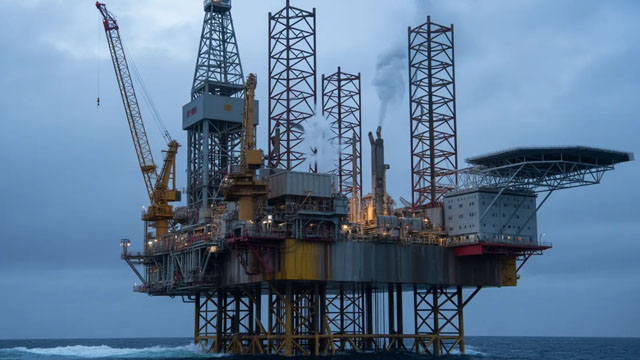
Epsilon Energy Ltd. is a North American onshore-focused independent natural gas and oil company that specializes in the acquisition, exploration, development, gathering, and production of hydrocarbon reserves. The company was incorporated on March 14, 2005, under the Alberta Business Corporations Act, and is headquartered in Houston, Texas. Its operations are ...Epsilon Energy Ltd. is a North American onshore-focused independent natural gas and oil company that specializes in the acquisition, exploration, development, gathering, and production of hydrocarbon reserves. The company was incorporated on March 14, 2005, under the Alberta Business Corporations Act, and is headquartered in Houston, Texas. Its operations are primarily concentrated in the United States, with significant assets in two key regions: the Marcellus Shale in Pennsylvania, where it holds approximately 5,100 net acres, and the Anadarko Basin in Oklahoma, where it extracts a combination of oil, natural gas liquids (NGLs), and natural gas. Additionally, Epsilon has interests in Wyoming, Texas, and Alberta, including a joint venture in the Garrington and Harmattan areas of Alberta to earn a 25% interest in 160,000 acres. The company's business model is bifurcated into two main divisions: upstream operations and gathering systems. The upstream division focuses on the sourcing, development, and extraction of reserves, while the gathering systems division manages the infrastructure for collecting and transporting hydrocarbons. As of December 31, 2021, Epsilon's confirmed net proved reserves amounted to 110,969 million cubic feet of natural gas, 819,726 barrels of NGLs, and 305,052 barrels of oil and other liquids. The company is led by President and CEO Jason Stabell, who has been in the role since July 2022, with a team that includes Chief Financial Officer Andrew Williamson, Chief Operating Officer Henry Clanton, and Senior Vice President Glen Christiansen. Financially, Epsilon maintains a low debt profile, with a debt-to-equity ratio of 0.004 and a strong liquidity position, as indicated by a current ratio of 1.078. The company has paid dividends, with a dividend yield of approximately 4.2% and a trailing dividend per share of $0.25. Despite challenges in the energy sector, Epsilon continues to focus on operational efficiency and shareholder returns. With only about 10 full-time employees, the company operates with a lean structure, leveraging strategic partnerships and joint ventures to expand its asset base. The company's stock trades on the NASDAQ Global Market under the ticker symbol EPSN, and it went public on November 15, 2007. Epsilon Energy aims to deliver value through disciplined capital allocation, organic growth, and prudent risk management in the evolving energy landscape.
YoYYoY means Year-over-Year. It compares the latest annual value with the previous annual value to show long-term trend strength.
QoQQoQ means Quarter-over-Quarter. It compares the latest quarter with the immediately previous quarter to show short-term momentum changes.
RevenueThe total money that came through the front door from selling things, before paying a single bill. Think of it as the grand total of every credit card swipe from customers. (YoY compares this year to last year's performance, while QoQ compares the current three months to the previous three).
$51.6M
+63.7%
-28.7%
Net IncomeThe absolute bottom line. If the company paid every single supplier, employee, banker, and tax collector, this is the actual money left in their pocket at the end of the day.
$-5.8M
-400.8%
+878.0%
Gross MarginThe basic markup. If they sell a $100 pair of sneakers, this percentage tells you how much of that price tag is profit right after paying for the rubber and shoelaces, but before paying for things like store rent or TV commercials.
+47.6%
+27.0%
+8.2%
Operating MarginThe 'day job' efficiency score. Out of every dollar a customer spends, this shows how many cents the company keeps after making the product AND paying for all the everyday corporate overhead (like salaries, marketing, and keeping the lights on).
+30.3%
+178.8%
+8.0%
Net MarginThe final take-home percentage. When you strip away every conceivable cost, tax, and interest payment, this is the exact number of cents the company truly gets to keep from every dollar in sales.
-11.2%
-283.8%
+1270.7%
Free Cash FlowThe holy grail of corporate cash. It's the spendable, physical money left over after the business pays for its daily operations AND buys the big, expensive upgrades (like new factories or servers) it needs to survive. This is the 'free' money they can use to pay dividends or buy back stock.
$5.2M
+126.5%
+6.8%
FCF MarginThe ultimate cash conversion rate. It shows how good the company is at turning regular sales directly into cold, hard, spendable cash. A high percentage means the business is an absolute cash-printing machine.
+10.1%
+116.2%
+49.7%
Debt / EquityThe financial risk gauge. It compares how much of the company's empire was built using borrowed money (loans) versus the owners' own money (shareholders). A high number means they are heavily leveraged and playing a riskier game; a low number means they are playing it safe.
40.7%
+8148.1%
-16.6%
Current RatioThe 12-month survival check. It simply compares the cash they have right now (plus things they can quickly turn into cash) against the immediate bills they absolutely must pay this year. A score above 1 means they have enough in the wallet to cover the upcoming bills without panicking.
1.31x
-35.5%
-10.7%
Total AssetsThe absolute size of the company's empire. It bundles together absolutely everything of value they own—from the cash in the register and the inventory in the warehouse, to the software patents in the vault and the factories on the ground.
Operator: Thank you. Good day and welcome to the Epsilon Energy Second Quarter 2026 Earnings Conference Call. [Operator Instructions] At this time, I would like to turn the conference over to your President and CEO, Jason Stabell. Please go ahead.
Jason Stabell: Good morning. Before we begin our prepared remarks, we would like to address the press release correction issued yesterday. The correction was limited to the presentation of adjusted net income and adjusted EPS in the summary table. The reconciliation later in the release reflected the correct treatment. After identifying the inconsistency, we promptly updated the release. There was no impact to our reported GAAP results, cash flows, or the underlying economics of the business. Thank you, Operator. I'll now turn the call over to Andrew Williamson, our CFO.
J. Williamson: Thank you, Operator. And on behalf of the management team, I would like to welcome all of you to today's conference call to review Epsilon's Second Quarter 2026 Financial and Operational Results. Before we begin, I would like to remind you that our comments may include forward-looking statements. It should be noted that a variety of factors could cause Epsilon's actual results to differ materially from the anticipated results or expectations expressed in these forward-looking statements. Today's call may also contain certain non-GAAP financial measures. Please refer to the earnings release that we issued yesterday for disclosures on forward-looking statements and reconciliations of non-GAAP measures. With that, I would like to turn the call over to Jason Stabell, our Chief Executive Officer.
Jason Stabell: Thank you, Andrew, and good morning, everyone. Joining me today are Andrew Williamson, our CFO, and Henry Clanton, our COO. We will be available for questions following our prepared remarks. Our message this quarter remains consistent with what we communicated in May. We are focused on execution, and I am pleased to report that our major operational initiatives have progressed on schedule and on budget. We have started to execute our development plan as expected and anticipate meaningful quarter-over-quarter production growth through the remainder of 2026, primarily driven by crude volumes in the Powder River Basin. As a result of the progress we have made across the portfolio, for the first time, we are providing production guidance for the second half of 2026. The anticipated increase in volumes reflects the commencement of production from several high-return oil projects that have either recently been brought online or are expected to begin contributing over the coming months. We refer you to a presentation posted to our website this morning for additional details on our guidance. In the Powder River Basin, execution on our acquired operated assets has been particularly strong. Our 2 Niobrara DUC completions were completed during the quarter and brought online in July. Early production results have exceeded our type …