%22%2F%3E%0A%20%20%3Ccircle%20cx%3D%22220%22%20cy%3D%22150%22%20r%3D%22180%22%20fill%3D%22%2322d3ee%22%20fill-opacity%3D%220.12%22%2F%3E%0A%20%20%3Ccircle%20cx%3D%221010%22%20cy%3D%22130%22%20r%3D%22220%22%20fill%3D%22%2338bdf8%22%20fill-opacity%3D%220.08%22%2F%3E%0A%20%20%3Ccircle%20cx%3D%22920%22%20cy%3D%22520%22%20r%3D%22170%22%20fill%3D%22%2322d3ee%22%20fill-opacity%3D%220.06%22%2F%3E%0A%20%20%3Cpath%20d%3D%22M140%20430h920%22%20stroke%3D%22url(%23line)%22%20stroke-width%3D%2212%22%20stroke-linecap%3D%22round%22%2F%3E%0A%20%20%3Cpath%20d%3D%22M220%20360c120-150%20260-220%20380-220s260%2070%20380%20220%22%20fill%3D%22none%22%20stroke%3D%22%2367e8f9%22%20stroke-opacity%3D%220.5%22%20stroke-width%3D%2216%22%20stroke-linecap%3D%22round%22%20stroke-linejoin%3D%22round%22%2F%3E%0A%20%20%3Cpath%20d%3D%22M300%20398h600%22%20stroke%3D%22%2394a3b8%22%20stroke-opacity%3D%220.24%22%20stroke-width%3D%228%22%20stroke-linecap%3D%22round%22%2F%3E%0A%20%20%3Ctext%20x%3D%22220%22%20y%3D%22510%22%20fill%3D%22%23e2e8f0%22%20fill-opacity%3D%220.7%22%20font-family%3D%22Arial%2C%20Helvetica%2C%20sans-serif%22%20font-size%3D%2238%22%20letter-spacing%3D%228%22%3EINSIGHTS%3C%2Ftext%3E%0A%3C%2Fsvg%3E)
Meta Platforms · Jul 21 – Aug 19, 2026
All sourced institutions in this window maintained a bullish rating while anchoring targets that range from $640 to $1,000, implying the debate is less about direction and more about the speed at which AI capex converts into ad and/or compute monetization.
Institutions
4
Target range
$640 – $1,000
Median $852.50
Stance
No bearish calls were verifiably sourced with public rating/target evidence inside the window; the dispute is expressed via target magnitude rather than stance.
How to read the evidence grades
- AInstitution's own document — Published by the institution itself — research page, disclosure, transcript, or an on-the-record analyst appearance.
- BWire service citing the report — Reuters, Bloomberg, CNBC and similar, directly attributing the research note.
- CMultiple independent reports — Several independent secondary reports agreeing on the same rating or target.
- DRatings aggregator only — A ratings aggregator only. Treat the number as reported, not as confirmed.
Price targets over time
Every target published in this window, by date. The line under a dot is that firm's previous target.
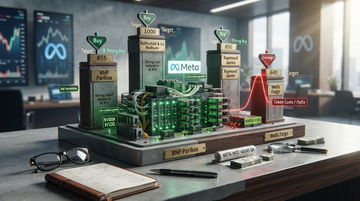
- BNP Paribas ExaneBuy
$855
- Wells FargoOverweight
$835$640
- Raymond JamesStrong Buy
$825$850
- Rothschild & Co RedburnBuy
$900$1,000
BNP Paribas ExaneMeta Platforms
Nick JonesReiterated Buy with an increased price target
BNP Paribas Exane expects Meta to monetize AI compute capacity, supporting a higher target despite ongoing AI spending needs.
Why
- Funds AI buildout while emphasizing monetization via unused/excess AI compute capability.
- Views compute as monetizable rather than purely cost-heavy near term.
Valuation basis: Target anchored to BNP Paribas Exane’s 12-month valuation of Meta, explicitly framed around AI compute monetization potential (as disclosed in the public item).
What could break it
- AI infrastructure economics may take longer to monetize than assumed.
- Ad pricing/engagement sensitivity could affect realized margins.
Evidence (1)
Proves: BNP Paribas (Nick Jones) reiterated a Buy rating on Meta and set a $855 price target on Aug 19, 2026, citing potential to monetize excess AI compute.
B“BNP Paribas analyst Nick Jones kept a Buy rating and set an $855 price target, implying roughly 55% upside from recent levels.”
Yahoo Finance (via finance.yahoo.com/markets/stocks/articles)yahoo.com2026-08-19
Wells FargoMeta Platforms
Cut price target; maintained Overweight
Wells Fargo substantially reduced its target due to skepticism about the AI hyperscaler investment cycle’s near-term monetization path, while keeping an Overweight rating.
Why
- Materially trims the target to reflect uncertainty about hyperscaler/AI investment payback.
- Stays bullish despite caution, maintaining Overweight while lowering the expected value.
Valuation basis: The public item frames the cut in the context of uncertainty about the AI/hyperscaler investment cycle and AI monetization (as disclosed).
What could break it
- AI spend may not translate into faster ad revenue and/or margin expansion.
- Token/opex or other AI-related cost items could remain higher for longer.
Evidence (1)
Proves: Wells Fargo lowered its Meta price target to $640 from $835 while maintaining an Overweight rating on Jul 30, 2026.
B“Wells Fargo lowered its price target on Meta Platforms Inc. (NASDAQ:META) to $640 from $835 while maintaining an Overweight rating.”
Investing.com (analyst ratings listing)investing.com2026-07-30
Rothschild & Co RedburnMeta Platforms
Dominic BallRaised price target; maintained Buy
Rothschild & Co Redburn lifted its target to reflect confidence in Meta’s AI/compute business shift, while keeping a Buy stance.
Why
- Lifts the target after an AI business-shift narrative while maintaining a Buy rating.
- Signals higher conviction that AI-driven investments can support value creation.
Valuation basis: The public item attributes the increased target to the firm’s view of Meta’s AI business shift; the target itself is the institution’s published number for the relevant horizon.
What could break it
- AI spending intensity may outpace monetization timelines.
- If ad growth or AI uptake slows, the valuation may be pressured.
Evidence (1)
Proves: Rothschild & Co Redburn (Dominic Ball) raised Meta’s price target to $1,000 from $900 while maintaining a Buy rating on Jul 21, 2026.
B“Rothschild & Co Redburn analyst Dominic Ball raised his price target on Meta Platforms to $1,000 from $900, maintaining a Buy rating.”
Barron's (as surfaced in search results)barrons.com2026-07-21
Raymond JamesMeta Platforms
Raised price target; maintained Strong Buy/Outperform
Raymond James raised Meta’s price target, tying the upgrade logic to AI-cloud potential and continued strength in ad monetization.
Why
- Raises target on AI cloud potential while pointing to resilience in advertising monetization.
- Assumes AI investment supports longer-run monetization rather than purely higher costs.
Valuation basis: The public item reports the raised target and references the firm’s stated linkage to AI cloud potential and advertising monetization.
What could break it
- If AI-driven compute costs rise faster than ad monetization, margins could disappoint.
- External ad demand shocks could widen the gap between spend and returns.
Evidence (1)
Proves: Raymond James raised Meta’s price target to $850 from $825 on Jul 21, 2026 and maintained a Strong Buy rating (per the publicly surfaced item).
B“Raymond James raised its price target on Meta Platforms Inc. (NASDAQ:META) shares to $850 from $825 while maintaining a Strong Buy rating.”
Investing.com (stock-market news/analyst ratings listing)investing.com2026-07-21
AI capex vs ad revenue: what the targets are really debating
The institutions mostly agree on direction—then diverge on payback timing for AI spend
Across these five public calls, every sourced institution keeps a bullish rating while moving the target range from $640 to $1,000. That pattern usually means the dispute is not whether Meta will grow, but how quickly AI infrastructure spend translates into monetization (either via ad performance/margins and/or via AI compute monetization).
- Upper-target firms (Rothschild & Co Redburn, Raymond James, BNP Paribas Exane) explicitly tie value to AI-related monetization narratives (AI compute/AI cloud) alongside ad strength.
- Wells Fargo’s cut (still Overweight) reflects skepticism about the AI/hyperscaler investment cycle’s near-term economic payoff.
- Morgan Stanley’s maintenance of Overweight with a lower target suggests a middle view: valuation is more sensitive to the AI spend trajectory than previously assumed, but not enough to flip stance.
What would need to be true for the $1,000-end of the range
- Compute monetization materializes fast enough to offset capex intensity (BNP Paribas’ framing on monetizing excess AI compute).
- AI-driven improvements lift ad outcomes (Raymond James’ linkage to advertising monetization plus AI cloud potential).
- Cost/investment payback accelerates despite hyperscaler-cycle uncertainty (the opposite of Wells Fargo’s lower-target framing).