
The Event
Treasury Draws a Carve-Out for Drug Pipelines — But Not For WuXi
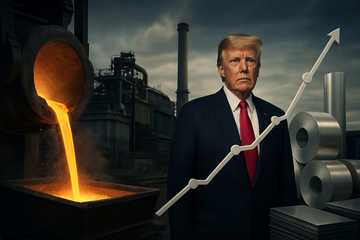
Reuters reported on Sep 18, 2026 that the US Treasury is drafting rules that would preserve most pharmaceutical licensing deals with China, a significant walk-back from the BIOSECURE-era stance that had effectively federalized the boundary between US drug pipelines and Chinese innovation. Three people briefed on the process said the rules are likely to allow investment in \"promising new Chinese drugs\" so long as they are not tied to pathogens or biotechnology that could be weaponized — and that Treasury is unlikely to unveil the new framework before President Trump's Sep 24 summit with Xi Jinping.
The Reuters story lands in a market that had been pricing decoupling for two years. The BIOSECURE Act (P.L. 119-60, enacted Dec 18, 2025 as § 851 of the FY2026 NDDA) prohibits federal agencies from procuring biotechnology equipment or services from any designated \"biotechnology company of concern.\" In June2026, the Department of Defense added WuXi AppTec (and Complete Genomics) to its Section 1260H list, and WuXi AppTec lost an Aug 7, 2026 court challenge — though the DC District Court enjoined the 1260H designation on Aug 7, finding the agency's evidence \"factually deficient\" on the ownership stake used to justify it. The OMB retains a separate statutory path to designate biotech companies of concern that does not rely on the 1260H list at all, and must publish its first BCC list by Dec 18, 2026.
China biotech licensing deals (2025)
$137.7B
GlobalData via Reuters, Feb 13, 2026 — record total
China out-licensing deal volume (H1 2026)
~$110B
Reuters, Jul 13, 2026 — first half alone near80% of full-year 2025
Share of US in-licensing deals sourced from China (2025)
~50%
GlobalData cited in Reuters, Sep 18, 2026
BMS–Hengrui headline deal value
$15.2B
13 oncology/hematology/immunology programs; $600M upfront; announced May 12, 2026
Pfizer–Innovent headline deal value
$10.5B
12 ADC oncology programs; $650M upfront; $9.85B milestones; announced May 28, 2026
Why Now
The Deal Flow Was Already Run-Rate; The Policy Was The Only Hurdle
The reason the policy reversal matters is that the underlying licensing flow never stopped — it just moved into a smaller, faster lane. Chinese out-licensing hit a record $137.7B in 2025 per GlobalData, then ran at roughly $110B in H1 2026 alone (Reuters, Jul 13, 2026), with average deal sizes up 76% and upfront fees doubling. Headline transactions in 2026 were anchored by Western pharma: Bristol Myers Squibb signed a $15.2B alliance with Jiangsu Hengrui for 13 programs in oncology, hematology and immunology (May 12, 2026), and Pfizer signed a $10.5B collaboration with Innovent Biologics for 12 ADC oncology programs (May 28, 2026). The pipelines were already flowing; what was missing was a formal US government posture that would not pull the rug.
China Biotech Out-Licensing — Deal Value Trajectory
Total disclosed value of Chinese innovative-drug out-licensing deals, per GlobalData/Reuters reporting
Unit: USD billions
2023
GlobalData baseline
16.6
2024
+150% YoY, GlobalData
41.5
2025
Record, per Reuters Feb 2026
137.7
H1 2026
Reuters Jul 13, 2026
110
The Trump-Xi summit on Sep 24 in Washington sets a hard political deadline. Sources told Reuters the rules are likely to allow drug investment but not pathogen-adjacent biotech, framing the carve-out as a national-security exception rather than a blanket embrace. Treasury Secretary Bessent and PhRMA have both signaled comfort with the licensing flow, while a bipartisan group led by Reps. John Moolenaar and Debbie Dingell is pushing the BINSA bill to drag pharma into the existing COINS Act outbound-investment screening regime — a competing direction that could still pull the rules back toward restriction.
First-Order Re-Rating
The China CRDMO Duopoly Is The Only Name That Already Backed Up The Thesis
WuXi AppTec's H1 2026 results, released Aug 2, 2026, are the cleanest proof that the BIOSECURE-era \"decoupling\" never matched the ground reality. Revenue reached RMB 28.90B (up 38.9% YoY) and the backlog for Continuing Operations hit RMB 66.43B (up 25.2% YoY) — both records. Management raised full-year 2026 revenue guidance to RMB 58.5–60.5B (from RMB 51.3–53.0B), implying 35–39% Continuing-Operations growth. The BIOSECURE risk visibly showed up in the gap between operating cash and customer wins: customers and suppliers reportedly cancelled contracts and moved programs to competitors within weeks of the June 1260H designation, per the DC District Court's irreparable-harm analysis. Treasury's draft rules unwind precisely that overhang.
WuXi AppTec: H1 2026 Backlog vs Revenue Growth
Backlog (RMB, continuing ops) and reported revenue growth, H1 2026
Unit: RMB billions / %
H1 2026 revenue
+38.9% YoY
28.9
H1 2026 backlog
+25.2% YoY
66.4
FY26 guidance (low)
Raised Aug 2, 2026
58.5
FY26 guidance (high)
Raised Aug 2, 2026
60.5
WuXi Biologics, the bioservices sister, reported H1 2026 revenue of RMB 11.8B (up 18.4% YoY) and a record US$25.1B total backlog as of Jun 30, 2026 (US$12.6B service backlog + US$12.4B potential milestone payments). Three-year backlog hit US$5.5B, up ~30% YoY. The company filed 68 INDs during the period and plans to lift filing capacity to 300/year by 2027. Notably, WuXi Biologics was not added to the June 2026 1260H update (unlike WuXi AppTec), so the Treasury carve-out has direct read-across to a backlog that already prices further US customer wins.
The Re-Rating Hierarchy
Who Re-Prices First, And Who Loses The Bidding War
The second-order story is about the US clinical CROs whose bull case was \"China decoupling, US biotech comes home.\" Those bids were won — Charles River Laboratories returned to positive organic growth (+0.1%) in Q2 2026 for the first time since Q3 2023, and lifted full-year organic guidance to 0.0–1.0% from prior (1.5)–(0.5)%, raising non-GAAP EPS guidance to $11.15–11.45 from $10.80–11.30. But the rerating is now constrained: if US biotech can keep sourcing molecules from China, the bid for share-of-wallet at the US CROs moderates, even if total R&D spend keeps rising.
| Company | Ticker | Q2 2026 revenue | Backlog / bookings | Q2 2026 margin / growth |
|---|---|---|---|---|
| Charles River Laboratories | CRL | $1.00B (−2.7% YoY) | n/a | Organic +0.1%; non-GAAP EPS $3.02 |
| ICON plc | ICLR | $2.07B (Q1 disclosure) | $23.4B backlog (+3.0% QoQ) | Net book-to-bill 1.42x; FY25 rev $8.25B |
| IQVIA Holdings | IQV | $4.37B (+8.7% YoY) | $34.2B backlog; $3.15B bookings (+19%) | R&D rev +7% organic; FY26 guide raised |
| WuXi AppTec (H1) | 2359.HK | RMB 28.90B (+38.9%) | RMB 66.43B backlog (+25.2%) | FY26 guide raised to RMB 58.5–60.5B |
| WuXi Biologics (H1) | 2269.HK | RMB 11.8B (+18.4%) | US$25.1B backlog; 3-yr +30% | Adj. net profit +38.6% |
IQVIA is the cleanest second-order winner. Its R&D Solutions segment posted $2.575B in Q2 2026 revenue (+8.8% YoY) and a record $3.15B in net new bookings (+19% YoY), lifting the contracted backlog to $34.2B — both absolute backlog and bookings growth are at multi-year highs. The licensing-policy relief means more China-originated molecules enter the clinic, and IQVIA runs the trials. ICON's $23.4B backlog (+3.0% QoQ in Q2 2026) and 1.42x net book-to-bill tell the same story. The bear case for the US CROs was that biotech would just R&D in China and outsource in China; the draft rules now say they can both.
- WuXi AppTec (2359.HK) re-rates first because the BIOSECERE-specific overhang (1260H designation) is the cleanest near-term binary, and H1 2026 results already show the franchise has been growing through the penalty box.
- IQVIA (IQV) and ICON (ICLR) benefit from a bigger funnel: more China-originated molecules mean more US-based Phase II/III trials outsourced to global CROs — backlogs at $34.2B and $23.4B already reflect this.
- Charles River (CRL) is the most exposed to share-of-wallet competition from China CRDMOs in early-stage work, but its manufacturing and DSA segments remain defensible on biologics testing and supply-chain complexity.
- Bristol Myers Squibb (BMY) and Pfizer (PFE) directly benefit: their 2026 China deals stop carrying BIOSECURE risk, and the front-weighted milestones (e.g., $650M Innovent upfront, $600M Hengrui upfront) are no longer at risk of federal-policy override.
The China Biotech Names
Innovent And Hengrui Are The Cleanest Policy Beta
For the Chinese innovators themselves, the licensing carve-out is the most direct. Innovent Biologics is already trading on the Pfizer deal: shares rose ~10% on the May 28, 2026 announcement (CNBC), and Innovent's stock sits at HK$93.55 (Sep 11, 2026, Bloomberg), well off the HK$112.70 52-week high. The Pfizer deal's $650M upfront plus $9.85B of milestone eligibility is the single largest payment in Innovent's history; if Treasury's rules stabilize, Innovent becomes the most leveraged listed vehicle to a re-acceleration of cross-border deal flow.
Innovent Biologics (1801.HK) Stock vs 52-Week Range
HK$, as of Sep 11, 2026 close (Bloomberg)
Unit: HKD
Current (Sep 11)
Bloomberg quote
93.6
52-week high
Per Bloomberg
112.7
Recent low
Google Finance Sep 16, 2026
91.7
Jiangsu Hengrui is a different setup — a larger incumbent ($32.6B TTM revenue per Yahoo Finance) whose H1 2026 results showed RMB 15.46B in revenue with drug-sales revenue up 1.87% YoY. The Bristol Myers Squibb $15.2B deal (announced May 12, 2026, expected to close Q3 2026) is the largest in Hengrui's history and the second mega-deal with a Western pharma in under a year (following the December 2024 GSK $12B deal). The stock at HK$45.94 (Hengrui IR page Sep 11, 2026) sits only 3.15% above its 52-week low of HK$45.08 (set Sep 2, 2026). If the Treasury rules hold, Hengrui becomes the highest-quality way to play a continued re-rating of Chinese biopharma in global pharma pipelines.
What Could Still Break It
BIOSECURE, OMB, And The BINSA Counter-Bid
The Reuters story is explicit that \"rules are not finalized and could change\" — and there are three named live threats. First, the OMB must publish its first statutory list of \"biotechnology companies of concern\" by Dec 18, 2026 (one year after enactment of P.L. 119-60). The OMB has an independent path that does not rely on the 1260H list; WuXi AppTec's 1260H designation is currently enjoined by court order, but a clean OMB BCC designation would re-impose the BIOSECURE risk from a different statutory doorway. Second, the BINSA bill (Jun 2026, sponsored by Moolenaar and Dingell) would explicitly add pharma to the existing COINS Act outbound investment screening regime, putting drug licensing back into Treasury's review queue. Third, the Trump-Xi summit on Sep 24 will determine the political envelope — and any post-summit concession on Taiwan, fentanyl, or agriculture could be paired with a tougher biotech screen.
There is also an upstream consideration. The Aug 7, 2026 court injunction against the 1260H designation relied on the court finding that customers and suppliers had cancelled contracts and moved programs to competitors within weeks of the June 2026 designation — i.e., the commercial damage was already done even when the designation was later set aside. If Treasury's draft rules stick, WuXi AppTec has to rebuild that business pipeline while competing against the ICON and Charles River Laboratories capacity that absorbed the redirected work. Backlog conversion is the score to watch, not headline revenue.
Short vs Long Term
Days vs Quarters vs Years — The Catalyst Map
- Days (next ~2 weeks): Trump-Xi summit Sep 24, 2026 is the next binary event; expect Treasury to delay the formal rules drop until after the political deal is sealed, with leaked signaling in the interim.
- Quarters (Q4 2026–Q1 2027): OMB BCC list publication deadline Dec 18, 2026 is the next real regulatory inflection; if WuXi AppTec is not on it, the BIOSECURE path is functionally closed for FY27.
- Years (2027–2028): WuXi AppTec full-year 2026 revenue target is RMB 58.5–60.5B; H1 already at RMB 28.9B implies a clean path to mid-30s% revenue growth if backlog converts, with operating leverage pushing margin expansion.
- Years (2030 horizon): Patent-cliff math drives ~$300B of revenue at risk across big pharma by 2030 per multiple industry estimates; the China in-licensing channel becomes structural rather than tactical if Treasury's rules hold for one full congressional cycle.
The horizon-weighted view: in days, the Trump-Xi summit and post-summit Treasury announcement drive headline volatility. In quarters, the OMB BCC list and the BINSA bill mark the next binary policy events; investors who price only the licensing carve-out miss the BCC list risk. In years, the question is whether Chinese innovators (Innovent Biologics, Jiangsu Hengrui) and CRDMOs (WuXi AppTec, WuXi Biologics) can rebuild trust and capacity fast enough to capture the patent-cliff-driven in-licensing wave — and whether the US clinical CROs (IQVIA, ICON) can hold share-of-wallet against a reinvigorated China R&D ecosystem.
Where To Put The Trade
- H1 2026 revenue +38.9% YoY to RMB 28.90B and backlog +25.2% to RMB 66.43B already prove the franchise grows through the BIOSECURE penalty box; Treasury's licensing carve-out removes the cleanest remaining binary overhang on US customer wins.
- FY26 guidance raised to RMB 58.5–60.5B (from RMB 51.3–53.0B); if 1260H/BCC paths close, backlog conversion drives operating leverage into FY27.
- Aug 7, 2026 DC District Court injunction already set aside the 1260H designation; OMB BCC list due Dec 18, 2026 is the next regulatory test — name stays binary.
- H1 2026 revenue RMB 11.8B (+18.4%); 3-year backlog +30% YoY to US$5.5B; record US$25.1B total backlog gives visibility into FY27–28 even before licensing volumes recover.
- Was not added to the June 2026 1260H update (unlike parent WuXi AppTec); relative beneficiary of the carve-out as US biotech customers face one less Chinese-entity screen to navigate.
- Long-term: capacity target of 300 IND filings/year by 2027 vs 68 in H1 2026 — scale ramp underwrites margin expansion if Treasury's rules hold.
- Q2 2026 R&D Solutions revenue +8.8% YoY to $2.575B; bookings +19% to a record $3.15B; backlog $34.2B — operating leverage on a re-accelerating pipeline.
- Treasury licensing carve-out widens the molecule funnel without ceding US clinical trial spend; FY26 guidance raised after Q2 print.
- Watch: stock at new 52-week highs (Sep 2, 2026); the licensing-policy tailwind is largely priced — upside comes from bookings acceleration, not just continued growth.
- $23.4B Q2 2026 backlog (+3.0% QoQ) and 1.42x net book-to-bill signal the funnel is widening, consistent with a multi-quarter bookings tailwind if China-originated molecules accelerate.
- Anthropic AI partnership (Jul 2026) adds optionality on trial efficiency — the licensing carve-out increases the addressable backlog for ICON's automation-enabled delivery model.
- Margin guidance trajectory matters: leverage >15x = bull case; a flat bookings print at Q3 would re-rate name sideways.
- Q2 2026 organic growth turned positive (+0.1%) for the first time since Q3 2023, and FY26 organic guidance raised to 0–1% — trough is behind, but most of the recovery was from share-of-wallet gains during decoupling.
- Treasury's licensing carve-out moderates the share-of-wallet tailwind: China CRDMOs regain bidding leverage on early-stage work, capping the multiple expansion runway.
- Long-term: Manufacturing Solutions and biologics testing remain defensible on complexity and regulated capacity — the bull case now rests on mix shift, not volume gain.
- Pfizer $10.5B ADC collaboration (May 28, 2026) — $650M upfront plus $9.85B in milestones — validates Innovent as the highest-conviction policy beta on US-China licensing normalization.
- Stock at HK$93.55 (Sep 11, 2026) vs HK$112.70 52-week high; multiple compression since May deal leaves room for re-rating if Treasury rules stick and a second Western partnership follows.
- Watch Q4 2026 deal flow: a follow-on transaction post-OMB BCC list would turn Innovent into a structural licensing platform, not a one-off.
- Two Western mega-deals in 12 months (Bristol Myers Squibb $15.2B in May 2026; GSK $12B in late 2024) make Hengrui the highest-quality incumbent way to play the licensing carve-out.
- HK$45.94 (Sep 11, 2026) sits 3.15% above the 52-week low set Sep 2, 2026 — the asymmetry is on the upside if Treasury's framework holds through the OMB BCC list publication.
- Risk: H1 2026 drug-sales revenue grew only 1.87% YoY (RMB 13.95B); core business is mature and earnings beta comes from milestone realization, not domestic growth.