%22%2F%3E%0A%20%20%3Ccircle%20cx%3D%22220%22%20cy%3D%22150%22%20r%3D%22180%22%20fill%3D%22%2322d3ee%22%20fill-opacity%3D%220.12%22%2F%3E%0A%20%20%3Ccircle%20cx%3D%221010%22%20cy%3D%22130%22%20r%3D%22220%22%20fill%3D%22%2338bdf8%22%20fill-opacity%3D%220.08%22%2F%3E%0A%20%20%3Ccircle%20cx%3D%22920%22%20cy%3D%22520%22%20r%3D%22170%22%20fill%3D%22%2322d3ee%22%20fill-opacity%3D%220.06%22%2F%3E%0A%20%20%3Cpath%20d%3D%22M140%20430h920%22%20stroke%3D%22url(%23line)%22%20stroke-width%3D%2212%22%20stroke-linecap%3D%22round%22%2F%3E%0A%20%20%3Cpath%20d%3D%22M220%20360c120-150%20260-220%20380-220s260%2070%20380%20220%22%20fill%3D%22none%22%20stroke%3D%22%2367e8f9%22%20stroke-opacity%3D%220.5%22%20stroke-width%3D%2216%22%20stroke-linecap%3D%22round%22%20stroke-linejoin%3D%22round%22%2F%3E%0A%20%20%3Cpath%20d%3D%22M300%20398h600%22%20stroke%3D%22%2394a3b8%22%20stroke-opacity%3D%220.24%22%20stroke-width%3D%228%22%20stroke-linecap%3D%22round%22%2F%3E%0A%20%20%3Ctext%20x%3D%22220%22%20y%3D%22510%22%20fill%3D%22%23e2e8f0%22%20fill-opacity%3D%220.7%22%20font-family%3D%22Arial%2C%20Helvetica%2C%20sans-serif%22%20font-size%3D%2238%22%20letter-spacing%3D%228%22%3EINSIGHTS%3C%2Ftext%3E%0A%3C%2Fsvg%3E)
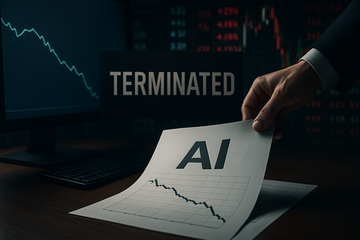
JPMorgan terminates SA lending
Sept. 11, 2026
Per FT report citing people familiar with the matter
SA peak AUM → July-end AUM
$45B → ~$10B
Largest dollar drawdown in hedge fund industry history, per FT
SA July return
-67%
Following a +439% run through end of June 2026, on ~4x leverage
JPM Securities Services Q2
$1.66B
Up 17% YoY; includes prime brokerage activity, Q2 FY2026 10-Q
Goldman PB financing exposure
~16%
Share of Goldman prime brokerage book tied directly to AI memory stocks at end-June 2026
Goldman PB equity financing rev
+91% YoY
Record quarter; total FICC+equities financing +62% to $4.5B, Q2 FY2026
The event
JPMorgan Cut Off the AI Fund — and the Fund Already Moved On
JPMorgan Chase informed Leopold Aschenbrenner's Situational Awareness LP that it was terminating the prime brokerage lending relationship, according to a Financial Times report on Friday, Sept. 11, 2026. Both the bank and the fund declined to comment. The action came six weeks after Situational Awareness posted a 67% loss in July — the worst single-month dollar drawdown in hedge fund industry history — and was forced on July 30 to offload roughly $16 billion of public-equity positions to Ken Griffin's Citadel in a block-trade fire sale.
The fund did not sit still. Per Bloomberg and the FT, Situational Awareness has already begun working with Clear Street, a specialist non-bank prime brokerage that services700+ institutional clients and supports roughly $16 billion in customer balances. The shift matters: it removes the failed trade from the balance sheet of the largest US prime broker and re-houses it at a smaller, faster-moving shop — but it does not retire the underlying positions or the leverage.
Why this one matters
Why JPM, Why Now — and Why It's the First Time
The Citadel acquisition closed the immediate fire in late July. What JPMorgan's termination changes is the next phase: the counterparty bank has now actively repriced the relationship after the fund's peak-to-trough collapse from ~$45 billion to ~$10 billion. Until Sept. 11, every public signal in the AI-fund unwind — Citadel's 80% block-trade exit by Aug. 21, the SEC's August subpoenas to Goldman, Citigroup, JPMorgan and Bank of America, the $4 billion+ of unwind trades — came from the fund side or the regulator side. The cut is the first signal from the prime broker's risk desk.
That shift shows up in the bank's own numbers. JPMorgan's Markets revenue rose 35% year-over-year to about $12.1 billion in Q2 2026, with equities revenue up 86%, and Securities Services — the line that houses prime brokerage and custody — rose 17% to $1.66 billion, per the Q2 10-Q. The bank is making record money financing hedge fund volatility while simultaneously walking away from the most volatile single client relationship in the space.
Concentration risk
16% of Goldman's Prime Brokerage Book Sat in AI Memory Stocks
The concentration risk that JPMorgan's risk desk priced down was not unique to Situational Awareness. According to a Goldman Sachs prime brokerage client report circulated in early July, approximately 16% of its financing book was directly linked to AI memory stocks at the end of June. With Q2 FY2026 prime brokerage average balances at a record and equity-financing revenue up 91% year-over-year, Goldman Sachs is the prime broker with the most concentrated direct exposure to the AI-memory leg of the trade.
Morgan Stanley reports the same underlying boom on the other side of the trade. Q2 2026 Institutional Securities revenue hit a record $11.0 billion, with equities trading revenue up 69% to $6.3 billion — much of it hedge fund flow. Bank of America and Citigroup round out the four subpoenaed prime brokers, per Barron's, signaling that the SEC is reconstructing the full counterparty map around the Situational Awareness collapse.
Q2 2026 prime-broker revenue at the top four US banks
Securities Services (JPM) is the prime brokerage/custody line; for peers, PB revenue is embedded in Global Markets (GS) and Institutional Securities (MS).
Unit: USD billions
JPM Securities Services
+17% YoY, Q2 10-Q
1.7
MS Equities trading revenue
+69% YoY, Q2 release
6.3
GS FICC+equities financing
+62% YoY, Q2 release
4.5
GS Equity financing (subset)
Implied from +91% YoY disclosure
2.1
The thesis
Dimon Warned the Market Was Wrong About Leverage — and JPMorgan Is Now Acting on It
Three weeks before the cut, JPMorgan CEO Jamie Dimon publicly warned that \"margin debt is the highest it has ever been\" and that hidden leverage — borrowings not captured in official margin-debt statistics — sits inside prime brokerage, hedge fund, ETF and Treasury-arbitrage books. The Situational Awareness termination reads as the operating consequence of that warning, not just a risk committee ruling on one client.
The mechanism is also mechanical. A 4x-levered fund is wiped out by a 25% drawdown in the underlying; Situational Awareness held a portfolio concentrated in AI data-center names — Sandisk as its single largest 13F position — against the same AI-memory tape that Goldman's prime book had marked at 16%. When the AI sell-off started in late June, prime brokers' contractual risk management provisions fired automatically, and JPMorgan and Goldman Sachs were among the banks asking clients to post additional collateral to maintain borrowing levels. The Sept. 11 termination is the next step on that same decision tree: the bank decided not to wait for the next automated margin call.
- JPMorgan CIB Q2 revenue +27% YoY; Markets revenue $12.1B (+35%); Securities Services $1.66B (+17%) — Q2 FY2026 10-Q
- Goldman prime brokerage record quarter; equity financing revenue +91% YoY; 16% of PB book tied to AI memory — Goldman Sachs client report, FT/Hedgeweek
- Morgan Stanley Institutional Securities record $11B in Q2; equities trading +69% to $6.3B — Q2 FY2026 earnings release
- SEC has subpoenaed JPMorgan, Goldman Sachs, Citigroup and Bank of America over the Situational Awareness unwind — Aug. 25, 2026, Barron's/CNBC
- Hedge fund gross leverage rising at fastest cumulative pace in any first-five-months period since 2016 — Goldman Sachs Prime Services data, Hedgeweek
The supply chain
What the AI Trade Actually Was — and Where the Real Estate Now Sits
Situational Awareness's Q2 2026 13F (filed Aug. 17, as of June 30, 2026) showed Sandisk as the largest single position, with the portfolio heavily concentrated in AI infrastructure — data-center power, memory and networking names. Per the 247WallSt reconstruction of the filing, the fund held roughly $11 billion in long AI-infrastructure equities at June 30, alongside substantial put notional, with all of it levered about 4x. The Q2 2026 13F covers only part of a much larger exposure that included private credit and private equity-style holdings in AI compute.
The same names that populated the Situational Awareness book drove the broader sell-off. Sandisk was down more than 53% from its high as of late July; Intel was down39%; the Philadelphia Semiconductor Index fell roughly 25% from late June. Micron — the AI-memory leader behind HBM — reported Q3 FY2026 revenue of $41.46 billion (up sharply sequentially) but its stock moved with the same tape. The Nasdaq 100 briefly entered correction territory, down 10% from its early June peak.
| Ticker | Company | Role in the trade | Peak-to-July drawdown |
|---|---|---|---|
| SNDK | Sandisk Corp | Largest 13F position; NAND/AI storage | -53% from peak (per FT/Hedgeweek) |
| INTC | Intel Corp | AI compute / foundry exposure | -39% from peak (per FT/Hedgeweek) |
| MU | Micron Technology | HBM / DRAM AI memory leader | Philadelphia Semi Index -25% from late June |
| — | Philadelphia Semiconductor Index (SOX) | Broad proxy for AI-memory tape | -25% from late June (per FT) |
Who's next
The Banks Most Exposed — and Who the Next Fund Out Will Be
The transmission chain runs in two directions. Upstream: the AI-memory tape that drove the original439% gain at Situational Awareness also drives the 16% slice of Goldman Sachs's prime book. A continued drawdown in Sandisk, Micron and similar names forces the prime broker to either post more collateral against the financing or reduce exposure. Downstream: every other AI-concentrated long-short fund with similar concentration ratios is now negotiating from a weaker position, because their prime broker can credibly cite the JPMorgan precedent.
Three names stand out as the next points of pressure. First, Bank of America and Citigroup — already subpoenaed alongside JPMorgan, both with smaller prime brokerage books and less room to absorb a single-name unwind. Second, the AI-levered long-short cohort that was up materially YTD and now sits on the same drawdown curve as Situational Awareness; a 25% decline wipes a 4x levered book. Third, Clear Street itself: it just absorbed the most public AI-fund collapse of2026 and is now the financing counterparty for the residual book — which makes its credit standing a market signal in its own right.
Horizons
Short-Term Catalysts vs. the Structural Reset
Over the next one to two quarters, the immediate question is whether other prime brokers follow JPMorgan's lead. The Q2 2026 results — Goldman prime brokerage record, Morgan Stanley Institutional Securities record, JPMorgan CIB record — show that the AI boom is still highly profitable for the financing side. The risk is not the headline revenue; it is the tail exposure. The next Goldman Sachs Q3 disclosure on average prime brokerage balances and the composition of the financing book will be the first hard data point on whether the bank is following JPMorgan's precedent or leaning into the record revenue.
Over the one-to-three-year horizon, the structural implication is more durable. Prime brokerage has moved from a balance-sheet utility to a directional bet on AI infrastructure. The JPMorgan termination is the first formal acknowledgment from a top-tier US bank that AI-fund leverage is now on its risk committee agenda — and that, per Dimon's margin-debt warning, the bank believes official leverage statistics understate the true size of the bet. If Goldman Sachs and Morgan Stanley follow, the prime brokerage business model for AI-concentrated funds will reprice materially, with wider haircuts, lower gross leverage and faster termination triggers built into fund credit agreements.
Stocks with the clearest transmission to the JPM cut
- CIB Q2 revenue +27% YoY and Securities Services $1.66B (+17%) show the prime franchise still growing — but the SA termination sets a precedent that could force the bank to widen haircuts on AI-fund books over the next two quarters.
- Dimon's pre-cut \"margin debt highest ever\" warning turns the SA cut into a credibility play: defending JPM's risk discipline in a year the SEC is now actively subpoenaing prime brokers.
- Days–quarters: any Q3 prime brokerage balance disclosure;1–3 years: structural repricing of prime leverage if peers follow JPM.
- Q2 prime brokerage record quarter — equity financing revenue +91% YoY, average PB balances at record — turns the SA unwind into a competitive pickup opportunity as displaced funds re-house at GS.
- But the disclosed 16% AI-memory share of the PB financing book is the largest single-name concentration in the prime brokerage universe; a continued AI tape drawdown forces a deleveraging choice.
- Days–quarters: Q3 PB book disclosure is the key tell; 1–3 years: structural widening of haircuts on AI-concentrated funds if peers follow JPM.
- Q2 Institutional Securities record $11.0B revenue with equities trading +69% to $6.3B; prime brokerage embedded in the segment benefits from displaced SA-style flow.
- Less directly exposed than Goldman on AI-memory concentration (the disclosure was Goldman's), so the next fund out is more likely to land at MS than at GS or JPM.
- Days–quarters: any new equity-financing revenue disclosure; 1–3 years: re-pricing of fund credit agreements across the prime brokerage industry.
- Largest 13F position in the collapsed Situational Awareness fund — the most concentrated single-name bet the fund ran.
- Down more than 53% from its peak as of late July; the SA unwind removed a marginal buyer that had been levered 4x into the tape.
- Days–quarters: continued tape pressure as remaining AI-fund holders face the same risk-desk clock JPM just set; 1–3 years: the AI-memory capex cycle is the longer-term thesis driver.
- Flagship AI-memory name (HBM/DRAM) sitting inside the same Goldman prime brokerage book that had 16% AI-memory exposure at end-June.
- Q3 FY2026 revenue $41.46B and net income $28.24B show the underlying franchise is still scaling — but the stock trades with the AI-memory tape.
- Days–quarters: any new disclosure of PB margin or concentration cuts; 1–3 years: HBM demand cycle is the binary catalyst into late 2027.
- One of the four prime brokers already subpoenaed by the SEC over the SA unwind — alongside JPM, GS and Citi.
- Smaller prime brokerage franchise than JPM, GS or MS; less room to absorb a single-name unwind if a second AI-fund blowup lands.
- Days–quarters: SEC enforcement follow-on; 1–3 years: a precedent from JPM's SA cut could force BAC to tighten terms on AI-concentrated clients preemptively.