%22%2F%3E%0A%20%20%3Ccircle%20cx%3D%22220%22%20cy%3D%22150%22%20r%3D%22180%22%20fill%3D%22%2322d3ee%22%20fill-opacity%3D%220.12%22%2F%3E%0A%20%20%3Ccircle%20cx%3D%221010%22%20cy%3D%22130%22%20r%3D%22220%22%20fill%3D%22%2338bdf8%22%20fill-opacity%3D%220.08%22%2F%3E%0A%20%20%3Ccircle%20cx%3D%22920%22%20cy%3D%22520%22%20r%3D%22170%22%20fill%3D%22%2322d3ee%22%20fill-opacity%3D%220.06%22%2F%3E%0A%20%20%3Cpath%20d%3D%22M140%20430h920%22%20stroke%3D%22url(%23line)%22%20stroke-width%3D%2212%22%20stroke-linecap%3D%22round%22%2F%3E%0A%20%20%3Cpath%20d%3D%22M220%20360c120-150%20260-220%20380-220s260%2070%20380%20220%22%20fill%3D%22none%22%20stroke%3D%22%2367e8f9%22%20stroke-opacity%3D%220.5%22%20stroke-width%3D%2216%22%20stroke-linecap%3D%22round%22%20stroke-linejoin%3D%22round%22%2F%3E%0A%20%20%3Cpath%20d%3D%22M300%20398h600%22%20stroke%3D%22%2394a3b8%22%20stroke-opacity%3D%220.24%22%20stroke-width%3D%228%22%20stroke-linecap%3D%22round%22%2F%3E%0A%20%20%3Ctext%20x%3D%22220%22%20y%3D%22510%22%20fill%3D%22%23e2e8f0%22%20fill-opacity%3D%220.7%22%20font-family%3D%22Arial%2C%20Helvetica%2C%20sans-serif%22%20font-size%3D%2238%22%20letter-spacing%3D%228%22%3EINSIGHTS%3C%2Ftext%3E%0A%3C%2Fsvg%3E)
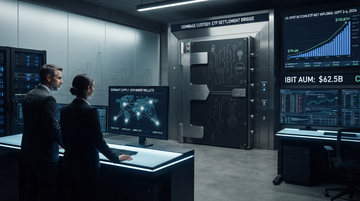
The cleanest supply test of 2026 happened over the weekend and the market barely noticed. Seven wallets, each holding a single 50 Bitcoin coinbase reward from a block they mined in March 2010, woke up after 16.5 years and moved a combined 350 BTC. At ~$80,000 per coin that is roughly $28 million of supply — a meaningful onchain signal, but a rounding error against the ETFs that took in more than three times as much in two trading days. The interesting part isn't the size. It's that every batch went to a fresh, unlabeled address. None of it landed on an exchange.
The event
Seven March-2010 wallets moved — straight to holding addresses
The onchain forensics are unambiguous. Lookonchain, citing Whale Alert, confirmed on September 6 that seven miner addresses dormant for 16.5 years each transferred exactly 50 BTC — the standard coinbase reward before Bitcoin's 2012 halving. The coins were mined in March 2010, when a single GPU could produce a block and BTC traded in fractions of a cent; the implied all-in mining cost for a 50 BTC block on consumer hardware at the time was on the order of $120 in electricity and wear. At the September 6 spot of roughly $80,000, each batch was worth about $4 million, and the seven combined for ~$28 million.
- 7 addresses, each carrying a single 50 BTC coinbase reward from March 2010
- Dormant for 16.5 years; transferred in tandem within hours on Sept 6
- Implied acquisition cost per 50 BTC block: roughly $120 (electricity on consumer GPUs)
- Spot valuation at the time of transfer: ~$4 million per batch, ~$28 million total
- Destination pattern: fresh wallets, no exchange or OTC desk tagged
The counter-evidence
The rally didn't even notice
Two days before the seven wallets woke up, the ETF complex was doing something much louder. On September 3, US spot Bitcoin ETFs took in $730.87 million in net inflows — the day's biggest single session since May, and a2026 high. BlackRock's IBIT alone captured $453.96 million, or about 62% of the day's total, with Fidelity's FBTC and the rest of the field splitting the remainder. September 4 added another $174.6 million of net inflows. Combined, the two sessions absorbed roughly $905 million of demand in48 hours — about 32x the value of the dormant BTC supply that hit the chain over the weekend.
Bitcoin spot ETF net inflow — Sept 3, 2026
$730.87M
IBIT captured $454M (62%); 2026 high
Bitcoin spot ETF net inflow — Sept 4, 2026
$174.6M
Friday session; jobs-data wobble cooled pace
iShares Bitcoin Trust (IBIT) AUM — Sept 4, 2026
$62.5B
Per iShares product page; ~62% of US spot ETF complex
Total US spot Bitcoin ETF AUM — Sept 4, 2026
$101B
1.27M BTC held; 6.04% of Bitcoin's 21M cap
BTC spot on Sept 6, 2026 (transfer day)
~$80,000
Yahoo Finance daily range $79,830–$80,106
The August backdrop made the contrast sharper. Spot Bitcoin ETFs had just printed their best month of 2026, taking in $3.52 billion in August as BTC rallied roughly 25% back above $80,000. Bitcoin spent most of the first weekend of September oscillating in the $79,000–$80,500 band — the $80,000–$82,800 zone repeatedly rejected upside attempts. In that context, 350 BTC of dormant2010 supply was a footnote, not a stress event.
Mechanism
Why these wallets didn't hit a sell wall
What makes this supply event different from prior whale wake-ups is the destination, not the amount. When dormant BTC moves to an exchange deposit cluster — the address tag that analytics firms use to identify hot wallets — the standard reading is intent to sell. Coinbase Prime has been the venue of choice for institutional sellers all year: Strategy (formerly MicroStrategy) moved 1,030 BTC and later 411 BTC to it in Q2, Japanese treasury firm Metaplanet sent 3,000 BTC in three batches in late August, and the US government-linked wallets deposited roughly4,000 BTC on July 13 alone.
That distinction matters because it points to the most likely explanation: the wallets are being prepared for use as loan collateral, OTC block trades, or trust/planning structures, not liquidation. The coin's onchain provenance from 2010 is a premium in private markets — buyers pay up for clean, unmixed history. A direct sale on Coinbase would destroy that.
Structure
Coinbase sits in the middle of every ETF dollar
The other reason the September 6 supply event was a non-event is structural. Coinbase Custody holds roughly 84% of all US spot Bitcoin ETF assets — about $77 billion out of a then-$91.7 billion complex in early 2026, with the share growing as AUM grows. Coinbase acts as the custodian for 9 of 11 spot Bitcoin funds. When IBIT, FBTC, ARKB, BITB or HODL needs BTC to back a creation order, the coins are sourced and held through Coinbase's cold-storage infrastructure, often via Coinbase Prime for the institutional OTC leg.
Coinbase's own Q2 FY2026 numbers — filed July 30, 2026 — show how dependent that franchise has become on ETF plumbing. Total revenue was $1.22 billion (down 14% year over year), transaction revenue fell to $599 million, and the company posted a $359.5 million net loss as retail trading volumes compressed. But subscription-and-services revenue hit $555 million (48% of net revenue, up from 29% two years earlier), with custody and other institutional services a major component. The press release framed this as the third consecutive quarter of record crypto trading volume market share at 10.3%, and explicitly cited custody as part of the \"everything exchange\" platform.
Coinbase Q2 FY2026 revenue
$1.22B
Down 14% YoY; reported Jul 30, 2026
Coinbase Q2 FY2026 net loss
$359.5M
EPS -$1.36; vs. profit year earlier
Coinbase subscription & services rev (Q2)
$555M
48% of net revenue; custody-led diversification
Coinbase share of US spot ETF BTC custody
~84%
~$77B of $91.7B complex in early 2026
The takeaway: an ETF dollar entering the Bitcoin market almost certainly passes through Coinbase's infrastructure on its way to the chain. A Satoshi-era dollar leaving dormancy does not. The two flows rarely meet.
The supply side
Who's actually been selling in 2026
If the 2010 cohort is holding, the selling pressure in 2026 has come from somewhere else — and the onchain record points at miners, corporates and2017-era whales, not the original supply. Strategy filed an 8-K on July 7, 2026 confirming aggregate holdings of 846,000 BTC at an average purchase price of $75,578 (cost basis $63.94 billion); the company briefly disclosed that the cost basis exceeded the fair value of its holdings as of June 30, when BTC was trading near $64,900. MSTR has been a net accumulator, not a seller, but its mNAV sat at just 1.15x as of early September with shares at $142.80 — a thin premium that compresses if BTC dips.
Public miners have been more active on the sell side. MARA Holdings reported Q2 FY2026 revenue of $174.9 million, down from $238.5 million a year earlier, and a $611.3 million net loss (-$1.60 per share) as hashprice collapsed to roughly $27–$32 per petahash per day for most of the first half. The company sold 23,093 BTC for roughly $1.6 billion across H1 2026 to fund operations and AI/computing pivots. Riot Platforms, by contrast, has been a2026 beneficiary: shares were up roughly 72% year-to-date as of early September, riding the hashrate expansion and treasury accumulation. Bitcoin whales collectively sold approximately $40 billion of BTC since October 2025 per CoinShares — the largest wave of supply in the current cycle.
2026 supply events ranked by approximate USD value
Satoshi-era wake-ups are small relative to the year's larger distribution events
Unit: USD millions
7 Satoshi-era wallets (Sept 6, 2026)
350 BTC to fresh wallets
28
MARA BTC sale (H1 2026)
23,093 BTC for operations
1,600
8.5-year whale (Jul 16, 2026)
5,908 BTC; internal transfer
383
Metaplanet → Coinbase Prime (late Aug)
3,000 BTC across three batches
237
US gov't → Coinbase Prime (Jul 13)
~4,000 BTC seized-asset sale
250
The first real test
September 1 was the warning shot the rally dodged
Before the seven wallets woke up, US spot Bitcoin ETFs had already given the rally its first true test. On September 1, 2026 — the first trading day after August's $3.52 billion inflow binge — the complex saw $236.46 million of net outflows, the largest single-day withdrawal since July 31. BlackRock's IBIT accounted for $201.18 million of that, about 85% of the day's total. Fidelity's FBTC lost another $43.67 million. Only Bitwise's BITB saw any inflow ($8.38 million).
Year-to-date net outflows, which had stood at approximately $5.29 billion at the end of July, fell to just $1.77 billion after August's inflows — a remarkable recovery. But the September 1 print reminded markets how thinly that conviction is held. When a single day of outflows is concentrated85% in one fund, ETF-driven rallies are one big redemption wave away from reversing. The Satoshi-era coins didn't trigger that wave. They didn't even reach a sell wall to try.
Horizons
Short-term rally vs long-term chokepoint
Short term (days to quarters): the data already supports a clear answer. Bitcoin's August 25% rally and September consolidation above $79,000 were driven almost entirely by ETF demand — BlackRock's IBIT alone absorbed $2.4 billion across August, with single-day hauls exceeding the entire 16-year-old Satoshi-era supply event by 17x on September 3. The dormant 350 BTC transfer was a non-event because the supply side of the equation has decoupled from the demand side: original 2010 coins are being routed around exchanges, not through them. The September 1 outflow shows how quickly that can change, but the September 3–4 rebound shows how quickly the bid returns.
Long term (1–3 years): the structural question isn't supply, it's custody. Coinbase's ~84% share of US spot Bitcoin ETF custody is a single point of failure for a ~$101 billion market — and the September 6 event reinforced how little of that $101 billion actually touches the onchain supply pool day to day. For Coinbase, that concentration is the moat. For ETF holders, it's a tail risk that few are pricing. Watch three things over the next year: Coinbase's custody market share in Coinbase's 10-Q filings (currently embedded in subscription-and-services revenue), the SEC's stance on multi-custodian ETF structures, and whether any rival — Fidelity's in-house custody, BitGo, Anchorage — gains material share.
- Days–quarters: ETF flow is the marginal price-setter; $80K–$82.8K is the line that decides whether September's ETF bid extends
- Next quarter: Coinbase Q3 FY2026 will show whether custody fee revenue grew with the $3.52B August ETF haul, or whether margin compressed
- 1–3 years: any serious move to multi-custodian ETF structures directly compresses Coinbase's structural advantage
- 1–3 years: Strategy's mNAV compression risk below 1.0x could force BTC sales that dwarf any Satoshi-era wake-up
The bottom line
The 2026 rally is ETF-driven — the supply side never even got tested
The September 6, 2026 wake-up of seven March-2010 miner wallets wasn't the test it could have been. At ~$28 million of2010-vintage BTC routed around the entire exchange complex, it was an order of magnitude too small to clear Coinbase Prime's daily OTC pipeline. The structural answer to the original question — is the 2026 rally ETF-driven? — is yes, decisively, and the proof is that the original supply and the new demand sit in two different plumbing systems. The rally's risk isn't Satoshi's coins moving. It's IBIT having a bad day.
Stocks this event actually moves
- Custody franchise scales1:1 with ETF AUM; the ~84% share of $101B US spot ETF BTC passes through Coinbase
- Q2 FY2026 subscription-and-services revenue hit $555M (48% of net revenue); ETF custody is the embedded growth lever
- September 1 outflow showed ETF-driven volatility can compress transaction revenue even while custody scales
- IBIT captured $454M of $731M (62%) in net inflows on September 3; the single-day lead is widening, not narrowing
- IBIT AUM stood at $62.5B on September 4, ~62% of the $101B US spot ETF complex
- Q2 FY2026 firm-wide revenue of $7.08B (+31% YoY) is increasingly crypto-linked through IBIT fee revenue
- Holds 846,000 BTC at $75,578 avg cost per July 7, 2026 8-K; cost basis exceeded fair value at June 30
- mNAV at 1.15x with shares at $142.80 leaves little cushion — a drop to ~1.0x can force BTC sales
- If MSTR sells into a weak tape, the supply dwarfs any Satoshi-era wake-up by 60–80x
- Sold 23,093 BTC for ~$1.6B in H1 2026 to fund operations — net supply pressure, not demand
- Q2 FY2026 net loss of $611.3M (-$1.60/share) shows hashprice compression has earnings impact regardless of BTC price
- Hashrate of 70.3 EH/s (+22% YoY) gives operational leverage if BTC rallies back above $82K
- Up ~72% YTD in 2026 vs MARA's flat-to-down; pure-play miner leverage to ETF-driven price recovery
- Has not been a forced seller at scale; smaller float amplifies moves on ETF flow days
- Hashrate expansion and power capacity make Riot a direct beneficiary if September ETF inflows persist
- Retail transmission of the rally — watch whether Q3 FY2026 crypto trading volumes lift with the August25% BTC move
- If Satoshi-era coins begin routing into retail wallets via Coinbase, HOOD is the natural retail on-ramp
- Stock at $191.84 with $48.7B market cap already prices significant crypto upside