%22%2F%3E%0A%20%20%3Ccircle%20cx%3D%22220%22%20cy%3D%22150%22%20r%3D%22180%22%20fill%3D%22%2322d3ee%22%20fill-opacity%3D%220.12%22%2F%3E%0A%20%20%3Ccircle%20cx%3D%221010%22%20cy%3D%22130%22%20r%3D%22220%22%20fill%3D%22%2338bdf8%22%20fill-opacity%3D%220.08%22%2F%3E%0A%20%20%3Ccircle%20cx%3D%22920%22%20cy%3D%22520%22%20r%3D%22170%22%20fill%3D%22%2322d3ee%22%20fill-opacity%3D%220.06%22%2F%3E%0A%20%20%3Cpath%20d%3D%22M140%20430h920%22%20stroke%3D%22url(%23line)%22%20stroke-width%3D%2212%22%20stroke-linecap%3D%22round%22%2F%3E%0A%20%20%3Cpath%20d%3D%22M220%20360c120-150%20260-220%20380-220s260%2070%20380%20220%22%20fill%3D%22none%22%20stroke%3D%22%2367e8f9%22%20stroke-opacity%3D%220.5%22%20stroke-width%3D%2216%22%20stroke-linecap%3D%22round%22%20stroke-linejoin%3D%22round%22%2F%3E%0A%20%20%3Cpath%20d%3D%22M300%20398h600%22%20stroke%3D%22%2394a3b8%22%20stroke-opacity%3D%220.24%22%20stroke-width%3D%228%22%20stroke-linecap%3D%22round%22%2F%3E%0A%20%20%3Ctext%20x%3D%22220%22%20y%3D%22510%22%20fill%3D%22%23e2e8f0%22%20fill-opacity%3D%220.7%22%20font-family%3D%22Arial%2C%20Helvetica%2C%20sans-serif%22%20font-size%3D%2238%22%20letter-spacing%3D%228%22%3EINSIGHTS%3C%2Ftext%3E%0A%3C%2Fsvg%3E)
Private-market signal from an AI-security specialist
HiddenLayer is positioning “model/agent security” as its own enterprise renewal cycle
On Sept. 2, 2026, HiddenLayer announced a $100M Series B to “advance trustworthy AI,” with the company explicitly using the money to deepen its agentic runtime security and add a dedicated “Agent Harness Security” offering. The market read-through isn’t simply that AI security is growing—it’s that buyers are starting to treat protections for models and autonomous agent behavior as a recurring, runtime-critical line item, not a one-time governance checkbox.
Round size
$100M
Series B announced Sep 2, 2026
Lead investor
Delta-v Capital
Named in the Series B announcement on Sep 2, 2026
Key growth claim
>10x ARR growth
Company-reported ARR growth “over the past year” in the Sep 2, 2026 announcement
Customer/scale hints
>50 new customers
Company-reported “more than 50” new platform customers (period not further specified) in the Sep 2, 2026 announcement
What’s actually getting funded
The spend shift is from pre-deployment assurance to production-time enforcement for agents
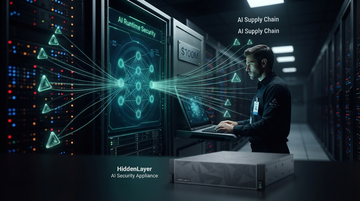
HiddenLayer’s platform map breaks AI security into discovery, supply chain validation, runtime protection, and continuous attack simulation. The Sept. 2 raise specifically calls out two next steps that matter for enterprise budgeting: (1) expanding “Agentic Runtime Security” and (2) launching “Agent Harness Security” to protect AI coding agents at runtime. In other words, the company is trying to own the enforcement moment where agents can manipulate tools, take unauthorized actions, or be driven off-policy.
- HiddenLayer plans to deepen its agentic runtime security capabilities as AI agents move from demos into always-on production workflows.
- HiddenLayer says “Agent Harness Security” extends runtime security to autonomous coding agents that write/review/ship code with less human oversight.
- HiddenLayer’s platform messaging frames runtime protection as EDR-like for AI, implying buyers expect detection + response rather than passive assessment.
This is the structural pivot. Legacy security budgets were shaped around endpoints, identities, and network boundaries. Agentic AI moves the critical boundary into the runtime: tool access, action permissions, and “what the agent did” become the audit objects. A dedicated budget line emerges when enforcement is continuous, not periodic.
Why this funding matters for enterprise AI-security taxonomy
“Model security” is splitting away from legacy controls—but the winner isn’t obvious yet
HiddenLayer frames its approach as not simply “traditional cybersecurity for AI,” but security built around AI assets and behaviors. That claim aligns with what buyers appear to be funding: tools that find shadow AI, validate model integrity, simulate attacks, and constrain unsafe agent behavior. The taxonomy effect is that “AI security” is no longer one bucket; it’s fracturing into model/supply-chain assurance, and agent/runtime enforcement. HiddenLayer’s growth claims—ARR growing more than 10x and “more than 50” new platform customers—suggest that at least one sub-category is clearing the procurement hurdle quickly.
The “secure the AI model” budget line can still fail to produce a single clear winner because enterprises often buy in layers (model validation + runtime monitoring + policy/guardrails). The most fundable architectures are likely to be those that integrate with existing security ecosystems while offering measurable runtime outcomes.
Supply chain view (end-to-end): where the security gap forms
The gap is at handoffs—model files, agent toolchains, and production execution
From a full supply chain perspective, AI risk concentrates at handoffs. HiddenLayer’s product map points to three handoff zones: (1) discovery—finding AI systems that are already running; (2) supply chain—validating the model artifact before deployment; and (3) runtime—detecting and stopping attacks and unsafe actions while the system operates. The new “agent harness” focus adds a fourth nuance: securing the interface between an agent and its toolchain, especially where agents can trigger actions automatically.
| Supply-chain step | Buyer’s enforcement expectation | What HiddenLayer emphasizes | Why it becomes a recurring budget line |
|---|---|---|---|
| AI discovery / shadow AI | Continuous inventory and visibility | AI Discovery to find AI assets across environments | New models/agents appear constantly; inventory doesn’t finish |
| Model supply chain | Integrity checks before deployment | AI Supply Chain Security and model/scanning use cases | Integrity gates reduce later incident risk and remediation cost |
| Agent/runtime execution | Detection + response during live behavior | AI Runtime Security plus Agentic Runtime Security | Runtime is where harm happens; it requires always-on controls |
| Agent toolchain / harness | Inline enforcement on tool misuse and unauthorized actions | Agent Harness Security extending runtime security to coding agents | Autonomous workflows increase frequency of risky executions |
Fundamentals read-across using public comparables
Incumbent security platforms face a timing problem: budgets follow proof of runtime outcomes
HiddenLayer’s raise comes with company-reported ARR in the “tens of millions” range and growth >10x over the prior year, plus claims that runtime security is becoming a priority and analogous to EDR “but specifically for AI.” If the buyer’s internal security KPI moves toward runtime intervention metrics, incumbents with mostly endpoint or identity-centric telemetry can struggle to show equivalent performance quickly. The implication for listed security vendors is not that their products become obsolete; it’s that their AI runtime story must become operationally measurable to avoid budget leakage to AI-native specialists.
Near-term vs. long-term horizons
What to watch next: procurement evidence first, then platform consolidation
- In days-to-quarters, expect procurement to concentrate on runtime monitoring pilots and agentic harness rollouts where tool misuse is most operationally visible.
- In 1–3 years, investors should watch whether AI security “runtime control” consolidates around a few integration patterns or fragments across multiple incompatible stacks.
- Watch for category displacement: if identity vendors extend into AI-native runtime enforcement fast enough, budget leakage could slow; if they don’t, specialists like HiddenLayer gain durable renewals.
Synthesis
Bottom line: this is a “budget-line fork” inside enterprise AI security
HiddenLayer’s $100M raise is best interpreted as evidence that enterprises are separating “secure the AI model” from legacy cyber categories and moving toward continuous, runtime enforcement for agentic systems. The company is funding the enforcement layer—especially Agent Harness and agentic runtime—where harm is immediate and auditability is required. The investment implication is dual: the sub-category can win fast on demand proof, but the larger market winner is still undecided because integration, measurable outcomes, and interoperability will determine how budgets consolidate.
Listed companies most exposed to the identity-to-runtime budget shift
- Okta’s identity control relevance can persist but runtime enforcement for agents can require AI-native telemetry that identity-first products don’t automatically provide.
- If agentic workflows increase unauthorized tool actions, Okta could see mixed demand depending on whether it can translate identity signals into agent runtime response outcomes in enterprise deployments.
- Over 1–3 years, Okta’s AI-security impact depends on integration speed—budget will follow proof inside the agent runtime rather than just authentication strength.
- CrowdStrike benefits from the same framing that HiddenLayer uses: runtime security becomes the priority metric, which aligns with EDR-style expectations.
- If buyers benchmark AI-agent risk against endpoint-like detections, CrowdStrike can win share as an adjacent runtime enforcement layer—especially when agents run on monitored hosts.
- In days-to-quarters, watch for faster AI-security conversations tied to runtime intervention; over 1–3 years, watch whether CrowdStrike’s coverage extends into agent tool misuse patterns with measurable controls.
- Booz Allen’s involvement as a participant signals government-oriented demand; when runtime enforcement is required, services and implementation scale matter.
- In days-to-quarters, agency and defense procurement cycles often translate into pilot-to-contract ramps when a vendor’s enforcement approach is credible—agent harness security can be a fit for integration work.
- Over 1–3 years, if model/runtime security becomes a distinct renewal line, Booz Allen can capture spend via rollout and auditability services.
- Zscaler can be indirectly exposed because runtime enforcement often depends on network and policy control paths; however, AI-agent-specific enforcement may need additional layers beyond traffic inspection.
- In days-to-quarters, the key watch item is whether Zscaler can connect AI-policy controls to agent behavior outcomes rather than just application access.
- Over 1–3 years, Zscaler’s upside hinges on whether it becomes part of the standardized runtime/policy stack—otherwise the budget-line fork favors AI-native runtime specialists.
- Palo Alto Networks is likely exposed if enterprises expect unified security enforcement; the risk is that AI runtime control becomes too specialized to fit within existing platform boundaries.
- In days-to-quarters, watch for whether PANW can demonstrate detection and response patterns that match AI-agent threats (e.g., tool misuse) with operationally comparable outcomes.
- Over 1–3 years, PANW’s competitive position depends on integration—if it can turn AI-security telemetry into actionable agent runtime remediation, it can defend share.